
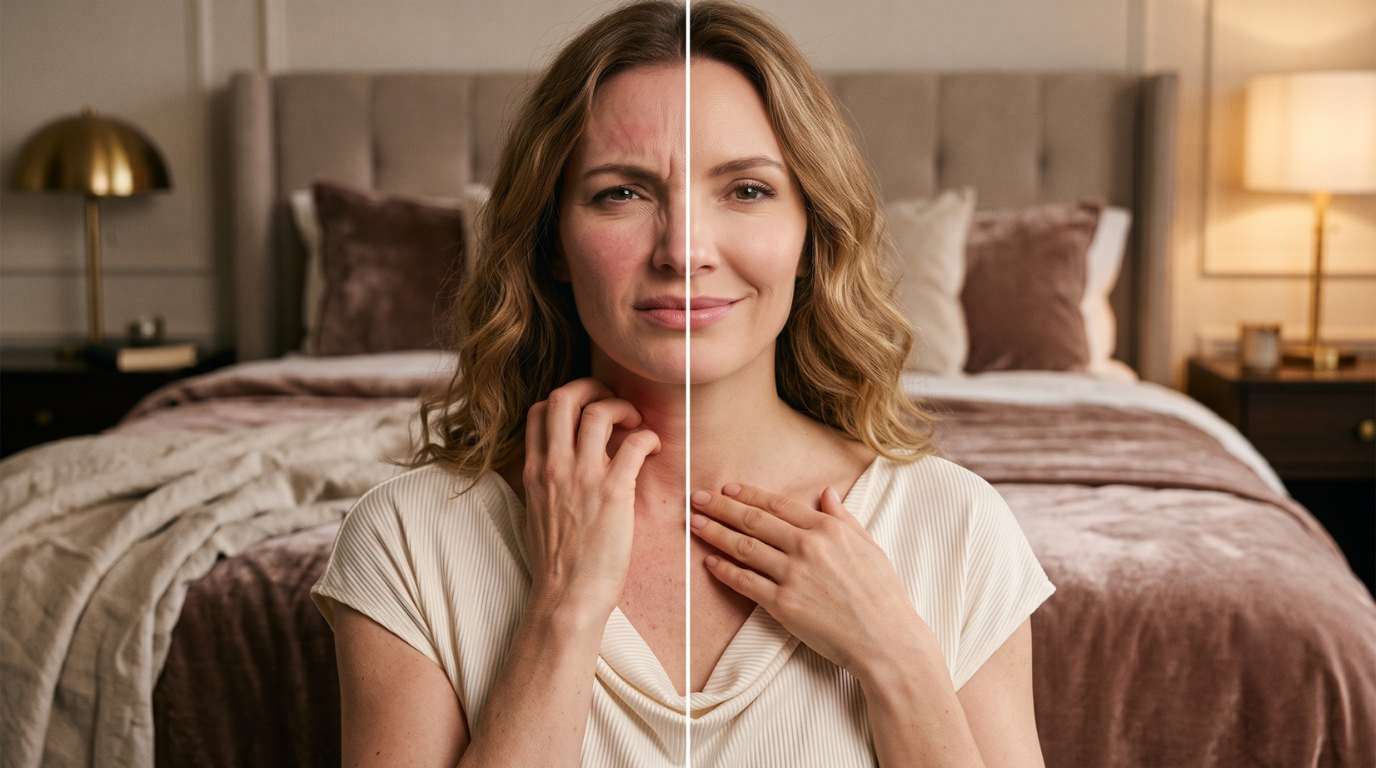
Vaginal dryness assessment & treatment
Vaginal dryness assessment and treatment
Private, assessment-led care for women experiencing dryness, burning, soreness, irritation, discomfort with intimacy, menopause-related changes, postpartum symptoms or treatment-related tissue changes.
- CQC registered Regulated and inspected
- 4.8 / 5 From 3,500+ reviews
- Clinician-led Personalised care
What is vaginal dryness?
Vaginal dryness is a symptom that can happen when vulvovaginal tissues become less hydrated, less elastic, more sensitive or more easily irritated. It may have several possible causes, including menopause-related GSM, postpartum or breastfeeding changes, medication, cancer treatment, infection, irritants or vulval skin conditions.
When dryness occurs alongside other low-oestrogen vaginal, vulval or urinary symptoms, our GSM and vaginal atrophy assessment may be more appropriate. For wider hormonal symptoms or HRT advice, our menopause service provides broader support.
Symptoms you may notice
Dryness can present as stinging, burning, irritation, rawness, soreness or friction. Some women notice discomfort with intimacy, exercise, wiping, daily movement or certain products.
What may be happening biologically
In many women, tissue changes affect lubrication, elasticity, resilience and repair. These changes may involve hormones, ageing, inflammation, reduced blood flow, irritation or medical treatments.
Why assessment matters
Similar symptoms can have different causes. Assessment helps clarify whether symptoms are most consistent with GSM, infection, irritant dermatitis, lichen sclerosus, medication effects or a combination.
The balanced way to think about vaginal dryness
Vaginal dryness should not be reduced to one quick explanation or one default treatment. Some women mainly need moisturisers, lubricants and vulval-care support. Others need assessment for GSM, skin conditions, infection, medication effects or tissue change. Some may be suitable for selected in-clinic procedures, but only after suitability is reviewed.
Menopause and GSM
Falling oestrogen can affect tissue hydration, elasticity, resilience and comfort.
Postpartum and breastfeeding
Temporary low-oestrogen states can reduce lubrication and comfort during recovery or breastfeeding.
Cancer treatment or medication
Chemotherapy, radiotherapy, anti-oestrogen treatment or some medications may contribute to dryness.
Skin conditions and irritants
Lichen sclerosus, dermatitis, soaps, condoms, lubricants, pads or detergents may worsen irritation.
Causes and contributors are often overlapping
Vaginal dryness can be multifactorial. Contributors can include low-oestrogen states, inflammation, irritants, medication effects, chronic vulval skin conditions, reduced blood flow, tissue hydration changes, collagen and elastin changes, and external volume or support changes.
Vaginal dryness is the symptom. GSM, menopause and vulval conditions may explain why it is happening.
Because dryness can have more than one cause, assessment considers your symptoms, medical history and any related vulval, vaginal or urinary changes. Where appropriate, we can guide you towards more specific GSM, menopause or vulval care.
Dryness assessment
Assessment for dryness, soreness or irritation when the cause is not yet clear.
GSM and vaginal atrophy
Use the GSM pathway when low-oestrogen vulval, vaginal and urinary symptoms form the clinical picture.
Menopause care
Use the menopause service for the wider hormonal picture, HRT discussion and broader symptoms.
Vulval or skin conditions
Persistent itching, lesions, white patches or fragile skin may need a dedicated vulval pathway.
You may not have the words for it yet. You can simply describe what feels different.
Vaginal dryness can be physical, emotional and practical. It may affect daily comfort, intimacy, confidence, clothing, exercise or how you feel in your own body.
Dryness or rawness
You may feel dry, raw, tight, sensitive or less comfortable than before.
Burning or stinging
Symptoms may feel like burning, stinging, irritation or soreness during the day.
Discomfort with intimacy
Friction, soreness or fear of discomfort may make intimacy feel difficult or less natural.
Menopause or GSM changes
Perimenopause, menopause and GSM can affect lubrication, tissue comfort and sensitivity.
Postpartum, breastfeeding or medication changes
Dryness may appear after childbirth, while breastfeeding, after cancer treatment or with certain medicines.
Not sure what is causing it
That is exactly why assessment comes first. You do not have to self-diagnose.
When vaginal dryness needs assessment before treatment
Dryness is common, but new bleeding, unusual discharge, lesions, severe pain or persistent vulval inflammation should not be assumed to be “just dryness”. These symptoms need clinical review before elective treatment.
Medical history also changes which options are appropriate. Pregnancy, cancer treatment, anti-oestrogen therapy, infection risk, medication and vulval skin disease all need a cause-led decision.
Symptoms to check before self-treating
Bleeding or post-coital bleeding
New or unexplained bleeding should be assessed before dryness procedures are considered.
Discharge, odour or infection symptoms
Thrush, BV, UTI symptoms, herpes or active inflammation should be treated or clarified first.
New lump, lesion or skin change
Persistent white patches, ulcers, thickening, lesions or non-healing changes need a vulval examination.
Severe or deep pelvic pain
Significant pain may need a broader gynaecological or pelvic-floor pathway rather than dryness treatment alone.
Cancer history or anti-oestrogen treatment changes the decision
Women with a history of breast or gynaecological cancer may still have dryness support options, but treatment should be individualised. Local hormonal treatment and procedures may require discussion with the clinician responsible for your cancer care or GP, depending on your history and current treatment.
No blanket clearance claim
Suitability depends on cancer type, receptor status, current medication, treatment history and the option being considered.
Non-hormonal options
Moisturisers, lubricants, vulval-care measures and selected specialist options may be discussed where appropriate.
Shared decision-making
We explain when liaison or clearance is advisable before local hormone therapy or a procedure.
Injectable and PRP cautions
Bleeding disorders, anticoagulants, active infection, allergy and healing risk may change whether PRP, HA or other injectables are appropriate.
Energy-based treatment cautions
Pregnancy, infection, unexplained bleeding, recent surgery, active inflammation and some implanted devices can change laser or RF suitability.
Alternatives remain part of consent
A procedure is not automatic. Conservative care, local medical treatment, skin-condition management, referral or watchful review may be the better route.
Confidential review
Not sure whether your symptoms need testing or referral?
A cause-led consultation can clarify whether examination, infection testing, vulval assessment, menopause/GSM care, oncology liaison or another referral route is appropriate.
How we assess vaginal dryness before recommending treatment
A useful treatment plan starts with understanding the pattern of symptoms. Dryness, burning, soreness and friction can be caused by GSM, irritation, infection, medication, tissue change or more than one factor.
The assessment is sensitive, consent-led and paced around your comfort. Not every woman needs every examination or test at the first appointment.
Step 1
Symptom history
We ask when dryness started, whether symptoms include burning, stinging, soreness or friction, whether intimacy is affected, and whether there are urinary symptoms, discharge, bleeding, skin changes or recurrent irritation.
Step 2
Life stage and medical context
Perimenopause, menopause, breastfeeding, childbirth, cancer treatment, anti-oestrogen therapy, medication, HRT history and vulval skin conditions can all change the likely pathway.
Step 3
Sensitive examination where appropriate
Examination can help assess tissue health, vulval irritation, tenderness, skin changes, scarring, discharge and whether further testing or referral may be needed. It is only carried out with consent.
Red flags
Checking for symptoms that need investigation
New bleeding, post-coital bleeding, unusual discharge or odour, a new lump or lesion, severe pain, suspected infection or significant vulval inflammation should be assessed before any elective treatment.
Pathway
Matching treatment to the likely driver
If symptoms are mainly linked to GSM, dryness, irritation, tissue change, medication, skin conditions or external support changes, the treatment plan should reflect that rather than defaulting to one method.
Choice
Explaining options clearly
We explain hydration support, vulval care, non-hormonal treatment options, pricing, limitations, downtime, evidence uncertainty and suitability so you can make an informed decision.
You do not need to self-diagnose
The purpose of assessment is to make the next step clearer
Many women arrive unsure whether symptoms are due to menopause, GSM, an infection, medication, skin irritation or something else. A structured review helps separate what is likely, what needs checking and what treatment options make sense.
Who may benefit from vaginal dryness assessment and treatment?
Vaginal dryness affects women at different life stages and for different reasons. Some women mainly notice dryness or friction. Others experience burning, vulval irritation, medication-related symptoms, or dryness after cancer treatment, childbirth or breastfeeding. The right starting point depends on the likely driver.
Perimenopause and menopause
Women with dryness, burning, thinning tissue, reduced elasticity, recurrent irritation or discomfort with intimacy may benefit from assessment for menopause-related change and GSM.
Postpartum or breastfeeding
Low-oestrogen states after childbirth or during breastfeeding can temporarily reduce lubrication, comfort and tissue resilience. Timing and suitability are assessed individually.
After cancer treatment
Women experiencing dryness after chemotherapy, radiotherapy or anti-oestrogen therapies may need careful review and, where appropriate, liaison with their GP or oncology team.
Vulval skin conditions or irritation
Symptoms alongside lichen sclerosus, dermatitis, sensitivity, soreness, burning or recurrent irritation may need a combined medical plan rather than dryness treatment alone.
Medication-related dryness
Some medications can contribute to dryness, reduced arousal, irritation or changes in comfort. A medication and medical history review helps identify relevant contributors.
Women seeking non-hormonal options
If you prefer to avoid hormones, cannot use them, or want to understand non-hormonal options, assessment can help clarify which approaches may be appropriate and which may not.
You do not need to know the cause first
The right option depends on what is actually driving the dryness
Some women benefit most from moisturisers, lubricants and vulval-care changes. Others may be suitable for energy-based, regenerative or hydration-focused treatments. The key is matching the treatment to the likely cause rather than assuming every woman needs the same solution.
Vaginal dryness treatment pathways
Treatment should begin with the least invasive option that fits the likely cause. Established comfort and medical routes come first; procedures are individualised later options rather than universal first-line treatment.
We distinguish symptom support, local medical care, specialist non-hormonal options and evidence-limited procedures so that the purpose and limitations of each route remain clear.
Moisturisers, lubricants and vulval care
Regular vaginal moisturisers, adequate lubricant during intimacy, reduced irritant exposure and vulval-barrier care can improve comfort and may be used alone or alongside other treatment.
Hormonal and other clinician-led medical options
Where low-oestrogen tissue change or GSM is likely, a clinician may discuss local hormonal or other medical options. Cancer history and current anti-oestrogen treatment can change the decision and may require liaison.
Cause-specific non-hormonal support
Where hormones are not preferred or suitable, treatment may focus on specialist moisturising, barrier care, management of vulval disease, pelvic-floor support, medication review or other non-hormonal pathways.
Nu‑V CO₂ laser and RF
CO₂ laser or RF may be discussed in selected women where tissue change is part of the problem. These are not universal first-line treatments, and method mechanics remain owned by the CO₂ treatment page.
PRP, HA boosters and exosome-based options
Injectable and regenerative approaches may be discussed for selected hydration or tissue-support objectives. They should be presented as individualised adjuncts with method-specific evidence, risks and alternatives.
Labia majora support and combination planning
Where external volume loss, rubbing or exposure contributes to discomfort, support-focused treatment may be discussed. Generic all-method comparison remains on the vaginal rejuvenation options page.
The route should follow the cause—not the price list
Suitability, risks, alternatives, expected objective and evidence status are discussed before any procedure or package is recommended.
Your enquiry is private, simple and low-pressure.
The first step is not a treatment commitment. It helps us understand whether you may need vulval care, menopause support, non-hormonal treatment, Nu-V CO₂ laser, RF, PRP, HA boosters, regenerative care or another clinical route.
Request Private ConsultationWe contact you discreetly
A member of the team follows up privately so you can take the next step without needing to explain everything online.
You describe what has changed
You can use your own words. You do not need a diagnosis or treatment name before speaking to us.
We guide the next step
We explain whether consultation, examination, symptom support or treatment assessment is the appropriate next step.
Examination reassurance
Nothing happens without your consent.
An intimate examination is not always needed at the first stage. If one is recommended, we explain why first, what it involves and what alternatives may exist.
You can ask questions, pause, decline or take time to decide. You remain in control throughout.
The cost of starting is separate from the cost of treatment.
A free nurse telephone consultation is available as an initial conversation. We generally recommend a paid doctor telephone consultation when symptoms, medication, prescribing, cancer history or procedural suitability need medical review.
Vaginal dryness treatment is not one-size-fits-all. Where treatment may help, we explain the expected pathway, limitations, risks, likely costs and alternatives before any decision is made.
First step
Free nurse telephone consultation
A confidential first conversation to understand what has changed and whether a clinical appointment is the appropriate next step.
No treatment decision needed today
Consultation
Paid doctor consultation recommended
Recommended where diagnosis, prescribing, oncology history, complex symptoms or treatment suitability need doctor-led review.
Treatment options
From price shown below
Pricing depends on assessment, treatment type, medical suitability and whether a combined pathway is appropriate.
No pressure to proceed
Clinical choice
You can stop at advice.
If treatment is not right for you, we will say so and guide you toward the more appropriate next step where possible.
Suitability for vaginal dryness treatment is confirmed after consultation and clinical assessment. Results vary. This page is educational and does not replace individual medical advice.
Start with the right level of consultation
The first conversation is separate from treatment
A free nurse telephone consultation is available as an initial conversation. We generally recommend a paid doctor telephone consultation where medical assessment, prescribing, cancer history, complex symptoms or treatment suitability need to be reviewed.
Initial option
Free nurse telephone consultation
A confidential first conversation before booking a clinical pathway.
Recommended clinical route
Paid doctor telephone consultation
Recommended where diagnosis, medication, oncology history or treatment suitability needs medical review.
Treatment fees follow assessment
Verified options and indicative prices appear below
The full pricing section retains current prices for Nu‑V, RF, PRP, HA hydration, external support, exosomes and combination packages. Listing a price does not mean that option is suitable or first-line for every dryness presentation.
Conservative and medical care
Costs depend on the consultation, prescription or specialist pathway required.
Procedural options
Current method and package prices are retained in the detailed pricing section.
Vaginal dryness and GSM treatment prices
Treatment for vaginal dryness depends on the likely cause and the pathway recommended after assessment. Some women need conservative and hydration support. Others may discuss Nu-V, RF, PRP, HA booster, exosomes, labia majora support or a combined plan.
Prices below are indicative and subject to change. Final recommendations depend on consultation, symptoms, examination findings where appropriate, medical history and suitability. Please also refer to our latest pricing page.
Before choosing a treatment
The right pathway depends on the likely driver of dryness
Some women need simple comfort support first. Others may benefit from a broader plan involving tissue support, regenerative or energy-based treatment, and external support where appropriate. The goal is to recommend what fits the cause rather than defaulting to one category of treatment.
Nu-V / fractional CO₂ laser
Fractional CO₂ laser may be discussed in selected women where tissue change, dryness or GSM-related discomfort is part of the symptom picture, following medical assessment and counselling.
Nurse-led single session
£599
Indicative single-session price.
Doctor-led single session
£799
Indicative single-session price.
Nurse-led course of 3
£1,200
Indicative course pricing.
Doctor-led course of 3
£1,800
Indicative course pricing.
Radiofrequency treatment
£699
Single treatment
£2,300
Course of 4
PRP / platelet-rich plasma
£1,110
Single treatment
£2,985
Course of 3
HA hydration booster
£795
Single treatment
£1,400
Course of 2
Labia majora filler / support
£1,200
Labia majora filler 2ml
£699
Vulval skin tightening
Exosome treatment
£895
Single treatment
£2,450
Course of 3
Intimate Makeover
Combination package including PRP, HA skin booster and laser sessions, tailored after consultation. Treatment mix may vary by suitability.
£2,999
Discuss packagePrices are indicative and may be updated. Final treatment planning and suitability are confirmed after consultation and assessment. Please refer to the latest WHC pricing page for current pricing.
Reviews
Experiences shared by women like you
Real feedback from women who felt listened to, supported and cared for throughout their journey.
Fantastic service by everyone. I could talk openly without feeling embarrassed, and everything was explained clearly. The team made me feel so comfortable and at ease.
Finally, a place that explains everything fully. The staff put my mind at ease and I felt listened to, understood, and given sound advice.
Katy went above and beyond making me feel comfortable and making sure I understood everything that was happening and what to expect. Very nice and clean facilities.
Many women arrive unsure whether dryness is “normal” or something that can be helped
Vaginal dryness is not always easy to talk about. These are the kinds of concerns women commonly describe during intimate health consultations.
“
The dryness is affecting everything — comfort, confidence and intimacy.
“
I thought this was just something I had to put up with after menopause.
“
Things feel sore, irritated or raw even when I am trying to be careful.
“
I want to know whether this is GSM, an infection, a skin problem or something else.
These are representative concerns commonly discussed in consultations, not individual verified patient reviews.
Helpful videos on vaginal dryness, GSM and treatment choices
These videos support the page by explaining related symptoms, treatment choices and what to consider before deciding on a pathway.


Vaginal dryness, GSM, and intimacy: How do you choose the right intimacy ai... | WHC Clinical FAQ

What can I do to treat painful intercourse and vaginal dryness? | WHC Clinical FAQ

What causes vaginal dryness and irritation during perimenopause? | WHC Clinical FAQ

What is the difference between vaginal atrophy and vaginal dryness? | WHC Clinical FAQ
What is vaginal atrophy and how does it cause dryness? | WHC Clinical FAQ

Can vaginal dryness GSM cause pain with penetration? | WHC Clinical FAQ

Is vaginal dryness the same as atrophy or GSM? | WHC Clinical FAQ
Frequently asked questions about vaginal dryness and GSM treatment
These are some of the most common questions women ask when dryness, burning, soreness or discomfort begins to affect daily comfort or intimacy.
We answer them clearly while still being honest about what depends on the underlying cause, your medical history and your assessment.
What exactly is vaginal dryness or GSM?
How do I know if it is dryness, thrush, BV or a skin condition?
Are all treatments on this page hormone-free?
Do I always need a procedure?
Is vaginal laser or RF suitable for everyone?
How many sessions will I need?
What is the downtime and when can I have sex again?
Can I have treatment if I have had breast cancer or I am on anti-oestrogen therapy?
Can treatments be combined?
Are results permanent?
What are the main risks or side effects?
What does “exosomes” mean in this context?
Still unsure?
Have a question that is not covered here?
Vaginal dryness is often more nuanced than one short answer can capture. A medical discussion can help separate what is likely, what needs checking and what may actually help.
Practical ways to support vaginal comfort at home
Self-care is not a replacement for medical assessment, but it can help reduce friction, protect the vulval skin barrier and make symptoms easier to manage while the underlying cause is being clarified.
These measures are most useful when they are consistent, realistic and matched to your symptom pattern rather than used as one-off fixes.
Use moisturisers and lubricants differently
Lubricants and moisturisers do different jobs. Lubricants are usually used during intimacy to reduce friction. Vaginal moisturisers are used more regularly between intimacy to support baseline comfort.
Use enough lubricant during intimacy rather than a very small amount at the last minute.
Consider regular vaginal moisturising support if dryness is recurring.
Allow enough time for arousal and comfort rather than rushing penetration.
Simplify intimate products
If the vulval area feels sore, burning or easily irritated, comfort often improves when women simplify their routine and reduce avoidable irritants.
Avoid perfumed soaps, shower gels, bubble baths and fragranced intimate products.
Think about whether pads, condoms, lubricants, detergents or wipes may be adding irritation.
Choose breathable underwear and avoid anything that increases rubbing, heat or friction.
Notice patterns and triggers
Tracking when symptoms flare can help identify whether dryness is linked to intimacy, exercise, products, medication, menstrual changes, menopause, breastfeeding or infections.
Write down when symptoms are worse and what seems to improve them.
Note any discharge, odour, bleeding, visible skin change or recurrent soreness.
Bring your medication list and relevant medical history to consultation.
Know when not to self-manage
Dryness can be part of GSM, but persistent or unusual symptoms should not be assumed to be “just dryness”.
Seek assessment for unexplained bleeding, post-coital bleeding or a new lump or lesion.
Get reviewed if there is unusual discharge, odour, severe pain or recurrent infection-like symptoms.
If symptoms persist despite moisturisers and lubricants, a structured review may be more useful than further trial and error.
When home measures are not enough
Ongoing dryness or soreness deserves proper assessment
If dryness keeps returning, intimacy feels uncomfortable, symptoms are affecting confidence, or you are unsure whether GSM, infection, medication or a skin condition is involved, it is worth getting a proper medical review.
Common myths about vaginal dryness
Vaginal dryness is often dismissed as something women should tolerate, especially after menopause or childbirth. In reality, persistent dryness, burning or discomfort deserves a proper explanation and a cause-led plan.
These myth-versus-reality cards are designed to keep the message medically balanced while helping women recognise when assessment may be useful.
“Vaginal dryness is just a normal part of ageing.”
Vaginal dryness is common, especially around menopause, but that does not mean women have to ignore it. It may be linked to GSM, skin irritation, medication, infection, breastfeeding, cancer treatment or more than one factor.
“If lubricant helps a bit, there cannot be a medical issue.”
Lubricant can reduce friction, but it does not always address the reason dryness is happening. GSM, skin conditions, medication effects or inflammation may still need proper assessment.
“Dryness always means menopause.”
Menopause is a common cause, but dryness can also occur after childbirth, during breastfeeding, after cancer treatment, with some medications, with vulval skin conditions or because of irritants.
“Non-hormonal treatments are suitable for everyone.”
Non-hormonal options may be helpful for some women, but they are not automatically suitable for everyone. Pregnancy, infection, unexplained bleeding, recent surgery, cancer history or certain medical conditions may change the pathway.
“Laser or RF is a guaranteed solution for dryness.”
No procedure is a guaranteed cure. Energy-based treatments may be discussed in selected cases, especially where tissue change is relevant, but they should not replace proper assessment or realistic counselling.
“If I cannot use hormones, nothing else can be discussed.”
Some women prefer or need to avoid hormones. Non-hormonal options may be discussed, but suitability depends on symptoms, medical history, tissue findings and the specific treatment being considered.
Need clarity?
It is okay not to know which explanation fits you
Many women arrive unsure whether dryness is hormonal, skin-related, medication-related, treatment-related or something else. A proper review helps replace guesswork with a cause-led plan.
More about vaginal dryness, GSM and treatment choice
Vaginal dryness often sits at the intersection of tissue change, hormones, skin sensitivity, medication, life stage and personal experience. That is why a useful treatment plan needs more than a simple list of procedures.
These expandable sections give extra context for women who want to understand the condition more deeply before deciding what questions to ask in consultation.
GSM vs vaginal atrophy: terminology and why symptoms persist
Genitourinary Syndrome of Menopause is a modern umbrella term for vulvovaginal and urinary symptoms related to low-oestrogen states, most commonly around menopause. Older terms such as vaginal atrophy focus mainly on tissue thinning and dryness.
GSM recognises the wider picture: vaginal symptoms, vulval symptoms and urinary symptoms can overlap. Symptoms may be chronic and can worsen without targeted support, which is why assessment and treatment choice matter.
First-line care and non-hormonal basics
Lubricants
Short-acting support for intimacy and friction-related discomfort.
Moisturisers
Longer-acting support for baseline dryness and comfort between intimacy.
Irritant reduction
Simplifying intimate products can support the vulval skin barrier.
Energy-based and regenerative treatments: what is known and what is still evolving
Why the wording stays cautious
Energy-based and regenerative treatments may be discussed in selected women, but evidence varies by method, device, protocol and patient group. Not every symptom is due to GSM, and some causes require different medical treatment. Results vary and maintenance may be required.
Why combination treatment is sometimes discussed
Dryness can involve internal tissue change, surface sensitivity, external support changes, irritation and confidence. In some cases, a combined plan may make more sense than one standalone treatment. This should always be based on assessment, not a fixed protocol.
Dryness, intimacy and confidence
Comfort and arousal
When intimacy is associated with dryness or friction, the body may become less relaxed and less responsive.
Avoidance and confidence
Dryness can affect confidence, desire, spontaneity and communication. This does not mean the symptom is “just psychological”; it means discomfort can affect the whole experience of intimacy.
Ready to ask better questions?
Understanding the possible causes can make consultation clearer
You do not need to know the diagnosis in advance. But understanding possible pathways can make consultation feel clearer, calmer and more productive.
Further support and helpful next steps
Vaginal dryness can feel personal, frustrating and difficult to talk about, especially when symptoms affect comfort or intimacy. For many women, it helps to combine medical review with trustworthy education and practical support.
These suggestions are here to support informed conversations — not to replace individual assessment.
Useful topics to read about
Genitourinary Syndrome of Menopause
Helpful if dryness, burning, tissue fragility or discomfort worsened around perimenopause or menopause.
Vulval irritation and skin-related discomfort
Helpful if symptoms feel sore, burning, surface-based or triggered by products, rubbing or skin change.
Painful sex and dryness
Helpful if dryness has started to affect intimacy, arousal, comfort or confidence.
What to bring to consultation
Symptom pattern
When symptoms started, what they feel like, what worsens them and whether intimacy, products or exercise trigger symptoms.
Medical and medication history
Menopause status, HRT history, cancer treatment history, breastfeeding, childbirth, surgery, medications and skin conditions.
Questions and preferences
Whether you prefer to avoid hormones, want to understand non-hormonal options, or have questions about downtime, maintenance and safety.
Reference themes
What our page is broadly guided by
Menopause and GSM guidance, including vaginal dryness, vulval symptoms and local symptom support.
First-line non-hormonal comfort measures, including moisturisers, lubricants and irritant reduction.
Transparent counselling around energy-based and regenerative treatments, including evidence limitations and selected-case use.
Next step
You do not need to work this out on your own
If dryness, burning, soreness or discomfort is affecting comfort, confidence or intimacy, the most useful next step is usually a calm, structured review of the symptoms rather than more trial and error at home.
Educational only. This page is designed to support informed discussion and does not replace individual medical assessment. Suitability, diagnosis and treatment planning depend on symptoms, history, examination findings where appropriate and the specific treatment being considered.
Clinical references and further reading
This page is informed by current guidance and clinical resources relevant to vaginal dryness, GSM, menopause-related genitourinary symptoms, non-hormonal symptom support and treatment choice.
2. British Menopause Society
Consensus statement: Genitourinary Syndrome of Menopause (GSM).
View sourceEducational only. These references are provided for transparency and further reading. They do not replace individual medical assessment, diagnosis, or personalised treatment planning.
