



Why is the clinical concept of a "complete cure" for postmenopausal dryness... | WHC Clinical FAQ

Skin Boosters vs. Fillers: What Fixes Dryness & Painful Sex? Expert Guide.
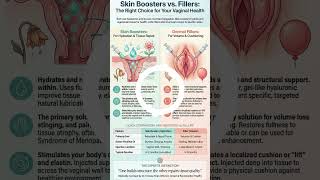
Skin Boosters vs. Fillers: What Fixes Dryness & Painful Sex? Expert Guide.
Women’s Health Clinic FAQ
What does NICE say about energy-based treatments for dryness?
NICE places energy-based vaginal devices (fractional CO 2 /Er:YAG lasers and radiofrequency) after established, first-line measures for genitourinary syndrome of menopause (GSM). UK guideline care begins with vaginal moisturisers and suitable personal lubricants ; if symptoms affect quality of life, low-dose local vaginal oestrogen is.
Direct answer
NICE guidance prioritises non-hormonal care (vaginal moisturisers and suitable lubricants) and-when symptoms affect quality of life-low-dose local vaginal oestrogen for genitourinary syndrome of menopause (GSM). Energy-based vaginal treatments (laser or radiofrequency) are not first line; evidence quality is mixed and devices must meet UK medical-device rules with clear consent and follow-up. If considered, this should be after guideline-led care and an individual discussion of benefits, limits and risks.
If the symptom pattern is getting harder to explain, you can book a consultation or ask WHC about the next step once you have a clearer record of triggers, timing and what you have already tried.
Educational only. Clinical suitability must be confirmed following an appropriate consultation and assessment by a qualified healthcare professional. Results vary. Not a cure.
At a glance
NICE places energy-based vaginal devices (fractional CO 2 /Er:YAG lasers and radiofrequency) after established, first-line measures for genitourinary syndrome of menopause (GSM). UK guideline care begins with vaginal moisturisers and suitable personal lubricants ; if symptoms affect quality of life.
Diagnostic Differentiators
Key physical and clinical parameters
Starting point
begin with moisturisers, lubricants and other established first-line care
Next evidence-based step
move to vaginal oestrogen or broader menopause treatment if basics are not enough
What to be cautious with
research-limited device claims need extra caution, not automatic escalation
Best next step
review response before adding the next layer
Critical Progressive Risk
Educational only. Established guideline-backed menopause care should be reviewed before drifting into research-limited device or injectable claims.
How to think about treatment order
The safest order is usually the least invasive and most evidence-supported first, then a review of what changed before moving on.
Key Overlapping Symptom Triggers
That matters because a rushed, layered plan can make it impossible to tell whether the tissues needed more time, more consistency or a different treatment class altogether.
What usually comes first
NICE places energy-based vaginal devices (fractional CO 2 /Er:YAG lasers and radiofrequency) after established, first-line measures for genitourinary syndrome of menopause (GSM). UK guideline care begins with vaginal moisturisers and suitable personal lubricants ; if symptoms affect quality of life, low-dose local.
What moves the plan on
These options directly address the low-oestrogen biology behind GSM-thinner epithelium, raised pH and reduced lactobacilli-while energy devices aim to remodel tissue via heat. Because published studies vary in quality, design and follow-up, energy treatments are not considered first line.
Where caution is needed
If explored, it should be within an informed, shared-decision conversation that covers expected benefit, uncertainty, safety, costs and maintenance. Where this sits in a practical pathway.
Why review matters
1) Build foundations: gentle vulval care (lukewarm water; bland emollient as a soap substitute), breathable underwear, and a scheduled vaginal moisturiser (many choose hyaluronic acid gels) several times weekly. Keep a compatible lubricant for higher-friction moments- water-based (versatile, condom-friendly), silicone-based (long-lasting glide.
Why layering care too quickly creates confusion
2) If dryness, micro-tears, dyspareunia or urinary urgency/frequency persist, add local vaginal oestrogen (cream, pessary/tablet, ring) or consider vaginal DHEA after assessment. 3) Only when these guideline-led steps are insufficient or unsuitable should energy devices be discussed-ensuring you understand realistic outcomes and follow-up.
Safety, regulation and consent. In the UK, devices must be UKCA/CE-marked for intended use and operated by trained clinicians.
Why escalation should stay structured
Sequencing matters because established menopause care and research-limited device claims do not sit on the same footing.
Do not normalise progression
If the pattern is becoming more intrusive, more painful or less recognisable, it deserves a proper explanation rather than repeated guesswork.
Look for overlap
Menopause-related dryness may coexist with infection, pelvic-floor tension, medication effects or another diagnosis that changes the plan.
Use the least risky first step
A staged pathway is usually safer and easier to judge than jumping straight to device-led or adjunctive claims.
Keep review thresholds low
Seek review if symptoms keep recurring, start affecting daily life or no longer respond to the same simple measures.
Why the order of care matters
You should receive clear written information about potential benefits and risks, what aftercare involves, how many sessions are planned, and signs that need medical review (e.g., fever, malodorous discharge, heavy bleeding, severe pelvic pain, or any new post-menopausal bleeding). Device choice does not replace evaluation for mimics of GSM (e.g., lichen sclerosus.
Expectations and maintenance.
What makes the pathway easier to judge
A good treatment order leaves enough time to see whether basic measures, local hormonal support or a wider review is doing the real work.
Best baseline question
Ask what has been tried consistently, what changed, and whether first-line options were given enough time before a more complex step was suggested.
Clarify the main driver
Work out whether the main problem is dryness, fragility, discharge, urinary symptoms, pain or a mix of several layers.
Do not miss another diagnosis
Bleeding, strong odour, discharge, fever, a new lesion or severe pain should trigger broader review rather than a narrow self-care answer.
Use first-line care consistently
Foundational measures should be used properly before deciding they failed or before assuming a more intensive step belongs next.
Know when to escalate
Escalation is appropriate when symptoms persist, worsen, recur or start affecting intimacy, confidence, sleep or daily function.
What a useful review usually adds
A good review often adds more than a prescription. It clarifies the diagnosis, the red flags, the overlap issues and the most logical next step.
That structure matters because newer or more invasive options do not automatically sit above simple guideline-backed care.
Myths about treatment order
A more intensive or newer option is not automatically the next logical step.
Myth: The newest or most invasive option should come first
False. Stronger or newer is not automatically more appropriate.
Myth: Several treatments started together always speed progress
False. Layering too much too quickly can hide what is actually helping.
Myth: Devices and injectables sit on the same evidence footing as first-line care
False. Established guideline-backed care still carries the stronger routine evidence base.
Why stepwise care matters
A staged plan protects safety, reduces unnecessary cost and makes the response easier to judge.
Best next step
Start with the basics, review honestly, then escalate only if the symptom pattern still justifies it.
A safer way to decide the next step
A structured pathway usually works better than chasing several treatment ideas at once.
Pattern still fits
The symptoms are mild to moderate, recognisable and not rapidly changing.
No obvious red flags
There is no postmenopausal bleeding, severe pain, foul discharge, fever or new visible lesion.
Daily life still manageable
Comfort, intimacy and confidence are not being steadily eroded while you wait and watch.
Clear follow-up point
You know what improvement would look like and when a more evidence-based next step should be discussed.
Reassuring Signs Matrix (Green Flags)
Reasonable first steps at home usually include the following evidence-aware checks.
Indicators to Pause and Re-Evaluate (Red Flags)
Seek a clinical review sooner if the pattern is worsening or no longer looks straightforward.
Signs Demanding Immediate Clinical Evaluation
Treatment choices should stay grounded in symptoms, review points and evidence strength. Escalation is most helpful when it is structured rather than reactive. Access NHS 111 Support
Bleeding needs checking
Postmenopausal bleeding or repeated bleeding after sex should be assessed rather than normalised as simple dryness.
Pain may need a different explanation
Pain can also reflect infection, pelvic-floor spasm, vulval skin disease or another diagnosis that needs a different plan.
Persistent symptoms deserve options
If symptoms are ongoing, ask about evidence-based treatment rather than cycling through unsuitable over-the-counter products.
Evidence strength matters
If a pathway is leaning on research-limited device claims before first-line menopause care has been reviewed, pause and reassess.
This safety and escalation advice is purely educational and does not replace emergency medical care. If you are experiencing severe, worsening pain, heavy active bleeding, signs of systemic infection, acute urinary retention, or sudden incontinence, please contact NHS 111, your local GP, or an urgent care centre immediately.
Deep Clinical Context & Common Patient Inquiries
Why first-line steps still matter
NICE places energy-based vaginal devices (fractional CO 2 /Er:YAG lasers and radiofrequency) after established, first-line measures for genitourinary syndrome of menopause (GSM). UK guideline care begins with vaginal moisturisers and suitable personal lubricants ; if symptoms affect quality of life, low-dose local vaginal oestrogen is usually added. These options directly address the low-oestrogen biology behind GSM-thinner epithelium, raised pH and reduced lactobacilli-while energy devices aim to remodel tissue via heat.These options directly address the low-oestrogen biology behind GSM-thinner epithelium, raised pH and reduced lactobacilli-while energy devices aim to remodel tissue via heat. Because published studies vary in quality, design and follow-up, energy treatments are not considered first line. If explored, it should be within an informed, shared-decision conversation that covers expected benefit, uncertainty, safety, costs and maintenance. Where this sits in a practical pathway.Why review points matter before adding more
1) Build foundations: gentle vulval care (lukewarm water; bland emollient as a soap substitute), breathable underwear, and a scheduled vaginal moisturiser (many choose hyaluronic acid gels) several times weekly. Keep a compatible lubricant for higher-friction moments- water-based (versatile, condom-friendly), silicone-based (long-lasting glide for vestibular tenderness) or oil-based (rich feel but may degrade latex condoms/toys). 2) If dryness, micro-tears, dyspareunia or urinary urgency/frequency persist, add local vaginal oestrogen (cream, pessary/tablet, ring) or consider vaginal DHEA after assessment. 3) Only when these guideline-led steps are insufficient or.- Start with the least invasive, most guideline-backed measures first.
- Give each step enough time to judge before adding another layer.
- Be cautious when a pathway starts leaning on research-limited device claims.
Authoritative UK Clinical Resources
Access peer-reviewed guidance from national healthcare bodies to support your understanding of pelvic health conditions.
Recommendations | Menopause: identification and management | NICE
NICE sets the core UK menopause pathway, including moisturisers, lubricants, vaginal oestrogen and when broader review is needed.Read NICE guidance
1 Recommendations | Transvaginal laser therapy for urogenital atrophy | NICE
NICE says transvaginal laser for urogenital atrophy should only be used in research, which is important when stepwise treatment order is discussed.Read NICE guidance
Vaginal dryness - NHS
NHS summarises common symptoms, causes, first-line self-care and when vaginal dryness should prompt a GP review.Read NHS guidance
Next step
Schedule a Confidential Specialist Evaluation
If you are unsure which step belongs first and which options are still too weakly supported to jump to, WHC can help build a safer staged plan.
Clinical reference materials used for this FAQ
Educational only. Individual treatment suitability can only be determined by a qualified professional after a thorough consultation and assessment. Results vary. Not a cure.
