
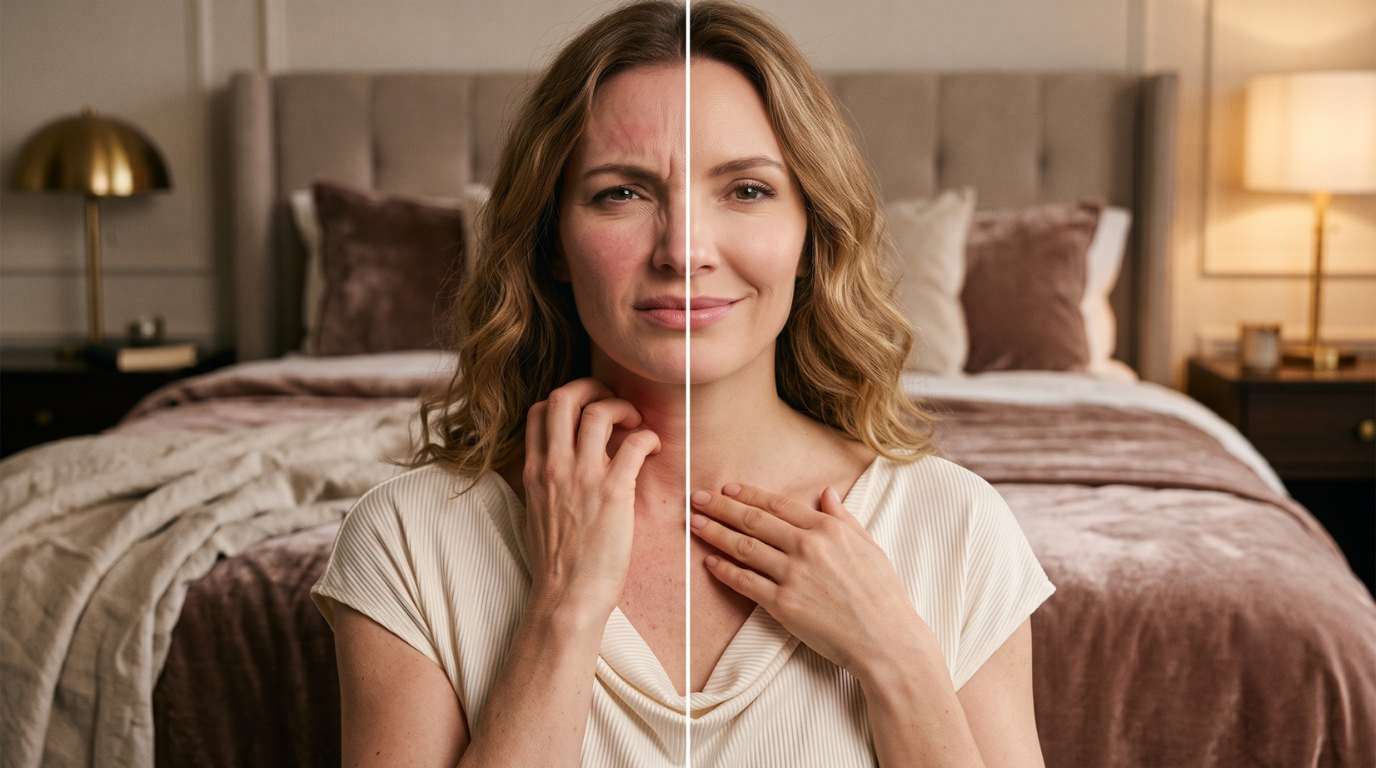
Lichen sclerosus assessment & treatment
Lichen sclerosus assessment and treatment
Private, assessment-led care for women with persistent vulval itching, soreness, white patches, fragile skin, fissures, scarring, tightening or recurrent flares.
- CQC registered Regulated and inspected
- 4.8 / 5 From 3,500+ reviews
- Clinician-led Personalised care
What is lichen sclerosus?
Lichen sclerosus is a long-term inflammatory skin condition that commonly affects the vulval area. It can cause itching, soreness, burning, fragile skin, white patches, fissures and skin changes that may scar or tighten over time if not well controlled.
It is not contagious and is not a sexually transmitted infection. The exact cause is not fully understood, but immune, genetic, hormonal and skin-barrier factors may contribute. Good management focuses on symptom control, skin protection and long-term monitoring.
This page’s role
Assessment, treatment planning and long-term clinical management
This treatment page focuses on women seeking clinical assessment, first-line treatment review, flare management, monitoring and discussion of appropriate supportive options. General educational pages and focused FAQs can help with background questions, but they do not replace an individual assessment or this condition-led pathway.
Common symptoms
Symptoms vary from mild irritation to severe itching or painful fissures. Some women have visible skin changes, while others mainly notice discomfort or fragility.
First-line care
Recognised guidance commonly describes potent prescription steroid ointment as first-line treatment, supported by gentle skincare, emollients, barrier care and planned maintenance.
Why monitoring matters
LS is associated with a small increased risk of vulval cancer, so regular review and prompt assessment of new, changing or non-healing areas are important parts of care.
The balanced way to think about lichen sclerosus treatment
LS treatment should not be device-first. The foundation is correct diagnosis, first-line anti-inflammatory care, skin-barrier support and monitoring. Adjunct options such as laser, RF, PRP or polynucleotides may be discussed only where appropriate and with realistic counselling.
Autoimmune tendency
LS may be associated with immune factors and sometimes occurs alongside other autoimmune conditions.
Hormonal context
LS is often seen after menopause, though it can occur at other ages too.
Skin-barrier irritation
Friction, harsh products and scratching can worsen symptoms and maintain the itch-scratch cycle.
Genetic predisposition
LS can sometimes run in families, suggesting genetic susceptibility may play a role.
What LS can look and feel like
LS may cause white or shiny patches, texture change, fissures, discomfort with sex, stinging with urine, irritation with wiping or sitting, and scarring or tightening over time if inflammation is not well controlled. New, persistent or non-healing changes should be assessed promptly.
Medical note: lichen sclerosus is a long-term condition that requires appropriate diagnosis, treatment and monitoring. Adjunct options are not a replacement for first-line medical care.
Lichen sclerosus safety, suitability and red-flag checks
Safety comes first. LS is associated with a small increased risk of vulval cancer, so new, changing or non-healing skin changes must be reviewed promptly before any supportive procedure is discussed.
Some women are suitable for supportive adjunct care. Others first need diagnosis confirmation, infection treatment, steroid optimisation, biopsy or onward specialist review. Adjunct procedures are paused until concerning changes have been assessed.
Red flags needing prompt assessment
Persistent sore or ulcer
A sore, ulcer or broken area that does not heal, especially if lasting more than a few weeks, should be reviewed promptly.
New lump, thickening or hardening
New hardening, thickening, nodules or raised areas should be assessed before any elective adjunct treatment.
Crusted or non-healing patch
New crusting, persistent rough patches or non-healing areas may need specialist review or biopsy.
Unexplained bleeding or significant change
Any unexplained bleeding, rapid change or concerning lesion should be assessed clinically first.
Suitability checks and common cautions
Active infection or uncontrolled inflammation
Active infection, unexplained discharge, severe flare or unstable inflammation should be managed before adjunct treatment.
PRP suitability
Blood disorders, active systemic infection or relevant medical history may affect suitability for PRP.
Polynucleotide allergy considerations
Polynucleotides may involve purified fish-derived sources, so relevant allergy history must be discussed.
RF and device considerations
Implanted electronic devices or certain medical conditions may affect suitability for radiofrequency treatment.
Comfort and safety
Worried about symptoms or suitability?
If you are unsure whether symptoms are LS, infection, dermatitis, menopause-related dryness or a red-flag change, the safest next step is a proper medical discussion and examination where appropriate.
This list is not exhaustive. Final suitability depends on diagnosis, current symptoms, examination findings, medical history, allergy history, medication, active inflammation and the specific treatment being considered.
How we assess lichen sclerosus before recommending treatment
The safest LS plan starts with the basics: diagnosis, current symptom control, correct use of first-line treatment, skin monitoring and red-flag review. Adjunct options only make sense when this foundation is clear.
The assessment is sensitive, consent-led and paced around your comfort. If examination is appropriate, we explain each step first.
Diagnosis, treatment use, skin examination and escalation are considered together
We bring together your symptom history, previous diagnosis, steroid and emollient use, flare pattern, skin findings and any areas that have changed. This avoids repeating separate “before treatment” and “assessment” journeys.
Clinical differential
LS, dermatitis, infection, GSM, irritation and other vulval conditions may overlap.
Biopsy or referral decision
If biopsy or specialist review is needed, we explain why and arrange or recommend the appropriate pathway.
Step 1
Symptom and flare history
We ask about itching, soreness, burning, fissures, tearing, tightness, discomfort with sex, urinary stinging, night-time itching, triggers, flares and what has or has not helped.
Step 2
Diagnosis and treatment review
We review whether LS has been diagnosed clinically or by biopsy, what steroid or emollient routine you use, whether application is clear, and whether symptoms suggest another overlapping condition.
Step 3
Sensitive skin examination where appropriate
Examination can help assess white or shiny patches, skin fragility, fissures, thickening, scarring, narrowing, architectural change and areas that may need further review.
Red flags
Checking for changes needing urgent review
Persistent sores or ulcers, new lumps, thickened areas, hardening, crusting, non-healing patches or changing lesions should be assessed promptly. Where needed, we explain and arrange or recommend biopsy or specialist referral before any adjunct treatment.
Foundation
Optimising first-line LS care
Standard care usually includes a prescription steroid ointment schedule, gentle skincare, emollients, trigger reduction, barrier support and a maintenance plan with follow-up.
Adjuncts
Discussing supportive options carefully
Laser, RF, PRP and polynucleotides may be discussed only as adjuncts in selected cases, with clear explanation of limitations, evidence uncertainty, risks, pricing and follow-up.
You do not need to work it out alone
The purpose of assessment is to separate LS, irritation, infection and red flags
Many women arrive unsure whether symptoms are lichen sclerosus, thrush, dermatitis, dryness, menopause-related change or something else. A structured review helps clarify what is likely, what needs checking, and what care plan is safest.
Who may benefit from lichen sclerosus assessment and treatment planning?
This page is for women with confirmed or suspected vulval lichen sclerosus who want structured, clinician-led care. Adjunct regenerative or energy-based options may be considered only where appropriate and alongside optimised first-line management.
Confirmed or suspected LS
You have a confirmed diagnosis, previous LS assessment, or symptoms strongly suggestive of vulval lichen sclerosus and need structured care.
Ongoing itching, soreness or flares
You are using or have used standard LS care but still struggle with itching, burning, tenderness, fragility or recurrent flare patterns.
Pain with intimacy or friction
You experience discomfort with intimacy, wiping, exercise, sitting or daily friction despite careful skincare and barrier support.
Scarring, tightness or fragile skin
You notice tightening, narrowing, repeated splitting, scarring, fragile skin or sensitivity and want a personalised review with appropriate monitoring.
Unclear steroid routine
You were prescribed steroid ointment but are unsure how much to use, where to apply it, how long to continue or how maintenance should work.
Need red-flag review or biopsy advice
If you have a new lump, ulcer, thickened patch, hardening, crusting or a non-healing area, this should be assessed promptly before adjunct treatment.
Not every symptom needs a procedure
The right option depends on diagnosis, control and safety
Some women mainly need clearer steroid guidance and skin-care support. Others may need biopsy or onward referral. Adjunct options are only considered after assessment confirms that they are appropriate to discuss.
Lichen sclerosus treatment and supportive care options
Lichen sclerosus care should start with diagnosis, first-line medical treatment, gentle skin care and monitoring. Adjunct treatments may be considered only when standard care is optimised and the skin has been assessed.
Our role is to explain what is first-line, what may be supportive, what needs monitoring, and what should be checked before any elective procedure is discussed.
First-line prescription treatment and maintenance
Potent prescription steroid ointment is commonly described as first-line treatment for vulval lichen sclerosus. A clear induction and maintenance plan, correct application and follow-up are central to long-term control.
Emollients, barrier care and irritant reduction
Many women need practical help with gentle cleansing, emollient use, avoiding triggers, reducing friction and breaking the itch-scratch cycle. Small routine changes can make medical treatment easier to tolerate.
Laser support for selected cases
Laser may be discussed in selected women as an adjunct option for comfort and tissue-support goals. It is not a cure and should not replace first-line LS treatment or monitoring.
RF, PRP and polynucleotides
RF, PRP and polynucleotides may be discussed case-by-case as supportive adjuncts. Evidence and suitability vary, so we explain what is known, what is uncertain and what applies to your situation.
Long-term review, biopsy and specialist escalation when needed
LS care includes monitoring for new or changing areas. Persistent ulcers, lumps, thickened areas, hardening, crusting, significant scarring or non-healing patches may require biopsy, specialist vulval review or a surgical opinion. This page does not imply that WHC directly provides every investigation or surgical procedure.
Why this balanced approach matters
The aim is not to replace standard LS management with a device or injectable. It is to improve clarity, optimise the foundation, monitor safely and discuss adjunct options only where they are appropriate and realistic.
Practical ways to support vulval comfort with lichen sclerosus
Self-care does not replace prescribed treatment or clinical review, but it can reduce irritation, protect fragile skin and make flare management easier.
The most useful routine is usually simple, consistent and designed to reduce friction, scratching and product-related irritation.
During a flare
Return to the agreed treatment plan
Use the prescribed flare regimen and barrier care as instructed, and seek review if symptoms are different, severe or not settling as expected.
Maintenance
Continue the agreed long-term schedule
When symptoms improve, maintenance treatment, gentle skincare and planned review help protect the skin and reduce uncertainty about future flares.
Surveillance
Know which changes need earlier review
Do not wait for a routine appointment if there is a persistent ulcer, lump, thickening, hardening, bleeding, crusting or non-healing area.
Use prescribed treatment correctly
Many women are under-treated because they are unsure how much steroid ointment to use, where to apply it or how maintenance should work. Clear instructions can make a big difference.
Ask exactly where to apply treatment and what amount is intended.
Clarify the induction phase, tapering plan and long-term maintenance schedule.
Do not stop or change prescribed treatment without medical advice if symptoms flare.
Simplify vulval skincare
LS-prone skin is often more sensitive. Reducing irritants can help calm soreness, stinging and friction-related symptoms.
Avoid perfumed soaps, shower gels, wipes, bubble baths and fragranced intimate products.
Use fragrance-free emollients or barrier support where recommended.
Choose breathable underwear and avoid clothing that increases heat, rubbing or pressure.
Reduce friction and the itch-scratch cycle
Itching can lead to scratching, which further damages fragile skin and can make symptoms worse. A flare plan can help break the cycle.
Use barrier protection before activities that cause rubbing, such as walking, cycling or swimming.
Use appropriate lubricant during intimacy and stop if pain or tearing occurs.
Discuss night-time itching if it is affecting sleep or causing repeated scratching.
Know when not to self-manage
Because LS requires monitoring, certain changes should not be managed at home or covered up with repeated creams.
Seek prompt review for a persistent sore, ulcer, thickened patch, crusted area or non-healing change.
Get checked if there is a new lump, hardening, bleeding, or a significant change in symptoms.
If symptoms do not improve with correct first-line treatment, diagnosis and treatment use should be reviewed.
When symptoms persist
Ongoing soreness, fissures or itching deserve proper review
If symptoms continue despite treatment, the next step is not simply to add more products. It is to check diagnosis, application, infection overlap, irritants, red flags and whether specialist review is needed.
Treatment pathway
First-line care first, then adjunct options only where appropriate
Lichen sclerosus treatment planning is different from purely aesthetic intimate treatments. The foundation is accurate assessment, correct first-line medical management, gentle skin care, flare control and monitoring. Adjunct options may be considered only after this foundation is clear.
Indicative prices
Supportive treatment prices from
Prices are shown as a broad guide only. Final treatment choice, suitability and package recommendation depend on consultation, assessment, current LS control and whether adjunct treatment is appropriate. Please also refer to the main pricing page for the latest prices.
Laser adjunct
From £599
Nurse-led / doctor-led options may differ.
RF adjunct
From £699
Suitability assessed case-by-case.
PRP adjunct
From £1,110
Course pricing may be available.
Polynucleotides
Quoted
Discussed after assessment.
Prices are indicative and subject to change. Adjunct treatment planning and suitability are confirmed after consultation and assessment.
Lichen sclerosus treatment support prices
Pricing depends on whether any adjunct treatment is appropriate after assessment. First-line medical management and monitoring remain the foundation of LS care.
Prices below are indicative and subject to change. Final recommendations depend on consultation, symptoms, examination findings, current LS control, red-flag review and suitability. Please also refer to our latest pricing page.
Before choosing a treatment
Adjunct options only make sense after the foundation is reviewed
We first review diagnosis, steroid use, flare control, irritants, infection overlap, red flags and whether biopsy or onward referral is needed. Adjunct options are only discussed after these safety and treatment-planning steps.
Laser support for vulval lichen sclerosus
Laser may be discussed in selected patients as a supportive adjunct, not as a replacement for first-line LS management. Suitability is confirmed after assessment.
Nurse-led single session
£599
Indicative single-session price.
Doctor-led single session
£799
Indicative single-session price.
Nurse-led course of 3
£1,200
Indicative course pricing.
Doctor-led course of 3
£1,800
Indicative course pricing.
Radiofrequency treatment
£699
Single session
£2,300
Course of 4
PRP support
£1,110
Single session
£995
Per session in course of 3
Polynucleotides
Polynucleotides may be discussed in selected cases as an adjunct option. Suitability, allergy history and treatment plan are reviewed before pricing is confirmed.
Discuss suitabilityLaser course as adjunct only
A course may be discussed for selected patients where adjunct laser support is appropriate as part of a broader LS plan.
£1,200 – £1,800
Discuss coursePrices are indicative and may be updated. Final treatment planning and suitability are confirmed after consultation and assessment. Adjunct options do not replace standard LS medical care. Please refer to the latest WHC pricing page for current pricing.
Reviews
Experiences shared by women like you
Real feedback from women who felt listened to, supported and cared for throughout their journey.
Fantastic service by everyone. I could talk openly without feeling embarrassed, and everything was explained clearly. The team made me feel so comfortable and at ease.
Finally, a place that explains everything fully. The staff put my mind at ease and I felt listened to, understood, and given sound advice.
Katy went above and beyond making me feel comfortable and making sure I understood everything that was happening and what to expect. Very nice and clean facilities.
Many women arrive after months or years of uncertainty
Lichen sclerosus symptoms can be difficult to explain and are often mistaken for other causes. These are the kinds of concerns women commonly raise in intimate health consultations.
“
The itching keeps coming back and I am not sure whether it is thrush, skin irritation or LS.
“
The skin feels fragile, sore or easily torn, and I feel anxious about intimacy.
“
I was given steroid ointment, but I am not confident I am using it correctly.
“
I want someone to explain what needs monitoring and whether anything else can support comfort.
These are representative concerns commonly discussed in consultations, not individual verified patient reviews.
Helpful videos on lichen sclerosus, vulval symptoms and treatment choices
These videos support the page by explaining related symptoms, clinical considerations and what to think about before deciding on a pathway.

Can lichen sclerosus cause chronic pain? | WHC Clinical FAQ

Can exercise make lichen sclerosus worse? | WHC Clinical FAQ

What vitamins are good for lichen sclerosus? | WHC Clinical FAQ

Can lichen sclerosus develop during pregnancy? | WHC Clinical FAQ

How to maintain hygiene with lichen sclerosus? | WHC Clinical FAQ

Can lichen sclerosus affect the anal area? | WHC Clinical FAQ

What is penile lichen sclerosus in men? | WHC Clinical FAQ
Frequently asked questions about lichen sclerosus
These are some of the most common questions women ask when LS symptoms, flare-ups or treatment uncertainty begin to affect comfort and confidence.
We answer them clearly while keeping the message medically cautious: LS is usually managed, not cured, and care should be individualised.
Can lichen sclerosus be cured?
What is the first-line treatment for vulval lichen sclerosus?
Are laser, RF, PRP or polynucleotides a replacement for steroid ointment?
How is lichen sclerosus diagnosed?
Do I need a biopsy for lichen sclerosus?
Is lichen sclerosus contagious or sexually transmitted?
Is there a cancer risk with lichen sclerosus?
What symptoms should be reviewed urgently?
Is it safe to use strong steroid ointment long term?
Can lichen sclerosus be mistaken for thrush, BV or dermatitis?
How many adjunct treatment sessions will I need?
Can lichen sclerosus affect mental wellbeing?
Still unsure?
Have a question that is not covered here?
LS can be complex, especially if symptoms overlap with infection, dermatitis, menopause-related dryness or red-flag skin changes. A medical discussion can help make the next step clearer.
Common myths about lichen sclerosus
LS is often misunderstood. Some women are wrongly treated repeatedly for thrush, while others are frightened by online information or told to simply live with symptoms.
These myth-versus-reality cards are designed to give balanced, practical reassurance without minimising the need for proper medical care.
“Lichen sclerosus is caused by poor hygiene.”
LS is not caused by poor hygiene. Over-washing or harsh products may actually worsen irritation. It is a long-term inflammatory skin condition with possible immune, hormonal, genetic and skin-barrier factors.
“It is contagious or sexually transmitted.”
Lichen sclerosus is not contagious and is not considered a sexually transmitted infection. Symptoms can affect intimacy, but that does not mean it was acquired sexually.
“Steroid ointment is always dangerous.”
Potent steroid ointment is widely described as first-line LS treatment when used correctly under clinical guidance. The key is correct product, correct amount, correct frequency and follow-up.
“Laser, RF or PRP can cure lichen sclerosus.”
No adjunct treatment should be presented as a cure. Laser, RF, PRP and polynucleotides may be discussed in selected cases as supportive options, not replacements for first-line management.
“If it keeps itching, it must just be thrush.”
Thrush can cause itching, but repeated or persistent itching can also be LS, dermatitis, dryness or other vulval skin conditions. Recurring symptoms deserve assessment rather than repeated assumptions.
“If symptoms improve, I never need review again.”
LS is long term. Even when symptoms improve, maintenance and monitoring matter. New, changing or non-healing areas should be assessed promptly.
Need clarity?
It is okay not to know whether this is LS or something else
Many women arrive unsure whether symptoms are lichen sclerosus, thrush, dermatitis, dryness or a flare. A proper review helps replace guesswork with a safer plan.
More about lichen sclerosus, symptom control and adjunct care
Lichen sclerosus often needs long-term, structured care. It can affect comfort, intimacy, sleep, confidence and quality of life, but the first step is always safe assessment and good control of inflammation.
These expandable sections give extra context for women who want to understand the condition more deeply before deciding what questions to ask in consultation.
Causes and risk factors: what we know and myths to ignore
The exact cause of LS is not fully understood. Research suggests immune, genetic, hormonal and skin-barrier factors may play a role. LS may occur alongside other autoimmune conditions in some women.
LS is not caused by poor hygiene, is not contagious and is not a sexually transmitted infection.
Symptoms checklist and comfort-focused support
Early or fluctuating symptoms
Mild itching, subtle colour change, sensitivity, urinary stinging or discomfort with wiping may occur before symptoms become severe.
Progressive symptoms
Persistent itching, white or shiny patches, fissures, bruising, bleeding, cracking, pain with intimacy or tightening may need review.
Where adjunct therapies may fit: laser, RF, PRP and polynucleotides
Why the wording stays cautious
Laser, RF, PRP and polynucleotides are discussed as possible adjuncts in selected patients, not as first-line replacements. Evidence varies by method, patient group, disease activity and outcome measure.
Any plan should be personalised, focused on comfort and reviewed over time. Results vary. Not a cure.
Why first-line care still matters even if adjunct treatments are discussed
LS is an inflammatory skin condition. If inflammation is not controlled, symptoms can continue and skin change may progress. Adjunct therapies should not distract from correct diagnosis, steroid use, skin-barrier care, maintenance and monitoring.
LS, intimacy and emotional wellbeing
Pain and avoidance
Fissures, soreness and fear of tearing can make intimacy feel difficult or frightening.
Confidence and anxiety
Chronic symptoms can affect sleep, confidence, relationships and quality of life. Clear care plans and follow-up can reduce uncertainty.
Ready to ask better questions?
Understanding LS can make consultation clearer
You do not need to know the answer in advance. But understanding first-line care, monitoring and red flags can help you get more from a consultation.
Further support and helpful next steps
LS can feel isolating because symptoms are intimate, persistent and sometimes frightening. A calm, structured plan can make the condition feel more manageable.
These suggestions are here to support informed conversations — not to replace individual assessment.
Useful topics to read about
Vulval skin conditions
Helpful if symptoms overlap with dermatitis, irritation, recurrent thrush-like symptoms or skin sensitivity.
Painful sex and vulval soreness
Helpful if LS symptoms affect intimacy, confidence or comfort with touch.
Vaginal dryness and GSM
Helpful if symptoms overlap with menopause-related dryness, burning or tissue fragility.
What to bring to consultation
Symptom pattern
When symptoms started, what they feel like, what triggers flares, and whether itching, fissures, skin tearing or pain with intimacy are present.
Previous treatment details
Steroid ointment name, how often you use it, where you apply it, emollients used, infection treatments tried and any biopsy or specialist letters.
Questions and worries
Concerns about steroid use, cancer risk, intimacy, flares, adjunct treatments, comfort, maintenance or what needs urgent review.
Reference themes
What our page is broadly guided by
Vulval LS guidance covering diagnosis, steroid treatment, maintenance care and follow-up.
Red-flag monitoring guidance for persistent ulcers, lumps, thickened areas and non-healing changes.
Research discussing adjunctive laser, RF, PRP and regenerative approaches, with cautious interpretation.
Next step
You do not need to manage LS uncertainty alone
If itching, soreness, fissures, fragile skin or treatment uncertainty is affecting comfort or confidence, the most useful next step is a structured medical review rather than more trial and error.
Educational only. This page is designed to support informed discussion and does not replace individual medical assessment. Suitability, diagnosis and treatment planning depend on symptoms, history, examination findings where appropriate and the specific treatment being considered.
Clinical references and further reading
This page is informed by clinical resources relevant to vulval lichen sclerosus, first-line treatment, monitoring, red-flag symptoms and adjunct supportive treatment options.
2. British Association of Dermatologists
Patient information: lichen sclerosus in females.
View source5. PubMed Central
Nonablative radiofrequency in the treatment of refractory lichen sclerosus.
View source7. PubMed Central
Polydeoxyribonucleotide dermal infiltration in genital lichen sclerosus-related literature.
View sourceEducational only. These references are provided for transparency and further reading. They do not replace individual medical assessment, diagnosis, or personalised treatment planning.
