



Does prolapse cause vaginal dryness during sex?

Can vaginal tightening prevent future prolapse?
Does prolapse cause vaginal dryness during sex? | WHC Clinical FAQ
Women’s Health Clinic FAQ
How does prolapse affect sexual intercourse?
This is often asked quietly because women are unsure whether what they are feeling is normal, embarrassing to mention or simply “something to put up with”.
Direct answer
Pelvic organ prolapse can affect sexual intercourse by causing a feeling of bulging, pressure, rubbing, reduced confidence or discomfort, but it does not affect every woman in the same way. Some women continue to have comfortable sex, while others need changes such as better lubrication, slower pacing, symptom treatment or pelvic health review. The clinically useful answer is that prolapse can affect intercourse, but the reason may be the bulge itself, dry tissues, pelvic floor tension, anxiety or a mixture of all of these.
In reality, intercourse may feel unchanged, awkward or painful depending on symptoms, tissue health and confidence, so it is worth talking about specifically rather than as a vague side concern. You can book a pelvic health review if you want a clearer clinical explanation of symptom stage, risk factors and management choices.
Educational only. Clinical suitability must be confirmed following an appropriate consultation and assessment by a qualified healthcare professional. Results vary. Not a cure.
At a glance
Prolapse may change pressure, sensation or confidence during sex, but comfort problems often involve more than anatomy alone and can be reviewed in a practical way.
Diagnostic Differentiators
Key physical and clinical parameters
Possible effects
Pressure, bulging, discomfort or reduced confidence
Not every woman
Has pain or major sexual difficulty
Other contributors
Dryness, tissue change and pelvic floor tension
Helpful next step
Name the exact symptom, not just “sex is different”
Critical Progressive Risk
Educational only. Pelvic organ prolapse, pregnancy-related symptoms and activity choices still need individual assessment. Results vary, and conservative care or surgery should never be oversold as a universal cure.
Why sex can feel different with prolapse
The prolapse itself may create a bulge or pressure sensation, but sexual discomfort is often shaped just as much by tissue dryness, muscle tension and fear of aggravating symptoms.
Key Overlapping Symptom Triggers
That is why two women with a similar stage of prolapse can describe very different experiences with intercourse.
Pressure and bulging can change comfort
Prolapse may create a physical awareness during intercourse that some women barely notice and others find very distracting or uncomfortable.
Dryness can be a major part of the picture
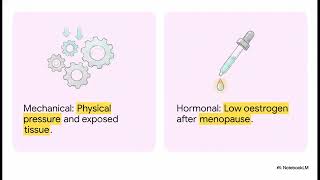
Vaginal dryness, especially after menopause, may make intercourse sore even when the prolapse itself is not large.
Confidence can alter the experience
Self-consciousness or fear of making the prolapse worse can reduce relaxation and make sex feel less comfortable or enjoyable.
Pain deserves a specific assessment
If intercourse is painful, it is worth checking whether the cause is prolapse alone or whether dryness, pelvic floor overactivity or another condition is contributing.
What helps make the answer useful
Instead of asking only whether prolapse affects sex, try to identify what has changed: pressure, pain, lubrication, confidence, bleeding or all of them together.
That often makes the next step much clearer.
Why this intimacy question matters
Sexual difficulties around prolapse are often driven by a mixture of physical symptoms, tissue change, confidence and fear of making things worse, so one-line reassurance is usually not enough.
Not every symptom is caused by prolapse alone
Dryness, menopausal tissue change, pelvic floor overactivity, skin conditions and anxiety can all sit alongside prolapse and change the sexual picture.
Comfort matters as much as anatomy
A prolapse may be clinically mild but still have a major effect on sexual confidence, enjoyment or avoidance if comfort has changed.
Good counselling should feel normalising
Women often need clear language that says these symptoms are common and reviewable rather than something they simply have to tolerate.
Bleeding and significant pain still need checking
Some symptoms can happen with exposed or dry tissue, but persistent post-coital bleeding or painful penetration still deserve assessment.
Why the wider context matters
A prolapse question is rarely answered by anatomy alone. Symptoms, childbearing plans, bladder and bowel function, previous surgery and tissue quality all change what the most sensible advice looks like.
A helpful consultation should explain what is likely, what is uncertain, and where self-management ends and clinician-led review becomes more important.
What helps make sexual advice more useful
The most helpful answers separate what prolapse may contribute from what else could be affecting sex, then focus on comfort, lubrication, communication and knowing when to seek review.
Useful benchmark
If sex has become painful, you are avoiding intimacy completely, or bleeding is happening after intercourse, it is better to discuss it openly than assume it is “just the prolapse”.
Name the exact symptom
Bulging, pain, dryness, reduced desire, fear of penetration and bleeding each need slightly different discussion rather than one generic sex-with-prolapse answer.
Address tissue health
Postmenopausal dryness or atrophy may be a major part of the problem and should not be missed because prolapse is also present.
Use practical adjustments
Lubricants, slower pacing, better communication and reducing pressure can be more immediately useful than abstract reassurance.
Escalate when symptoms are not straightforward
New bleeding, severe pain, skin changes or persistent distress justify a proper assessment rather than continued guessing.
A grounded way to approach it
The goal is not to prove that prolapse should never affect sex. It is to identify what is actually getting in the way and deal with that honestly.
That often makes the advice more reassuring and more practical at the same time.
Common myths
These misconceptions often push women towards either false reassurance or unhelpfully rigid self-management.
Myth: Prolapse automatically means a healthy sex life is over.
Reality: many women continue to have enjoyable sex, but the route back to comfort may involve symptom treatment, tissue support and better communication.
Myth: If intercourse feels different, the prolapse must be severe.
Reality: sexual symptoms can happen even with modest prolapse, especially if dryness, pain or anxiety are also present.
Myth: Bleeding or pain after sex is something you should simply accept with prolapse.
Reality: those symptoms deserve review because they may reflect dryness, exposed tissue or another condition that needs assessment.
Keep the conversation specific
The most useful support comes when you say what has changed: pain, desire, lubrication, confidence, orgasm, bleeding or all of the above.
What to ask next
Ask what prolapse may be contributing, what else should be ruled out, and which practical changes are worth trying first.
When a prolapse can be monitored and when to get reviewed
Mild prolapse symptoms can often be managed conservatively, but some symptom patterns still need a proper examination.
Symptoms are mild and predictable
You have pressure, dragging or a bulge sensation, but you are still emptying your bladder and bowel reasonably well and the symptoms settle with rest or symptom-aware changes.
Conservative measures are helping
Pelvic floor work, avoiding constipation and reducing heavy strain are improving symptoms enough for routine follow-up rather than urgent escalation.
There is no red-flag bleeding or severe pain
There is no new bleeding from exposed tissue, severe vaginal pain, fever or sudden inability to pass urine.
You know when to ask for help
You are not trying to self-manage through worsening bladder emptying, repeated infections, ulceration, or symptoms that are clearly limiting day-to-day function.
Reassuring Signs Matrix (Green Flags)
Reasonable first steps often include:
Indicators to Pause and Re-Evaluate (Red Flags)
Arrange a medical review sooner if you notice:
Signs Demanding Immediate Clinical Evaluation
Prolapse is often not dangerous, but persistent bladder, bowel, pain or exposed-tissue symptoms should not be normalised away. Review becomes more important when function is changing. Access NHS 111 Support
Bladder emptying matters
Voiding difficulty, recurrent infections or needing to manually support the prolapse to pass urine or stool are reasons to seek assessment rather than endless self-management.
Symptoms can change after key life events
After childbirth, surgery, heavy strain or menopause-related tissue change, symptoms can become more intrusive and may justify a different management plan.
Conservative treatment is still treatment
Pelvic floor physiotherapy, symptom-aware activity changes and pessaries are legitimate management options, not a sign that your symptoms are being dismissed.
Seek urgent help if the picture is not straightforward
Severe pain, inability to pass urine, significant bleeding, or symptoms that feel out of keeping with a typical prolapse pattern need prompt medical review.
This safety and escalation advice is purely educational and does not replace emergency medical care. If you are experiencing severe, worsening pain, heavy active bleeding, signs of systemic infection, acute urinary retention, or sudden incontinence, please contact NHS 111, your local GP, or an urgent care centre immediately.
Deep Clinical Context & Common Patient Inquiries
Questions worth bringing into the consultation room
Sexual symptoms are clinically relevant prolapse symptoms, not a side note. It is reasonable to say whether the problem is bulging, discomfort, dryness, fear of penetration or reduced enjoyment.If you want a more tailored discussion about how prolapse and tissue health may be interacting, you can review symptom and intimacy concerns with the clinical team.- Mention any postmenopausal dryness or burning rather than discussing prolapse in isolation.
- Say whether discomfort happens with penetration, deep pressure or afterwards.
- Raise bleeding after sex promptly instead of assuming it must be harmless.
Authoritative UK Clinical Resources
Access peer-reviewed guidance from national healthcare bodies to support your understanding of pelvic health conditions.
Pelvic organ prolapse - NHS
Current NHS prolapse guidance describing typical symptoms and the place of conservative treatment and review.Read NHS guidance
Pelvic organ prolapse | RCOG
RCOG patient information that includes sex-related symptom effects and self-help context.Read RCOG guidance
Pelvic organ prolapse | Gloucestershire Hospitals NHS Foundation Trust
Further NHS and recognised urogynecology patient information that helps explain how prolapse symptoms may affect comfort and quality of life.Read NHS guidance
Next step
Schedule a Confidential Specialist Evaluation
If prolapse is changing how sex feels or whether it feels possible at all, WHC can help review the physical, tissue and confidence factors together rather than in isolation.
Clinical reference materials used for this FAQ
Educational only. Individual treatment suitability can only be determined by a qualified professional after a thorough consultation and assessment. Results vary. Not a cure.
