



When is numbness after treatment concerning?

Can pelvic radiation increase pain risk after energy treatments?

When is numbness after treatment concerning? | WHC Clinical FAQ
Symptom pattern
Normal vs abnormal
Review thresholds
Women’s Health Clinic FAQ
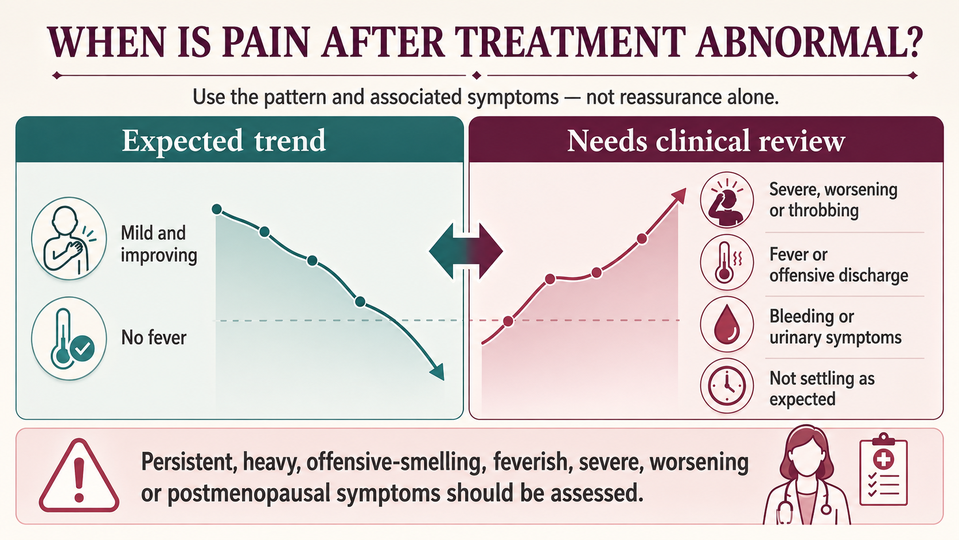
When is pain after treatment abnormal?
Some short-lived discharge, spotting or discomfort may happen after treatment, but the pattern matters more than reassurance alone.
Direct answer
Pain is abnormal when it is severe, worsening, throbbing, associated with fever, discharge, bleeding, urinary symptoms or does not settle as expected. The safest interpretation uses symptom trend, severity and red flags rather than reassurance alone.
A careful answer separates mild settling symptoms from offensive discharge, heavy bleeding, severe pain, fever or worsening symptoms.
Educational only. Suitability and next steps should be confirmed after consultation. Results vary. Not a cure.

Healing symptoms
At a glance
These are the main points to understand before deciding whether a symptom, product or activity is safe during recovery.
At a glance
Aftercare summary
Main area
Symptom pattern
Pattern
Mild versus worsening
Watch for
Persistent change
Next step
Track symptoms
Important safety note
Persistent, heavy, offensive-smelling, feverish, severe, worsening or postmenopausal symptoms should be assessed rather than treated as routine healing.
Bleeding
Pain
Pattern
Review
Detailed answer
The clinical answer
The answer starts by separating expected settling symptoms, red flags, clinic-specific aftercare, activity return, infection risk and delayed healing.
Expected symptoms
The reader wants to know what is normal after treatment, what should be avoided, when symptoms need review and how to return to normal activities without disrupting healing.
Healing
Aftercare
Review
Expected symptoms
Start with symptom severity and trend: mild and improving is different from severe, offensive, heavy, persistent or worsening.
Abnormal changes
Follow clinic aftercare because treatment type, tissue response and personal risk factors can change advice.
Bleeding and discharge
Avoid internal irritation, water exposure, friction, heat or heavy pressure while symptoms are active or uncertain.
Pain pattern
Seek review if symptoms do not follow the expected pattern or if red flags appear.
How the research shapes the answer
Variable Success Rates: Complete relief of chronic pain is rarely achieved [1]. For instance, DBS has an average long-term success rate of 63% for nociceptive pain but only 47% for deafferentation (nerve-type) pain [35]. Surgical Limitations: Microsurgery of the trigeminal nerve effectively.
The research synthesis shaped the structure, while final wording avoids resolved universal timelines, medication-stop advice, device hype, treatment ranking and overconfident healing claims.
Patient safety
Why this matters
Aftercare questions can sound small, but they affect comfort, infection risk, bleeding concerns, activity return and confidence during recovery.
It separates patterns
Mild settling symptoms differ from persistent, heavy, offensive or worsening symptoms.
It keeps bleeding safe
Postmenopausal, heavy or persistent bleeding deserves review.
It validates pain
Severe or worsening pain should not be dismissed.
It improves aftercare
Tracking change helps decide whether healing is on course.
Clear thresholds reduce worry
Good aftercare does not mean ignoring symptoms; it means knowing which changes are expected and which need help.
A careful plan protects healing while helping patients return to normal activities gradually.
Considerations
What to consider
Medication Management: Introducing new pain medications requires careful dosage titration, overlapping with old treatments to prevent pain flare-ups, and structured tapering when discontinuing [38]. Wound Care: Post-surgical wounds should be kept clean and dry, usually for 10-14 days until stitches are removed.
Aftercare priorities
Track pain, bleeding, discharge, smell, urinary symptoms, fever, activity triggers, internal product use, bowel strain and whether symptoms are improving.
Triggers
Clinic advice
Red flags
Track the trend
Improving symptoms are more reassuring than worsening symptoms.
Check smell and colour
Offensive smell or concerning discharge should be reviewed.
Watch bleeding
Persistent, heavy or postmenopausal bleeding needs assessment.
Review pain quality
Throbbing, severe or nerve-type pain needs advice.
What not to assume
Do not assume every symptom is normal, or that one resolved date applies to every activity and every patient.
Neuromodulation Trial Periods: Patients undergoing SCS or DBS typically undergo a temporary trial stimulation period lasting several days to a week. The system is only permanently internalized if the patient experiences satisfactory pain relief (often defined as >50% improvement on a Visual.
Common concerns and myths
Common misconceptions
These corrections keep aftercare practical, calm and safety-aware.
Myth: Any discharge is always infection
Reality: mild symptoms may settle, but severe, offensive, persistent or worsening symptoms need review.
Myth: Light spotting and heavy bleeding mean the same thing
Reality: mild symptoms may settle, but severe, offensive, persistent or worsening symptoms need review.
Myth: Pain pattern does not matter
Reality: mild symptoms may settle, but severe, offensive, persistent or worsening symptoms need review.
Symptoms have context
The same symptom can be more or less concerning depending on timing, severity, smell, bleeding, fever and whether it is improving.
Aftercare cannot force results
Healthy habits can support recovery, but they cannot promise collagen change, tightening or a specific outcome.
Safety checklist
Safety checklist
Use these checks before deciding whether to continue home care, pause an activity or seek advice.
Is the symptom worsening?
Worsening pain, bleeding, discharge, odour or urinary symptoms should be reviewed.
Is there fever or feeling unwell?
Fever, chills, feeling very unwell or offensive discharge can suggest infection.
Is there pressure or retention?
Urinary retention, faecal incontinence, new bulge or marked pelvic pressure needs advice.
Did activity trigger symptoms?
Bleeding, soreness or discharge after swimming, cycling, gym work or internal products should prompt a pause and review if persistent.
More reassuring signs
The situation is more reassuring when symptoms are mild, improving, not offensive-smelling, not heavy, and not associated with fever, urinary retention, severe pain or a new bulge.
Improving
No fever
Reasons to seek advice
Surgical Site Infections: Red flags include spreading redness, localised heat, increased swelling, separating wound edges, and purulent (yellow/brown) discharge [23, 24]. Signs of Sepsis: Immediate emergency medical attention (999/A&E) is required if the patient exhibits confusion, slurred speech, severe muscle pain, breathlessness.
Heavy bleeding
Retention
When to escalate
When to seek medical help
These symptoms should not be managed with general aftercare advice alone.
Use NHS 111 online
Infection symptoms
Fever, offensive discharge, pelvic pain, feeling very unwell or worsening soreness should be assessed.
Bleeding that needs review
Heavy, persistent, postmenopausal or worsening bleeding should be reviewed promptly.
Urinary, bowel or support symptoms
Urinary retention, faecal incontinence, a new bulge or marked pelvic pressure should be checked.
Emergency symptoms
Call 999 for life-threatening symptoms such as collapse, severe bleeding, chest pain, breathing difficulty or stroke-like symptoms.
Use NHS 111 for urgent advice or call 999 in a life-threatening emergency. This page is educational and does not replace individual medical assessment.
Additional clinical context
How to use this answer
Use this page to compare your symptoms with your clinic's aftercare instructions. The key question is whether symptoms are mild and improving, or persistent, severe, offensive, heavy, feverish or triggered by activity.What to bring to review
Helpful details include treatment date, symptoms, bleeding pattern, discharge, smell, urinary symptoms, fever, pain score, activities restarted, internal product use, constipation, coughing and whether symptoms are improving or worsening.Regulatory resources
Authoritative resources
These resources support careful explanation of discharge, bleeding, pain, mucosal healing and review thresholds after energy-based vaginal treatment.
Next step
Book a clinical consultation
A consultation can review discharge, bleeding, pain, urinary symptoms and whether healing is following the expected pattern.
▶ View Research Sources (12 Sources)
These 12 source names are selected from 12 display-ready sources, with a raw audit trail of 60 imported records. Additional reviewed material included UK clinical guidance, professional society guidance, peer-reviewed clinical papers; duplicate, low-relevance and non-clinical records were removed before display.
Educational only. This information is for education only and is not a substitute for professional medical advice, diagnosis or treatment. Results vary. Not a cure.

