


Can AI-guided treatment planning improve safety? | WHC Clinical FAQ
Customisation
Clinician oversight
No self-settings
Women’s Health Clinic FAQ
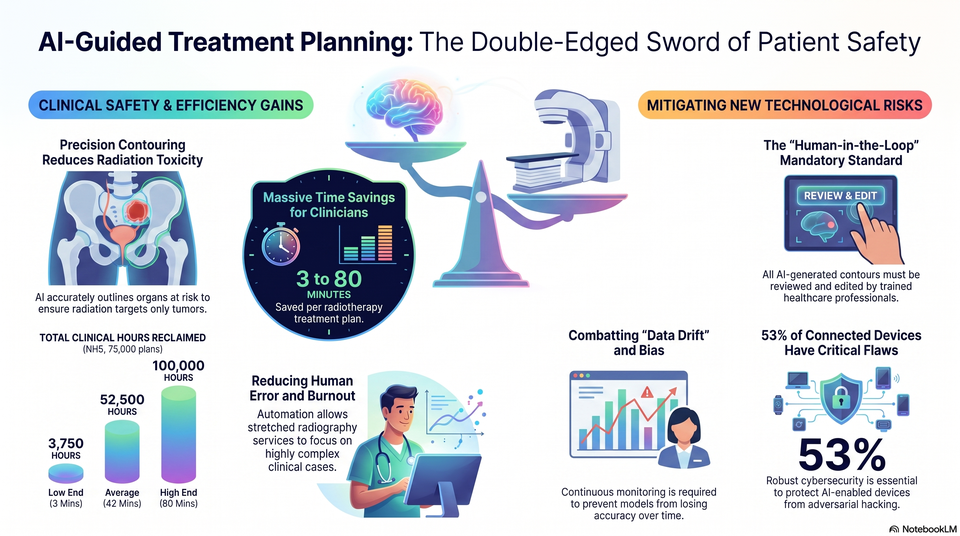
Can AI-guided treatment planning improve safety?
Customised or AI-supported treatment planning may sound precise, but patients should not be asked to choose technical settings themselves.
Direct answer
AI-guided planning may become useful for safety support, but emerging technology still needs evidence, governance, clinician oversight and clear consent. The safest interpretation keeps technical decisions under trained clinical oversight and clear consent.
A careful answer explains oversight, governance, anatomy, consent and uncertainty without giving operational device instructions.
Educational only. Suitability and next steps should be confirmed after consultation. Results vary. Not a cure.

Treatment planning
At a glance
These are the main points to understand before accepting a device, clinic, safety or comparison claim.
At a glance
Device-aware summary
Main area
Planning and customisation
Pattern
Oversight required
Watch for
Automation hype
Next step
Ask who controls the plan
Important safety note
AI or algorithmic support should not replace clinical assessment, consent, safety monitoring or review of unexpected symptoms.
AI
Oversight
Consent
Assessment
Detailed answer
Detailed answer
The deeper answer starts by separating device features, marketing claims, clinical governance, operator training, consent, safety and patient-relevant outcomes.
Customisation limits
The reader wants to know whether a device feature, brand, clinic setting or treatment comparison is medically meaningful, and how to separate genuine safety governance from marketing.
Safety
Evidence
Consent
Customisation limits
Start with the clinical question being asked, not the device feature being advertised.
Clinician oversight
Check whether the claim is supported by patient-relevant outcomes, safety reporting and follow-up.
AI governance
Ask how assessment, operator training, governance, infection control and aftercare are handled.
Consent
Compare alternatives by goal, evidence, risk, effort and suitability rather than convenience or brand language alone.
How the research shapes the answer
Vaginal Lasers: Despite patient reports of short-term relief, major professional bodies (e.g., RCOG, NICE) maintain that long-term safety and efficacy are unproven, and laser therapy should not be routinely offered outside of clinical trials [17, 18]. RF Ablation: A highly successful, definitive.
The research synthesis shaped the structure, while final wording avoids device hype, treatment ranking, legal advice, operational parameters and overconfident benefit claims.
Patient safety
Why this matters
Device features can sound reassuring or impressive, but patients need to know whether those features translate into safer, more appropriate care.
It protects patients from settings talk
Technical choices should sit with trained clinicians, not patients.
It keeps oversight clear
AI can support decisions only within governance and clinical review.
It exposes emerging uncertainty
New planning tools need evidence and monitoring.
It supports consent
Patients should know what is automated and what is clinician-led.
Governance protects choice
A cautious device discussion does not dismiss treatment; it helps match the option to the right clinical goal.
The strongest decision is one where benefits, limits, risks, alternatives, aftercare and escalation routes are all visible before treatment.
Considerations
What to consider
Vaginal Lasers: Performed in an outpatient clinical setting using specific straight and 360-degree vaginal probes to irradiate the vaginal wall and vulvar vestibule [5, 21]. RF Ablation: The NovaSure system mandates a Cavity Integrity Assessment (CIA) prior to activation; this automated test.
Consultation priorities
Bring your symptoms, childbirth and menopause history, pelvic-floor symptoms, pain, urinary or bowel symptoms, previous treatments, goals and questions about device governance.
Governance
Safety
Alternatives
Ask who supervises
Clarify who approves and monitors the plan.
Ask what data is used
Understand whether planning is based on assessment, symptoms or device readings.
Ask about limits
No planning tool can promise a result.
Ask about escalation
Know what happens if symptoms worsen.
What not to assume
Do not assume newer, faster, stronger, branded or automated treatment is automatically safer or better.
Transvaginal Lasers: Treatment typically involves 3 sessions spaced 4 to 6 weeks apart [5]. Symptom relief is observed in the short-term, but clinical benefits frequently diminish by 12 to 24 months, suggesting maintenance sessions may be required [9, 10]. RF Endometrial Ablation.
Common concerns and myths
Common misconceptions
These corrections keep the answer clinically cautious and useful rather than device-led.
Myth: Customisation means patients should choose settings
Reality: planning tools require clinician oversight and should not turn patients into device operators.
Myth: AI removes the need for clinician oversight
Reality: planning tools require clinician oversight and should not turn patients into device operators.
Myth: Automation proves safety
Reality: planning tools require clinician oversight and should not turn patients into device operators.
Features are not outcomes
A device feature can support treatment delivery, but patient benefit still depends on assessment, suitability, evidence and follow-up.
Uncertainty should be visible
Clear uncertainty helps patients compare device treatment, pelvic-health care, conservative options and referral pathways fairly.
Safety checklist
Safety checklist
Use these checks before accepting a device claim or deciding whether symptoms can wait for routine review.
Is the clinical goal clear?
Know whether the aim is comfort, support, friction, confidence, urinary symptoms, pain relief or another outcome.
Is governance clear?
Ask about device status, intended use, training, maintenance, infection control, aftercare and escalation routes.
Were alternatives discussed?
Pelvic-health assessment, symptom treatment, conservative care and procedural options may have different roles.
Are red flags present?
Bleeding, severe pain, fever, discharge, urinary retention, faecal incontinence or a new bulge should change the pathway.
More reassuring signs
The situation is more reassuring when symptoms are stable, there are no red flags, goals are realistic, governance is clear and follow-up is planned.
Governed
Reviewed
Reasons to seek advice
AI or algorithmic support should not replace clinical assessment, consent, safety monitoring or review of unexpected symptoms.
Pain
Discharge
When to escalate
When to seek medical help
These symptoms should not be managed with general device or vaginal-tightening advice alone.
Use NHS 111 online
Bleeding that needs review
Postmenopausal bleeding, bleeding after sex or unexplained bleeding should be assessed promptly.
Severe or worsening pain
Severe pelvic, vulval or vaginal pain, rapidly worsening symptoms or pain after treatment needs medical advice.
Infection or support symptoms
Fever, offensive discharge, urinary retention, faecal incontinence, a new bulge or marked pelvic pressure should be checked.
Emergency symptoms
Call 999 for life-threatening symptoms such as collapse, severe bleeding, chest pain, breathing difficulty or stroke-like symptoms.
Use NHS 111 for urgent advice or call 999 in a life-threatening emergency. This page is educational and does not replace individual medical assessment.
Additional clinical context
How to use this answer
Use this page to prepare a focused discussion about device claims, safety controls, governance, treatment goals and alternatives. The aim is to ask whether the feature being promoted is relevant to your symptoms and supported by patient-relevant evidence.What to bring to consultation
Helpful details include childbirth history, menopause status, urinary or bowel symptoms, prolapse sensations, pain, dryness, previous procedures, infection concerns, what changed over time and what improvement would feel meaningful enough to justify treatment.Regulatory resources
Authoritative resources
These resources support discussion of consent, AI medical-device governance, digital evidence standards and safe clinical oversight.
Next step
Book a clinical consultation
A consultation can explain how treatment planning is supervised, what the technology can and cannot decide, and how safety is handled.
▶ View Research Sources (12 Sources)
These 12 source names are selected from 12 display-ready sources, with a raw audit trail of 64 imported records. Additional reviewed material included UK clinical guidance, professional society guidance, peer-reviewed clinical papers, evidence reviews; duplicate, low-relevance and non-clinical records were removed before display.
Educational only. This information is for education only and is not a substitute for professional medical advice, diagnosis or treatment. Results vary. Not a cure.
