

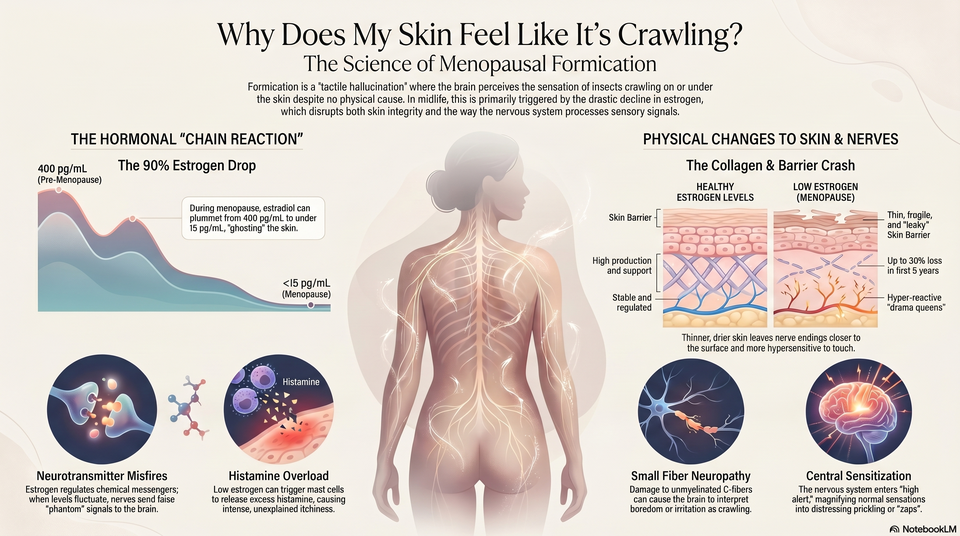


What causes the sensation of insects crawling under my skin (formication)?

What causes the sensation of insects crawling under my skin (formication)? | WHC Clinical FAQ
Nerve symptoms
Red flags
Pattern matters
Women’s Health Clinic FAQ
What causes the sensation of insects crawling under my skin (formication)?
Symptoms such as migraine change, dizziness, tinnitus or crawling skin sensations can be frightening because they overlap with neurological, ear, vascular and stress-related causes.
Direct answer
Formication is a crawling or prickling skin sensation. It can be reported during perimenopause or menopause, possibly through hormone-related effects on skin sensitivity and nerves, but medicines, anxiety, thyroid disease, neuropathy and skin conditions should be considered. The safest interpretation depends on timing, severity, associated symptoms, medicines, medical history and whether the pattern is new, persistent or one-sided. Seek review if symptoms are severe, unusual, rapidly worsening or difficult to explain.
A useful answer validates the symptom while making clear that sudden, severe, one-sided or neurological features need proper assessment.
Educational only. Suitability and next steps should be confirmed after consultation. Results vary. Not a cure.

Nerve and sensory
At a glance
These are the main points to understand before deciding whether symptoms are expected, need routine review or should be assessed promptly.
At a glance
Practical clinical summary
Main area
Nervous system
Pattern
Sensory change
Watch for
Sudden severe symptoms
Next step
Triage if needed
Important safety note
Sudden severe headache, weakness, speech change, fainting, chest pain, new one-sided hearing loss, severe dizziness or stroke-like symptoms need urgent medical advice.
Symptoms
Mechanism
Review
Safety
Detailed answer
Detailed answer
The key is to connect the symptom to the most likely body system, then check whether another cause needs assessment before calling it menopause.
What formication means
The reader wants validation for a strange sensory symptom without being made to feel dismissed.
Pattern
Assessment
Support
What formication means
Hormone fluctuation, sleep loss, migraine biology and stress load may affect sensory thresholds.
Nerves and skin sensitivity
Dizziness, tinnitus, migraine change and crawling skin sensations can also reflect ear, neurological, vascular, thyroid or medicine-related causes.
Hormone fluctuation
Timing, one-sided symptoms, severity, hearing change, headache features and neurological signs change the safest advice.
Other causes to rule out
Sudden neurological or severe symptoms need urgent care rather than menopause reassurance.
How the research shapes the answer
The research supports a balanced approach: menopause may contribute to this symptom pattern, but the final page should still explain alternative causes and red flags.
The benchmark guides structure and search intent; final wording stays cautious, UK-facing and specific to this symptom pattern.
Patient safety
Why this matters
These symptoms deserve a careful explanation because they can be menopause-related, but they can also point to other medical, sensory or systemic causes.
Nerves can become more reactive
Hormone fluctuation, sleep loss, migraine biology and stress load may affect sensory thresholds.
Not every symptom is hormonal
Dizziness, tinnitus, migraine change and crawling skin sensations can also reflect ear, neurological, vascular, thyroid or medicine-related causes.
Pattern helps triage
Timing, one-sided symptoms, severity, hearing change, headache features and neurological signs change the safest advice.
Urgent symptoms matter
Sudden neurological or severe symptoms need urgent care rather than menopause reassurance.
A proportionate answer
The aim is not to make every midlife symptom alarming, but to avoid dismissing symptoms that are persistent, severe or unusual.
A clear pattern, associated symptoms and medical history usually matter more than one symptom label on its own.
Considerations
What to consider
A useful consultation starts with the symptom pattern, timing, severity, medical history and whether there are features that need GP, specialist or urgent review.
Consultation priorities
Bring the timing, triggers, associated symptoms, medicines, cycle pattern if relevant and any red flags, so the discussion stays cause-led.
Pattern
Options
Follow-up
Describe the episode
Record duration, triggers, hearing change, headache features, balance symptoms, visual symptoms and whether it is one-sided.
Review medicines and history
Migraine history, blood pressure, thyroid disease, anxiety, sleep and medicines may all change interpretation.
Seek urgent help if severe
Sudden severe headache, weakness, speech change, collapse or chest pain needs urgent advice.
Plan follow-up
Persistent tinnitus, dizziness or sensory symptoms should be reviewed if they do not settle.
What not to assume
Do not assume the symptom is either definitely menopause or definitely unrelated to hormones without looking at the wider pattern.
Timelines vary: some symptoms fluctuate with hormone changes, while persistent or worsening symptoms may need examination, testing or referral.
Common concerns and myths
Common misconceptions
Online menopause advice can be either dismissive or overconfident. These corrections keep the answer balanced.
Myth: Formication means you are imagining it
Reality: menopause may contribute to symptom thresholds, but sudden, severe or one-sided neurological symptoms need assessment.
Myth: Every crawling sensation is menopause
Reality: menopause may contribute to symptom thresholds, but sudden, severe or one-sided neurological symptoms need assessment.
Myth: There is never a medical cause
Reality: menopause may contribute to symptom thresholds, but sudden, severe or one-sided neurological symptoms need assessment.
Common does not mean automatic
Menopause can change symptom thresholds, but the safest interpretation still depends on pattern, severity and associated features.
Self-care has limits
Self-care may help mild symptoms, but persistent, sudden, severe or one-sided symptoms should be discussed with a clinician.
Safety checklist
Safety checklist
Use these checks to decide whether the symptom can be discussed routinely or needs more prompt advice.
Is this new or changing?
New, rapidly worsening, one-sided or severe symptoms need more caution than a mild pattern already reviewed.
Are there red flags?
Pain, bleeding, neurological symptoms, chest symptoms, breathing difficulty, vision change or suspicious breast changes alter the urgency.
Could another cause fit?
Medicines, thyroid disease, diabetes, allergy, infection, migraine, ear disease, dental problems and skin disease can overlap with menopause symptoms.
Is daily life affected?
Symptoms that affect sleep, work, eating, sight, hearing, confidence, movement or relationships deserve a proper discussion.
More reassuring signs
Symptoms are more reassuring when they are mild, fluctuating, improving, already assessed and not linked with red-flag features.
Improving
Reviewed
Reasons to seek advice
Sudden severe headache, weakness, speech change, fainting, chest pain, new one-sided hearing loss, severe dizziness or stroke-like symptoms need urgent medical advice.
Severe
One-sided
When to escalate
When to seek medical help
Some symptoms should not be attributed to menopause without assessment.
Use NHS 111 online
Stroke-like symptoms
Face drooping, arm weakness, speech problems, sudden confusion or one-sided weakness need emergency help.
Severe headache
A sudden worst-ever headache, headache with fever, neurological symptoms or new severe pattern needs urgent assessment.
Balance or hearing red flags
Sudden hearing loss, severe vertigo, fainting or persistent one-sided tinnitus should be assessed promptly.
Chest or collapse symptoms
Chest pain, severe breathlessness, collapse or a sustained racing heartbeat needs urgent medical advice.
Use NHS 111 for urgent advice or call 999 in a life-threatening emergency. This page is educational and does not replace individual medical assessment.
Additional clinical context
How to use this answer
Use the page to understand how menopause may fit the symptom pattern, then bring the specific timing, triggers and associated features to a clinician if the symptom is persistent or worrying.What to discuss at appointment
Useful details include age, cycle pattern if relevant, medicines, medical history, symptom onset, whether symptoms are one-sided, and whether there are red-flag features such as severe pain, neurological symptoms, suspicious breast change or breathing difficulty.Regulatory resources
Authoritative resources
These resources support balanced information on menopause, migraine, dizziness, tinnitus and sensory symptom triage.
Next step
Book a clinical consultation
A consultation can review symptom timing, neurological features, hearing or balance symptoms, migraine history, medicines and whether urgent or routine assessment is appropriate.
▶ View Research Sources (12 Sources)
These 12 source names are selected from 12 display-ready sources, with a raw audit trail of 64 imported records. Additional reviewed material included UK clinical guidance, professional society guidance, peer-reviewed clinical papers; duplicate, low-relevance and non-clinical records were removed before display.
Educational only. This information is for education only and is not a substitute for professional medical advice, diagnosis or treatment. Results vary. Not a cure.
