

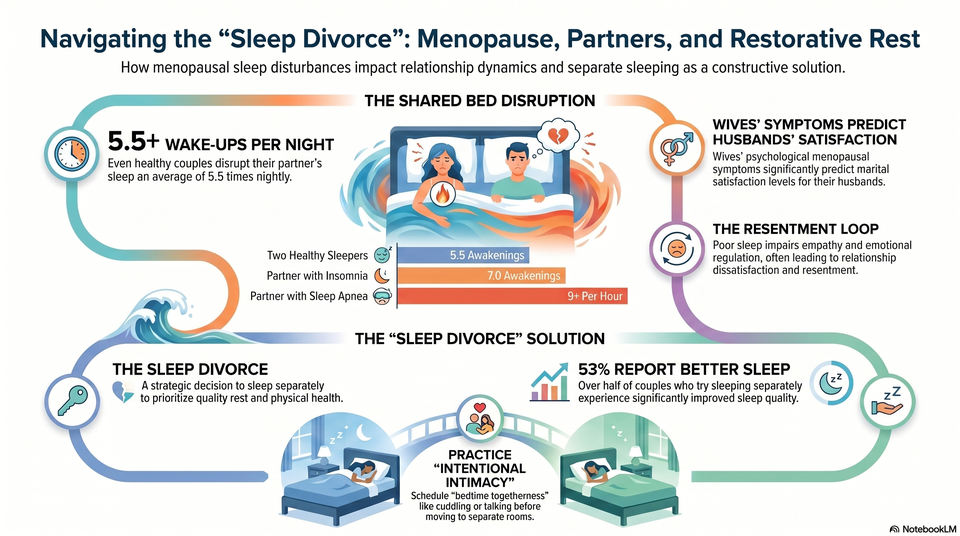


How does menopausal sleep disruption impact partners and sleeping arrangements?

How does menopausal sleep disruption impact partners and sleeping arrangeme... | WHC Clinical FAQ

What lifestyle adjustments can I make to improve sleep hygiene and combat menopausal insomnia?
Sleep
Partner impact
Practical choices
Women’s Health Clinic FAQ
How does menopausal sleep disruption impact partners and sleeping arrangements?
Menopause-related sleep disruption can affect both partners, especially when night sweats, restlessness, temperature conflict or fatigue become frequent.
Direct answer
Menopausal sleep disruption can affect partners through interrupted sleep, temperature conflict, night sweats, restlessness, snoring, fatigue and reduced intimacy. Separate bedding or occasional separate sleeping can be a practical health choice rather than a relationship failure if the couple discusses it kindly. The goal is to protect sleep and connection together, not to blame either partner for symptoms or coping choices.
A useful answer normalises practical sleep arrangements without making separate beds or bedding choices feel like relationship failure.
Educational only. Suitability and next steps should be confirmed after consultation. Results vary. Not a cure.

Sleep and relationships
At a glance
These are the main points to understand before deciding what support, conversation, assessment or adjustment may help.
At a glance
Practical clinical summary
Main area
Sleep and partner
Pattern
Interrupted nights
Watch for
Severe insomnia
Next step
Shared plan
Important safety note
Persistent insomnia, drenching sweats, severe fatigue or mood deterioration should be assessed rather than treated only as a relationship issue.
Context
Support
Boundaries
Review
Detailed answer
Detailed answer
The deeper answer starts by matching the symptom to the real-life setting, because work, relationships and intimacy are affected by both biology and context.
Night sweats and waking
The reader wants reassurance and practical relationship language around sleep disruption and bed arrangements.
Practical steps
Communication
Safety
Night sweats and waking
Start by naming the specific symptom or situation, because fatigue, pain, low desire, brain fog and conflict need different support.
Partner fatigue
Look at the setting around the symptom, including work demands, sleep, relationship safety, products, medicines and emotional pressure.
Separate sleeping without shame
The most useful plan is practical and proportionate, with clear language for what can be tried and when review is needed.
Temperature and bedding
Follow-up matters when symptoms persist, affect safety, confidence, sex, sleep, performance or emotional closeness.
How the research shapes the answer
The research supports framing sleep disruption as a shared health issue that can affect both partners' mood, communication and intimacy.
The benchmark shaped the search intent and structure, but final wording avoids legal overclaiming, product promotion, blame and pressure-based intimacy advice.
Patient safety
Why this matters
Menopause can affect work, sleep, confidence, body image, desire, communication and sexual comfort, but the impact is easier to manage when it is named clearly.
Sleep disruption is shared
Night sweats, restlessness and temperature conflict can affect both partners' recovery and patience.
Practical changes are not rejection
Separate duvets, cooling strategies or occasional separate sleep can protect rest and closeness.
Fatigue changes communication
Poor sleep can increase irritability, anxiety, low mood and conflict.
Other causes can overlap
Insomnia, sleep apnoea, pain, medicines, alcohol and stress may also need review.
Practical, not blaming
A good answer should make the next conversation easier, whether that conversation is with a manager, partner, clinician or therapist.
It should also protect privacy, consent and safety rather than pushing disclosure, endurance or quick resolves.
Considerations
What to consider
A consultation or couple conversation should review night sweats, insomnia, temperature conflict, partner sleep, mood and practical sleeping arrangements.
Conversation priorities
Useful details include symptom timing, what has changed, what makes it worse, what has already been tried and what support would feel realistic.
Pacing
Options
Follow-up
Agree sleep experiments
Try cooling, bedding changes, fans, separate duvets or planned separate nights without treating them as a relationship verdict.
Protect affection
If sleep arrangements change, keep deliberate moments for warmth, touch or conversation.
Review night sweats
Drenching sweats with illness, weight loss or fever should not be assumed to be menopause.
Discuss resentment early
Partner fatigue and frustration are easier to manage before they become blame.
What not to assume
Do not assume the person is less capable, less interested, less loving or simply being difficult.
Sleep strategies often need trial and review, especially if night sweats, insomnia or partner fatigue are persistent.
Common concerns and myths
Common misconceptions
Menopause advice can become dismissive, overly legalistic or too product-focused. These corrections keep the answer balanced.
Myth: Separate beds mean relationship breakdown
Reality: practical sleeping arrangements can protect rest and closeness when they are discussed respectfully.
Myth: Partners should simply tolerate poor sleep
Reality: practical sleeping arrangements can protect rest and closeness when they are discussed respectfully.
Myth: Night sweats are always menopause
Reality: the right support depends on symptoms, context, safety, preferences and the person affected.
Context changes the answer
The same symptom can need a workplace adjustment, relationship conversation, clinical review or specialist therapy depending on context.
Support should reduce pressure
The aim is safer communication and better care, not forced disclosure, endurance or blame.
Safety checklist
Safety checklist
Use these checks to decide whether self-management is enough or whether support should be escalated.
Is there pain, bleeding or danger?
Painful sex, postmenopausal bleeding, severe pain, coercion, unsafe work or crisis symptoms should not be minimised.
Is privacy protected?
At work and in relationships, support should not require more disclosure than the person feels safe sharing.
Is the plan realistic?
Adjustments, intimacy changes or sleep arrangements work best when they are specific, agreed and reviewed.
Is specialist support needed?
Occupational health, counselling, psychosexual therapy, pelvic-health physiotherapy or menopause care may be useful.
More reassuring signs
The situation is more reassuring when symptoms are stable, boundaries are respected, support is agreed and there are no red flags.
Respectful
Reviewed
Reasons to seek advice
Persistent insomnia, drenching sweats, severe fatigue or mood deterioration should be assessed rather than treated only as a relationship issue.
Bleeding
Safety
When to escalate
When to seek medical help
These symptoms or situations should not be managed with general menopause advice alone.
Use NHS 111 online
Drenching sweats with illness
Night sweats with fever, weight loss, chest symptoms or feeling unwell should be assessed.
Severe insomnia
Persistent insomnia with daytime impairment, low mood or anxiety should be discussed clinically.
Mood crisis
Suicidal thoughts, feeling unsafe or severe depression needs urgent support.
Breathing symptoms at night
Loud snoring, witnessed pauses or severe daytime sleepiness should be reviewed.
Use NHS 111 for urgent advice or call 999 in a life-threatening emergency. This page is educational and does not replace individual medical assessment.
Additional clinical context
How to use this answer
Use this page to identify what needs a practical change, what needs a better conversation and what needs clinical or specialist review.What to bring to a conversation
Helpful details include symptom timing, work or relationship impact, sleep, pain, bleeding, products tried, medicines, mood changes, boundaries and the specific support that would feel useful.Regulatory resources
Authoritative resources
These resources support UK-facing information on menopause sleep symptoms, insomnia and relationship support.
Next step
Book a clinical consultation
A consultation can review night sweats, insomnia, mood, fatigue, medicines and whether menopause care or sleep support may help.
▶ View Research Sources (12 Sources)
These 12 source names are selected from 12 display-ready sources, with a raw audit trail of 36 imported records. Additional reviewed material included UK clinical guidance, professional society guidance, peer-reviewed clinical papers; duplicate, low-relevance and non-clinical records were removed before display.
Educational only. This information is for education only and is not a substitute for professional medical advice, diagnosis or treatment. Results vary. Not a cure.

