
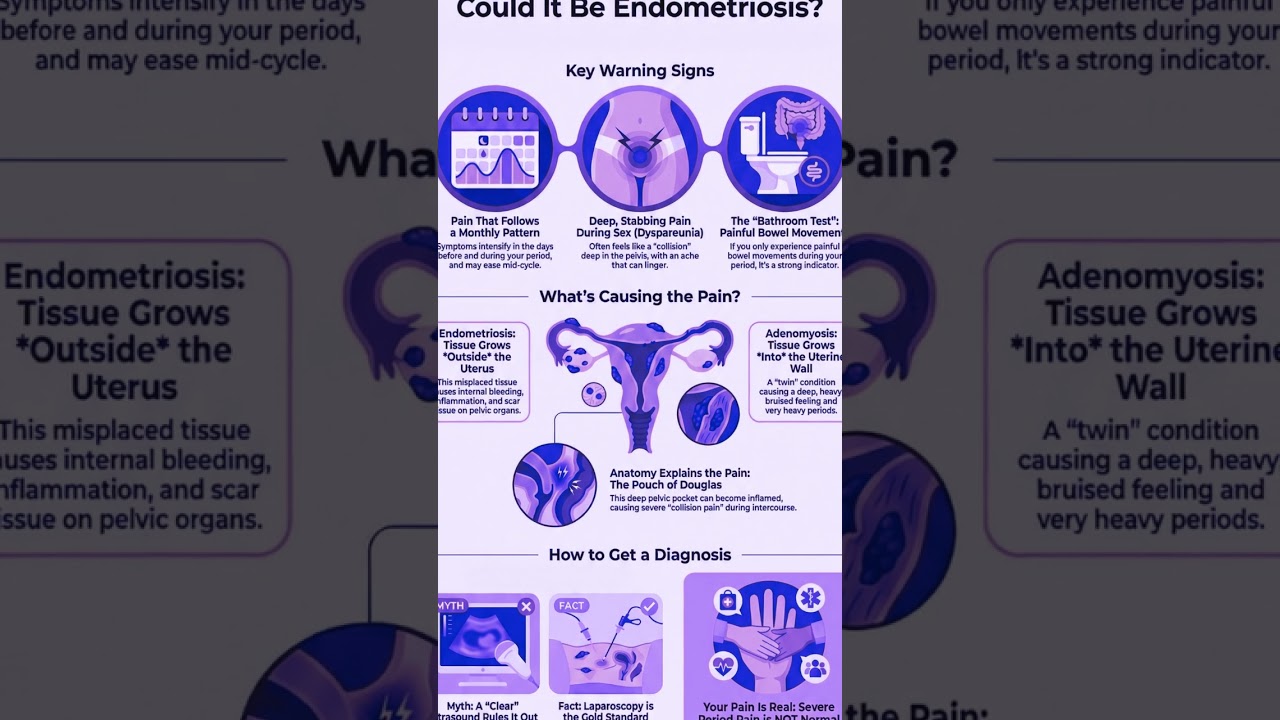
DEEP PAIN During Periods? Endometriosis, Adenomyosis, & Dyspareunia Explained by a MD
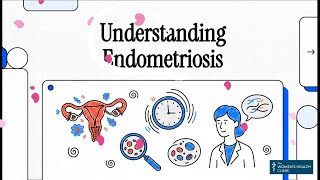
DEEP PAIN During Periods? Endometriosis, Adenomyosis, & Dyspareunia Explained by a MD.
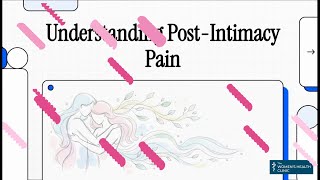
Pain After Sex, Not During? 🤯 Causes: Endometriosis, Cysts, Muscle Spasm Explained
WHC diagnostic authority editorial
When Period Pain Is Not “Normal”: Endometriosis, Adenomyosis and the Cost of Waiting
How to recognise when pain deserves investigation—and what current evidence says about imaging, treatment and fertility.
The useful question is not whether periods can hurt. It is why pain is severe enough to take someone out of ordinary life.
Key takeaways
- Period pain is common, but pain that repeatedly removes someone from school, work, sleep, exercise, sex or ordinary activity deserves assessment.
- Endometriosis and adenomyosis can cause painful periods, but they are different conditions and neither can be diagnosed from symptoms alone.
- Bowel, bladder and deep sexual pain can be relevant, especially when cyclical, while similar symptoms also have other possible causes.
- NICE recommends transvaginal ultrasound for adults with suspected endometriosis, even when examination is normal, but normal imaging does not exclude the condition.
- Investigation, referral and initial pain or hormonal treatment can proceed in parallel; laparoscopy is an option in selected cases, not a mandatory first step.
- Treatment should reflect symptoms, preferences, contraception and fertility priorities. Hormonal treatment is legitimate treatment, and surgery cannot guarantee permanent elimination of disease or pain.
- Sudden severe pelvic pain, possible ectopic pregnancy, ovarian torsion, acute infection or heavy acute bleeding require urgent assessment rather than a routine endometriosis pathway.

Pain should not have to become unbearable before it becomes believable.
Chapter 1 — When pain changes the question
When does period pain stop being “normal”?
A period can hurt. The womb contracts, inflammatory mediators rise and many people experience cramps for a limited time. The more useful threshold is not whether pain exists, but whether it is severe, persistent, changing, resistant to appropriate first-line measures or repeatedly disruptive to ordinary life.
There is no universal pain score that separates common cramps from disease. One person’s number seven is another person’s four, and pain intensity does not identify the cause. Ask instead what the pain stops: attendance, sleep, movement, eating, concentration, relationships or the ability to care for yourself.
Pain that is worsening, starts after years of manageable periods, occurs outside menstruation or travels with heavy bleeding, deep sexual pain or cyclical bowel or bladder symptoms deserves a fuller history. That is a reason to investigate, not proof of endometriosis or adenomyosis.
The everyday-life test
Missing school or work every month is clinically meaningful. So are vomiting, fainting, repeated urgent-care visits, cancelling plans, being unable to exercise or needing to organise the month around bed rest and a hot-water bottle. Common symptoms can still create unacceptable disability.
Function also helps when someone has learnt to minimise pain. “I cope” may mean working while nauseated, taking repeated medication or recovering for days afterwards. A high pain tolerance is not a diagnostic test and should never become the price of being believed.
The everyday-life test is not a self-diagnosis checklist. Fibroids, pelvic inflammatory disease, ovarian conditions, gastrointestinal or urinary disease, pregnancy-related problems and primary dysmenorrhoea can overlap. Its purpose is to make the impact visible enough to ask why.
Your period can hurt. It should not routinely take you out of your life.
Primary dysmenorrhoea is real pain too
Primary dysmenorrhoea means painful periods without an identified pelvic disorder. It commonly begins after periods have become ovulatory and often produces cramping around the start of bleeding. The absence of secondary disease does not make the pain imaginary or undeserving of treatment.
A pattern that has always been similar, responds to appropriate anti-inflammatory pain relief or hormonal suppression and does not carry concerning associated symptoms may fit primary dysmenorrhoea. Even then, persistent functional impairment warrants review of whether treatment is effective and acceptable.
The distinction can change over time. New heavy bleeding, pain between periods, deep pain during sex, cyclical bowel or urinary symptoms, infertility concerns or a marked escalation should prompt reconsideration rather than indefinite renewal of the original label.
Severe pain in adolescence must not be normalised
Endometriosis can affect teenagers from the time periods begin. Repeated school absence, vomiting, fainting, inability to join sport or severe pain despite appropriate first-line care should not be dismissed as immaturity, anxiety or something that must be endured until adulthood.
Assessment should remain age-appropriate and consent-led. NICE recommends referral of people aged 17 and under with suspected or confirmed endometriosis to a paediatric and adolescent gynaecology service or specialist endometriosis service. Internal examination or transvaginal scanning may be unsuitable or declined, and alternatives should be discussed.
Early attention does not mean forcing a diagnosis or surgery. It means documenting the pattern, offering treatment, checking alternatives and ensuring that education and wellbeing are not repeatedly sacrificed while symptoms continue without a plan.
Why an explanation can take years
Diagnostic delay rarely has one cause. Period pain is common, symptoms vary, and bowel, bladder or sexual symptoms may be discussed in different services. Stigma can make the history incomplete, while temporary symptom improvement may reduce urgency without resolving the underlying question.
Disease extent and pain severity do not correlate neatly. Superficial endometriosis may not appear on imaging, deep disease detection depends on technique and expertise, and a normal examination is possible. These limits can create false reassurance when the clinical pattern remains concerning.
The clearest cost of waiting is not a claim that every delay causes progression. It is years lived with unmanaged pain, lost education or work, relationship strain, repeated urgent care and uncertainty. The 2024 NICE update seeks earlier ultrasound, parallel treatment and clearer referral pathways.
Continuity can help because the evidence is longitudinal. A single appointment may capture a quiet week, a temporary response to treatment or one symptom domain. Reviewing the same pattern over several cycles can reveal the cumulative impact and whether the planned next step actually happened.
Chapter 2 — Two conditions, overlapping symptoms
What endometriosis actually is
Endometriosis is a chronic condition in which tissue similar to the lining of the womb is found elsewhere, most often in the pelvis. It may affect the peritoneum, ovaries and tissues around the uterus, while deep disease can involve structures around the bowel, bladder or ureter.
It is inaccurate to describe the condition simply as menstrual blood or the womb lining “escaping”. The tissue is endometrial-like, the biology is complex and the exact cause remains uncertain. Inflammation and altered immune activity are involved, but endometriosis is not formally established as a single autoimmune disease.
Some people have extensive visible disease with few symptoms; others have severe pain with limited visible disease. Location, adhesions, nerve involvement, pelvic-floor response and pain processing can all matter. Symptoms and priorities, not stage alone, should guide care.
Adenomyosis is a different condition
Adenomyosis involves endometrial-type glands and supporting tissue within the muscle of the uterus. It can make the uterus bulky or tender and may be associated with heavy bleeding, painful periods, pelvic pressure, bloating or pain during sex. Some people have no symptoms.
It is sometimes described as “endometriosis inside the womb muscle”, but that shortcut hides important differences in location, imaging and treatment. Adenomyosis is uterine; endometriosis is found outside the uterus. A person can have either condition, both conditions or neither.
Heavy and painful periods are not specific to adenomyosis. Fibroids, bleeding disorders, endometrial pathology and other causes require consideration. NICE recommends history focused on bleeding, related symptoms and quality of life rather than assuming one diagnosis from flow alone.
Endometriosis and adenomyosis: overlap without equivalence
Both conditions may involve painful periods, pelvic pain and pain during sex. Heavy bleeding is often prominent in adenomyosis, whereas cyclical bowel or bladder symptoms can raise suspicion of endometriosis in the relevant clinical context. These are tendencies, not diagnostic rules.
Endometriosis may be superficial, ovarian or deep and can involve sites beyond the uterus. Adenomyosis sits within the uterine muscle. Specialist ultrasound or MRI may map deep endometriosis; transvaginal ultrasound is preferred by NICE when heavy bleeding and significant dysmenorrhoea suggest adenomyosis.
Treatment principles overlap—pain relief and hormonal options may help both—but surgery differs. Endometriosis surgery targets lesions, endometriomas or adhesions. Hysterectomy removes the uterus and can definitively treat uterine adenomyosis in selected people, but it does not guarantee removal of endometriosis elsewhere.
Endometriosis and adenomyosis at a glance
Endometriosis
Endometrial-like tissue outside the uterus. It may be superficial, ovarian or deep and can involve structures around the bowel, bladder or ureter.
Normal imaging does not exclude all disease. Treatment may be medical, surgical or combined.
Adenomyosis
Endometrial-type tissue within the uterine muscle. Heavy painful periods, pressure and uterine tenderness may feature.
Transvaginal ultrasound is usually the preferred initial imaging when suspected with heavy bleeding.
Symptoms overlap. Neither condition can be diagnosed from this comparison alone.
Five symptom domains that build a pattern
A useful history covers period pain and bleeding, non-menstrual pelvic pain, bowel symptoms, urinary symptoms, and pain during or after sex. Fertility concerns add another dimension. The timing, persistence and effect on life are more informative than counting how many boxes are ticked.
NICE advises suspecting endometriosis with chronic pelvic pain; period-related pain affecting activities and quality of life; deep sexual pain; cyclical gastrointestinal or urinary symptoms; or infertility together with one or more of these features. Fatigue may accompany the picture but is non-specific.
Clustering matters, especially when symptoms worsen predictably around menstruation. Yet a cluster still does not establish the diagnosis. Irritable bowel syndrome, infection, bladder pain, pelvic-floor dysfunction, fibroids and other pelvic conditions can coexist or produce similar experiences.
Five domains that make the pattern clearer
Period
Pain, bleeding and change over time.
Bowel
Cyclical pain, pressure or bleeding.
Bladder
Cyclical urinary pain or blood.
Sex
Deep pain during or afterwards.
Fertility
Trying, priorities and ovarian factors.
A symptom map supports assessment; it does not award a diagnosis.
When bowel symptoms follow the cycle
Pain opening the bowels during periods, cyclical rectal pressure, constipation, diarrhoea or bloating may be relevant to endometriosis. Rectal bleeding around menstruation also warrants assessment. Deep disease can involve the bowel, but bowel symptoms do not show where disease is located.
Irritable bowel syndrome is common and can worsen around periods. That does not mean all IBS is missed endometriosis, nor that a previous IBS diagnosis should end the gynaecological history. The question is whether symptoms are cyclical, progressive, associated with pelvic pain or otherwise atypical.
Persistent rectal bleeding, weight loss, altered bowel habit or acute abdominal symptoms require appropriate gastrointestinal or urgent evaluation. A menstrual association can guide questions, but it must not become a reason to ignore non-gynaecological causes.
Bladder symptoms also need their own assessment
Cyclical pain passing urine, bladder-area pain or visible blood in urine around periods can occur with endometriosis, particularly when deep disease affects urinary structures. These symptoms are uncommon enough to deserve careful investigation rather than casual reassurance.
Urinary tract infection, stones, bladder pain syndrome and kidney or other urinary conditions can produce overlapping symptoms. Testing and referral should follow the presentation. Recurrent urinary pain should not be labelled endometriosis without evaluating common and important alternatives.
Suspected deep endometriosis involving the bladder or ureter belongs in a specialist service. Imaging should be planned and interpreted by professionals with gynaecological imaging expertise, and management may require collaboration across specialties.
Pain during or after sex is a symptom, not a diagnosis
Deep pain with penetration or pain that persists afterwards may occur with endometriosis or adenomyosis. It can affect intimacy, relationships and wellbeing, and deserves direct, respectful questions rather than being treated as an embarrassing side note.
Pelvic-floor guarding, vulval or vaginal conditions, infection, dryness, trauma-related responses and other pelvic pathology can also contribute. Several mechanisms may coexist, particularly after months or years of anticipating pain.
Assessment must be consent-led. A person can decline or stop an internal examination at any time, and alternatives can be discussed. Pain should never be framed as something to push through for the sake of completing an examination or preserving sexual activity.
Pain severity is not a disease stage
Staging systems describe visible disease distribution and anatomy; they are not pain scores. Severe pain can occur with limited visible disease, while extensive endometriosis may be found in someone with milder symptoms or during fertility investigation.
This mismatch does not mean symptoms are exaggerated. Pain can reflect lesion location, inflammation, adhesions, organ movement, nerve sensitivity, muscle guarding and central sensitisation. The same stage may therefore affect two people very differently.
NICE advises offering treatment according to symptoms, preferences and priorities rather than stage. A stage label should not override daily impact, fertility plans or the need to look for other pain generators.
Chapter 3 — Assessment and imaging
The history should connect symptoms across the month
A good history maps when pain begins, where it is felt, how long it lasts and whether it occurs outside bleeding. It asks about flow, clots, bowel and urinary symptoms, sex, contraception, pregnancy possibility, fertility goals, medicines, previous treatment and family history.
Impact belongs beside symptom description: school or work absence, sleep loss, exercise, eating, caring responsibilities, urgent-care visits and recovery time. Treatment response matters too, but partial relief does not confirm or exclude a particular diagnosis.
The history should also test alternatives. Sudden pain, fever, discharge, pregnancy risk, weight loss, persistent bleeding between periods and non-cyclical bowel or urinary change may require different or additional pathways.
Examination can help without settling the diagnosis
In adults with suspected endometriosis, NICE recommends abdominal and pelvic examination where appropriate. Findings may include tenderness, a mass, reduced organ mobility or pelvic signs suggesting deep disease. A bulky tender uterus may support suspicion of adenomyosis.
A normal examination does not rule out endometriosis. Superficial disease may be invisible and not palpable, while pain and anatomy vary. Examination findings should guide imaging and referral, not become a credibility test.
Consent, comfort and context matter. Internal examination may be declined, unsuitable or particularly difficult after trauma or with severe pain. The clinician should explain the purpose, offer a chaperone, discuss alternatives and stop whenever requested.
Ultrasound is a key first investigation
NICE recommends offering transvaginal ultrasound to adults with suspected endometriosis even when abdominal or pelvic examination is normal. The aims are to identify ovarian endometriomas and deep disease, find other pelvic pathology and guide referral and management.
If transvaginal ultrasound is declined or unsuitable, transabdominal pelvic ultrasound can be considered. The alternative may provide less detail, so the limits should be explained without pressuring someone into an internal scan.
Ultrasound can also support assessment of adenomyosis. For heavy menstrual bleeding with significant dysmenorrhoea or a bulky tender uterus, NICE prefers transvaginal ultrasound to transabdominal ultrasound or MRI as the initial imaging test.
A current diagnostic pathway
Steps can overlap. Initial treatment, investigation and referral may proceed in parallel.
1
History and impact
2
Examination if appropriate
3
Ultrasound
4
Specialist imaging or referral
5
Laparoscopy when appropriate
A normal ultrasound does not mean “nothing is wrong”
NICE explicitly says not to exclude endometriosis when examination and ultrasound are normal, and referral may still be necessary. Ultrasound is good at identifying some forms of disease and other pathology, but superficial endometriosis may not be visible.
The wording matters. A normal scan is useful evidence about what was and was not seen; it is not evidence that pain is psychological or insignificant. Symptoms, response to treatment and the wider differential remain part of the decision.
The next step is not automatically MRI or surgery. It may be continuing treatment, referral, specialist ultrasound, further investigation for another cause or laparoscopy where persistent symptoms and clinical suspicion make that option appropriate.
The report should be interpreted against the question the scan was designed to answer. “No endometrioma or deep disease identified” is not equivalent to “all causes of pelvic pain excluded”. Asking what was assessed, whether expertise matched the suspected disease and what follows from the result can prevent both over-investigation and premature closure.
Routine and specialist ultrasound are not interchangeable
Detection of deep endometriosis depends on the scan protocol, operator expertise and the site being assessed. A routine pelvic ultrasound can identify endometriomas or other pathology, but it may not provide the systematic mapping needed for suspected deep disease.
The 2024 NICE update strengthened the role of specialist transvaginal ultrasound as an alternative to pelvic MRI for diagnosing deep endometriosis and assessing extent. Both should be planned and interpreted by someone with specialist expertise in gynaecological imaging.
This distinction should not be used to dismiss every previous scan as inadequate. Instead, match the investigation to the clinical question: routine first assessment, or specialist mapping because symptoms, examination or earlier imaging suggest deep disease.
When MRI adds value
Pelvic MRI may help when deep endometriosis is suspected, when complex findings need mapping or when specialist surgical planning requires a clearer view of disease extent. It is not the automatic first scan for every painful period.
MRI also depends on appropriate protocols and expert interpretation. A normal MRI does not automatically exclude all endometriosis, particularly superficial disease, and should be integrated with history, examination and ultrasound.
For suspected deep disease, NICE recommends specialist ultrasound or MRI before operative laparoscopy. The purpose is to understand potential bowel, bladder or ureter involvement and plan the appropriate team and setting.
Is laparoscopy always required?
Modern care should not be reduced to “no surgery, no diagnosis”. Endometriosis can be suspected clinically, imaging can identify endometriomas or deep disease, and initial pain or hormonal treatment may begin while investigations and referral proceed.
NICE says laparoscopy can be considered for suspected endometriosis even when ultrasound or MRI is normal. It may clarify diagnosis and sometimes allow treatment, but it involves anaesthesia, surgical risk and the possibility that no visible endometriosis is found.
The decision should reflect persistent symptoms, previous treatment, imaging, diagnostic uncertainty, fertility priorities and whether surgery would change management. If undertaken, systematic inspection by a clinician with appropriate laparoscopic expertise and careful documentation are important.
Chapter 4 — Treatment and persistent pain
Treatment can begin before surgery
NICE recommends carrying out investigations and referral in parallel with initial pharmacological treatment. Offering pain relief or hormonal treatment for suspected endometriosis is not ignoring the cause; it is an evidence-based attempt to reduce symptoms while the pathway continues.
Treatment response is informative but not diagnostic. Improvement with hormonal suppression does not prove endometriosis, because primary dysmenorrhoea and adenomyosis may also improve. Lack of improvement does not by itself exclude disease.
A review point matters. If treatment is ineffective, not tolerated or contraindicated, symptoms remain detrimental to daily activities, or the pattern persists or recurs, referral for further investigation and management is appropriate.
Hormonal treatment is still treatment
Options may include combined hormonal contraception or progestogen-based treatment, depending on medical eligibility, contraceptive needs, preferences and fertility goals. Specialist hormonal therapies may be considered in selected circumstances. Doses and individual prescribing decisions belong in a consultation.
These treatments aim to suppress ovulation, bleeding or hormonal stimulation and reduce pain. They do not eradicate endometriosis, but symptom control is a legitimate clinical goal. Calling them “just masking” can discourage useful care without offering a safer alternative.
Hormonal suppression is not appropriate when someone is actively trying to conceive because it does not improve spontaneous pregnancy rates. Fertility priorities should therefore be stated early rather than treated as a later complication of the pain plan.
When surgery enters the conversation
Surgery may aim to treat visible lesions, endometriomas or adhesions, manage deep disease, protect organs or improve pain and fertility prospects in selected situations. The likely benefit depends on disease type, location, symptoms, previous surgery and the person’s priorities.
Deep disease involving bowel, bladder or ureter requires specialist expertise and sometimes a multidisciplinary team. Consent should cover what may be treated during laparoscopy, the risks, possible need for staged surgery and alternatives.
Surgery cannot guarantee permanent elimination of disease or pain. Symptoms can persist or recur, and further operations carry additional risks. A decision can be reasonable without promising a permanent outcome, just as choosing medical management can be reasonable without denying the disease.
Why pain may persist after treatment
Persistent pain may reflect residual or recurrent endometriosis, adenomyosis, adhesions, pelvic-floor overactivity, bladder or bowel conditions, nerve sensitivity or central sensitisation. More than one mechanism can remain after technically successful treatment.
Sensitisation means the nervous system can become more responsive after prolonged pain. It does not mean the pain is imagined or “all in the head”. It helps explain why removing visible lesions may not switch off every pain pathway immediately.
Reassessment should avoid two extremes: assuming recurrence without evidence, or dismissing pain because surgery was completed. Multidisciplinary pain care, physiotherapy, medical treatment and investigation of other contributors may all have a role.
Pelvic-floor physiotherapy can address an overlap
Repeated pelvic pain can lead muscles to guard. An overactive pelvic floor may contribute to deep sexual pain, pain opening the bowels, urinary symptoms or pain that persists between periods. This can coexist with endometriosis or adenomyosis.
A specialist pelvic-health physiotherapist may assess breathing, muscle coordination, movement, scar sensitivity and strategies for reducing guarding. Treatment should be consent-led and adapted to pain; internal techniques are not automatically required.
Physiotherapy does not remove endometriosis. Its value is in treating a contributing pain mechanism, improving function and supporting recovery before or after other treatment where appropriate.
Lifestyle support without blame or false cures
Sleep, regular movement, nutrition and pacing can support general wellbeing and pain management. Some people identify foods or activities that alter symptoms, but no established diet, supplement or cold-water protocol cures endometriosis.
Highly restrictive diets can create nutritional, financial and psychological harm. Supplement evidence varies, interactions are possible and “anti-inflammatory” language is often stronger than the clinical evidence. Advice should be proportionate and individualised.
Women did not cause endometriosis or adenomyosis through stress, weight, diet or insufficient exercise. Supportive strategies belong alongside medical assessment, not in place of it and never as a test of whether someone tried hard enough.
Chapter 5 — Fertility, referral and next steps
Endometriosis can affect fertility—but infertility is not inevitable
Many people with endometriosis conceive without IVF, while others take longer or need fertility support. The relevant assessment includes age, duration of trying, ovarian reserve, tubal and semen factors, disease location, previous surgery and personal goals.
The 2026 NICE fertility pathway separates endometriosis from unexplained infertility and supports individual discussion of expectant management, surgery and assisted reproduction. Endometriosis-related subfertility should involve fertility expertise and access to appropriate services.
Hormonal treatment can manage pain when pregnancy is not being attempted, but it does not improve spontaneous pregnancy rates while trying to conceive. Pain management and fertility planning therefore need coordination rather than competing messages.
Fertility conversations should also avoid turning a diagnosis into a countdown. Some people want pregnancy now, some later and some not at all. The useful discussion is personalised: what is known about current disease and ovarian factors, which proposed treatment could affect fertility, and whether referral would change a decision being made now.
Endometriomas and ovarian reserve
An endometrioma is an ovarian cyst associated with endometriosis. Not every endometrioma requires immediate surgery. Size, symptoms, appearance, age, ovarian reserve, previous operations, bilateral disease and fertility plans all influence management.
Ovarian surgery can affect healthy ovarian tissue and reduce ovarian reserve. NICE advises considering this impact and notes that drainage and ablation may preserve reserve more than cystectomy in some fertility contexts, while different approaches have different recurrence and treatment considerations.
Fertility goals should be discussed before ovarian surgery, especially with bilateral disease or repeat operations. Fertility preservation may be relevant for selected people, but egg freezing is not an automatic recommendation for everyone with endometriosis.
Adenomyosis and fertility require careful wording
Adenomyosis has been associated with subfertility and some adverse pregnancy outcomes, but the evidence is complex and affected by age, coexisting endometriosis, fibroids and fertility treatment. Association should not be translated into certainty for an individual.
Management depends on whether the priority is bleeding, pain, contraception or conception. An LNG-IUS may be considered first-line for heavy bleeding with suspected or diagnosed adenomyosis when suitable, but it prevents pregnancy while in use.
Hysterectomy is a definitive uterine treatment for adenomyosis in selected people who have completed childbearing and for whom it is appropriate. It is not the default, and it does not treat endometriosis that may exist outside the uterus.
When referral is appropriate
NICE recommends gynaecology referral when initial treatment is ineffective, not tolerated or contraindicated; symptoms detrimentally affect daily activities; symptoms persist or recur; or pelvic signs suggest endometriosis without suspected deep disease.
Suspected or confirmed endometrioma, deep endometriosis involving bowel, bladder or ureter, or disease outside the pelvis should prompt referral to a specialist endometriosis service. Fertility priorities may also require multidisciplinary input.
Referral is not a promise of surgery. It creates access to further assessment, specialist imaging, medical options, fertility discussion and surgical expertise where relevant. The destination should match the suspected complexity.
Acute pelvic pain must not wait for a routine pathway
Sudden severe pelvic or abdominal pain can reflect ectopic pregnancy, ovarian torsion, ruptured cyst, acute infection, appendicitis or another emergency. Severe bleeding, collapse, fainting, shoulder-tip pain, fever or feeling acutely unwell increases urgency.
If pregnancy is possible, pain or bleeding needs timely pregnancy assessment even when periods have been irregular or endometriosis is already diagnosed. A familiar chronic condition should not be used to explain a new acute pattern without assessment.
NHS advice recommends urgent help when pelvic or period pain is severe or worse than usual and painkillers have not helped. Emergency symptoms require emergency services rather than waiting for a routine scan or specialist appointment.
Build a pain pattern, not a tolerance résumé
For a limited period, record cycle day, pain location and duration, bleeding, bowel and urinary symptoms, pain during or after sex, medication response and missed activities. Note urgent-care visits and recovery time. Short, consistent entries are more useful than an exhaustive diary.
Include better days as well as worse days. That can reveal cyclical patterns and reduces the tendency to document only crises. The record cannot diagnose endometriosis, but it can make a consultation more precise.
Stop or simplify tracking if it increases anxiety or becomes burdensome. Its purpose is communication: what happens, when, what travels with it and what it costs—not proof that the pain is severe enough to deserve care.
Build a useful pain pattern
1 — Record
Cycle day, location, duration, bleeding and associated symptoms.
2 — Show impact
Missed activity, medicine response, urgent care and recovery time.
3 — Review
Use the record to improve a consultation, then simplify or stop.
Questions worth taking to an appointment
Useful questions include: could this be endometriosis, adenomyosis or another cause; do I need ultrasound; would specialist ultrasound help; and what does a normal scan mean in my situation? Ask how treatment and referral can proceed while uncertainty remains.
If fertility matters, ask how disease location, ovarian reserve or surgery could affect plans, and whether fertility expertise is needed before ovarian treatment. If pregnancy is not a current goal, discuss contraception and symptom control together.
Ask what should trigger review or urgent care. A clear plan should identify the working explanation, what has been ruled out, the purpose of each treatment, when benefit will be judged and what happens if symptoms continue.
The cost of waiting is measured in life
A delayed label does not prove that disease progressed throughout the delay. The harm can be simpler and still profound: repeated pain, missed education, limited work, painful sex, relationship strain, fertility anxiety and years without a coherent plan.
Taking pain seriously does not mean jumping straight to endometriosis, demanding surgery or treating every period symptom as pathology. It means allowing impact and associated symptoms to change the level of assessment.
Your period can hurt. It should not routinely take you out of your life. The goal is not to prove how much pain you can tolerate; it is to understand why you are in pain and match treatment to symptoms, priorities and fertility goals.
Frequently asked questions
How much period pain is normal?
Mild-to-moderate cramps can occur, but pain that is severe, worsening, resistant to appropriate treatment or repeatedly stops normal activities deserves assessment. There is no universal pain-score threshold.
When should painful periods be investigated?
Seek review when pain affects school, work, sleep, exercise or sex; causes vomiting or fainting; becomes heavier or different; or occurs with cyclical bowel, bladder or fertility concerns.
What is the difference between endometriosis and adenomyosis?
Endometriosis is endometrial-like tissue outside the uterus. Adenomyosis involves endometrial-type tissue within the uterine muscle. Symptoms overlap, and a person can have either, both or neither.
Can teenagers have endometriosis?
Yes. Severe or persistent period-related pain in adolescents should not automatically be normalised. NICE recommends specialist paediatric/adolescent gynaecology or endometriosis referral for suspected or confirmed disease in people aged 17 and under.
Can bowel or bladder symptoms be endometriosis?
Cyclical pain opening the bowels or passing urine can raise suspicion, but gastrointestinal and urinary conditions have overlapping symptoms. Bleeding, persistent change or severe symptoms need appropriate assessment.
Can endometriosis make sex painful?
Deep pain during or after sex can occur, but pelvic-floor guarding, vulval or vaginal conditions, infection and other pelvic pathology may contribute. It is a symptom, not proof of one diagnosis.
Does a normal ultrasound rule out endometriosis?
No. NICE explicitly says normal examination and ultrasound do not exclude endometriosis. The scan can still identify endometriomas, deep disease and other causes, and guide referral.
Do you need laparoscopy for diagnosis?
Not as an automatic first step. Clinical suspicion, imaging and empirical treatment form part of current care. Laparoscopy may be considered when symptoms persist, imaging is normal but suspicion remains, or surgery could change management.
Can treatment begin without surgery?
Yes. NICE supports initial pain or hormonal treatment alongside investigation and referral. Response does not prove the diagnosis, and review is needed if treatment is ineffective or unsuitable.
Does hormonal treatment eliminate endometriosis?
No. It may suppress bleeding or hormonal stimulation and reduce symptoms, which is legitimate treatment. Choice depends on medical eligibility, contraception, side effects, preferences and fertility goals.
Can endometriosis affect fertility?
It can make conception more difficult for some people, but infertility is not inevitable. Age, ovarian reserve, tubes, semen factors, disease location, prior surgery and how long someone has been trying all matter.
When is pelvic pain urgent?
Seek urgent help for sudden severe or worsening pain, possible pregnancy with pain or bleeding, collapse, fainting, shoulder-tip pain, severe bleeding, fever, vomiting or feeling acutely unwell.
