



PCOS Is Not Just Irregular Periods

Can irregular periods affect treatment timing?

Can irregular periods affect treatment timing? | WHC Clinical FAQ
WHC hormone-metabolic authority editorial
PCOS Is More Than Irregular Periods
What your cycle can reveal about hormones, insulin resistance, fertility and long-term health.
PCOS may first appear in the menstrual calendar. It does not stop at the ovaries.
Key takeaways
- PCOS is now officially called polyendocrine metabolic ovarian syndrome (PMOS) by the international guideline programme, although PCOS remains widely recognised.
- Diagnosis is broader than ovarian appearance: irregular ovulation, androgen excess and ovarian morphology or adult AMH criteria are interpreted after excluding relevant alternatives.
- Adolescents need age-specific criteria; ultrasound and AMH should not be used to diagnose the condition during adolescence.
- Insulin resistance is important and common but not universal, visible from body size or equivalent to diabetes.
- PCOS can affect fertility without meaning infertility. Many people conceive spontaneously; anovulatory infertility has stepwise treatment options.
- Long-term care includes cycles, endometrial protection, glucose, blood pressure, lipids, sleep, mental health and pregnancy planning—not weight alone.
- Lifestyle and medication can both be legitimate treatment. Neither should be framed as punishment, moral failure or a way to permanently eliminate the syndrome.
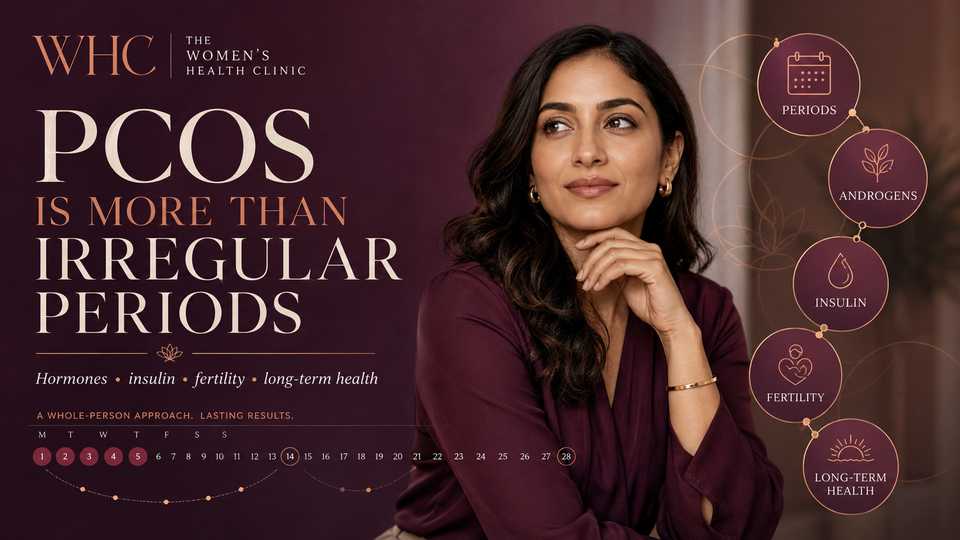
The cycle is only the first clue.
Chapter 1 — A broader diagnosis
One condition can enter through many doors
One woman first hears PCOS because her periods are months apart. Another seeks help for acne or chin hair. Another only meets the diagnosis when pregnancy does not happen as expected, while someone else is assessed because glucose or blood pressure risk has become relevant. The variety is not a contradiction; it reflects a heterogeneous endocrine-metabolic condition.
That breadth also creates a safety boundary. Irregular periods, acne, excess hair, weight change or infertility each have other possible causes. No single symptom, body type, blood result or scan should be asked to carry the whole diagnosis. The cycle is a clue; the diagnostic and long-term plan must be broader.
The presentation may also change across life. An adolescent may mainly notice cycles and skin, a person trying to conceive may focus on ovulation, and later reviews may centre on blood pressure or glucose. Care should follow the current priorities without pretending the other domains disappeared.
Fragmented explanations can create contradictory advice: suppress the cycle now, prove ovulation later, lose weight before receiving help, or ignore metabolism until diabetes appears. A coherent plan states which problem is being treated today while keeping the other health domains visible for review.
The whole PCOS/PMOS picture
Cycles
Ovulation, bleeding and endometrium.
Androgens
Hair, skin and biochemical signs.
Metabolism
Glucose, lipids and blood pressure.
Fertility
Goals, ovulation and other factors.
Wellbeing
Sleep, mood, anxiety and stigma.
PCOS has a new official name: PMOS
In May 2026, the Monash-led international guideline programme changed “polycystic ovary syndrome” to “polyendocrine metabolic ovarian syndrome”, abbreviated PMOS. The new name aims to move attention away from misunderstood ovarian “cysts” and towards interacting endocrine, metabolic and ovarian features.
The NHS now uses PMOS and explains that it was previously called PCOS. Because PCOS remains the familiar public and search term, this article uses both: PCOS for recognition and PMOS when discussing the updated terminology. The change does not create a new disease or invalidate an existing diagnosis.
The name change is authoritative within the international guideline ecosystem, but adoption will be uneven across records, research and services. Readers may encounter both acronyms for years. Clinicians can reduce confusion by naming both once, confirming they refer to the same syndrome and then using the term the patient recognises.
Renaming alone will not fix fragmented services, and the term “metabolic” should not become a new source of fear or weight bias. Its value is conceptual: it signals that ovarian, endocrine and metabolic biology interact and that follow-up should extend beyond bleeding and fertility.
How diagnosis works in adults
After relevant alternative causes are excluded, adult diagnosis traditionally uses two of three domains: ovulatory dysfunction or irregular cycles; clinical or biochemical hyperandrogenism; and polycystic ovarian morphology. If irregular cycles and hyperandrogenism are already present, ultrasound is not required merely to complete the pattern.
The 2023 international guideline allows anti-Müllerian hormone, or AMH, as an alternative to ultrasound for defining polycystic ovarian morphology in adults within a diagnostic algorithm. It is not a stand-alone consumer test, should not be combined with ultrasound simply to increase the chance of a positive result, and does not measure egg quality.
Alternative causes depend on the presentation and may include pregnancy, thyroid dysfunction, hyperprolactinaemia, non-classic congenital adrenal hyperplasia and, where clinically indicated, disorders causing marked androgen excess. Exclusion is not an indiscriminate hormone panel; it is targeted reasoning based on history, examination and results.
Clinical hyperandrogenism and biochemical hyperandrogenism are not interchangeable in every situation. Hirsutism can be informative even when a blood result falls within a laboratory range, while acne alone is less specific. Diagnostic confidence comes from the combined pattern, the quality of testing and exclusion of other causes—not from adding every available marker.
Adult diagnostic reasoning
After excluding relevant alternatives, two of three domains support diagnosis.
1
Ovulatory dysfunction
2
Clinical or biochemical hyperandrogenism
3
Adult ovarian morphology by ultrasound or AMH algorithm
Adolescents require both irregular cycles and hyperandrogenism; ultrasound and AMH are not used diagnostically.
Adolescents are not small adults
Irregular cycles and acne can be physiological after menarche, while ovarian morphology differs with age. International guidance therefore requires both persistent ovulatory dysfunction defined by time since menarche and clinical or biochemical hyperandrogenism for adolescent diagnosis, after excluding mimics.
Ultrasound and AMH are not recommended for diagnosis during adolescence because specificity is poor. A teenager with only one feature may be considered at increased risk and reviewed over time rather than given a premature label. Care can still address distressing symptoms while diagnostic certainty develops.
The timing definitions matter: irregularity in the first year after menarche can be normal, while persistent patterns become more informative with time. A diagnosis should never be built from an adult ultrasound threshold applied to a developing ovary or from common adolescent acne without careful assessment.
An “at risk” designation should come with a real plan: symptom care, education, avoidance of stigma and reassessment by or before transition to adult services. It should not become a vague label that follows a teenager indefinitely without explaining whether criteria were eventually met.
What an irregular cycle can reveal
Cycle interpretation depends on years since menarche. In adults, long gaps, fewer than eight cycles a year, cycles longer than 35 days or very short cycles can indicate ovulatory dysfunction; complete absence of a period also needs assessment. Ovulation can occasionally be irregular even when bleeding appears regular.
Pregnancy, thyroid disease, high prolactin, hypothalamic amenorrhoea, perimenopause and other endocrine conditions can produce irregular or absent periods. Very infrequent bleeding also raises the question of endometrial protection, but it does not mean every irregular cycle has already caused dangerous uterine change.
Long gaps deserve a plan even when pregnancy is not wanted. The discussion may include cycle control or periodic progestogen for endometrial protection, depending on suitability. Unexpected heavy, prolonged or intermenstrual bleeding still needs its own assessment rather than being automatically labelled part of PCOS.
Hormonal contraception can make the original cycle and androgen pattern difficult to assess, yet stopping it may be unwanted or clinically inappropriate. Historical cycle information, previous symptoms and treatment goals can help. Diagnostic purity should not override contraceptive choice or symptom stability.
The cycle is a clue. The diagnosis is broader. The long-term plan should be broader too.
Chapter 2 — Hormones and metabolism
Ovulation matters beyond pregnancy
When follicles do not mature and release an egg regularly, bleeding becomes unpredictable and fertility timing becomes harder. Prolonged anovulation can also expose the endometrium to oestrogen without regular progesterone, increasing the importance of cycle management and appropriate protection.
The goal is not necessarily a cosmetically perfect monthly cycle. It is to understand the bleeding pattern, pregnancy intentions, endometrial risk and symptoms. Someone using hormonal contraception may have controlled bleeding while the broader metabolic, androgen and psychological picture still deserves attention.
Bleeding induced by medication is not evidence that spontaneous ovulation has resumed, and a calendar cannot always confirm ovulation. When fertility decisions depend on the answer, clinicians may use the history and appropriate investigation rather than asking a consumer app to settle it.
Androgens are not “male hormones”
Women naturally produce and need androgens. In PCOS/PMOS, higher androgen activity may appear as hirsutism, acne, scalp hair thinning or elevated levels on carefully performed blood tests. Symptoms vary across individuals and ethnic backgrounds, and cosmetic impact can be substantial.
Testing requires attention to assay quality, medicines and other endocrine causes. Rapidly progressing hair growth, virilising features or markedly abnormal results should not be automatically attributed to PCOS. Treatment may combine dermatological, cosmetic and hormonal approaches according to symptoms, contraception and preference.
Biochemical assessment is most useful when clinical signs are unclear and should prioritise validated testosterone methods. Hormonal contraception changes interpretation, so testing may require specialist planning rather than simply stopping treatment. Sudden or severe androgen change widens the differential and can increase urgency.
Hair, skin and body image belong in clinical care
Facial hair, acne and scalp hair loss can affect confidence, relationships and daily routines. Their emotional effect is not superficial. A consultation should ask which symptom matters most, how quickly it changed and what treatments or removal methods have already been tried.
Options may include evidence-based acne treatment, laser or electrolysis, combined hormonal contraception and selected anti-androgen therapy with reliable contraception where required. No online article can determine suitability, and visible improvement often takes time. Psychological support may be as relevant as a prescription.
Hair-removal access, skin colour and scarring risk can affect cosmetic choices. Anti-androgens may harm a developing male fetus, which is why effective contraception is important when they are prescribed. This is one example of treatment goals that need reproductive and dermatological thinking together.
What insulin resistance actually means
Insulin helps cells use glucose. Insulin resistance means some tissues require a stronger insulin signal to achieve the same metabolic effect, often prompting the body to produce more insulin. This can interact with androgen production and ovulatory function, but the pathway varies rather than operating as one identical mechanism in everyone.
Insulin resistance is a pathophysiological feature of PCOS/PMOS, yet routine insulin assays have limited clinical relevance and are not recommended by the international guideline for everyday care. Glycaemic testing asks whether glucose regulation is impaired; it is not the same as ordering a fasting insulin number and treating it as a diagnosis.
Acanthosis nigricans may suggest hyperinsulinaemia but is not specific, and its recognition varies across skin tones. Conversely, absence of visible signs does not establish normal glucose regulation. Direct glycaemic assessment is more useful than judging metabolic health from appearance.
Insulin resistance and dysglycaemia also need separating. A person may compensate with higher insulin while glucose remains within range, while another may have impaired glucose regulation. Because routine insulin assays do not guide care reliably, guidelines focus on actual glycaemic status and modifiable risk factors.
What insulin resistance is—and is not
It can mean
Tissues need a stronger insulin signal, compensatory insulin may rise and glucose risk may increase.
It does not mean
Everyone with PCOS has it, body size reveals it, fasting insulin diagnoses it or diabetes is inevitable.
Body size does not diagnose or exclude PCOS
People in smaller bodies can have PCOS, androgen symptoms and metabolic risk. People in larger bodies can have irregular periods for reasons other than PCOS. Weight can influence expression and risk in some individuals, but obesity is not the universal cause and thinness is not protection from assessment.
The label “lean PCOS” can be useful in research but should not imply a more authentic or less serious condition. Blood pressure, glucose, lipids, sleep and psychological wellbeing should be considered on clinical grounds rather than withheld until someone crosses a body-mass threshold.
Weight-neutral does not mean pretending weight can never influence health. It means discussing evidence, consent and goals without withholding care or assigning blame. Two people at the same BMI may have different glucose, blood pressure, sleep and fertility needs; those measured realities should guide priorities.
Chapter 3 — Long-term health
Why glucose assessment matters
PCOS/PMOS is associated with increased risk of impaired glucose tolerance and type 2 diabetes, including at lower BMI. Risk is not destiny. Identifying dysglycaemia earlier creates an opportunity for prevention, monitoring or treatment without waiting for classic diabetes symptoms.
The international guideline identifies a 75 g oral glucose tolerance test as the most accurate glycaemic assessment regardless of BMI. If it cannot be performed, fasting glucose or HbA1c may be considered with lower accuracy. Status should be assessed at diagnosis and reassessed at intervals based on individual risk, commonly every one to three years.
An OGTT is more burdensome than HbA1c, so feasibility and context matter. The lower accuracy of alternatives should be explained, not used to imply they have no value. Pregnancy planning raises the priority because hyperglycaemia may be present before symptoms and affects antenatal care.
Risk-based timing allows more frequent review when there is previous gestational diabetes, family history, higher-risk ethnicity, weight change or an abnormal prior result. A normal test is reassuring for that moment; it is not a lifetime exemption from follow-up or evidence that the diagnosis was wrong.
Cardiovascular risk factors need precise language
PCOS/PMOS is associated with cardiometabolic risk factors including dysglycaemia, hypertension and adverse lipid profiles. Current terminology increasingly reflects this broader biology. That does not allow an article to predict a heart attack for an individual from the diagnosis alone.
International guidance recommends a lipid profile at diagnosis regardless of age and BMI, with repeat frequency based on findings and overall risk. Blood pressure should also be assessed. Smoking, family history, activity, sleep and other conditions belong in the same risk conversation rather than being eclipsed by weight.
The evidence for risk factors is stronger and more directly actionable than certainty about future cardiovascular events for a particular woman. That distinction supports screening without fear-based messaging. Abnormal findings should be managed under established hypertension, lipid and diabetes pathways rather than a separate “PCOS detox”.
Lipids can be abnormal without symptoms, and blood pressure varies across visits. Results should be confirmed and interpreted through ordinary cardiovascular prevention guidance. The syndrome supplies context, not a separate numerical risk calculator that overrides age and the rest of the clinical picture.
Sleep apnoea is more than tiredness
Women with PCOS/PMOS have a higher prevalence of obstructive sleep apnoea than women without the condition, independent of BMI in international evidence. Snoring, waking unrefreshed, breathing pauses and daytime sleepiness should prompt assessment rather than being assumed to be ordinary fatigue.
A questionnaire can help identify risk, but diagnosis requires a formal sleep study. Improving sleep hygiene cannot treat an obstructed airway, while treatment of sleep apnoea may improve alertness and wider health even if cycle or androgen symptoms remain unchanged.
Sleep disruption also worsens mood, appetite regulation, energy and capacity for activity, which can make the entire syndrome feel harder to manage. Asking about sleep can therefore uncover a treatable condition and reduce the tendency to interpret exhaustion as poor motivation.
Mental health is part of the syndrome, not an afterthought
Depression, anxiety, body-image distress and disordered eating are more common in PCOS/PMOS. Symptoms, fertility pressure, stigma, repeated dieting and biological factors may interact. Mental-health symptoms should not be reduced to hormones or delayed until reproductive treatment is complete.
The international guideline supports screening for depression and anxiety and awareness of eating disorders, with further assessment and treatment when indicated. Weight-focused advice can be particularly harmful when disordered eating is present. Immediate safety concerns require ordinary urgent mental-health pathways.
Screening is only useful when positive results lead to assessment, support and follow-up. Fertility treatment, visible symptoms and weight stigma can intensify distress, while some psychiatric medicines affect weight or metabolism. Coordinated care should avoid making people choose between mental and reproductive health.
Visible symptoms may have unequal social consequences across cultures and communities, and infertility expectations can intensify shame. Asking directly about distress validates the burden without assuming it. Referral should be based on need and preference, not on whether the clinician believes the symptom is hormonally caused.
Pregnancy planning deserves proactive care
PCOS/PMOS is associated with higher risks of gestational diabetes, hypertensive disorders and some other adverse pregnancy outcomes. These are reasons for preconception and antenatal planning, not predictions that a pregnancy will go badly.
Blood pressure, glucose, medicines, smoking, nutrition, folate, sleep and mental health can be reviewed before conception. The international guideline recommends considering OGTT before pregnancy or fertility treatment and, if not done, early in pregnancy as well as routine testing later. Individual maternity care should follow local guidance.
PCOS/PMOS itself does not remove the need to consider age, previous pregnancy history and other medical conditions. Medicines used for androgen symptoms, weight or metabolism may need review before conception. Contraception remains relevant because irregular ovulation is unpredictable, not absent by definition.
Gestational risk communication should use absolute context where available and avoid implying personal fault. A woman can receive early glucose surveillance and blood-pressure care without being told that her body is destined to fail in pregnancy. Preparation is a form of support, not a prediction.
Chapter 4 — Treatment without blame
“Lose weight and come back” is not a care plan
Weight stigma can delay diagnosis, reduce trust and turn every symptom into a moral judgement. A person may leave without cycle protection, metabolic assessment, fertility advice, treatment for acne or hirsutism, sleep evaluation or psychological support because the consultation stopped at the scales.
Weight can be discussed when clinically relevant and with permission, but care should continue regardless of whether weight changes. International guidance explicitly asks professionals to minimise stigma and consider social, cultural and environmental determinants. Respect is not optional or contingent on adherence.
Language shapes behaviour: asking permission to discuss weight, avoiding assumptions about diet and acknowledging previous harmful experiences can improve engagement. A clinical team should be able to offer metabolic prevention and eating-disorder-safe care at the same time; these goals are not opposites.
Lifestyle is treatment—but not punishment
Nutrition, physical activity, sleep, smoking cessation and reducing prolonged sedentary time can support metabolic and general health at any body size. Benefits can occur without major weight loss. A sustainable plan is more clinically useful than an intensive programme that cannot fit health, disability, work, culture or finances.
For some people with higher body weight, weight reduction may improve ovulation, cycle regularity or metabolic markers. It is not a universal requirement and does not permanently eliminate PCOS/PMOS. Preventing further unwanted weight gain may be a valid goal, while some people will prioritise health behaviours without weight loss.
Behavioural support can include goal setting, self-monitoring and relapse planning without making health a test of discipline. Structural barriers matter: safe space, time, income, caregiving, disability and culturally appropriate food options influence what is sustainable. Advice should adapt to life rather than demand that life disappear.
Health improvements independent of weight can include fitness, blood pressure, glucose handling, sleep, strength and psychological wellbeing. Choosing those outcomes reduces the cycle of repeated short-term diets. It also gives people in smaller bodies meaningful lifestyle care instead of implying that lifestyle only exists for weight loss.
There is no single PCOS diet or required workout
No one dietary composition has proved superior for all people with PCOS/PMOS. Guidance favours sustainable healthy eating tailored to preferences and needs: adequate fibre and protein, overall dietary quality and less reliance on highly processed foods can be practical principles without creating forbidden-food lists.
Aerobic activity, resistance training and reducing sedentary time can all support health. Skeletal muscle contributes substantially to glucose disposal, but strength training does not “reverse” insulin resistance on command and high-intensity exercise is not mandatory. Exercise should build capacity, not become punishment for having the condition.
Emerging microbiome research does not prove that PCOS begins in the gut or justify probiotics and elimination diets as established treatment. Likewise, stress can affect wellbeing and health behaviours without being the cause of the syndrome. Useful support should not be promoted with causal certainty it does not possess.
Supplements marketed for PCOS often combine multiple ingredients with variable evidence and quality. “Natural” does not guarantee safety, and pregnancy intentions or prescribed medicines may alter risk. A clinician or pharmacist can help distinguish a plausible adjunct from expensive replacement of established care.
The pill can treat symptoms without treating everything
Combined oral contraception is an evidence-based option for selected people with irregular cycles, hirsutism or acne. It can regulate bleeding and provide endometrial protection while in use. Calling it “just masking” ignores legitimate symptom treatment and contraceptive benefit.
It does not permanently eliminate the syndrome or replace metabolic, sleep and mental-health assessment. Progestogen-based options may also protect the endometrium when bleeding is very infrequent. Choice depends on medical eligibility, bleeding, contraception, side effects and priorities; readers should not stop prescribed contraception without advice.
Combined hormonal contraception requires the usual cardiovascular and thrombotic risk assessment. It can change androgen blood tests and bleeding patterns, so follow-up should distinguish treatment effects from the untreated phenotype. Metabolic screening can continue while contraception is used.
For very infrequent spontaneous bleeding, endometrial protection can be achieved in different ways, including selected contraceptive or progestogen strategies. The right option depends on pregnancy intentions, contraindications and preference. Persistent abnormal bleeding still warrants assessment rather than repeated unsupervised hormone courses.
Where metformin fits
Metformin improves insulin action and may support metabolic outcomes, cycle regulation or selected fertility contexts. International guidance places particular emphasis on metabolic indications and shared decisions, while local licensing and practice vary. It is not a universal drug for everyone with PCOS/PMOS.
It should not be presented simply as a weight-loss medicine. Gastrointestinal effects, vitamin B12 risk, pregnancy intentions and other medical factors affect use and monitoring. Newer anti-obesity medicines may be considered under general population criteria, but require current indication, contraception and pregnancy planning—not PCOS promotional claims.
Combined contraception may be more suitable for hirsutism or cycle control, while metformin may be prioritised for metabolic indications; sometimes both are considered. Shared decision-making should cover the symptom target, evidence, burden, side effects and what will count as benefit.
Anti-obesity medicines, including GLP-1-based therapies, are a fast-changing area and are not automatically indicated because PCOS appears in a record. General eligibility, side effects, long-term use, contraception and pregnancy washout advice matter. Publication should never turn this evolving evidence into a product recommendation.
Chapter 5 — Fertility and lifelong care
PCOS can affect fertility without meaning infertility
Irregular or absent ovulation can make conception less predictable, but many people with PCOS/PMOS conceive spontaneously. Fertility assessment should consider age, duration of trying, semen factors, tubal factors and other reproductive conditions rather than assuming the woman’s diagnosis explains everything.
Markedly irregular or absent ovulation may justify earlier advice instead of waiting through a standard interval that assumes regular cycles. A reproductive plan can also include people who are not trying now, without implying that everyone must preserve fertility or make immediate decisions.
Infertility language can be especially damaging when delivered at diagnosis years before pregnancy is wanted. Honest counselling can explain that ovulation may be irregular and that effective treatments exist, while avoiding false certainty or an assumption that IVF is inevitable.
A fertility assessment should not reduce the partner to a footnote or assume every delay is anovulation. Semen analysis and tubal considerations may alter the safest sequence. This is why treatment begins with a diagnosis of the fertility problem, not merely confirmation that PCOS exists.
Ovulation induction is stepwise; IVF is not the default
For anovulatory infertility with no other infertility factors, the international guideline recommends letrozole as first-line pharmacological ovulation induction. Use may be off-label in some countries, including aspects of UK practice, so specialist discussion and local protocols matter. No dosing belongs in a general article.
Other medicines, gonadotrophins, ovarian surgery or assisted conception may be considered according to response and the wider assessment. IVF is valuable when indicated, but it is not the automatic first fertility treatment merely because PCOS/PMOS appears in the record.
Before ovulation induction, pregnancy must be excluded and other fertility factors considered. Monitoring, multiple-pregnancy risk and local licensing differ between treatments. Stepwise care is not delay for its own sake; it matches intervention intensity to the actual fertility problem.
Fertility treatment also requires emotional and practical support. Monitoring, timed intercourse and repeated cycles can be demanding, and outcomes cannot be promised. A stepwise plan should include stopping points, review of response and discussion of when a different route becomes more appropriate.
AMH is not egg quality or a fertility promise
PCOS/PMOS often involves higher follicle numbers and AMH, but neither means “too many eggs” caused the condition. AMH reflects aspects of the follicle pool; it does not measure egg quality, guarantee conception or summarise all reproductive ageing.
In adults, AMH can support the ovarian-morphology diagnostic domain within the current algorithm. Age, assay, hormonal contraception and other factors influence results. It should not be used alone, repeated casually or interpreted as a direct forecast of natural fertility.
AMH can be elevated in PCOS/PMOS because of the number and activity of small follicles, but the relationship is not a simple inventory of usable eggs. Results must be interpreted with age and clinical context, especially when someone is making emotionally significant fertility decisions.
The condition does not become irrelevant after fertility
Cycle and androgen patterns may change with age, but metabolic risk factors, blood pressure, lipids, sleep and psychological wellbeing can remain relevant. PCOS/PMOS care should not disappear when pregnancy is no longer a goal or after menopause.
Later-life evidence is still developing, so risk-factor assessment is more defensible than dramatic predictions. The updated name helps express continuity beyond the ovaries, but follow-up should remain individual rather than treating every possible complication as inevitable.
The phenotype may become less obvious as cycles cease, which can make historical diagnosis harder to verify. That uncertainty should not erase established risk factors or automatically assign every later health problem to PMOS. Record quality and ordinary preventive care both matter.
After menopause, historical cycle criteria cannot be reconstructed perfectly and the updated name may tempt overdiagnosis from metabolic features alone. Diabetes, hypertension and dyslipidaemia should be treated because they are present, while the past syndrome remains relevant context rather than a substitute for current diagnosis.
The better PCOS consultation
A useful review asks how often bleeding occurs, whether endometrial protection is needed, which androgen symptoms matter, what contraception or fertility goals exist, and whether blood pressure, glucose and lipids have been assessed. It also asks about snoring, daytime sleepiness, mood, anxiety, eating and medication effects.
Not every test needs the same interval for everyone. Results, age, family history, pregnancy plans and other risk factors guide timing. The aim is a coherent plan: treat the cycle, check metabolic health, ask about fertility, screen psychological and sleep needs, and support the whole woman.
A good consultation finishes with ownership and timing: who will review results, how often glycaemia will be reassessed, what triggers earlier review and which symptom is being treated first. Without that, a checklist can become another fragmented set of tests rather than a long-term care plan.
Shared decisions should identify which outcome matters: fewer unpredictable bleeds, reduced hair growth, clearer skin, pregnancy, improved glucose, better sleep or less distress. A treatment can be successful for one goal and neutral for another. Review should judge it against the goal it was chosen to address.
A practical review framework
1 — Reproductive
Cycles, endometrium, androgens, contraception and fertility.
2 — Metabolic
Glucose, blood pressure, lipids and pregnancy planning.
3 — Whole person
Sleep, mood, eating, stigma, symptoms and priorities.
Frequently asked questions
What is PCOS now called?
The international guideline programme renamed PCOS polyendocrine metabolic ovarian syndrome, or PMOS, in May 2026. NHS guidance now uses PMOS while explaining the previous name.
Do polycystic ovaries mean PCOS?
No. Ovarian morphology is one possible adult diagnostic domain. Some people without the syndrome have this appearance, and some people with the syndrome do not need ultrasound for diagnosis.
Can I have PCOS with regular periods?
Possibly. Ovulatory dysfunction can occasionally occur despite apparently regular bleeding, but regular cycles make the history and alternative explanations important. Symptoms or one blood result alone do not establish diagnosis.
Can thin women have PCOS?
Yes. Body size neither diagnoses nor excludes PCOS/PMOS. Glucose, blood pressure, lipids, sleep and other risks should be assessed according to the person rather than appearance.
Does everyone with PCOS have insulin resistance?
No. Insulin resistance is an important and common feature but is not universal or visible from body size. Routine insulin assays are not recommended for ordinary clinical care.
Does PCOS cause diabetes?
It increases the risk of impaired glucose tolerance and type 2 diabetes, but diabetes is not inevitable. Regular glycaemic assessment enables prevention and early treatment.
Can AMH diagnose PCOS?
In adults, AMH may replace ultrasound for the ovarian-morphology domain within the guideline algorithm. It is not a stand-alone PCOS test, is not used for adolescent diagnosis and does not measure egg quality.
Does PCOS mean infertility?
No. Many people conceive spontaneously. When anovulation contributes to infertility, stepwise treatments are available and other fertility factors still need assessment.
Does the pill merely mask PCOS?
No. It can legitimately treat irregular bleeding, acne or hirsutism and provide contraception or endometrial protection. It does not replace the wider metabolic and psychological plan.
Can weight loss eliminate PCOS?
No. Some people with higher body weight may see improvements in cycles or metabolic markers, but PCOS/PMOS is not caused by personal failure and care must not depend on weight loss.
What is the best diet for PCOS?
No branded diet is superior for everyone. Sustainable healthy eating should fit culture, preferences, health needs and resources without restrictive or moralising rules.
Does PCOS go away after menopause?
Reproductive features may change, but metabolic risk factors, blood pressure, lipids, sleep and psychological health can remain relevant. Follow-up should not end when fertility is no longer a priority.

