



How do clinicians balance tightening with avoiding over-tightness?

How do clinicians balance tightening with avoiding over-tightness? | WHC Clinical FAQ

Does stronger energy mean better tightening? | WHC Clinical FAQ
Maintenance
Pelvic-health plan
Realistic results
Women’s Health Clinic FAQ
What lifestyle changes help maintain tightening results?
Lifestyle changes may help maintain comfort and pelvic-floor function, but they cannot lock in tightening results or replace assessment when symptoms change.
Direct answer
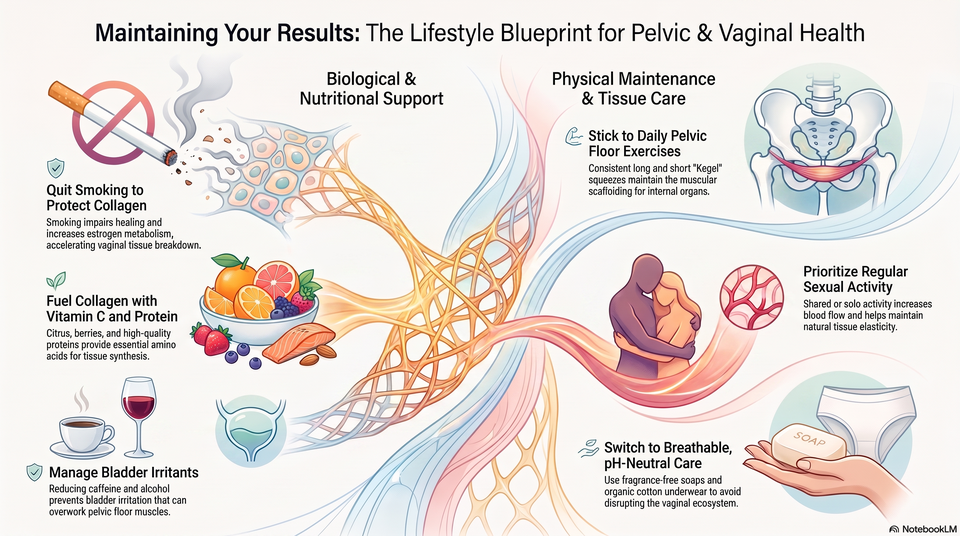
Lifestyle changes that may help maintain comfort include pelvic-health physiotherapy, sensible loading, smoking cessation, nutrition, sleep and review of symptoms. The realistic aim is a sustainable plan that supports pelvic-floor health and prompts review when symptoms change.
The strongest maintenance plan is realistic: pelvic-health physiotherapy, sensible loading, sleep, nutrition, smoking cessation, moderation with alcohol and timely review.
Educational only. Suitability and next steps should be confirmed after consultation. Results vary. Not a cure.

Maintaining comfort
At a glance
These are the main points before deciding whether a lifestyle factor is likely to help, worsen symptoms or need professional review.
At a glance
Lifestyle summary
Main area
Maintenance plan
Pattern
Realistic support
Watch for
Changing symptoms
Next step
Review and adapt
Important safety note
Seek review if symptoms return, worsen, or include pelvic heaviness, a new bulge, urinary leakage, bowel symptoms, pain, bleeding, numbness or tissue changes.
Load
Sleep
Review
Assessment
Detailed answer
The clinical answer
The answer starts by separating lifestyle support, structural limits, pelvic-floor mechanics, recovery biology, symptom triggers and review thresholds.
Pelvic-health physiotherapy
The reader wants to know whether a lifestyle factor may help or worsen vaginal laxity symptoms, what is realistic, what is not proven, and when symptoms need pelvic-health review rather than self-management.
Symptoms
Lifestyle
Review
Pelvic-health physiotherapy
Start with the exact symptom: looseness, heaviness, pressure, dryness, pain, numbness and reduced sensation can point to different causes.
Load management
Consider technique, breath, load, pelvic-floor tone, recovery habits and whether the factor is helping comfort or worsening symptoms.
Nutrition and sleep
Lifestyle can support pelvic-floor health and tissue repair, but it should not be presented as proof of tightening or structural repair.
Smoking and alcohol
Seek review when symptoms are persistent, worsening, painful, associated with bleeding, numbness, urinary or bowel change, or a new bulge.
How the research shapes the answer
While EBDs induce controlled micro-ablative damage to trigger a wound-healing cascade and neocollagenesis, long-term safety and efficacy data remain highly limited and controversial [12, 14]. True vaginal elasticity depends heavily on systemic oestrogen levels, blood supply, and intact collagen/elastin fibers [9]. Local.
The research synthesis shaped the structure, while final wording avoids resolved timelines, supplement hype, device claims, treatment ranking, weight stigma and overconfident result promises.
Patient safety
Why this matters
Lifestyle questions can sound simple, but they affect confidence, pelvic-floor load, tissue comfort, recovery conditions and whether symptoms are reviewed early enough.
It sets realistic expectations
Maintenance is support, not a indefinite promises.
It combines habits
Physiotherapy, load, sleep, nutrition and smoking cessation work together.
It protects against overtraining
Too much intensity can worsen pelvic-floor symptoms.
It keeps review open
Changing symptoms should be assessed rather than hidden.
Realistic support is safer
Good lifestyle advice supports recovery and pelvic-floor function without pretending to replace diagnosis or treatment review.
The most useful plan adapts exercise, nutrition and recovery habits to symptoms rather than using a rigid rule for everyone.
Considerations
What to consider
Exercise modifications: Substitute high-impact exercises (like heavy running or weight lifting) with low-impact alternatives to avoid exacerbating pelvic floor dysfunction [3]. Targeted therapy: Engage in a formally supervised Pelvic Floor Muscle Training (PFMT) program [6]. Dietary adjustments: Identify and reduce dietary bladder.
Lifestyle priorities
Track pelvic pressure, pain, dryness, sensation, urinary symptoms, bowel symptoms, exercise triggers, sleep, stress, smoking, alcohol and nutrition without blame.
Symptoms
Recovery
Review
Use pelvic-health physiotherapy
A tailored plan can address strength, relaxation and load.
Manage exercise load
Progress gradually and watch for heaviness, leakage or pain.
Support recovery biology
Sleep, nutrition and smoking cessation can support healing conditions.
Book review if symptoms change
Return of bulge, pain, leakage or numbness needs assessment.
What not to assume
Do not assume one lifestyle change explains the whole symptom picture or can secure a particular result.
Change should be interpreted by symptom pattern, treatment history, pelvic-floor function, recovery conditions and whether symptoms are improving or worsening.
Common concerns and myths
Common misconceptions
These corrections keep lifestyle advice practical, non-shaming and clinically realistic.
Myth: Lifestyle can lock in tightening results
Reality: lifestyle support is helpful only when symptoms, pelvic-floor function and treatment history are considered.
Myth: Maintenance is only about exercise
Reality: lifestyle support is helpful only when symptoms, pelvic-floor function and treatment history are considered.
Myth: Review is unnecessary if symptoms are embarrassing
Reality: lifestyle support is helpful only when symptoms, pelvic-floor function and treatment history are considered.
Symptoms need context
The same lifestyle factor can be helpful, neutral or irritating depending on pelvic-floor tone, tissue comfort, technique, load and treatment history.
Lifestyle cannot force results
Healthy habits can support comfort and recovery, but they cannot promise tightening, collagen change or a specific treatment outcome.
Safety checklist
Safety checklist
Use these checks before deciding whether to continue self-management, modify a lifestyle factor or seek advice.
Did symptoms change?
New or worsening heaviness, bulge, pain, dryness, numbness, urinary or bowel symptoms should be reviewed.
Is load too high?
Breath-holding, bracing, impact, saddle pressure or heavy straining may need modification.
Is recovery under-supported?
Poor sleep, restrictive nutrition, smoking, alcohol or high stress can make recovery harder without being the only explanation.
Is self-management enough?
Persistent symptoms, a new bulge, bleeding, numbness or functional change needs clinical or pelvic-health review.
More reassuring signs
The situation is more reassuring when symptoms are mild, improving, not associated with bleeding, numbness, a new bulge, urinary retention, bowel change, fever or severe pain.
Improving
No red flags
Reasons to seek advice
Seek review if symptoms return, worsen, or include pelvic heaviness, a new bulge, urinary leakage, bowel symptoms, pain, bleeding, numbness or tissue changes.
Bleeding
Numbness
When to escalate
When to seek medical help
These symptoms should not be managed with lifestyle advice alone.
Use NHS 111 online
Pelvic support symptoms
A new bulge, heaviness, urinary leakage, urinary retention or bowel symptoms should be assessed.
Bleeding or infection symptoms
Postmenopausal bleeding, heavy or persistent bleeding, offensive discharge, fever or pelvic pain needs review.
Pain or altered sensation
Persistent numbness, genital pain, nerve-type symptoms or symptoms after cycling or exercise should be checked.
Emergency symptoms
Call 999 for life-threatening symptoms such as collapse, severe bleeding, chest pain, breathing difficulty or stroke-like symptoms.
Use NHS 111 for urgent advice or call 999 in a life-threatening emergency. This page is educational and does not replace individual medical assessment.
Additional clinical context
How to use this answer
Use this page to decide whether a lifestyle factor is likely to support comfort, needs modification, or has become a reason for review. The key question is whether symptoms are mild and improving, or persistent, worsening, painful, associated with numbness, bleeding, urinary or bowel change, or a new bulge.What to bring to review
Helpful details include treatment date, exercise type, loads used, breathing pattern, cycling duration, diet changes, sleep, stress, smoking, alcohol, hydration, pain, dryness, pressure, sensation, urinary or bowel symptoms and whether symptoms are improving or worsening.Regulatory resources
Authoritative resources
These resources support advice on pelvic-floor health, physiotherapy, exercise, smoking cessation and realistic maintenance after treatment.
Next step
Book a clinical consultation
A consultation can review results, maintenance habits, pelvic-floor support, lifestyle barriers and whether changing symptoms need further assessment.
▶ View Research Sources (12 Sources)
These 12 source names are selected from 12 display-ready sources, with a raw audit trail of 63 imported records. Additional reviewed material included UK clinical guidance, professional society guidance, peer-reviewed clinical papers, evidence reviews; duplicate, low-relevance and non-clinical records were removed before display.
Educational only. This information is for education only and is not a substitute for professional medical advice, diagnosis or treatment. Results vary. Not a cure.

