


Can medications affect vaginal sensation?
Can medications affect vaginal sensation? | WHC Clinical FAQ

Can nerve testing help evaluate vaginal sensation changes?
Cycling
Saddle pressure
Sensation
Women’s Health Clinic FAQ
Can cycling affect vaginal sensation after treatment?
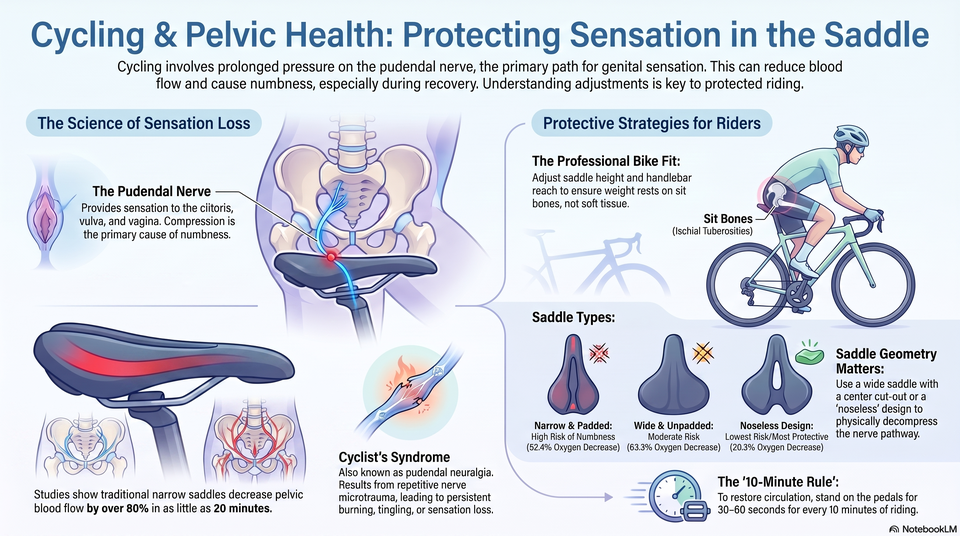
Cycling can sometimes affect vulval or vaginal sensation because saddle pressure may irritate soft tissue or nerves, especially after treatment or when symptoms are already present.
Direct answer
Cycling can affect vaginal or vulval sensation if saddle pressure irritates nerves or soft tissue, so persistent numbness or pain should be reviewed. The realistic aim is to reduce saddle pressure and review symptoms that persist, worsen or feel neurological.
Temporary pressure symptoms are different from persistent numbness, pain, bleeding or altered sensation that needs review.
Educational only. Suitability and next steps should be confirmed after consultation. Results vary. Not a cure.

Cycling and sensation
At a glance
These are the main points before deciding whether a lifestyle factor is likely to help, worsen symptoms or need professional review.
At a glance
Lifestyle summary
Main area
Saddle pressure
Pattern
Pressure-sensitive
Watch for
Numbness or pain
Next step
Pause and review
Important safety note
Persistent numbness, genital pain, bleeding, urinary symptoms, weakness, a new bulge or altered sensation that does not settle should be assessed.
Saddle
Numbness
Review
Assessment
Detailed answer
The clinical answer
The answer starts by separating lifestyle support, structural limits, pelvic-floor mechanics, recovery biology, symptom triggers and review thresholds.
Saddle pressure
The reader wants to know whether a lifestyle factor may help or worsen vaginal laxity symptoms, what is realistic, what is not proven, and when symptoms need pelvic-health review rather than self-management.
Symptoms
Lifestyle
Review
Saddle pressure
Start with the exact symptom: looseness, heaviness, pressure, dryness, pain, numbness and reduced sensation can point to different causes.
Nerve and soft-tissue symptoms
Consider technique, breath, load, pelvic-floor tone, recovery habits and whether the factor is helping comfort or worsening symptoms.
Treatment aftercare
Lifestyle can support pelvic-floor health and tissue repair, but it should not be presented as proof of tightening or structural repair.
Bike fit and modification
Seek review when symptoms are persistent, worsening, painful, associated with bleeding, numbness, urinary or bowel change, or a new bulge.
How the research shapes the answer
Diagnostic Challenges: Pudendal neuralgia is a clinical diagnosis of exclusion. It is frequently misdiagnosed as recurrent yeast infections, bacterial vaginosis (BV), or interstitial cystitis, leading to delayed appropriate care. The Nantes Criteria: Diagnosis relies heavily on the Nantes criteria: pain in the.
The research synthesis shaped the structure, while final wording avoids resolved timelines, supplement hype, device claims, treatment ranking, weight stigma and overconfident result promises.
Patient safety
Why this matters
Lifestyle questions can sound simple, but they affect confidence, pelvic-floor load, tissue comfort, recovery conditions and whether symptoms are reviewed early enough.
It explains pressure points
Saddle pressure can affect soft tissue and nerves.
It distinguishes temporary from persistent
Symptoms that settle quickly differ from ongoing numbness or pain.
It protects recovery
After treatment, pressure and friction may need extra caution.
It encourages practical changes
Bike fit, saddle choice and breaks can matter.
Realistic support is safer
Good lifestyle advice supports recovery and pelvic-floor function without pretending to replace diagnosis or treatment review.
The most useful plan adapts exercise, nutrition and recovery habits to symptoms rather than using a rigid rule for everyone.
Considerations
What to consider
Saddle Selection: Discard heavily padded, soft saddles. Padding allows the sit bones to sink, pushing the saddle nose upward into the soft perineal tissue. Choose a firm saddle that is wide enough to properly support the ischial tuberosities (sit bones). Saddle Features.
Lifestyle priorities
Track pelvic pressure, pain, dryness, sensation, urinary symptoms, bowel symptoms, exercise triggers, sleep, stress, smoking, alcohol and nutrition without blame.
Symptoms
Recovery
Review
Check duration
Longer rides may increase pressure symptoms.
Notice numbness
Persistent numbness should not be normalised.
Review saddle setup
Fit, tilt and pressure distribution can affect symptoms.
Pause if worsening
Pain, bleeding or persistent sensory change needs advice.
What not to assume
Do not assume one lifestyle change explains the whole symptom picture or can secure a particular result.
Change should be interpreted by symptom pattern, treatment history, pelvic-floor function, recovery conditions and whether symptoms are improving or worsening.
Common concerns and myths
Common misconceptions
These corrections keep lifestyle advice practical, non-shaming and clinically realistic.
Myth: Saddle numbness is always harmless
Reality: persistent numbness, pain or altered sensation after cycling should be reviewed.
Myth: Cycling cannot affect vaginal sensation
Reality: persistent numbness, pain or altered sensation after cycling should be reviewed.
Myth: Pain after cycling should be ignored if fitness improves
Reality: persistent numbness, pain or altered sensation after cycling should be reviewed.
Symptoms need context
The same lifestyle factor can be helpful, neutral or irritating depending on pelvic-floor tone, tissue comfort, technique, load and treatment history.
Lifestyle cannot force results
Healthy habits can support comfort and recovery, but they cannot promise tightening, collagen change or a specific treatment outcome.
Safety checklist
Safety checklist
Use these checks before deciding whether to continue self-management, modify a lifestyle factor or seek advice.
Did symptoms change?
New or worsening heaviness, bulge, pain, dryness, numbness, urinary or bowel symptoms should be reviewed.
Is load too high?
Breath-holding, bracing, impact, saddle pressure or heavy straining may need modification.
Is recovery under-supported?
Poor sleep, restrictive nutrition, smoking, alcohol or high stress can make recovery harder without being the only explanation.
Is self-management enough?
Persistent symptoms, a new bulge, bleeding, numbness or functional change needs clinical or pelvic-health review.
More reassuring signs
The situation is more reassuring when symptoms are mild, improving, not associated with bleeding, numbness, a new bulge, urinary retention, bowel change, fever or severe pain.
Improving
No red flags
Reasons to seek advice
Cauda Equina Syndrome (CES): Immediate emergency referral is required if the patient presents with new-onset saddle anaesthesia (profound numbness), sudden bladder/bowel retention or incontinence, and severe, progressive bilateral leg weakness. Unrelenting Pain: Pain that is exclusively paroxysmal, wakes the patient from sleep.
Bleeding
Numbness
When to escalate
When to seek medical help
These symptoms should not be managed with lifestyle advice alone.
Use NHS 111 online
Pelvic support symptoms
A new bulge, heaviness, urinary leakage, urinary retention or bowel symptoms should be assessed.
Bleeding or infection symptoms
Postmenopausal bleeding, heavy or persistent bleeding, offensive discharge, fever or pelvic pain needs review.
Pain or altered sensation
Persistent numbness, genital pain, nerve-type symptoms or symptoms after cycling or exercise should be checked.
Emergency symptoms
Call 999 for life-threatening symptoms such as collapse, severe bleeding, chest pain, breathing difficulty or stroke-like symptoms.
Use NHS 111 for urgent advice or call 999 in a life-threatening emergency. This page is educational and does not replace individual medical assessment.
Additional clinical context
How to use this answer
Use this page to decide whether a lifestyle factor is likely to support comfort, needs modification, or has become a reason for review. The key question is whether symptoms are mild and improving, or persistent, worsening, painful, associated with numbness, bleeding, urinary or bowel change, or a new bulge.What to bring to review
Helpful details include treatment date, exercise type, loads used, breathing pattern, cycling duration, diet changes, sleep, stress, smoking, alcohol, hydration, pain, dryness, pressure, sensation, urinary or bowel symptoms and whether symptoms are improving or worsening.Regulatory resources
Authoritative resources
These resources support advice on cycling pressure, pelvic-floor symptoms, sensory change and exercise modification.
RCOG - Pelvic floor health
Specialist pelvic-floor source for pressure and symptom assessment.
POGP - Pelvic health physiotherapy
UK pelvic-health physiotherapy authority for saddle pressure and symptom-led modification.
NHS - Numbness or tingling
Patient-facing source for sensory symptoms that need review if persistent or concerning.
Next step
Book a clinical consultation
A consultation can review saddle-related symptoms, treatment timing, pelvic-floor function and whether cycling should be modified during recovery.
▶ View Research Sources (12 Sources)
These 12 source names are selected from 12 display-ready sources, with a raw audit trail of 72 imported records. Additional reviewed material included UK clinical guidance, professional society guidance, peer-reviewed clinical papers; duplicate, low-relevance and non-clinical records were removed before display.
Educational only. This information is for education only and is not a substitute for professional medical advice, diagnosis or treatment. Results vary. Not a cure.
