

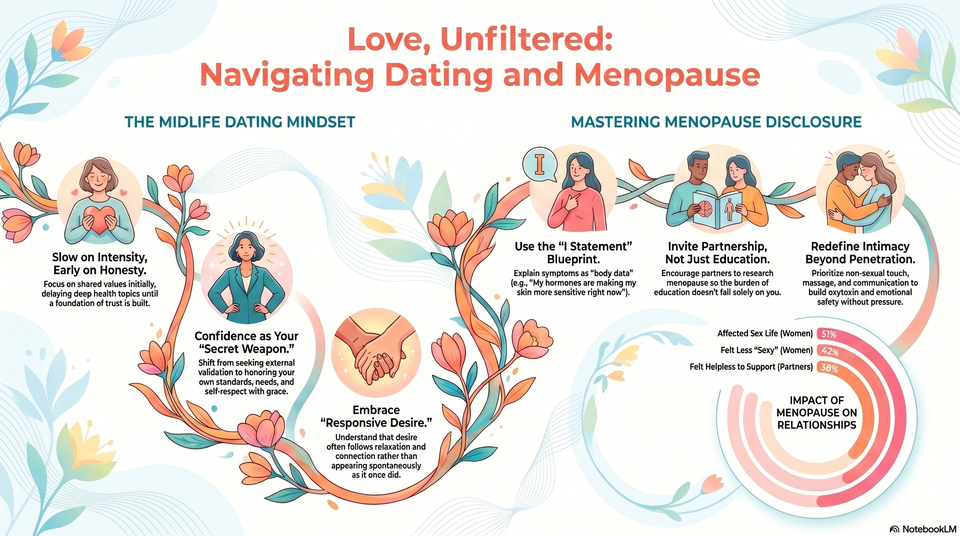


How do you navigate dating, new relationships, and disclosing menopause symptoms?

How do you navigate dating, new relationships, and disclosing menopause sym... | WHC Clinical FAQ

How does menopause affect communication and relationship dynamics with a partner?
Communication
Confidence
Intimacy
Women’s Health Clinic FAQ
How do you navigate dating, new relationships, and disclosing menopause symptoms?
Menopause can change how people feel in their bodies and relationships, but those changes are not a personal failure or proof that closeness is lost.
Direct answer
Dating during menopause does not require full disclosure before trust has developed, but symptoms that affect intimacy, sleep, mood or comfort may be easier to discuss with calm, practical language. The aim is honest pacing, boundaries and self-respect, not apologising for a normal life stage. The most useful approach is calm communication, clear boundaries, symptom review and support when distress or distance is becoming entrenched.
A strong answer should give language, pacing and support routes, while staying respectful about privacy, desire and boundaries.
Educational only. Suitability and next steps should be confirmed after consultation. Results vary. Not a cure.

Relationship support
At a glance
These are the main points to understand before deciding what support, conversation, assessment or adjustment may help.
At a glance
Practical clinical summary
Main area
Relationship wellbeing
Pattern
Communication
Watch for
Distress or pressure
Next step
Gentle conversation
Important safety note
Relationship strain should be taken seriously if there is emotional distress, pressure around sex, loss of safety, coercion or severe mood change.
Context
Support
Boundaries
Review
Detailed answer
Detailed answer
The deeper answer starts by matching the symptom to the real-life setting, because work, relationships and intimacy are affected by both biology and context.
Disclosure timing
The reader wants confidence about when and how to talk about menopause in a new relationship.
Practical steps
Communication
Safety
Disclosure timing
Start by naming the specific symptom or situation, because fatigue, pain, low desire, brain fog and conflict need different support.
Boundaries
Look at the setting around the symptom, including work demands, sleep, relationship safety, products, medicines and emotional pressure.
Dryness and sex
The most useful plan is practical and proportionate, with clear language for what can be tried and when review is needed.
Confidence and self-esteem
Follow-up matters when symptoms persist, affect safety, confidence, sex, sleep, performance or emotional closeness.
How the research shapes the answer
The research supports explaining relationship strain through symptoms, meaning, communication and safety rather than blame.
The benchmark shaped the search intent and structure, but final wording avoids legal overclaiming, product promotion, blame and pressure-based intimacy advice.
Patient safety
Why this matters
Menopause can affect work, sleep, confidence, body image, desire, communication and sexual comfort, but the impact is easier to manage when it is named clearly.
Symptoms can change behaviour
Sleep loss, pain, dryness, mood change and body image can alter patience, desire and confidence.
Meaning matters
A partner may read avoidance as rejection when the underlying issue is pain, fatigue, embarrassment or fear.
Language lowers defensiveness
Specific, calm wording helps couples talk about symptoms without blame.
Support can be relational
Counselling, sex therapy or clinical treatment may help when patterns feel stuck.
Practical, not blaming
A good answer should make the next conversation easier, whether that conversation is with a manager, partner, clinician or therapist.
It should also protect privacy, consent and safety rather than pushing disclosure, endurance or quick resolves.
Considerations
What to consider
A useful plan names the change, protects boundaries, reduces shame and considers clinical or counselling support when conversations stay stuck.
Conversation priorities
Useful details include symptom timing, what has changed, what makes it worse, what has already been tried and what support would feel realistic.
Pacing
Options
Follow-up
Choose timing carefully
Sensitive conversations are easier when neither partner is exhausted, rushed or already hurt.
Name the symptom and the meaning
Explain both what is happening physically and what you worry it may mean emotionally.
Keep boundaries clear
No one should feel pressured to have sex through pain, fear or distress.
Ask for support early
A neutral therapist may help if conversations repeatedly become defensive or distant.
What not to assume
Do not assume the person is less capable, less interested, less loving or simply being difficult.
Relationship repair is usually gradual, especially when pain, low desire, sleep loss or confidence changes have been present for some time.
Common concerns and myths
Common misconceptions
Menopause advice can become dismissive, overly legalistic or too product-focused. These corrections keep the answer balanced.
Myth: You must disclose menopause immediately
Reality: menopause can affect relationships, but blame, pressure and silence usually make the problem harder.
Myth: Menopause makes dating less valid
Reality: menopause can affect relationships, but blame, pressure and silence usually make the problem harder.
Myth: Symptoms are something to apologise for
Reality: menopause can affect relationships, but blame, pressure and silence usually make the problem harder.
Context changes the answer
The same symptom can need a workplace adjustment, relationship conversation, clinical review or specialist therapy depending on context.
Support should reduce pressure
The aim is safer communication and better care, not forced disclosure, endurance or blame.
Safety checklist
Safety checklist
Use these checks to decide whether self-management is enough or whether support should be escalated.
Is there pain, bleeding or danger?
Painful sex, postmenopausal bleeding, severe pain, coercion, unsafe work or crisis symptoms should not be minimised.
Is privacy protected?
At work and in relationships, support should not require more disclosure than the person feels safe sharing.
Is the plan realistic?
Adjustments, intimacy changes or sleep arrangements work best when they are specific, agreed and reviewed.
Is specialist support needed?
Occupational health, counselling, psychosexual therapy, pelvic-health physiotherapy or menopause care may be useful.
More reassuring signs
The situation is more reassuring when symptoms are stable, boundaries are respected, support is agreed and there are no red flags.
Respectful
Reviewed
Reasons to seek advice
Relationship strain should be taken seriously if there is emotional distress, pressure around sex, loss of safety, coercion or severe mood change.
Bleeding
Safety
When to escalate
When to seek medical help
These symptoms or situations should not be managed with general menopause advice alone.
Use NHS 111 online
Pressure or coercion
Sexual pressure, coercion, fear or feeling unsafe in a relationship needs support.
Severe mood symptoms
Suicidal thoughts, severe depression or feeling unsafe needs urgent help.
Pain or bleeding
Painful sex, bleeding after sex or persistent vulval symptoms should be assessed.
Emotional abuse
Controlling behaviour, threats or humiliation should not be explained away by menopause stress.
Use NHS 111 for urgent advice or call 999 in a life-threatening emergency. This page is educational and does not replace individual medical assessment.
Additional clinical context
How to use this answer
Use this page to identify what needs a practical change, what needs a better conversation and what needs clinical or specialist review.What to bring to a conversation
Helpful details include symptom timing, work or relationship impact, sleep, pain, bleeding, products tried, medicines, mood changes, boundaries and the specific support that would feel useful.Regulatory resources
Authoritative resources
These resources support UK-facing information on menopause symptoms, emotional wellbeing, relationship communication and counselling routes.
NHS - Menopause
UK baseline for mood, libido, sleep, vaginal symptoms and relationship impact.
Women's Health Concern - Menopause factsheets
Patient-facing UK source set for menopause, sexuality and emotional wellbeing.
Relate - Relationship counselling
UK relationship authority for couples communication and support routes.
Next step
Book a clinical consultation
A consultation can review symptoms affecting confidence, mood, libido, sleep or intimacy and whether clinical or counselling support may help.
▶ View Research Sources (12 Sources)
These 12 source names are selected from 12 display-ready sources, with a raw audit trail of 79 imported records. Additional reviewed material included UK clinical guidance, professional society guidance, peer-reviewed clinical papers, evidence reviews; duplicate, low-relevance and non-clinical records were removed before display.
Educational only. This information is for education only and is not a substitute for professional medical advice, diagnosis or treatment. Results vary. Not a cure.

