



Can the O-Shot help with menopause symptoms?

Can the O-Shot help if intimacy became painful after menopause?

Menopause Pain & Low Arousal? Expert Guide to GSM, Oestrogen & Intimacy Solutions 💡
Mixed evidence
Interaction checks
Safety first
Women’s Health Clinic FAQ
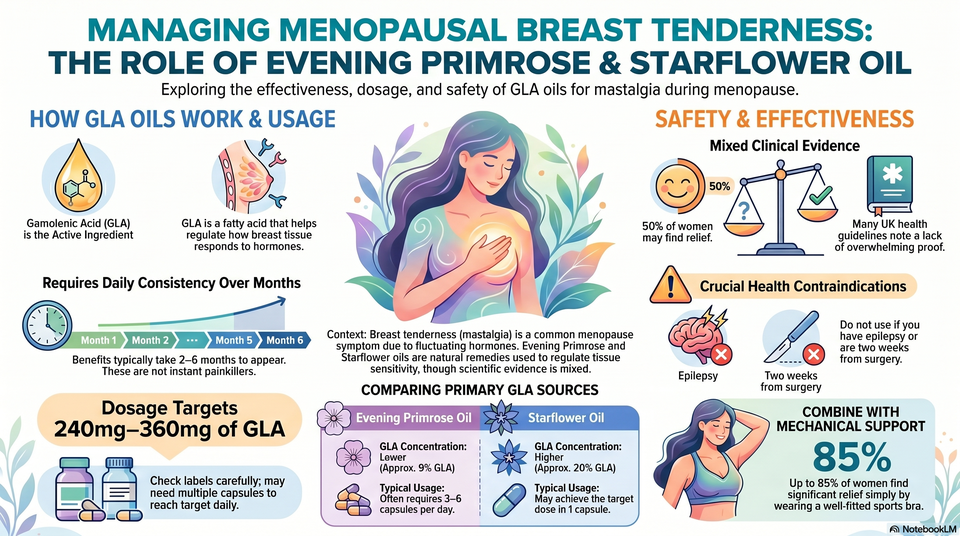
Can Evening Primrose Oil or Starflower Oil effectively treat menopausal breast tenderness?
Supplement questions need calm scrutiny because menopause products are often marketed as natural, gentle or hormone balancing without enough safety context.
Direct answer
Evening primrose oil or starflower oil may be tried by some women for breast tenderness, but evidence is limited and results vary. New lumps, nipple changes, skin dimpling, one-sided persistent pain or symptoms that do not settle need breast assessment. The safest plan depends on symptom pattern, medical history, current medicines, risk factors and whether red-flag symptoms are present. Lifestyle measures can be useful, but persistent, severe or unusual symptoms should be assessed.
A useful answer separates possible symptom support from proof, product quality, medicine interactions and health histories that need individual advice.
Educational only. Suitability and next steps should be confirmed after consultation. Results vary. Not a cure.

Supplement safety
At a glance
These are the main points to understand before deciding whether symptoms are expected, need routine review or should be assessed promptly.
At a glance
Practical clinical summary
Main area
Supplements
Pattern
Mixed evidence
Watch for
Interactions
Next step
Medicine review
Important safety note
Supplements can interact with medicines or be unsuitable for some health histories, so they should be discussed if symptoms are severe, persistent or treatment is being considered.
Symptoms
Mechanism
Review
Safety
Detailed answer
Detailed answer
The useful starting point is to separate what lifestyle support can realistically do, what the evidence can and cannot show, and when symptoms need clinical assessment.
Gamma-linolenic acid
The reader wants realistic evidence and breast-symptom safety.
Pattern
Assessment
Support
Gamma-linolenic acid
Herbal and nutritional supplements can have side effects, interactions and quality differences.
Breast pain evidence
Black cohosh, red clover, sage, oils and phytoestrogen supplements have mixed evidence and variable formulations.
Time to judge response
Liver disease, breast cancer history, epilepsy, anticoagulants or antidepressants can change risk.
Safety and interactions
A food-based phytoestrogen intake is not the same as concentrated supplement use.
How the research shapes the answer
The research supports practical lifestyle advice, but it also shows why symptom pattern, medical history, medicines and safety checks matter.
The benchmark guides search intent and structure; final wording avoids quick resolves, cure claims, supplement hype and blame-based language.
Patient safety
Why this matters
Supplement questions need calm scrutiny because menopause products are often marketed as natural, gentle or hormone balancing without enough safety context. A strong page should be useful without making the answer sound simpler than the evidence allows.
Natural is not the same as safe
Herbal and nutritional supplements can have side effects, interactions and quality differences.
Evidence varies by product
Black cohosh, red clover, sage, oils and phytoestrogen supplements have mixed evidence and variable formulations.
Medical history changes suitability
Liver disease, breast cancer history, epilepsy, anticoagulants or antidepressants can change risk.
Food and supplement doses differ
A food-based phytoestrogen intake is not the same as concentrated supplement use.
Supportive, not simplistic
Diet, exercise, sleep, CBT, supplements, pelvic floor work and vaginal products can all be useful in the right context.
They should still be matched to the person, the symptom, the evidence and the safety boundary.
Considerations
What to consider
A useful plan starts with the symptom pattern, what has already been tried, current medicines, medical history, safety concerns and what feels realistic to maintain.
Practical priorities
Bring a symptom diary, supplement list, medicines list and any red-flag symptoms to a clinician if the answer is unclear or symptoms are affecting daily life.
Pattern
Options
Follow-up
List every product
Tell clinicians about supplements, teas, oils, powders and herbal products, not only prescriptions.
Check interactions
Anticoagulants, antidepressants, epilepsy medicines, cancer treatments and liver conditions need particular caution.
Set a review point
If a supplement is tried, agree how long to assess it and what side effects would mean stopping.
Do not layer products
Combining multiple supplements makes side effects and interactions harder to identify.
What not to assume
Do not assume a lifestyle measure is ineffective because it is simple, or safe because it is natural.
Equally, do not assume symptoms should be managed alone if they are severe, persistent, unusual or linked with red flags.
Common concerns and myths
Common misconceptions
Online menopause advice can be either dismissive or overconfident. These corrections keep the answer balanced.
Myth: Breast tenderness is always hormonal
Reality: response varies, and suitability depends on symptoms, medical history, medicines, preferences and safety.
Myth: Oils treat the cause
Reality: lifestyle changes can support health, but they should not be framed as a cure or a single answer.
Myth: Supplements avoid the need for breast checks
Reality: natural products can still have side effects, interactions and quality differences.
Evidence and lived experience both matter
Some people feel real benefit from lifestyle changes, but that does not make every claim or product reliable.
Safety keeps advice useful
The best advice is practical enough to try and careful enough to avoid delaying assessment when it is needed.
Safety checklist
Safety checklist
Use these checks to decide whether self-care is reasonable or whether clinical advice is needed.
What symptom are you targeting?
Flushes, sleep, weight, dryness, leaking, pain, breast tenderness and brain fog often need different strategies.
What are you already taking?
Medicines, supplements and herbal products can interact or make symptoms harder to interpret.
Is the plan sustainable?
A realistic plan protects nutrition, sleep, muscle, mood and safety rather than relying on extreme restriction.
Are there red flags?
Bleeding, breast changes, severe pain, infection signs, neurological symptoms or severe mood symptoms should be assessed.
More reassuring signs
Self-care is more reasonable when symptoms are mild, stable, clearly triggered, not worsening and not linked with red flags.
Improving
Reviewed
Reasons to seek advice
Supplements can interact with medicines or be unsuitable for some health histories, so they should be discussed if symptoms are severe, persistent or treatment is being considered.
Interactions
Persistent symptoms
When to escalate
When to seek medical help
These symptoms or history details should not be managed with lifestyle advice alone.
Use NHS 111 online
Liver symptoms
Yellowing skin or eyes, dark urine, severe nausea or right-sided abdominal pain needs urgent advice.
Allergic reaction
Facial swelling, breathing difficulty, collapse or widespread severe rash needs emergency help.
Bleeding concerns
Easy bruising, unusual bleeding or anticoagulant use should prompt advice before supplements.
Breast changes
New breast lump, nipple discharge or skin dimpling should be assessed rather than treated with supplements.
Use NHS 111 for urgent advice or call 999 in a life-threatening emergency. This page is educational and does not replace individual medical assessment.
Additional clinical context
How to use this answer
Use this page to identify what is reasonable to try, what needs monitoring and what should be discussed with a clinician rather than managed alone.What to bring to a consultation
Helpful details include symptom timing, sleep pattern, exercise routine, diet changes, supplement list, medicines, bleeding history, urinary or vaginal symptoms, breast symptoms, mood changes and any medical history that affects safety.Regulatory resources
Authoritative resources
These resources support evidence-aware discussion of menopause supplements, herbal products, medicine interactions and safety reporting.
Next step
Book a clinical consultation
A consultation can review symptoms, current medicines, liver history, cancer history, clotting risk, allergies and whether supplements are appropriate or should be avoided.
▶ View Research Sources (12 Sources)
These 12 source names are selected from 12 display-ready sources, with a raw audit trail of 59 imported records. Additional reviewed material included UK clinical guidance, professional society guidance, peer-reviewed clinical papers; duplicate, low-relevance and non-clinical records were removed before display.
Educational only. This information is for education only and is not a substitute for professional medical advice, diagnosis or treatment. Results vary. Not a cure.
