
Evidence-aware PRP
No promise language
Women’s Health Clinic FAQ
Can the O-Shot help if I have never had an orgasm?
Never having had an orgasm can feel isolating, but it is a real and discussable sexual health concern. The useful question is not whether one treatment can force an orgasm, but whether local tissue sensitivity, comfort, hormones, medication, pain, arousal and psychosexual context have all been assessed properly.
Direct answer
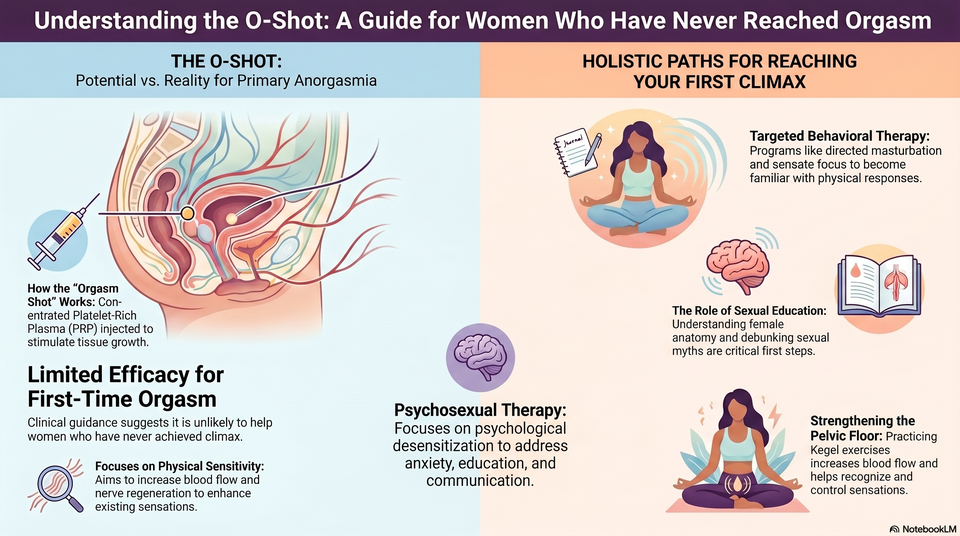
The O-Shot may help some women who have never had an orgasm if reduced clitoral or vaginal sensitivity, dryness, discomfort, low-oestrogen tissue change, or reduced local arousal response is part of the picture. It cannot promise a first orgasm because lifelong orgasm difficulty is often multifactorial, involving stimulation patterns, hormones, medication, pain, pelvic floor tension, nerve health, psychological safety and relationship context. Suitability is confirmed after consultation.
The O-Shot is an intimate platelet-rich plasma treatment. It may be considered for selected patients with reduced sensitivity, dryness, discomfort or menopause-related tissue changes, but orgasm depends on the body, brain, nervous system, hormones, medication, stimulation, pain and emotional safety working together.
Educational only. This page cannot diagnose the cause of orgasm difficulty; suitability for intimate PRP must be confirmed after consultation. Results vary. Not a cure.

At a glance
A first-orgasm concern needs a wider assessment than a simple yes or no. These are the key points to understand before considering intimate PRP.
At a glance
What matters most
May help selected patients
Most relevant when reduced sensitivity, dryness or discomfort is part of the picture.
Not a promise
A first orgasm cannot be promised because lifelong orgasm difficulty is often multifactorial.
Assessment matters
Medication, hormones, pain, pelvic floor function, trauma and relationship context may all be relevant.
Changes are gradual
Tissue response may take weeks to months, and non-response should prompt reassessment.
Important safety note
Unexplained bleeding, vulval skin changes, infection symptoms, severe pain or new numbness need medical review before intimate treatment.
Clitoral sensation
Low oestrogen
Psychosexual context
PRP suitability
Detailed answer
Why the answer needs nuance
The O-Shot can only address some possible contributors to orgasm difficulty. A careful page should separate lifelong anorgasmia from acquired loss of orgasm, partner-specific difficulty, penetration-specific difficulty and pain-related avoidance.
What intimate PRP is trying to support
PRP is prepared from a small sample of your own blood and injected into selected intimate tissue after assessment. The aim is to support local tissue quality, blood flow, lubrication and sensitivity, not to override the wider nervous system, emotional and relationship factors involved in orgasm.
Centrifuge PRP
Targeted tissue support
Consultation-led
Lifelong anorgasmia
If you have never climaxed alone or with a partner, the assessment should look beyond local sensitivity and include arousal, stimulation pattern, hormones, medication, pain, pelvic floor tone, trauma and psychological safety.
Local sensitivity
PRP may be more relevant when reduced clitoral or vaginal sensation, dryness, discomfort or low-oestrogen tissue change is part of the problem.
Pain and dryness
Painful sex, vulval soreness, tightness, recurrent infections, lichen sclerosus symptoms or vaginal dryness can make orgasm harder and may need a different treatment pathway first.
Brain-body connection
Orgasm is not only a local tissue event. Arousal, attention, stress, consent, emotional safety, medication effects and the nervous system all influence whether climax is possible.
The cellular why
Platelets release signalling proteins that are involved in tissue repair pathways. In selected patients, this may support fibroblast activity, collagen remodelling, angiogenesis and local tissue resilience.
In low-oestrogen states, vulvovaginal tissue may become drier, thinner, less elastic and more easily irritated. Improving comfort and sensitivity may help some patients feel more pleasure, but it is only one part of sexual response.
Patient safety
Why proper assessment matters
A careful assessment protects patients from being sold a single-treatment answer to a complex concern. It also helps identify medical issues that need treatment before intimate PRP is considered.
It validates the concern
Never having had an orgasm can be distressing. It deserves a respectful conversation, not dismissal or pressure.
It avoids wrong assumptions
Difficulty reaching orgasm is not automatically a blood-flow problem, a libido problem or a relationship problem. Several factors may overlap.
It protects safety
Unexplained bleeding, infection, vulval skin change, severe pain or neurological symptoms should be reviewed before injections are considered.
It keeps expectations realistic
Intimate PRP may support tissue sensitivity in selected patients, but a first orgasm cannot be promised from any single intervention.
A whole-person sexual response
Orgasm can depend on anatomy, nerve signalling, tissue comfort, blood flow, hormones, medication, pelvic floor tone, mental focus, safety and stimulation.
That is why the strongest plan may combine medical assessment, intimate tissue care, psychosexual support, pelvic floor physiotherapy, hormone review or changes to stimulation rather than relying on one treatment alone.
Considerations
What to consider before booking
The consultation should map what you mean by never having had an orgasm and whether intimate PRP is a sensible option or whether another pathway should come first.
Questions your clinician may ask
Expect questions about whether orgasm has ever happened alone, with a partner, with clitoral stimulation or with penetration, and whether pain, dryness, medication, menopause, trauma, anxiety or relationship factors are involved.
Medication review
Pain and dryness
Aftercare plan
When it may be relevant
Reduced clitoral or vaginal sensitivity, dryness, discomfort, menopause-related tissue changes or acquired weakening of orgasm may make the O-Shot worth discussing.
When to pause first
Active infection, unexplained bleeding, new skin changes, severe pain, new numbness or suspected vulval conditions should be assessed before treatment.
What the journey involves
Assessment, consent, numbing cream, a small blood sample, PRP preparation, cleansing and fine injections. Mild swelling, bruising, spotting or tenderness can occur.
What else may help
Some patients need psychosexual therapy, pelvic floor physiotherapy, hormone care, medication review, vulval treatment, lubricants, moisturisers or support with stimulation and communication.
Aftercare and timing
Your clinician should explain when to resume sex, tampons, swimming, exercise and active products. Follow the plan you are given rather than copying generic online advice.
If there is no improvement, that does not mean you have failed. It may mean the main driver is medication-related, hormonal, pelvic floor, neurological, pain-related or psychosexual.
Common concerns and myths
Common myths about orgasm and the O-Shot
The internet often turns intimate health into simple promises. A safer approach is more honest and usually more useful.
Myth: one injection can create a first orgasm
Reality: PRP may support local sensitivity in selected patients, but lifelong orgasm difficulty often needs a wider assessment and may need combined care.
Myth: vaginal orgasm is the only real orgasm
Reality: many women need direct or indirect clitoral stimulation. The goal is pleasurable, wanted sexual response, not a hierarchy of orgasm types.
Myth: if sex does not hurt, there is no medical issue
Reality: medication effects, low oestrogen, nerve sensitivity, diabetes, pelvic floor tension, stress and psychological factors can matter even without pain.
About the G-spot
Some clinic pages focus heavily on the G-spot. WHC copy should use careful anatomy and include the clitoral-urethral-vaginal complex, stimulation pattern and comfort rather than implying one simple target point.
About evidence
Research into PRP for female sexual function is still developing, with small studies and mixed findings. The page should be honest about uncertainty while explaining why some patients still ask about it.
Safety checklist
Safety and suitability checklist
Before considering the O-Shot for a first-orgasm concern, ask whether the basics have been assessed and whether the treatment aim is realistic.
Has the symptom been mapped?
Clarify whether orgasm has never happened, happens alone only, happens with clitoral stimulation only, or has become harder over time.
Has medication been reviewed?
Antidepressants and other medicines can affect desire, arousal, genital sensation and orgasm. Do not stop medication without medical advice.
Has pain been ruled in or out?
Dryness, burning, tearing, tightness, vulval soreness or pelvic pain can block arousal and orgasm and may need treatment first.
Are expectations clear?
The aim is to support tissue health and sensitivity in selected patients, not to promise a first orgasm or replace psychosexual care.
Reassuring signs
It is more reasonable to discuss intimate PRP when symptoms include reduced sensitivity, dryness or discomfort, there are no red flags, and you understand that results vary.
No red flags
Aftercare understood
Reasons to seek advice first
Seek clinical advice before treatment if symptoms are new, severe, worsening, painful, associated with bleeding, infection signs, skin change, numbness or distressing unwanted arousal.
Severe pain
New numbness
When to escalate
When to seek medical help
Some symptoms should not be handled as a cosmetic or wellness concern. They need medical advice before intimate injections are considered, or urgent help if severe. Use NHS 111 online
Before treatment
Seek medical advice promptly for unexplained bleeding, new vulval lumps, ulcers, skin colour change, persistent pelvic pain or unusual discharge.
Infection signs
After any intimate procedure, worsening pain, spreading redness, pus, fever or feeling unwell should be assessed quickly.
Nerve or sensation change
New numbness, severe burning, persistent unwanted genital arousal or distressing hypersensitivity should be reviewed rather than ignored.
Emergency symptoms
Call 999 in a life-threatening emergency, including severe allergic symptoms, fainting with collapse, chest pain or breathing difficulty.
Use NHS 111 for urgent advice or call 999 in a life-threatening emergency. This page is educational and does not replace individual medical assessment.
More detail about first orgasm, PRP and alternatives
What if I can orgasm alone but not with a partner?
This can point towards stimulation pattern, privacy, pressure, communication, anxiety, relationship safety, pelvic floor tension, pain, or medication effects rather than a simple tissue problem. Intimate PRP may still be discussed if reduced sensation, dryness or discomfort is also present, but it should not be treated as the only possible pathway.What if I can orgasm with clitoral stimulation but not penetration?
This is common and does not mean anything is wrong. Many women need direct or indirect clitoral stimulation to climax. The final plan should avoid treating vaginal orgasm as more valid than clitoral orgasm, and should consider anatomy, comfort, arousal, lubrication and the type of stimulation that feels pleasurable.Medication, hormones and pain can matter
Some antidepressants, other medicines, menopause-related low oestrogen, breastfeeding, vaginal dryness, vulval skin conditions, diabetes, neurological symptoms, pelvic floor tension, anxiety and past trauma can all affect orgasm. A consultation can help decide whether intimate PRP is relevant, whether another medical review should come first, or whether a combined plan is better.What happens during an O-Shot appointment?
The usual pathway is consultation, consent, medical history, possible intimate examination, numbing cream, a small blood sample from the arm, PRP preparation in a centrifuge, cleansing, and fine injections into selected intimate tissue. Patients may feel pressure, brief stinging or fullness, and mild swelling, spotting, bruising or tenderness can occur afterwards.How long might changes take?
Some people notice changes in sensitivity earlier, but tissue remodelling is gradual and may take several weeks to a few months. More than one session may be discussed depending on goals and response. If there is little or no response, that does not mean the patient is broken; it may mean another pathway is more relevant.Pricing and access
Fees should be checked on the pricing page or confirmed before booking. Do not rely on competitor prices because treatment plans, consultation requirements and follow-up arrangements vary.Regulatory resources
Authoritative resources
These resources support the page by explaining orgasm difficulty, libido and psychosexual assessment from NHS or NHS-linked services.
Sexual Health Oxfordshire NHS - difficulty having an orgasm
This NHS sexual health service page explains orgasm difficulty in practical, non-judgemental terms and supports the need for psychosexual context.
Leicestershire Partnership NHS Trust - female orgasmic difficulties
This NHS psychology leaflet gives a clinical framework for female orgasmic difficulty and reinforces that treatment should be individualised.
NHS inform - loss of libido
This NHS resource explains how hormones, medication, stress, health conditions and relationship factors can affect sexual desire and response.
Next step
Start with a private assessment
If you have never had an orgasm and want to know whether the O-Shot is relevant, the next step is a careful consultation. The aim is to understand the cause, rule out red flags and decide whether intimate PRP, another treatment or a combined plan is most appropriate.
Research sources reviewed: Are brand-named sexual procedures evidence-based and who might consider them?; CSP updates guidance on platelet-rich plasma (PRP) therapy; Can platelet-rich plasma (PRP) support sensitivity or orgasms in selected patients?; Evaluating Clinical Trials using Platelet-Rich Plasma to Treat Female Sexual Dysfunction; How Much Money Goes Into Erectile Dysfunction Research? - Bolt Pharmacy; Inhibited sexual desire; O-Shot-style intimate PRP - Canary Wharf - London - The Womens Health Clinic; ROLE OF PLATELET-RICH PLASMA IN FEMALE SEXUAL HEALTH AND RECOVERY - Dialnet; Vincenzo Mirone Editor - National Academic Digital Library of Ethiopia; Imperial College Healthcare NHS Trust female sexual function resource.
Also synthesised with the Stage B independent competitor benchmark for O-Shot, anorgasmia and intimate PRP search intent.
Educational only. This information is for education only and is not a substitute for professional medical advice, diagnosis or treatment. Individual suitability for intimate PRP or any sexual health intervention must be confirmed by a qualified clinician after assessment. Results vary. Not a cure.
