

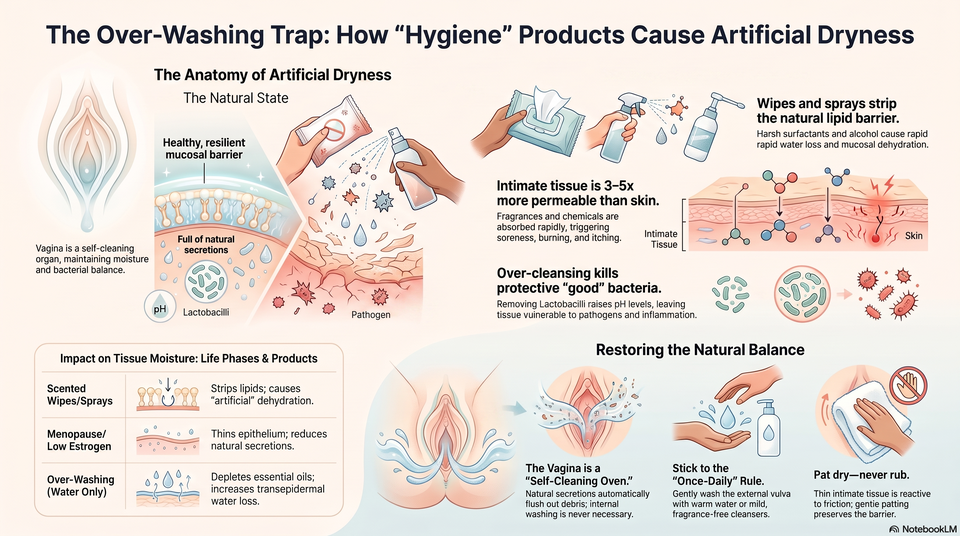


Can frequent use of internal wipes or sprays cause dryness in otherwise normal vaginal tissue?

Can the obsessive, over-frequent use of internal hygiene wipes or sprays cr... | WHC Clinical FAQ

Can Structural Introital Narrowing Cause Friction and Burning Often Blamed on Vaginal Dryness?
Irritant safety
Product caution
Stop harm
Women’s Health Clinic FAQ
Can the obsessive, over-frequent use of internal hygiene wipes or sprays create an artificial state of dryness in structurally normal tissue?
Internal hygiene products, tightening gels and home remedies can create or worsen dryness by irritating delicate vulvovaginal tissue.
Direct answer
Frequent internal wipes or sprays can irritate mucosa, disrupt comfort and create dryness-like symptoms even when tissue structure is normal. The safest approach is to validate the concern, check for physical causes, and then explore arousal, product use, relationship context, trauma history or consent pressure where relevant. This avoids both over-medicalising normal variation and dismissing symptoms that need assessment.
The safest page should warn clearly against drying or chemical approaches while explaining when symptoms need examination or infection checks.
Educational only. Suitability and next steps should be confirmed after consultation. Results vary. Not a cure.

Product safety
At a glance
These are the main points to understand before deciding whether symptoms are physical, situational, product-related, psychosexual, trauma-related or consent-related.
At a glance
Clinical summary
Main area
Product irritation
Pattern
Chemical dryness
Watch for
Burning or discharge
Next step
Stop and assess
Important safety note
Stop using internal wipes, sprays, tightening gels, vinegar, yoghurt or other irritant home remedies if burning, dryness or soreness develops.
Products
Consent
Tissue
Support
Detailed answer
Detailed answer
The deeper answer starts by separating tissue dryness from arousal response, friction, product irritation, relationship context, trauma triggers and normal variation.
Direct answer
The reader needs a clear warning about products or home remedies that can irritate mucosa and make dryness worse.
Cause
Safety
Support
Direct answer
Internal products and home remedies can irritate tissue and worsen dryness.
Irritant and dehydration mechanisms
pH, osmolality, fragrance and irritant effects can matter.
Why home remedies can harm
Tightening or puckering sensations can reflect irritation rather than healthy tissue change.
Product safety and pH/osmolality
Burning, discharge, sores or bleeding should not be covered up with more products.
How the research shapes the answer
The Hygiene Misconception: Over 60% of patients presenting with chronic vulval disease report engaging in adverse hygiene practices. Women frequently mistake physiological discharge or the odor of an existing bacterial imbalance for "uncleanliness," prompting them to buy commercial wipes that only worsen.
The benchmark shaped search intent and structure, while final wording avoids shame, partner blame, procedure pressure, unsafe product advice and unsupported psychological dismissal.
Patient safety
Why this matters
Dryness concerns can affect confidence, intimacy, examinations and treatment decisions, so the answer needs both physical caution and emotional intelligence.
It stops avoidable harm
Internal products and home remedies can irritate tissue and worsen dryness.
It explains chemistry
pH, osmolality, fragrance and irritant effects can matter.
It challenges marketing
Tightening or puckering sensations can reflect irritation rather than healthy tissue change.
It protects red flags
Burning, discharge, sores or bleeding should not be covered up with more products.
Balanced care prevents harm
A careful review can prevent both undertreatment of physical symptoms and overtreatment of anxiety, shame or relationship pressure.
That balance matters because products, procedures, reassurance, psychosexual support and medical treatment solve different problems.
Considerations
What to consider
Strict Avoidance: Patients must immediately discontinue the use of scented soaps, feminine deodorant sprays, internal douches, wet wipes, and bubble baths. Washing Routine: Cleanse the external vulva a maximum of once or twice daily. Use plain lukewarm water or an unscented, soap-free.
Consultation priorities
Useful details include symptom timing, arousal context, pain pattern, products used, relationship factors, trauma triggers, bleeding, discharge, expectations and treatment pressure.
Products
Context
Consent
Product list
Wipes, sprays, gels, masks, lubricants and washes should all be reviewed.
Symptom timing
Burning after product use suggests irritation.
Infection overlap
Thrush or bacterial symptoms can coexist with irritation.
Safer routine
Bland external care and appropriate lubricants are safer than internal irritants.
What not to assume
Do not assume symptoms are only psychological, only physical, or automatically suitable for an elective procedure.
Symptom Onset: Irritant contact dermatitis can trigger burning, stinging, and redness within minutes to hours of using an offending wipe or wash. Allergic contact dermatitis, caused by a delayed hypersensitivity to ingredients like fragrances, typically appears 24 to 72 hours after exposure..
Common concerns and myths
Common misconceptions
Dryness content often becomes too simplistic or too commercial. These corrections keep the answer safer.
Myth: Internal hygiene products make tissue healthier
Reality: internal irritants and home remedies can damage comfort rather than improve tissue health.
Myth: Tightening gels are harmless cosmetics
Reality: internal irritants and home remedies can damage comfort rather than improve tissue health.
Myth: Yoghurt or vinegar masks are natural and therefore safe
Reality: internal irritants and home remedies can damage comfort rather than improve tissue health.
Context matters
Arousal, products, trauma, relationship context, GSM, infection and skin disease can all affect what a patient calls dryness.
Care should be proportionate
The best plan may be reassurance, product change, physical assessment, psychosexual support, maintenance care or no treatment at all.
Safety checklist
Safety checklist
Use these checks to decide whether symptoms can be discussed routinely or need prompt clinical advice.
Are there physical red flags?
Bleeding, sores, discharge, odour, severe pain or urinary symptoms should be assessed.
Could products be irritating tissue?
Internal wipes, sprays, gels, vinegar, yoghurt or fragranced products can worsen symptoms.
Is there pressure to treat?
Cosmetic anxiety, partner pressure or unrealistic procedure expectations should be explored gently.
Is trauma or fear involved?
Exams and treatment discussions should be paced, consent-led and trauma-informed.
More reassuring signs
Symptoms are more reassuring when they are mild, situational, improving, already assessed and not linked with bleeding, sores, discharge, fever or severe pain.
Situational
Assessed
Reasons to seek advice
Ascending Infections: Pelvic pain, pain during urination (dysuria), or pain during intercourse, especially accompanied by a fever, can indicate Pelvic Inflammatory Disease (PID) or other serious ascending infections requiring immediate medical evaluation. Severe Vaginal Symptoms: Patients presenting with foul-smelling discharge, irregular bleeding.
Discharge
Severe pain
When to escalate
When to seek medical help
Some symptoms should not be managed as routine vaginal dryness or psychosexual stress.
Use NHS 111 online
Bleeding, sores or discharge
Bleeding, sores, odour, unusual discharge or a non-healing area should be assessed.
Severe pain or infection symptoms
Severe burning, pelvic pain, fever, urinary symptoms or feeling unwell needs clinical advice.
Coercion, distress or trauma triggers
Pressure to have sex, pressure to undergo treatment, flashbacks or severe distress deserve support and a pause in elective care.
Emergency symptoms
Call 999 for life-threatening symptoms such as collapse, chest pain, breathing difficulty or stroke-like symptoms.
Use NHS 111 for urgent advice or call 999 in a life-threatening emergency. This page is educational and does not replace individual medical assessment.
Additional clinical context
How to use this answer
This page is designed to separate physical dryness, arousal response, relationship context, product irritation, trauma triggers, consent pressure and normal variation.What to discuss at appointment
Useful details include symptom timing, pain pattern, arousal context, products used, bleeding, discharge, relationship pressure, trauma triggers, treatment expectations and what outcome would feel genuinely helpful.Regulatory resources
Authoritative resources
These resources support advice on vaginal dryness, thrush-like symptoms, vulval skin irritation, product safety and mucosal irritation.
Next step
Book a clinical consultation
A consultation can review products used, burning, discharge, odour, skin changes, infection symptoms and safer moisturiser or lubricant choices.
▶ View Research Sources (12 Sources)
These 12 source names are selected from 24 display-ready sources, with a raw audit trail of 86 imported records. Additional reviewed material included UK clinical guidance, professional society guidance, peer-reviewed clinical papers; duplicate, low-relevance and non-clinical records were removed before display.
Educational only. This information is for education only and is not a substitute for professional medical advice, diagnosis or treatment. Results vary. Not a cure.

