
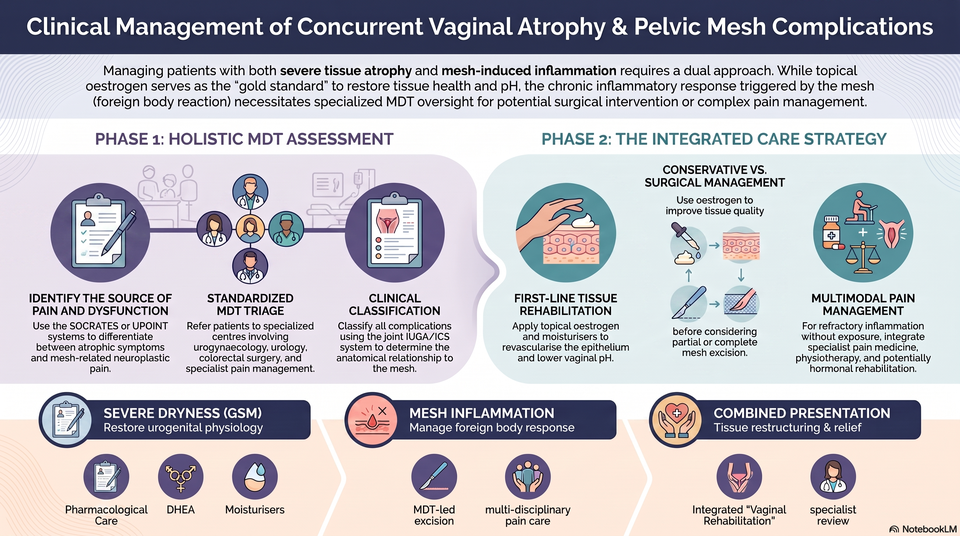


How Do Clinicians Manage Severe Vaginal Dryness With Chronic Mesh-Induced Inflammation?
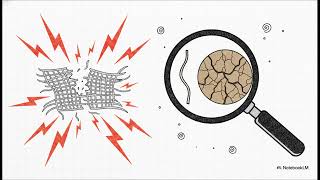
How pelvic organ prolapse mesh erosion causes localized dryness | WHC Clinical FAQ

How pelvic organ prolapse mesh erosion causes localized dryness
Prolapse
Mechanical irritation
Urogynae review
Women’s Health Clinic FAQ
How do clinicians manage the concurrent presentation of severe tissue dryness and pelvic mesh-induced chronic localised inflammation?
Prolapse, pessaries and mesh can make dryness feel more mechanical because tissue exposure, pressure, abrasion or inflammation may sit underneath the symptom.
Direct answer
Severe dryness with suspected mesh-related inflammation needs specialist pelvic-floor or urogynaecology review because moisturising alone will not address erosion, exposure or chronic inflammation. The key is to separate true low-moisture tissue change from friction, burning, scarring, arousal response, cervical mucus, prolapse exposure or infection. Assessment is worthwhile if symptoms are persistent, focal, painful, linked with bleeding or difficult to explain.
A useful answer should explain when moisturising support may help and when erosion, mesh exposure, ulceration or infection needs specialist review.
Educational only. Suitability and next steps should be confirmed after consultation. Results vary. Not a cure.

Prolapse tissue safety
At a glance
These are the main points to understand before deciding whether symptoms are hormone-related, anatomy-related, mechanical, inflammatory or part of healing.
At a glance
Clinical summary
Main area
Mechanical tissue stress
Pattern
Abrasion or exposure
Watch for
Ulcer or discharge
Next step
Urogynaecology review
Important safety note
Bleeding, ulceration, new discharge, odour, worsening pain, pessary pressure or suspected mesh exposure should be reviewed.
Hormones
Tissue
Symptoms
Review
Detailed answer
Detailed answer
The deeper answer starts by separating moisture production from friction, burning, exposure, scar sensitivity, arousal response and infection.
Direct answer
The reader wants to know whether mechanical support, prolapse or mesh could be causing secondary irritation, abrasion or dryness.
Anatomy
Assessment
Care
Direct answer
Exposure, pressure and abrasion can create dryness-like discomfort.
Mechanical exposure and tissue quality
Advanced prolapse may expose mucosa to friction and drying.
Abrasion, erosion or inflammation signs
Pessary erosion or mesh exposure needs more than moisturiser advice.
Moisturiser or suppository limits
Bleeding, odour, discharge or ulceration should prompt review.
How the research shapes the answer
The clinical reality is that vaginal dryness can overlap with hormone change, friction, scarring, tissue exposure, arousal response, infection, skin disease and pelvic-floor pain.
The benchmark shaped search intent and structure, while final wording avoids overclaiming, treatment promises, unsupported mechanisms and copied generic dryness text.
Patient safety
Why this matters
Dryness-like symptoms can affect comfort, sex, examinations, confidence and recovery, but the safest plan depends on the underlying mechanism.
It finds mechanical causes
Exposure, pressure and abrasion can create dryness-like discomfort.
It protects fragile tissue
Advanced prolapse may expose mucosa to friction and drying.
It recognises complications
Pessary erosion or mesh exposure needs more than moisturiser advice.
It guides escalation
Bleeding, odour, discharge or ulceration should prompt review.
Assessment prevents guesswork
A careful review can identify whether symptoms are mainly hormonal, mechanical, inflammatory, scar-related, arousal-related or healing-related.
That distinction matters because moisturisers, lubricants, pelvic-health support, endocrine review, pessary review or surgical clearance solve different problems.
Considerations
What to consider
• Specialist Centres: Patients experiencing complications must be referred to commissioned, regional complex mesh centres equipped with the necessary infrastructure. • MDT Composition: The treatment team must include urogynaecologists, urologists, colorectal surgeons, pain management specialists, clinical psychologists, and specialist physiotherapists. • Advanced.
Consultation priorities
Useful details include symptom location, cycle or feeding context, surgery history, products used, pain triggers, bleeding, discharge, prolapse, pessary or mesh history and treatment goals.
Location
Triggers
Safety
Prolapse stage
More advanced prolapse can change tissue exposure and product suitability.
Pessary fit
Size, pressure points and follow-up frequency matter.
Mesh history
Pain, discharge or exposure should be reviewed by a specialist.
Product safety
Suppositories or moisturisers should be matched to tissue condition.
What not to assume
Do not assume every dry, burning or friction symptom has the same cause, or that unusual anatomy automatically proves the mechanism.
• Onset of Complications: Mesh-related symptoms (such as pain or extrusion) may present immediately post-operatively or be delayed by months to over 10 years. • Conservative Trials: Prior to surgical intervention for primary prolapse, conservative options like supervised pelvic floor physiotherapy are.
Common concerns and myths
Common misconceptions
Dryness content often becomes too simple. These corrections keep the page clinically useful.
Myth: Pessary discomfort is always normal
Reality: pressure, exposure, erosion or inflammation can mimic or worsen dryness and should be examined.
Myth: Moisturisers can solve mesh inflammation
Reality: pressure, exposure, erosion or inflammation can mimic or worsen dryness and should be examined.
Myth: Advanced prolapse makes all suppositories safe because tissue is dry
Reality: pressure, exposure, erosion or inflammation can mimic or worsen dryness and should be examined.
Mechanism matters
Hormones, tissue exposure, surgery, scar sensitivity, arousal response and infection can all produce symptoms that patients call dryness.
Support should be targeted
The best plan starts with the cause, then chooses proportionate comfort measures, review, tests or referral.
Safety checklist
Safety checklist
Use these checks to decide whether symptoms can be discussed routinely or need prompt clinical advice.
Is there bleeding or ulceration?
Bleeding, sores, wound opening or exposed tissue should be assessed.
Is pain focal or worsening?
Entry pain, scar pain, severe burning or worsening symptoms may need examination.
Is there prolapse, pessary or mesh history?
Mechanical irritation, erosion or inflammation can mimic dryness.
Is there a hormone or healing context?
Breastfeeding, amenorrhoea, perimenopause, testosterone therapy, adrenal surgery or recent reconstruction changes the assessment.
More reassuring signs
Symptoms are more reassuring when they are mild, improving, already assessed and not linked with bleeding, ulcers, discharge, fever, wound change or severe pain.
Improving
Assessed
Reasons to seek advice
• Red Flag Symptoms: Patients should seek immediate specialist assessment if they experience heavy vaginal bleeding, recurrent or antibiotic-resistant UTIs, inability to empty the bladder or bowels, severe unprovoked pelvic pain, or new pain during sexual intercourse. • Mesh Erosion: Visible or.
Ulcer
Severe pain
When to escalate
When to seek medical help
Some symptoms should not be managed as routine vaginal dryness.
Use NHS 111 online
Bleeding, ulceration or wound change
Bleeding, sores, wound opening, exposed mesh or a non-healing focal area should be assessed.
Infection symptoms
Fever, odour, new discharge, pelvic pain or feeling unwell needs clinical advice.
Severe or worsening pain
Severe burning, entry pain, urinary symptoms or worsening scar pain should not be ignored.
Emergency symptoms
Call 999 for life-threatening symptoms such as collapse, chest pain, breathing difficulty or stroke-like symptoms.
Use NHS 111 for urgent advice or call 999 in a life-threatening emergency. This page is educational and does not replace individual medical assessment.
Additional clinical context
How to use this answer
This page is designed to separate hormones, anatomy, arousal response, friction, scarring, prolapse, pessary or mesh effects, and post-surgical healing.What to discuss at appointment
Useful details include timing, symptom location, feeding or cycle context, hormone therapy, surgery history, pain triggers, bleeding, discharge, products used, prolapse symptoms and treatment goals.Regulatory resources
Authoritative resources
These resources support advice on vaginal dryness, pelvic organ prolapse, pessaries, mesh complications and mucosal tissue safety.
Next step
Book a clinical consultation
A consultation can review prolapse stage, pessary fit, exposed tissue, discharge, bleeding, mesh history, moisturiser use and whether specialist review is needed.
▶ View Research Sources (12 Sources)
These 12 source names are selected from 24 display-ready sources, with a raw audit trail of 105 imported records. Additional reviewed material included UK clinical guidance, professional society guidance, peer-reviewed clinical papers, evidence reviews; duplicate, low-relevance and non-clinical records were removed before display.
Educational only. This information is for education only and is not a substitute for professional medical advice, diagnosis or treatment. Results vary. Not a cure.
