
Why us?  Why us? please click dropdown
4.8/5 out of 3,500+ reviews
Regulated: CQC Registered | 1-5796078466
  • Verified Content: Approved by the Women’s Health Clinic Clinical Team.
  • Educational Use: This is not a substitute for professional medical advice, diagnosis, or treatment.
  • Clinical Assessment: Individual suitability is determined by a clinician; results may vary.
  • Non-NHS: Private healthcare provider only. Pricing varies by treatment and site. Availability varies by clinical location.
  • MEDICAL EMERGENCY:

    If you need urgent help, use NHS 111. For a life-threatening emergency, call 999.

 Author  Find more about the author
Dr Farzana Khan

Dr Farzana Khan

Verified

Dr Farzana Khan qualified as an MD from the University of Copenhagen in 2003. She has worked in dermatology and obstetrics & gynaecology across the North of England and completed her MRCGP (CCT, 2013) and the Diploma of the Faculty of Sexual & Reproductive Health (2013). Her clinical focus is vaginal health—including dryness/GSM, sexual function concerns, lichen sclerosus, and comfort or volume changes. She offers careful assessment, discusses medical and conservative options first, and considers selected regenerative or aesthetic treatments where appropriate. Dr Farzana also trains clinicians as a KOL/Trainer with Neauvia, Asclepion Laser, and RegenLab (since 2023). Ongoing CPD includes IMCAS, CCR, ACE and expert training in women’s intimate fillers, PRP, and polynucleotide injectables. Her approach is simple: clear explanations, realistic expectations, and shared decision-making. Authored and medically reviewed by Dr Farzana Khan.

MD MRCGP DFFP
Was this answer helpful?
Rate Dr Farzana's explanation
Clinically reviewed content
Recovery timeline
Assessment first

Women’s Health Clinic FAQ

How long is the recovery time and downtime after CO2 laser resurfacing?

CO2 laser resurfacing can be an effective option for texture, scarring and sun-damage concerns, but it is a treatment that needs careful recovery planning. The visible downtime depends on whether the treatment is fractional or fully ablative, how large an area is treated and how your skin tends to heal.

Direct answer

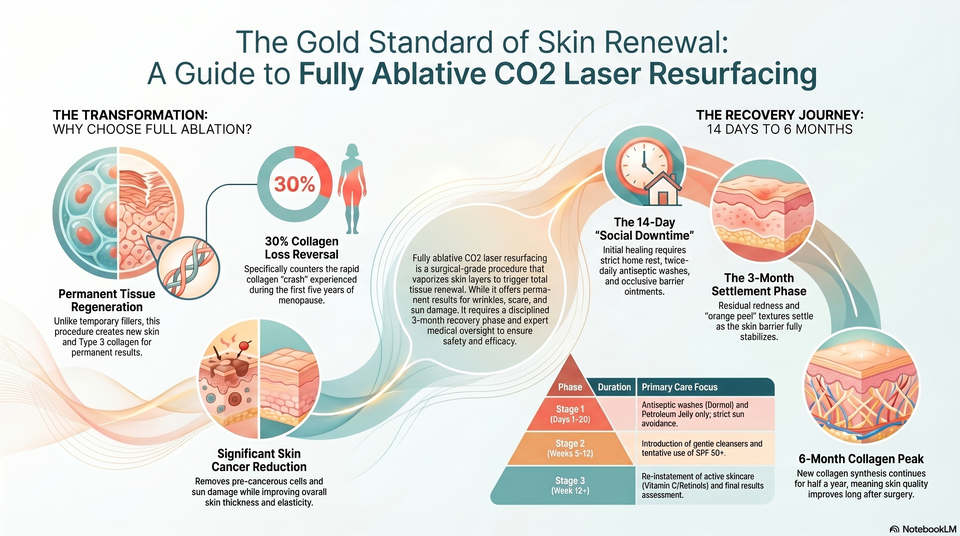
Recovery depends on how deeply the skin is treated. After fractional CO2 laser resurfacing, many people plan 7-14 days of visible downtime, with surface healing often improving around days 7-10. Deeper or fully ablative resurfacing can need 14-21 days of more intensive healing. Redness or pinkness may last 2-6 weeks, and collagen remodelling continues for months. Suitability is confirmed after consultation because skin type, treatment area, medical history and aftercare all affect recovery.

This guide explains the usual stages of healing, what may be normal, what should prompt medical advice and how to plan work, exercise, makeup and events around treatment.

Educational only. Results vary. Not a cure. This information explains typical recovery patterns and does not replace personalised medical advice.

A calm clinical consultation room representing CO2 laser resurfacing recovery planning
Recovery planning guide

At a glance

These are broad recovery ranges. Your clinician should personalise them after assessing your skin, settings, treatment area and medical history.

Typical recovery snapshot

Fractional and deeper resurfacing can differ substantially

Visible downtime

Often 7-14 days after fractional CO2; longer for deeper treatments.

Surface healing

Peeling and crusting commonly improve during the first 1-2 weeks.

Redness

Pinkness may continue for 2-6 weeks or longer after deeper passes.

Final settling

Collagen remodelling may continue for several months.

Important recovery note

Seek medical advice promptly if pain, redness, swelling, discharge or blistering worsens rather than gradually improving.

7-14 days visible downtime
No picking
Sun avoidance
Red-flag aware
Follow-up matters


Detailed answer

What recovery usually looks like

CO2 laser targets water in the skin. Controlled heating and ablation remove damaged surface tissue and trigger a wound-healing response, so downtime is part of how the treatment works rather than a separate side effect.

The key distinction

Fractional CO2 treats microscopic columns and leaves small bridges of untreated skin that help healing. Fully ablative resurfacing treats the surface more extensively, so the wound-care period, swelling, redness and social downtime are usually greater.

Ablative energy
Re-epithelialisation
Collagen remodelling
Pigment risk

Days 0-2

Heat, redness, tightness and swelling are common. Swelling can be more noticeable around the eyes. Rest, elevation and the aftercare plan from your clinician matter most.

Days 3-7

Micro-crusting, bronzing, peeling and itching may appear as the treated surface sheds. Do not pick or scrub, because this can increase inflammation, infection risk and scarring risk.

Days 8-14

Many fractional treatments are largely surface-healed by this stage, although pinkness and sensitivity can remain. Deeper or fully ablative treatments may still need more protected downtime.

Weeks to months

Redness gradually fades, skin sensitivity settles and collagen remodelling continues. Results and texture should be judged over months, not during the first peeling phase.

Why timelines vary

Recovery is affected by treatment depth, energy, density, number of passes, treated area, skin type, previous pigmentation, cold sore history, smoking, diabetes, immune suppression, recent tanning and medication history.

For women in perimenopause or menopause, changes in oestrogen can affect skin thickness, barrier function and wound-healing biology. This does not mean treatment is unsuitable, but it makes assessment and realistic planning especially important.


Patient safety

Why recovery planning matters

CO2 laser recovery is not just about taking time off work. It is about protecting a healing skin barrier, reducing infection and pigment risk, and knowing when normal healing has shifted into something that needs review.

The skin barrier is open

During early healing, the surface is more vulnerable to irritation, contamination and moisture loss. Gentle, clinician-led aftercare helps the barrier close properly.

Picking can cause harm

Crusts and peeling should lift naturally. Pulling flakes away early can prolong inflammation and may increase the risk of scarring or colour change.

Redness can be normal

Pinkness after the surface heals often reflects ongoing vascular and collagen activity. It should gradually improve rather than intensify.

Complications need speed

Infection, cold sore reactivation, eye symptoms or delayed healing are easier to manage when reviewed early by the treating clinic or an urgent-care service.

The clinical logic behind downtime

CO2 laser light is absorbed by water in the skin. The controlled thermal injury removes or disrupts surface tissue and signals keratinocytes, immune cells and fibroblasts to rebuild the barrier and remodel collagen.

The visible wound may settle before the deeper biology is finished. That is why a person can be back at work while still needing sun protection, gentle skincare and follow-up until redness and sensitivity calm.


Considerations

What to consider before treatment

A safe plan starts with a consultation, not a fixed number of downtime days. Your clinician should match the treatment settings to your skin, goals, medical history and available recovery time.

Suitability is individual

CO2 laser may not be suitable during active infection, recent tanning, some inflammatory skin flares, pregnancy or breastfeeding, or where scarring, pigmentation, cold sores, medicines or healing conditions need extra caution.

Skin type
Medical history
Treatment depth
Aftercare plan

Fractional or fully ablative?

Ask which approach is being recommended and why. Lighter fractional treatment may mean shorter downtime, while deeper resurfacing may involve more swelling, crusting and redness.

Pigmentation risk

Darker or more pigment-prone skin needs careful parameter planning and strict photoprotection. Avoid blanket assumptions based on ethnicity; the decision should be based on assessment.

Work and life planning

Desk work, video calls, client-facing work, outdoor work and major events all require different downtime plans. Photos or weddings are best planned with a longer buffer.

Follow-up access

Confirm who to contact after treatment, what photos or reviews are expected, and what symptoms should trigger urgent advice.

Aftercare should be written down

Your plan should explain cleansing, moisturising or ointment use, sun avoidance, makeup timing, exercise, active skincare and when to restart usual products.

If instructions differ between clinics, follow the written plan from the clinician who treated you, because it should reflect the device, settings and depth used on your skin.


Common concerns and myths

Common myths about CO2 laser downtime

Online recovery stories can be confusing because they often compare very different treatment depths. These myths are worth clearing up before you book.

Myth: everyone heals in a week

Some lighter fractional treatments may look much calmer after a week, but deeper resurfacing can need 2-3 weeks of protected healing and longer for redness to fade.

Myth: more aggressive is always better

Stronger settings may carry more downtime and risk. The right plan balances likely benefit, skin type, safety, pigmentation risk and the recovery time you can realistically protect.

Myth: darker skin is automatically excluded

Pigment-rich skin can have a higher risk of post-inflammatory hyperpigmentation, but suitability should be assessed individually with careful planning rather than assumed from ethnicity alone.

What about pain?

People often describe heat, stinging, tightness or a sunburn-like feeling early on. Comfort measures and pain relief should be discussed before treatment so you know what is expected and what is not.

What about results?

Do not judge results during peeling or early redness. Surface healing and deeper collagen remodelling happen on different timelines, and individual outcomes vary.


Safety checklist

Questions to ask before and after treatment

Use this checklist to make the recovery period more predictable and to reduce the chance of missing a problem that needs clinical review.

Have I had a proper assessment?

Your skin type, pigmentation history, cold sores, scarring tendency, medicines, recent sun exposure and healing conditions should be reviewed before treatment.

Do I know my downtime plan?

Ask when you can work, appear on video calls, exercise, wear makeup, travel, attend events and restart active skincare.

Is my aftercare clear?

You should leave with written instructions, the products or product types to use, and guidance on cleansing, sun exposure and follow-up.

Do I know the warning signs?

Know who to contact if pain, redness, swelling, discharge, blistering, fever, eye symptoms or delayed healing develops.

Reassuring signs

Healing is usually more reassuring when symptoms gradually settle, the skin surface closes as expected, and pinkness slowly fades rather than becoming hotter, more painful or more swollen.

Gradual improvement
No spreading redness
Clear follow-up

Reasons to seek advice

Do not wait if symptoms are worsening, if you feel unwell, or if the healing pattern looks different from the written recovery plan you were given.

Increasing pain
Pus or fever
Eye symptoms


When to escalate

When to seek urgent advice after CO2 laser

Some redness, swelling, tightness, oozing and peeling can be expected after CO2 laser resurfacing. The concern is when symptoms become more painful, more widespread, systemic or visually threatening. Use NHS 111 online

Possible infection

Seek medical advice promptly for spreading redness, increasing warmth, pus, yellow-green discharge, an unpleasant smell, fever or feeling generally unwell.

Pain or blistering

Increasing pain, new blistering, painful vesicles, non-healing open areas or worsening swelling should be reviewed by the treating clinic or an urgent-care service.

Pigment or scarring concerns

Persistent darkening, lightening, thickening, new texture change or delayed healing should be assessed early, especially if you have a history of pigmentation or scarring.

Eye-area symptoms

After treatment near the eyes, sudden vision changes, severe eye pain, difficulty closing the eye or marked eyelid pulling needs urgent medical advice.

Use NHS 111 for urgent advice or call 999 in a life-threatening emergency. If you have had treatment, contact the treating clinic as well, because they know the settings, area treated and expected recovery plan.

More detail on timelines, aftercare and planning

Day-by-day recovery timeline

Day 0: The skin may feel hot, tight and tender, similar to strong sunburn. Redness and swelling can build over the first evening.Days 1-2: Swelling often peaks, especially around the eyes. The skin may feel tight and sensitive. Follow the written plan for cooling, cleansing and ointment or moisturiser use.Days 3-5: Bronzing, micro-crusting, oozing, peeling or itching may appear. Avoid picking, scrubbing, hot water, steam, saunas and active skincare unless your clinician has advised otherwise.Days 6-10: Peeling often reduces and fresh pink skin appears. Some people feel ready for desk work; others need more time, particularly after deeper treatment.Days 11-14: Many people feel more comfortable in public, but the skin may still be pink, dry or reactive. Client-facing work may need a longer buffer.Weeks 2-6: Pinkness usually fades gradually. Makeup, sunscreen and active skincare should only be restarted according to your clinician's advice and once the surface is intact.Months 2-6: Collagen remodelling continues, so texture and firmness can keep changing after the visible wound has settled.

How much time should I take off work?

For fractional CO2, many people plan 7-14 days of visible downtime. Desk-based work may be possible sooner than client-facing work, but video calls can still feel difficult while swelling, peeling or redness is visible.For deeper or fully ablative resurfacing, plan more conservatively. Two to three weeks may be needed before you feel socially comfortable, and your clinician may advise a longer protected period depending on treatment depth.

When can I wear makeup after CO2 laser?

Makeup should usually wait until the skin surface is intact and your clinician has cleared it. Applying makeup too soon can irritate healing skin or increase contamination risk. Mineral or medical camouflage products may be advised in some plans, but timing should be individual.

Can I exercise after CO2 laser?

Light walking may be possible earlier if you feel well, but sweating, heat, swimming, saunas and high-intensity exercise can irritate healing skin. Many protocols delay vigorous exercise until the surface has healed and redness is settling.

How long before a wedding, holiday or photos?

For important photographs, events or holidays, a 6-12 week buffer is often more realistic than planning around the first week alone. Pinkness, pigmentation risk and sensitivity can last longer than peeling.

Why menopause can affect recovery planning

Oestrogen supports skin thickness, hydration, collagen balance and the inflammatory phase of wound healing. During perimenopause and menopause, some women notice thinner, drier or slower-recovering skin. This does not mean CO2 laser is unsuitable, but it strengthens the case for assessment-first planning and careful aftercare.

When CO2 laser may not be suitable right now

Suitability may need to be delayed or reconsidered if there is active infection, an inflammatory skin flare, recent tanning, pregnancy or breastfeeding, a tendency to keloid scarring, recent isotretinoin use, immune suppression, poorly controlled diabetes, or a history of significant pigmentation after procedures.

What to ask at consultation

  • Is this fractional, fully ablative or a lighter resurfacing protocol?
  • How many days should I plan away from work, exercise and events?
  • What should I do if I have a history of cold sores or pigmentation?
  • When can I cleanse, moisturise, apply sunscreen, wear makeup and restart actives?
  • Who do I contact after hours if symptoms worsen?
  • Where can I confirm treatment fees before booking?

Costs and access

Do not rely on generic online prices. Fees vary by treatment area, intensity, practitioner and follow-up requirements. Please refer to the pricing page or confirm costs before booking.

Next step

Plan your downtime before you plan treatment

A consultation can help confirm whether CO2 laser is suitable, what depth of treatment is appropriate, how long you may need for recovery and what aftercare you should follow.

Educational only. Results vary. Not a cure. This page is general education and cannot confirm suitability, diagnose a complication or replace advice from your treating clinician.

Loading directory...
