



Can lichen sclerosus cause urinary retention?
Can lichen sclerosus affect vaginal delivery?
Can lichen sclerosus affect vaginal delivery?
Trigger aware
Barrier care
No blame
Women’s Health Clinic FAQ
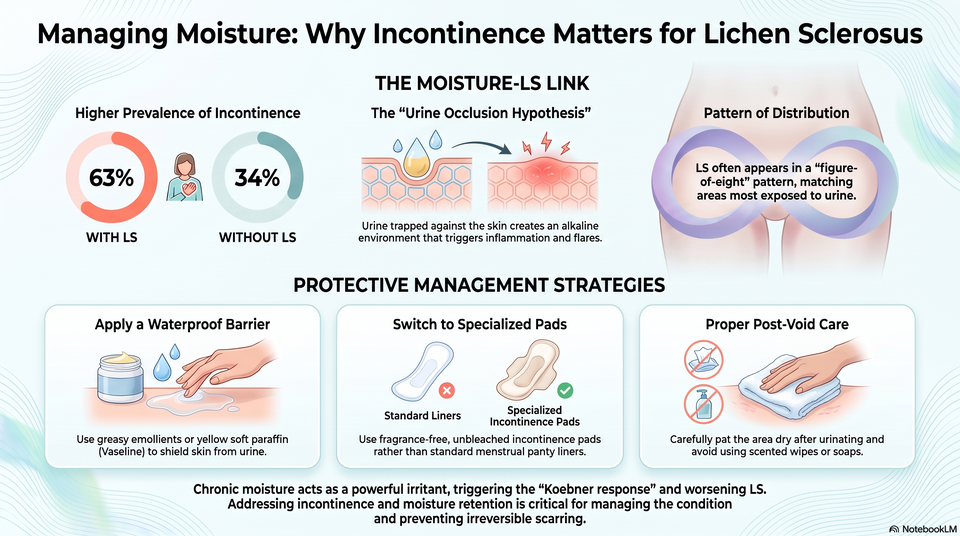
Can chronic urinary incontinence or moisture retention worsen vulval lichen sclerosus?
Friction, moisture and local trauma can aggravate fragile lichen sclerosus skin, but they should not be framed as a personal failure or the whole cause of the condition.
Direct answer
Chronic moisture, urine contact and pad friction can worsen irritation and stinging in vulval lichen sclerosus, even when they are not the root cause of the disease.
The safest answer reduces avoidable irritation while keeping diagnosis, active inflammation and review thresholds central.
Educational only. Suitability and next steps should be confirmed after consultation. Results vary. Not a cure.

Friction and triggers
At a glance
These are the main points to understand before deciding whether symptoms need self-care, prescribed treatment, specialist review or urgent advice.
At a glance
Clinical summary
Main area
Vulval skin barrier
Care pattern
Trigger-led
Watch for
Pain or fissures
Next step
Flare review
Important safety note
New, changing or painful skin symptoms should be assessed rather than repeatedly self-treated, especially if there is bleeding, ulceration, urinary change or rapid scarring.
Symptoms
Treatment
Review
Safety
Detailed answer
The clinical answer
The useful answer starts by separating active inflammation, established scarring, irritant symptoms, infection, GSM overlap, urinary involvement and non-standard treatment claims.
Direct answer
The reader wants a clear, clinically safe answer to an advanced lichen sclerosus concern, with enough context to know when symptoms suggest active disease, scarring, malignancy risk, irritant exposure, pelvic-floor overlap or evidence-limited treatment claims.
Scarring
Treatment
Follow-up
Direct answer
Start with the exact concern and the anatomy involved, because vulval skin, vaginal tissue, the introitus, foreskin, meatus and urethra need different thinking.
Koebner and friction context
Symptoms should be interpreted alongside appearance, fissures, pain, urinary features, treatment history and whether the problem is new or changing.
Irritant and moisture triggers
Treatment choices should keep prescribed anti-inflammatory care central and frame adjunctive or supportive options realistically.
Barrier and activity adjustments
Follow-up matters when symptoms persist, recur, affect sex or urination, or change vulval or penile architecture.
How the research shapes the answer
• Hygiene Pitfalls: Many patients attempt to manage incontinence by overwashing with harsh soaps or using scented panty liners, which trap moisture, disrupt the skin barrier, and drastically worsen LS symptoms [7, 21, 22]..
The research synthesis shaped the structure, while final wording avoids complete treatment framing, sexual-wellness marketing, treatment ranking, device hype and promises of tissue reversal.
Patient safety
Why this distinction matters
This distinction matters because lichen sclerosus can be missed, over-simplified or overtreated when symptoms are reduced to itching, dryness, cosmetic concern or sexual discomfort alone.
It reduces avoidable irritation
Friction, moisture and contact stinging can worsen comfort even when they are not the root cause.
It avoids blame
Patients should not feel responsible for the condition because they cycled, rode, swam or used pads.
It keeps treatment central
Barrier care helps comfort but does not replace disease control.
It guides review
Persistent fissures, pain or worsening symptoms need assessment.
Calm, precise care
Good lichen sclerosus information should reduce shame and confusion while making review thresholds clearer.
The right next step may be reassurance, swabs, biopsy, steroid review, GSM care, urology, paediatric review, specialist vulval care or urgent advice.
Considerations
What to consider
• Barrier Protection: Apply a barrier ointment (such as petroleum jelly or Cavilon) to the vulva before and after urination to shield the skin from urine [7, 8]. • Washing Routine: Avoid all soaps.
Consultation priorities
Track symptoms, visible change, fissures, pain, urine stinging, urinary stream, treatment use, irritants, sexual discomfort, scarring and whether symptoms are improving.
Examination
Treatment
Follow-up
Check disease activity
Friction advice is safer when active inflammation has been assessed.
Reduce contact triggers
Moisture, urine, pads, sweat and hair removal can irritate fragile skin.
Adapt activity
Saddle fit, clothing, breaks and barrier care may reduce symptoms.
Review flares
Pain, fissures or symptoms that do not settle need review.
What not to assume
Do not assume every flare is thrush, every white patch is lichen sclerosus, or every symptom can be solved with a procedure.
• Initial Therapy: The standard treatment for LS is the application of an ultrapotent topical corticosteroid (e.g., 0.05% clobetasol propionate) applied daily for an initial period (often up to 3 months) [9, 10]. •.
Common concerns and myths
Common misconceptions
These corrections keep the page practical, cautious and less vulnerable to online overclaims.
Myth: Friction means treatment has failed
Reality: symptoms, examination and treatment response matter more than assumptions.
Myth: Lichen sclerosus means avoiding all cycling, riding or swimming
Reality: self-care may reduce irritation, but active symptoms or urinary features still need the right assessment.
Myth: Moisture or pads cause lichen sclerosus by themselves
Reality: symptoms, examination and treatment response matter more than assumptions.
Diagnosis comes first
Similar symptoms can come from lichen sclerosus, thrush, GSM, vitiligo, lichen planus, irritant dermatitis, urinary infection or pelvic-floor guarding.
Treatment should stay proportionate
Supportive care, prescribed treatment, hormones, surgery, dilators and adjunctive options have different roles and should not be blurred together.
Safety checklist
Safety checklist
Use these checks to decide whether symptoms are more suitable for routine review, specialist review or urgent advice.
Is the diagnosis clear?
Persistent or recurrent symptoms should not be repeatedly treated without examination.
Is disease active?
Itch, fissures, soreness, texture change or new whitening may suggest active inflammation.
Is function affected?
Pain with sex, urine stinging, narrowing, stream change or daily discomfort should be discussed.
Are red flags present?
Bleeding, non-healing ulcers, new lumps, rapid change or urinary retention need prompt advice.
More reassuring signs
The situation is more reassuring when symptoms are improving, diagnosis is clear, treatment technique is understood and follow-up is planned.
Known plan
Review booked
Reasons to seek advice
Seek advice for severe pain, unexplained bleeding, non-healing ulcers, new lumps, urinary stream change, retention, fever, spreading redness or safeguarding concerns.
Ulcer
Urinary change
When to escalate
When to seek medical help
Some symptoms should not be managed with self-care, online advice or repeat treatment alone.
Use NHS 111 online
Changing skin
A new lump, non-healing ulcer, bleeding, rapid scarring or marked colour or texture change should be assessed.
Pain or urinary change
Severe pain, urine retention, stream change, spraying or persistent urine stinging should be reviewed.
Infection or safeguarding concerns
Fever, spreading redness, discharge, child safeguarding concerns or unexplained injury patterns need appropriate advice.
Emergency symptoms
Call 999 for life-threatening symptoms such as collapse, chest pain, breathing difficulty or severe allergic reaction.
Use NHS 111 for urgent advice or call 999 in a life-threatening emergency. This page is educational and does not replace individual medical assessment.
Additional clinical context
How to use this answer
Use this page to separate active lichen sclerosus, established scarring, irritant symptoms, urinary involvement, GSM overlap and treatment marketing. The safest next step depends on symptoms, examination and whether the concern is changing.What to bring to review
Helpful details include symptom timing, itch, soreness, fissures, urine stinging, urinary stream, visible change, sexual discomfort, treatment use, irritants, previous swabs or biopsy, and whether symptoms are improving or worsening.Regulatory resources
Authoritative resources
These resources support practical advice on lichen sclerosus, Koebnerisation, irritants, moisture, friction and skin-barrier care.
NHS - Lichen sclerosus
UK patient-facing baseline for symptoms, treatment and review.
British Association of Dermatologists - Lichen sclerosus in females
Specialist patient leaflet covering irritants, skin fragility and self-care.
BSSVD - Management of lichen sclerosus
UK vulval disease guidance on maintenance treatment and review.
Next step
Book a confidential consultation
A consultation can review whether symptoms reflect active lichen sclerosus, friction, moisture, infection or another vulval skin issue.
▶ View Research Sources (12 Sources)
These 12 source names are selected from 12 display-ready sources, with a raw audit trail of 73 imported records. Additional reviewed material included UK clinical guidance, professional society guidance, peer-reviewed clinical papers, evidence reviews; duplicate, low-relevance and non-clinical records were removed before display.
Educational only. This information is for education only and is not a substitute for professional medical advice, diagnosis or treatment. Results vary. Not a cure.
