


Can uncrosslinked hyaluronic acid skin boosters be combined with cross-link... | WHC Clinical FAQ

Can cross-linked hyaluronic acid filler cause localised tissue induration if deposited too...

Can cross-linked hyaluronic acid filler cause localised tissue induration i... | WHC Clinical FAQ
Skin quality
Layering
Staging
Women’s Health Clinic FAQ
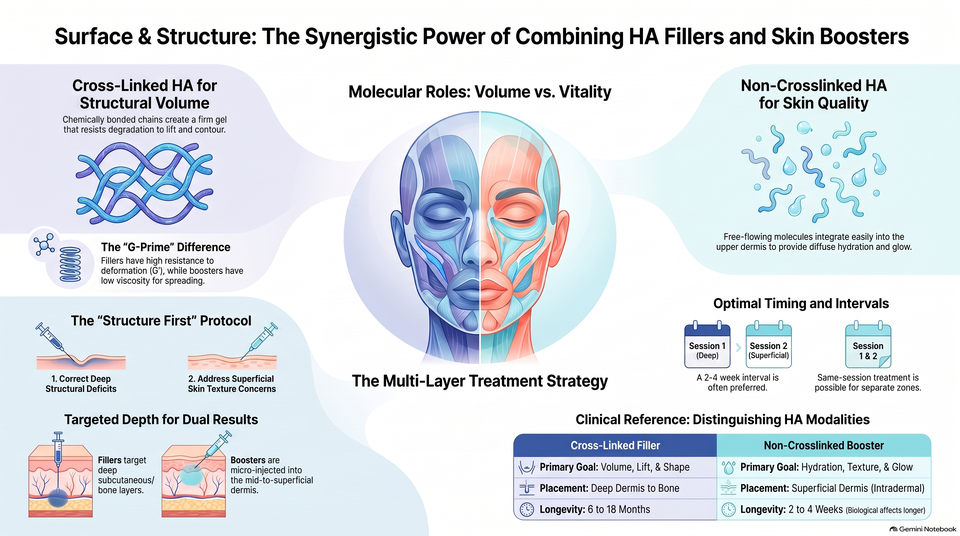
Can uncrosslinked hyaluronic acid skin boosters be combined with cross-linked fillers to treat both surface skin crinkling and deep volume loss?
Combination HA questions need a careful distinction between hydration, surface texture and deeper volume support.
Direct answer
Uncrosslinked HA skin boosters and cross-linked HA fillers have different purposes. Skin boosters are usually discussed for hydration or fine surface texture, while cross-linked fillers are used for structural volume and support. Combining them in the labia majora is not a simple layering rule, because superficial crinkling, deeper deflation, tissue laxity, irritation, infection risk and product evidence all matter. A staged assessment may be safer than trying to treat surface skin and volume loss in one plan.
This page keeps the explanation patient-facing: it explains the clinical principle without giving product prescriptions, injection technique, dose, placement or self-management instructions.
Educational only. Suitability must be confirmed after consultation. Results vary. Not a cure.

Labial Puff assessment
At a glance
These points frame the technical question before assuming Labial Puff filler is suitable.
At a glance
Clinical summary
Skin booster
Hydration and texture
Cross-linked filler
Volume and support
Combination
Not automatic
Best approach
Stage and review
Important safety note
Seek prompt advice for severe or escalating pain, pale, dusky or mottled skin, blistering, rapidly increasing swelling, fever, pus, spreading redness, heavy bleeding, urinary difficulty, allergic symptoms or delayed painful swelling.
Cross-linked HA
Texture
Volume
Staging
Detailed answer
Detailed answer
The clinically useful answer explains why the technical detail matters while keeping treatment planning clinician-led.
Clinical context
Uncrosslinked HA behaves differently from cross-linked filler and may not provide the same structure.
Product behaviour
Safety
Consent
What matters first
Uncrosslinked HA behaves differently from cross-linked filler and may not provide the same structure.
Why tissue matters
Surface crinkling can reflect dryness, skin quality, hormonal change or laxity rather than only volume loss.
Evidence boundary
Layering products may increase complexity, swelling or uncertainty if tissue is thin or irritated.
Consultation boundary
Consultation should decide whether hydration, volume, GSM care, reassurance or another pathway fits the concern.
What this means in practice
Technical filler properties can guide clinician judgement, but they should not be converted into public dosing, product or placement instructions.
The final decision depends on tissue quality, symptoms, medical history, expectations, safety and whether another pathway is more appropriate.
Patient safety
Why this matters
Technical terms can sound precise, but intimate filler outcomes still depend on anatomy, tissue response, consent and aftercare.
It protects anatomy
The labia majora, labia minora, vulva, vagina and internal G-Spot area should not be blurred together.
It protects consent
Patients should understand evidence limits, alternatives, product behaviour and what the treatment cannot promise.
It protects comfort
Soft, mobile tissue can reveal swelling, pressure, palpability or overfilling differently from other body areas.
It protects safety
Pain, colour change, infection signs, urinary difficulty or delayed swelling should have clear review routes.
A clinical decision
The question is not only how a filler behaves in theory, but whether it fits the patient's tissue and concern.
That is why consultation, cautious explanation and follow-up are central to responsible Labial Puff care.
Considerations
What to consider
Consider the main concern, tissue quality, hormonal context, weight history, skin health, infection risk, pain, urinary symptoms, previous procedures and expectations.
Consultation priorities
The consultation should confirm the concern relates to the external labia majora and that no active infection, unexplained bleeding, skin lesion or urgent symptom is present.
Tissue
Product
Follow-up
Assessment
Medical history, medicines, allergies, pregnancy status, skin symptoms, prior filler and previous reactions should be reviewed.
Suitability
Treatment may be delayed or redirected if symptoms suggest infection, skin disease, pain condition, urinary issue or unrealistic expectations.
Consent
Consent should cover temporary results, swelling, bruising, lumps, infection, vascular concerns, product limits and possible need for review.
Review
Follow-up should check comfort, symmetry, tissue response, red flags and whether further treatment is actually appropriate.
Practical expectations
Prices, exact product choice, activity restrictions, treatment amount and maintenance timing should be confirmed with the clinic before booking.
Patients should avoid choosing filler from online product claims, competitor pricing or a desired number of millilitres.
Common concerns and myths
Common misconceptions
These myths make technical filler questions sound more certain than they are.
Myth: two HA products are automatically compatible
Reality: product behaviour and tissue layer matter.
Myth: boosters replace assessment
Reality: skin quality and symptoms still need review.
Myth: crinkling always needs injectables
Reality: dryness, irritation or normal skin texture may need a different approach.
Mechanism and outcome
Mechanism can explain why a product is considered, but it does not prove a specific patient result.
Different outcomes
Cushioning, appearance, comfort, dryness, pain, arousal and urinary symptoms are different issues and should not be blurred.
Safety checklist
Safety checklist
Use these checks before assuming intimate HA filler is suitable.
Is the concern clear?
Clarify whether the concern is volume, comfort, friction, appearance, dryness, pain, sexual function or a technical product question.
Has tissue context been reviewed?
Skin laxity, low-oestrogen change, infection symptoms, lesions, scarring and previous treatment can affect suitability.
Are red flags absent?
Seek prompt advice for severe or escalating pain, pale, dusky or mottled skin, blistering, rapidly increasing swelling, fever, pus, spreading redness, heavy bleeding, urinary difficulty, allergic symptoms or delayed painful swelling.
Is follow-up planned?
The clinic should explain aftercare, review timing, symptoms to report and what happens if the result feels uncomfortable.
Reassuring signs
Proceeding is more reasonable when goals are stable, red flags are absent, tissue is healthy and expectations are realistic.
No red flags
Review plan
Reasons to pause
Pause for active genital infection, herpes flare, unexplained bleeding, ulcers, concerning lesions, severe pain, pregnancy, early postpartum healing or uncertainty about suitability.
Bleeding
Infection
When to escalate
When to seek medical help
Some symptoms after intimate filler need prompt assessment.
Use NHS 111 online
Severe pain or colour change
Severe or escalating pain, pale, dusky or mottled skin, blistering or rapidly increasing swelling should be assessed urgently.
Infection symptoms
Fever, pus, spreading redness, heat, foul discharge or feeling unwell needs prompt medical advice.
Bleeding or urinary difficulty
Heavy bleeding, new difficulty passing urine or pressure that feels obstructive should not be ignored.
Emergency symptoms
Call 999 for life-threatening symptoms such as collapse, chest pain, breathing difficulty or severe allergic reaction.
Use NHS 111 for urgent advice or call 999 in a life-threatening emergency. This page is educational and does not replace individual medical assessment.
More clinical detail
Why staged treatment may help
Staging lets the clinician see what changes after one intervention before adding another product.Why surface texture needs context
Crinkling may be related to dryness, ageing, skin laxity, weight change or irritation, not filler deficit alone.Regulatory resources
Authoritative resources
These resources support cautious discussion of labia majora HA filler, filler-material behaviour and genital cosmetic procedure consent.
Clinical paper on labia majora HA augmentation
Peer-reviewed clinical literature supporting cautious discussion of HA filler for labia majora volume restoration.
Basic rheology of dermal filler
Explains G prime, viscosity, cohesivity and related filler properties in a way that supports patient-safe material discussion.
ACOG guidance on elective female genital cosmetic surgery
Professional guidance supporting careful counselling, normal-anatomy discussion and caution with genital cosmetic claims.
Next step
Book an intimate health consultation
A consultation can clarify whether Labial Puff filler is suitable, what product behaviour matters, what alternatives should be considered and what aftercare or review would be needed.
▶ View Research Sources (12 Sources)
These 12 source names are selected from 98 curated sources. Additional reviewed material included peer-reviewed clinical papers, clinical trial records; duplicate and low-relevance records were removed before display.
Educational only. This information is for education only and is not a substitute for professional medical advice, diagnosis or treatment. Results vary. Not a cure.
