



Can chronic sneezing from allergies affect pelvic floor support? | WHC Clinical FAQ

Microneedling Case Study Lesley Chapman

Can the O-Shot help leaking when sneezing? | WHC Clinical FAQ
Pressure load
Cough control
Pelvic-floor aware
Women’s Health Clinic FAQ
Can chronic sneezing from allergies affect pelvic floor support?
Chronic coughing, asthma, COPD, smoking-related cough and repeated sneezing can all increase pressure through the abdomen and pelvic floor.
Direct answer
Chronic sneezing from allergies can affect pelvic-floor support because each sneeze creates a sudden pressure spike. Allergy control and pelvic-floor coordination may reduce the repeated load that worsens laxity, leakage or heaviness symptoms. The safest sequence is to improve cough control and assess pelvic-floor symptoms before choosing an elective treatment.
A useful answer links the respiratory trigger to pelvic support without blaming the patient or suggesting that vaginal treatment can compensate for an uncontrolled cough.
Educational only. Suitability and next steps should be confirmed after consultation. Results vary. Not a cure.

Pressure-aware care
At a glance
These are the main points to understand before deciding whether symptoms are pressure-related, need conservative care or should be reviewed before treatment.
At a glance
Pressure and pelvic support
Main area
Cough and pressure
Pattern
Repeated spikes
Watch for
Uncontrolled cough
Next step
Treat cough first
Important safety note
Persistent cough, breathlessness, chest pain, coughing blood, fever, unexplained weight loss or worsening respiratory symptoms should be medically assessed before elective vaginal treatment.
Pelvic floor
Timing
Technique
Review
Detailed answer
Detailed answer
The deeper answer starts by identifying the pressure driver, then separating manageable loading patterns from symptoms that need pelvic-health or medical review.
Sneezing pressure spikes
The reader wants to know whether allergies can contribute to pelvic-floor symptoms.
Load
Suitability
Follow-up
Sneezing pressure spikes
Start by naming the trigger because cough, constipation, lifting, breath-holding and recovery strain each change the safest next step.
Allergy control
Repeated pressure can worsen heaviness, leakage, prolapse sensations or laxity symptoms, especially when the pelvic floor cannot coordinate against the load.
Leakage or heaviness
Laser, RF or surgery should not be used to bypass cough control, bowel management, manual-handling changes or pelvic-floor assessment.
Pelvic-floor timing
If symptoms appear under load or during recovery, the plan should explain what needs controlling before treatment is reconsidered.
How the research shapes the answer
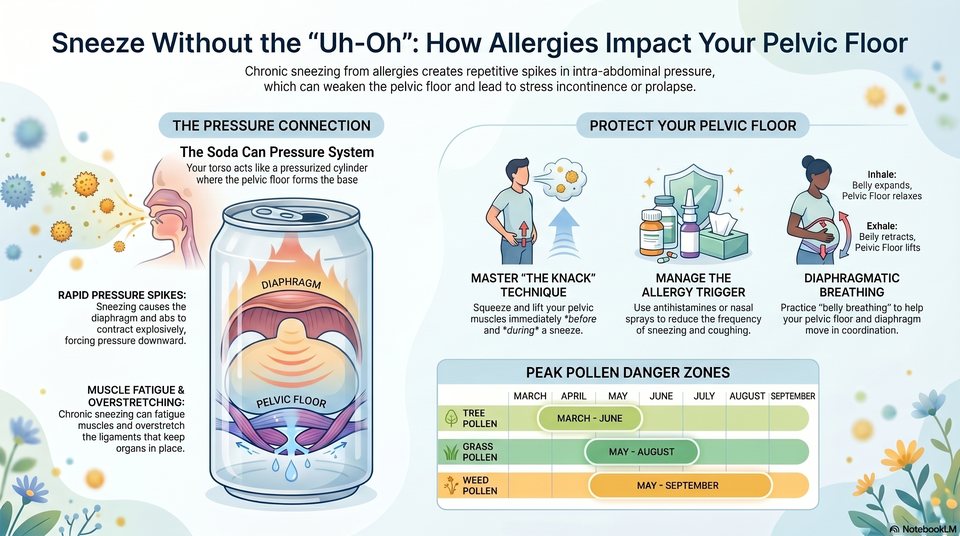
• High Prevalence: SUI is incredibly common, affecting approximately 1 in 3 women. • Seasonal Exacerbations: Symptoms often cyclically worsen during peak allergy seasons (e.g., Tree pollen from March-June; Grass pollen from May-August) due to repetitive sneezing. • Menopausal Vulnerability: oestrogen deficiency.
The benchmark shaped search intent and structure, but final wording avoids device hype, universal recovery rules, outcome promises and blame-based lifestyle advice.
Patient safety
Why this matters
Pressure-related symptoms matter because the forces that aggravate laxity can continue before, during and after treatment unless they are recognised.
It explains the pressure driver
Coughing, sneezing, straining, heavy lifting and breath-holding can repeatedly load the pelvic floor and support tissues.
It protects treatment decisions
Elective vaginal treatment is more sensible when the forces that may worsen symptoms or recovery have been recognised.
It avoids blaming the patient
Pressure management is about giving patients practical control, not implying symptoms are their fault.
It separates symptoms
Laxity, leakage, prolapse, bowel symptoms and pelvic pain can overlap but need different assessment pathways.
Pressure control protects choice
Treating cough, reducing straining or adjusting lifting may make later treatment decisions clearer and more realistic.
The aim is not to restrict normal life, but to reduce repeated loading that keeps provoking symptoms.
Considerations
What to consider
• Executing 'The Knack': Instruct patients to actively lift and squeeze the muscles around the urethra, vagina, and anus just as a sneeze brews, and to hold the contraction throughout the entire sneeze before fully relaxing. • Fluid & Diet Management: Maintaining.
Consultation priorities
Bring details about cough frequency, asthma or COPD control, smoking, allergies, bowel habits, lifting demands, exercise technique, leakage, prolapse symptoms and previous treatment.
Symptoms
Load
Plan
Name the trigger
Clarify whether the main pressure driver is cough, asthma, COPD, smoking, allergies, constipation, lifting or exercise technique.
Track symptom timing
Notice whether heaviness, looseness, leakage or pain appears during coughing, bowel movements, lifting, workouts or early recovery.
Check pelvic-floor signs
Bulge, urgency, leakage, bowel symptoms or pelvic pain may need pelvic-health assessment before device treatment.
Plan sequencing
The safest plan may treat cough or constipation, modify load or start physiotherapy before deciding on laser, RF or surgery.
What not to assume
Do not assume vaginal looseness is only a local tissue issue if symptoms are repeatedly triggered by cough, straining, lifting or exercise pressure.
• Immediate Relief: Proper application of 'The Knack' can provide immediate reduction or prevention of urinary leakage during a sneeze. • Rehabilitation Timeline: With a consistent, daily Pelvic Floor Muscle Training (PFMT) program, patients generally start to notice a measurable improvement in.
Common concerns and myths
Common misconceptions
These corrections keep the answer practical, specific and clinically cautious.
Myth: Sneezing is too brief to matter
Reality: suitability depends on symptoms, pressure drivers, pelvic-floor findings, tissue health and medical history.
Myth: Allergy treatment has no pelvic-health relevance
Reality: suitability depends on symptoms, pressure drivers, pelvic-floor findings, tissue health and medical history.
Myth: Only childbirth affects pelvic support
Reality: suitability depends on symptoms, pressure drivers, pelvic-floor findings, tissue health and medical history.
Pressure is modifiable
Cough control, bowel care, lifting changes and pelvic-floor coordination may reduce repeated load even when symptoms have been present for a while.
Treatment has limits
Vaginal tightening cannot replace respiratory care, constipation management, manual-handling changes, pelvic-floor rehabilitation or prolapse assessment.
Safety checklist
Safety checklist
Use these checks to decide whether treatment can be discussed routinely or should wait for another pathway first.
Is there an active pressure driver?
Uncontrolled cough, severe constipation, repeated straining, heavy unavoidable lifting or breath-holding can change timing and expectations.
Are pelvic symptoms provoked by load?
Heaviness, bulge, leakage, pain or looseness during coughing, bowel movements or lifting may need pelvic-health assessment.
Could this be prolapse or pelvic-floor dysfunction?
Bulge symptoms, urgency, bowel symptoms, pain or difficulty emptying bladder or bowel should not be treated as simple laxity.
Is recovery being protected?
After treatment, persistent coughing, constipation or heavy lifting should be discussed so healing advice can be individualised.
More reassuring signs
The situation is more reassuring when pressure triggers are controlled, symptoms are mild or stable, and there is no bulge, severe pain, infection sign or worsening bladder or bowel symptom.
Stable
No red flags
Reasons to seek advice
Persistent cough, breathlessness, chest pain, coughing blood, fever, unexplained weight loss or worsening respiratory symptoms should be medically assessed before elective vaginal treatment.
Bulge
Pain
When to escalate
When to seek medical help
These symptoms or situations should not be managed with general vaginal-tightening advice alone.
Use NHS 111 online
Respiratory warning signs
Breathlessness, chest pain, coughing blood, fever, unexplained weight loss or a persistent worsening cough need medical advice.
Pelvic or bowel red flags
Severe pelvic pain, urinary retention, bowel dysfunction, rectal bleeding or a worsening bulge should be assessed.
Post-treatment concerns
Fever, increasing pain, offensive discharge, bleeding or symptoms that worsen after treatment should be discussed with the treating clinician.
Emergency symptoms
Call 999 for life-threatening symptoms such as severe breathing difficulty, collapse, chest pain or stroke-like symptoms.
Use NHS 111 for urgent advice or call 999 in a life-threatening emergency. This page is educational and does not replace individual medical assessment.
Additional clinical context
How to use this answer
Use this page to prepare a focused discussion about pressure, pelvic support and treatment timing. The aim is to understand whether the main issue is a pressure driver, pelvic-floor coordination, prolapse, tissue laxity or recovery planning.What to bring to consultation
Helpful details include cough frequency, respiratory diagnosis, inhaler or smoking history, allergy triggers, bowel pattern, straining, lifting demands, exercise technique, leakage, heaviness, bulge symptoms, pain and what happens during or after exertion.Regulatory resources
Authoritative resources
These resources support UK-facing information on cough, asthma, COPD, smoking cessation and pressure-related pelvic-floor symptoms.
NHS - Chronic obstructive pulmonary disease
UK patient baseline for COPD, cough, breathlessness and long-term respiratory management.
NHS - Asthma
UK patient baseline for asthma symptoms, triggers and treatment adherence.
NHS - Cough
Patient source for cough duration, self-care and when to seek help.
Next step
Book a clinical consultation
A consultation can review cough pattern, asthma or COPD control, smoking, pelvic symptoms, leakage, prolapse signs and whether treatment should wait until the pressure driver is better controlled.
▶ View Research Sources (12 Sources)
These 12 source names are selected from 12 display-ready sources, with a raw audit trail of 55 imported records. Additional reviewed material included UK clinical guidance, professional society guidance, peer-reviewed clinical papers; duplicate, low-relevance and non-clinical records were removed before display.
Educational only. This information is for education only and is not a substitute for professional medical advice, diagnosis or treatment. Results vary. Not a cure.
