



Can low arousal reduce sensation and mimic laxity?

Can the O-Shot improve arousal?

Can the O-Shot improve arousal?
Medicine-aware
Mucosal comfort
Review first
Women’s Health Clinic FAQ
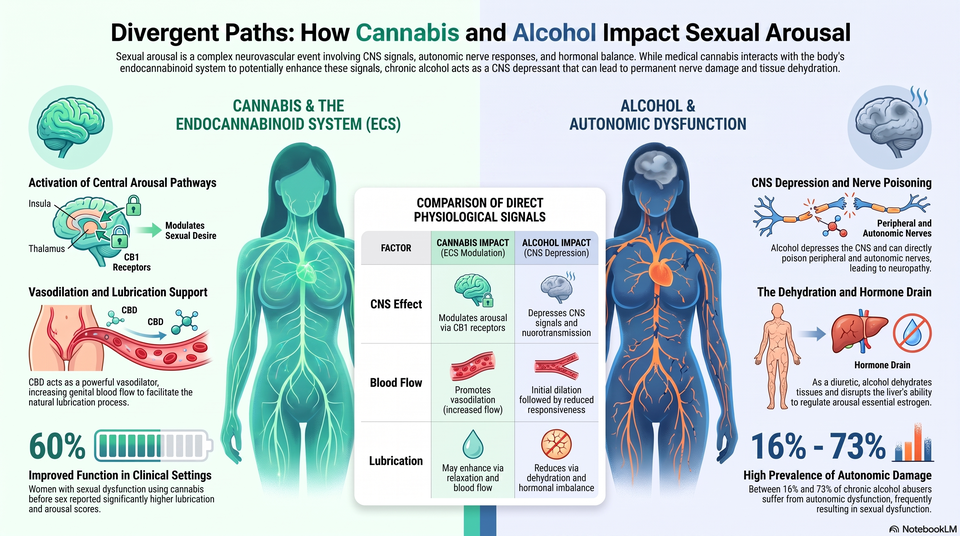
What is the impact of medical cannabis or chronic alcohol consumption on the central nervous system signals required for arousal lubrication?
Some medicines and substances can contribute to dryness, arousal change or sexual discomfort, but the safest answer is never to blame one tablet without context.
Direct answer
Cannabis and alcohol can affect arousal, mood, medicines and sexual response, but lubrication should be described as multifactorial rather than a simple central signal failure.
A useful answer separates dry mucous membranes, arousal response, pain, infection, GSM and medicine timing before suggesting a prescribing review.
Educational only. Suitability and next steps should be confirmed after consultation. Results vary. Not a cure.

Medication context
At a glance
These are the main points to understand before deciding whether symptoms are medicine-related, hormonal, product-triggered, skin-related or medically complex.
At a glance
Clinical summary
Main area
Medicines and secretions
Pattern
Variable side effect
Watch for
New severe symptoms
Next step
Medication review
Important safety note
Do not stop prescribed treatment because of dryness without speaking to the prescribing clinician, especially for isotretinoin, blood-pressure medicines or other monitored drugs.
GSM
Products
Skin
Review
Detailed answer
Detailed answer
The deeper answer starts by separating medicine effects, local hormone response, lubricant or cream irritation, skin disease, infection and arousal physiology.
Direct answer
The reader wants to know whether a medicine or substance could be reducing moisture or arousal response and how to discuss it safely with a clinician.
Tissue
Products
Safety
Direct answer
Start with the exact trigger and timing because a medicine change, local treatment, lubricant switch or cream reaction points to different next steps.
Medicine effect boundaries
Local tissue findings matter because burning, discharge, dryness, leakage, fissures and pain are not all the same clinical problem.
Mucosal dryness versus arousal response
Treatment or product changes should be framed as clinician-led or cautious trials, not proof of diagnosis or promises of symptom resolution.
Medication review
Persistent or severe symptoms need examination, swabs, medicine review, formulation review or specialist input rather than repeated self-management.
How the research shapes the answer
Approximately 70% of postmenopausal women experience symptoms of GSM, yet only about 7% receive appropriate treatment due to the misconception that it is an unavoidable part of ageing. Medical cannabis remains an off-label alternative, as no.
The benchmark shaped search intent and structure, while final wording avoids product fear, medication stopping advice, supplement promises and single-cause explanations.
Patient safety
Why this matters
Dryness, burning or leakage can affect sex, confidence, medication adherence and daily comfort, but the safest plan depends on cause.
It prevents unsafe stopping
Side effects should be reviewed without abruptly stopping prescribed medicines.
It separates mechanisms
Dry mucosa, arousal difficulty, pain and infection are different clinical problems.
It respects uncertainty
Medication links can be plausible without proving the whole cause.
It supports shared review
Prescriber, gynaecology and patient priorities may all matter.
Practical, proportionate care
Good advice should help patients discuss symptoms without shame, blame or abrupt medication changes.
The right next step may be product simplification, medicine review, local treatment adjustment, swabs, examination or a different diagnosis.
Considerations
What to consider
Prescribing GSM Therapies: Vaginal estrogens are available in ultra-low doses (e.g., 10 mcg oestradiol tablets) and are often applied daily for two weeks, followed by a maintenance dose of twice weekly. Non-Hormonal Options: For patients unable.
Consultation priorities
Useful details include medicine names, dose changes, treatment technique, lubricant or cream ingredients, symptom timing, discharge, odour, bleeding, pain and what has already been tried.
Ingredients
Technique
Review
Map timing
Compare symptom onset with medicine starts, dose changes and other health changes.
Check other causes
GSM, infection, skin disease, pain and products can coexist.
Review risks and benefits
Medication changes should be clinician-led.
Escalate severe symptoms
Bleeding, ulcers, discharge, severe pain or systemic illness need advice.
What not to assume
Do not assume one medicine, supplement, lubricant, cream or hormone level explains every dryness symptom.
Timelines vary because product irritation, local hormone response, medicine effects, skin reactions and GSM do not all improve at the same pace.
Common concerns and myths
Common misconceptions
Online advice about medicines, supplements and intimate products can become overconfident. These corrections keep the answer balanced.
Myth: Every dry mouth medicine causes vaginal dryness
Reality: medicines can contribute to dryness or arousal change, but symptoms still need context and clinician-led review.
Myth: Medication side effects mean treatment must be stopped
Reality: medicines can contribute to dryness or arousal change, but symptoms still need context and clinician-led review.
Myth: Lubrication is only a fluid-volume problem
Reality: medicines can contribute to dryness or arousal change, but symptoms still need context and clinician-led review.
Context matters
The same symptom can come from GSM, irritation, infection, medicines, product sensitivity, arousal response or skin disease.
Changes should be safe
Medication and hormone-treatment changes should be discussed with a clinician, while product trials should stop if symptoms worsen.
Safety checklist
Safety checklist
Use these checks to decide whether symptoms are suitable for routine review, cautious product change or more urgent advice.
Did timing change?
Link symptoms to new medicines, dose changes, local treatment, lubricant or cream use where possible.
Are symptoms localised?
Separate vulval burning, vaginal dryness, discharge, leakage, vestibular pain and urinary symptoms.
Could ingredients matter?
Preservatives, pH, osmolality, fragrances and active ingredients can affect sensitive tissue.
Are red flags present?
Bleeding, ulcers, swelling, severe pain or discharge with odour need advice.
More reassuring signs
The situation is more reassuring when symptoms are mild, improving after removing a likely trigger and not linked with bleeding, sores, swelling, odour or severe pain.
Improving
Clear timing
Reasons to seek advice
Seek advice for bleeding, ulcers, fissures, severe burning, swelling, discharge with odour, pelvic pain, urinary symptoms, suspected allergy, suspected infection or symptoms during complex hormone care.
Sores
Severe pain
When to escalate
When to seek medical help
Some symptoms should not be managed by changing products or medicines alone.
Use NHS 111 online
Bleeding, sores or swelling
Bleeding, ulcers, fissures, swelling, peeling or rapidly worsening pain should be assessed.
Discharge, odour or infection symptoms
New discharge, odour, pelvic pain, fever or urinary symptoms may need testing or treatment.
Treatment or medicine concerns
Severe irritation with local treatment, complex hormone history or suspected medicine side effects should be reviewed.
Emergency symptoms
Call 999 for life-threatening symptoms such as collapse, chest pain, breathing difficulty or stroke-like symptoms.
Use NHS 111 for urgent advice or call 999 in a life-threatening emergency. This page is educational and does not replace individual medical assessment.
Additional clinical context
How to use this answer
This page is designed to separate medication side effects, GSM, lubricant or moisturiser irritation, cream sensitivity, supplements, local treatment adherence and other causes of vulvovaginal dryness.What to discuss at appointment
Useful details include medicines, dose changes, local treatment technique, products used, supplement names, discharge, odour, bleeding, pain location, visible irritation and what improved or worsened symptoms.Regulatory resources
Authoritative resources
These resources support cautious advice on vaginal dryness, decongestants, isotretinoin, anticholinergic effects, alcohol and arousal-related lubrication.
Next step
Book a clinical consultation
A consultation can review medicine timing, dryness pattern, arousal, pain, discharge, alcohol or cannabis use and whether a prescribing review is appropriate.
▶ View Research Sources (12 Sources)
These 12 source names are selected from 24 display-ready sources, with a raw audit trail of 66 imported records. Additional reviewed material included UK clinical guidance, professional society guidance, peer-reviewed clinical papers, evidence reviews; duplicate, low-relevance and non-clinical records were removed before display.
Educational only. This information is for education only and is not a substitute for professional medical advice, diagnosis or treatment. Results vary. Not a cure.
