



Non-surgical fix for vaginal laxity? Common after birth or menopause. #shorts

Can intimate exosomes treat vaginal laxity after childbirth?

Vaginal Laxity Explained: Why "Tightening" Isn't the Answer (Medical Guide)
Pain plus looseness
Nerve aware
Sexual comfort
Women’s Health Clinic FAQ
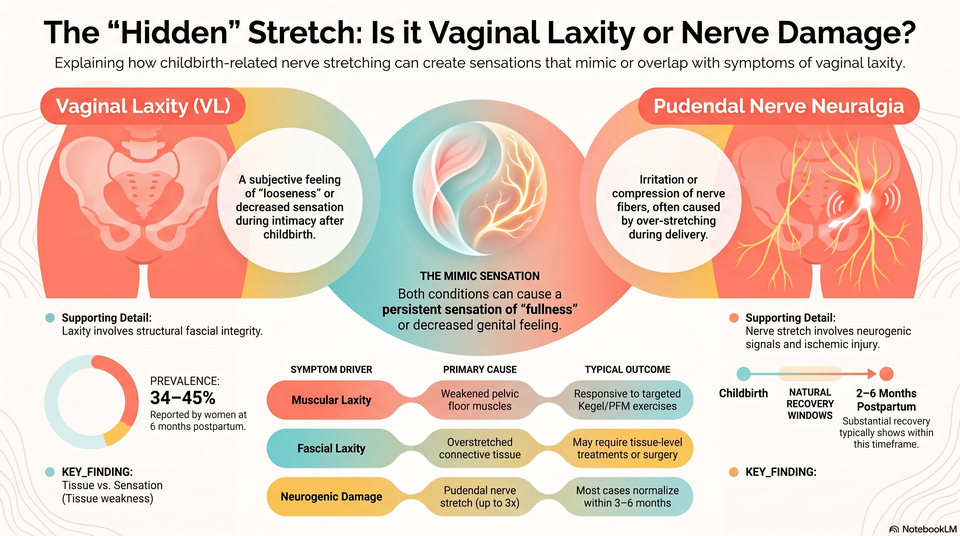
Can childbirth nerve stretch mimic vaginal laxity?
After birth trauma, looseness, pain, numbness and sexual changes can coexist because support, scar tissue, nerves and pelvic-floor tone may all be involved.
Direct answer
Childbirth-related nerve stretch can mimic vaginal laxity because reduced sensation, altered tone or slower pelvic-floor response may feel like looseness even when the main issue is nerve function. The safest next step is to assess structure, scar sensitivity, nerve symptoms and pelvic-floor tone together rather than treating one symptom in isolation.
A strong answer validates mixed symptoms and separates structural laxity from scar sensitivity, nerve stretch, muscle overactivity and psychosexual impact.
Educational only. Suitability and next steps should be confirmed after consultation. Results vary. Not a cure.

Symptom mapping
At a glance
These are the main points to understand before deciding whether symptoms need reassurance, pelvic-health physiotherapy, perineal review or specialist assessment.
At a glance
Postnatal support summary
Main area
Scar, pain and nerves
Pattern
Mixed symptoms
Watch for
Painful sex or numbness
Next step
Combined assessment
Important safety note
Painful sex, numbness, scar tenderness, reduced orgasm, pelvic pain, bleeding or worsening symptoms after birth trauma should be assessed before tightening is discussed.
Support
Pain
Rehab
Review
Detailed answer
Detailed answer
The deeper answer starts by locating the postnatal change: levator support, perineal body, scar tissue, nerve stretch, pelvic-floor tone, vaginal wall support or prolapse overlap.
Pudendal nerve stretch
The reader wants to understand sensation change, numbness or reduced tone after delivery.
Anatomy
Symptoms
Plan
Pudendal nerve stretch
Start with the birth event and the tissue most likely involved, because muscle, nerve, perineal and scar-related symptoms are not interchangeable.
Altered sensation
A loose feeling may overlap with gaping, prolapse, scar tenderness, pain, reduced sensation, urinary symptoms, bowel symptoms or normal healing.
Muscle response
Treatment choices should wait until pelvic-floor function, perineal healing, wall support and red-flag symptoms have been considered.
True laxity versus mimic
The plan should define whether the goal is support, comfort, sexual function, scar care, rehabilitation, reassurance or specialist referral.
How the research shapes the answer
Underreported and Dismissed: Many women suffer in silence or are told by healthcare providers to 'just live with it' or that it is a normal part of motherhood. The Limit of Kegels: While Pelvic Floor Muscle Training (PFMT) is the first-line defense.
The benchmark shaped search intent and structure, but final wording avoids device hype, universal recovery deadlines, procedure ranking and overconfident treatment claims.
Patient safety
Why this matters
Postnatal laxity symptoms matter because they can affect sex, exercise, bladder or bowel confidence, body trust and whether a woman feels properly heard after birth.
It locates the injury
Postnatal looseness can involve the levator muscles, perineal body, vaginal wall support, nerves, scar tissue, prolapse or tissue healing.
It avoids the wrong pathway
A tightening discussion should not bypass pelvic-floor assessment, perineal review, pain assessment or prolapse checks.
It validates mixed symptoms
Pain, looseness, numbness, gaping, reduced friction and altered orgasm can overlap after childbirth trauma.
It supports safer timing
Recovery, physiotherapy, specialist review and treatment discussions may each belong at different points in the postnatal timeline.
Assessment protects choice
A careful review does not mean treatment is impossible; it means the plan should match the real postnatal anatomy and symptom pattern.
The safest page helps patients understand what needs checking before a procedure or rehabilitation plan is chosen.
Considerations
What to consider
Initial Assessment: Clinical evaluation by a urogynaecologist or pelvic floor physical therapist to assess levator ani tone, rule out prolapse, and evaluate pudendal nerve function. Conservative Therapy: Guided PFMT using tactile or visual biofeedback devices to ensure correct muscle recruitment. Advanced Modalities.
Consultation priorities
Bring details about the birth, instruments, pushing time, shoulder dystocia, tears, episiotomy, repair, wound healing, gaping, bulge, pain, numbness, urinary symptoms, bowel symptoms and sexual concerns.
Symptoms
Function
Goals
Map the birth history
Include forceps, ventouse, shoulder dystocia, rapid birth, prolonged pushing, episiotomy, tear degree and wound healing.
Describe the symptom pattern
Note whether the concern is gaping, looseness, bulge, heaviness, pain, scar tenderness, numbness, leakage or bowel change.
Separate support from pain
A painful or tight pelvic floor can coexist with reduced support, so one symptom should not cancel out the other.
Choose the right review
Pelvic-health physiotherapy, gynaecology, urogynaecology, colorectal or obstetric review may be appropriate depending on symptoms.
What not to assume
Do not assume every postnatal loose feeling is normal, cosmetic, prolapse or a simple tightening problem.
0 to 6 Weeks Postpartum: Acute healing phase. Pudendal nerve terminal motor latency (PNTML) is at its highest (most impaired) immediately after delivery. 2 to 6 Months Postpartum: The pudendal nerve naturally recovers in the majority of women during this window. Sensations.
Common concerns and myths
Common misconceptions
These corrections keep the answer specific, trauma-aware and clinically cautious.
Myth: Reduced sensation always means the vagina is structurally loose
Reality: sexual comfort and sensation can involve support, nerves, scars, muscle tone, arousal and confidence together.
Myth: Nerve symptoms cannot improve
Reality: the answer depends on birth history, symptoms, pelvic-floor function, perineal healing, tissue comfort and realistic goals.
Myth: Numbness should be treated as a cosmetic tightening issue
Reality: sexual comfort and sensation can involve support, nerves, scars, muscle tone, arousal and confidence together.
Symptoms can overlap
Opening support, pelvic-floor injury, scar pain, nerve stretch and prolapse can produce overlapping symptoms.
Treatment has limits
Vaginal tightening cannot promise improved sensation, friction, orgasm, support restoration, pain relief or lasting results.
Safety checklist
Safety checklist
Use these checks to decide whether symptoms can be discussed routinely or need earlier medical advice.
What happened during birth?
Forceps, ventouse, shoulder dystocia, prolonged pushing, rapid birth, episiotomy or severe tears can guide assessment.
Where is the symptom?
Clarify whether the concern is gaping, canal looseness, bulge, scar pain, numbness, leakage or bowel change.
Is pain or wound concern present?
Painful sex, increasing pain, discharge, bleeding, wound breakdown or fever should change timing and pathway.
Are goals realistic?
The plan should define whether the aim is support, comfort, rehabilitation, scar care, confidence or symptom clarity.
More reassuring signs
The situation is more reassuring when symptoms are improving, there is no new bulge, severe pain, bleeding, discharge, wound concern, urinary retention or bowel dysfunction, and goals are realistic.
Mapped
No red flags
Reasons to seek advice
Persistent Dyspareunia: Pain during intercourse that does not improve after 3 to 6 months may indicate pudendal neuralgia, levator ani hypertonia, or painful scar tissue. Visible Prolapse: Sensations of 'falling out' or visible bulging extending beyond the hymenal ring, which require surgical.
Bulge
Pain
When to escalate
When to seek medical help
These symptoms or situations should not be managed with general vaginal-tightening advice alone.
Use NHS 111 online
Bleeding, fever or wound concern
Bleeding, fever, offensive discharge, wound breakdown or increasing perineal pain should be assessed promptly.
Bulge, retention or bowel change
A new bulge, urinary retention, faecal leakage or loss of bowel control needs clinical review.
Pain or sensory change
Severe pelvic pain, worsening painful sex, scar tenderness or persistent numbness should not be treated as simple looseness.
Emergency symptoms
Call 999 for life-threatening symptoms such as collapse, severe bleeding, chest pain, breathing difficulty or stroke-like symptoms.
Use NHS 111 for urgent advice or call 999 in a life-threatening emergency. This page is educational and does not replace individual medical assessment.
Additional clinical context
How to use this answer
Use this page to prepare a focused discussion about the birth event, where the symptom is felt and what else happens with it. The aim is to understand whether the concern is levator injury, perineal body change, wall support, scar tissue, nerve stretch, pain, prolapse overlap or normal recovery.What to bring to consultation
Helpful details include forceps or ventouse use, shoulder dystocia, pushing duration, rapid birth, tear degree, episiotomy, repair healing, wound symptoms, pelvic-floor exercises, gaping, bulge, urinary or bowel symptoms, painful sex, numbness, orgasm change and personal goals.Regulatory resources
Authoritative resources
These resources support UK-facing information on perineal trauma, pelvic pain, painful sex, pelvic-floor health and nerve-related symptom assessment.
Next step
Book a clinical consultation
A consultation can review scar tissue, pelvic-floor pain, nerve symptoms, sensation change, orgasm concerns, support symptoms and whether referral or physiotherapy is more appropriate.
▶ View Research Sources (12 Sources)
These 12 source names are selected from 12 display-ready sources, with a raw audit trail of 76 imported records. Additional reviewed material included UK clinical guidance, professional society guidance, peer-reviewed clinical papers; duplicate, low-relevance and non-clinical records were removed before display.
Educational only. This information is for education only and is not a substitute for professional medical advice, diagnosis or treatment. Results vary. Not a cure.
