
Can severe, chronic mechanical friction from sports training induce a local... | WHC Clinical FAQ

Chronic dynamic friction from running clothes alter the | WHC Clinical FAQ

Chronic dynamic friction from running clothes alter the
Structure
Fissure
Friction
Women’s Health Clinic FAQ
Can severe, chronic mechanical friction from sports training induce a localised hyperkeratosis that reduces entry-way tissue compliance?
Entry pain can come from local architecture, fissures, scar sensitivity or repeated friction, but persistent tearing still needs a careful vulval diagnosis.
Direct answer
Repeated mechanical friction may thicken or irritate local skin and reduce comfort, but persistent entry pain should be assessed for dermatoses, infection and focal lesions. The safest approach is to localise the pain, examine the skin and mucosa, check discharge or infection where relevant, and decide whether swabs, microscopy, pH testing, biopsy or specialist vulval review are needed. This avoids reducing persistent dyspareunia to thrush, dryness or friction alone.
The answer should explain mechanics without missing inflammatory dermatoses, infection, suspicious lesions or post-surgical anatomy.
Educational only. Suitability and next steps should be confirmed after consultation. Results vary. Not a cure.

Entry pain mechanics
At a glance
These are the main points to understand before deciding whether painful sex is linked to skin, discharge, infection, allergy, scarring, mechanics or a focal lesion.
At a glance
Clinical summary
Main area
Mechanical entry pain
Pattern
Fissure or scar
Watch for
Tearing
Next step
Focused exam
Important safety note
Recurrent tearing, a non-healing fissure, swelling, bleeding, a new lump or scar pain should be assessed.
Skin
Swabs
Biopsy
Review
Detailed answer
Detailed answer
The deeper answer starts by separating entrance pain, deep pain, vestibular pain, discharge, dermatoses, fissures, scarring, allergy and focal lesions.
Direct answer
The reader is asking how local architecture, fissuring, surgery or repeated friction can create entry pain without reducing everything to dryness.
Cause
Testing
Safety
Direct answer
A precise pain point can reveal fissure, scar, Bartholin area tenderness or vestibular involvement.
Local architecture and friction
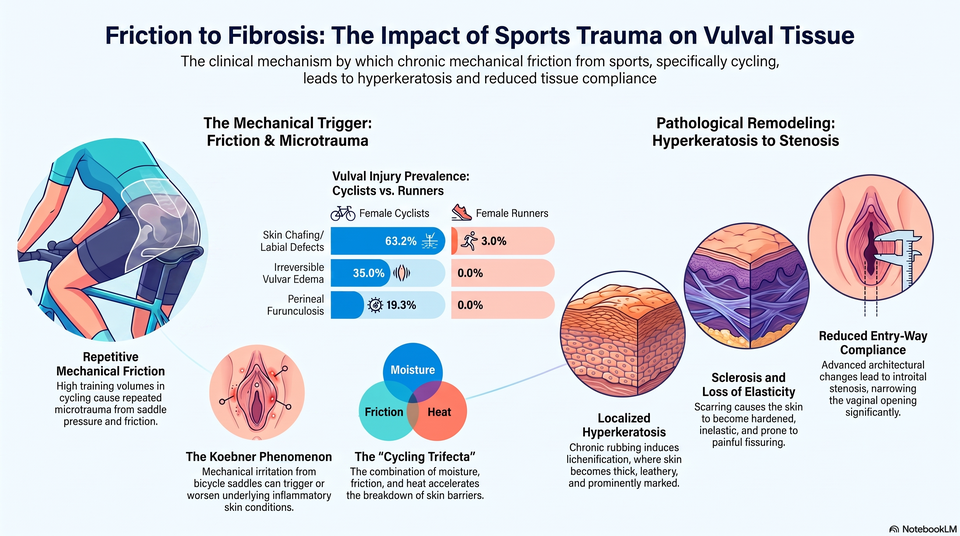
Repeated rubbing can irritate skin and reduce comfort, especially if tissue is already inflamed.
Fissuring or scar sensitivity
Marsupialisation or recurrent abscess history may alter local sensitivity and anatomy.
Mechanical triggers
Persistent fissures or lumps need diagnostic attention rather than only lubrication advice.
How the research shapes the answer
Underreporting: Saddle sores and sports-induced vulval trauma remain a "taboo" topic. Many athletes normalize the pain or feel too embarrassed to seek help, delaying crucial early interventions. Medical Mismanagement: Patients frequently report receiving conflicting or dismissive advice from healthcare providers who may.
The benchmark shaped search intent and section order, while final wording keeps anatomy precise, avoids self-treatment instructions and preserves biopsy vigilance.
Patient safety
Why this matters
Painful sex is not a single diagnosis. It can affect intimacy and confidence, but the clinical priority is to identify the cause without shame or false reassurance.
It localises pain
A precise pain point can reveal fissure, scar, Bartholin area tenderness or vestibular involvement.
It explains friction
Repeated rubbing can irritate skin and reduce comfort, especially if tissue is already inflamed.
It respects prior surgery
Marsupialisation or recurrent abscess history may alter local sensitivity and anatomy.
It checks for non-healing
Persistent fissures or lumps need diagnostic attention rather than only lubrication advice.
Cause-led care prevents harm
Repeatedly treating pain as thrush, dryness, friction or anxiety can delay the right diagnosis.
A better approach connects history, examination, tests, skin findings and follow-up so treatment matches the actual driver.
Considerations
What to consider
Mechanical Adjustments: Professional bike fitting is paramount. Wider saddles that support the ischial tuberosities reduce perineal pressure. "Cut-out" saddles must be chosen carefully, as they can sometimes increase pressure along the cut-out edges. Apparel and Friction Reduction: using seamless, well-fitting cycling shorts.
Consultation priorities
Useful details include pain location, discharge, odour, bleeding, visible lesions, itching, products, condoms, prior surgery, cycle timing, recurrent infections and vulval skin history.
Discharge
Triggers
Lesions
Pain point
Ask whether pain is at the entrance, one side, a scar, a fissure or deeper inside.
Tearing pattern
Repeated splitting suggests a local tissue or skin problem to identify.
Surgery history
Bartholin procedures, scars and recurrent abscesses can shape symptoms.
Mechanical load
Sport, clothing, cycling or repeated friction may add to irritation.
What not to assume
Do not assume persistent dyspareunia is only dryness, only thrush, only friction or only anxiety.
Acute Phase (0-48 hours): Minor chafing, superficial skin defects, and temporary numbness often resolve within 48 hours of rest and basic hygiene interventions. Subacute Phase (Weeks to Months): Recurrent microtrauma without adequate recovery leads to chronic inflammation, recurrent furunculosis (infected follicles), and.
Common concerns and myths
Common misconceptions
Painful sex content can become too vague. These corrections keep the answer clinically safer.
Myth: Entrance tearing is just dryness
Reality: local mechanics can contribute, but non-healing fissures or lesions still need assessment.
Myth: Bartholin surgery cannot change pain
Reality: local mechanics can contribute, but non-healing fissures or lesions still need assessment.
Myth: Sports friction is harmless if there is no open wound
Reality: local mechanics can contribute, but non-healing fissures or lesions still need assessment.
Precision matters
The vulva, vestibule, vagina, introitus, perineal folds and Bartholin gland area can produce different pain patterns.
Persistence changes the threshold
When symptoms persist, recur or do not respond as expected, reassessment is safer than repeating the same explanation.
Safety checklist
Safety checklist
Use these checks to decide whether symptoms can be discussed routinely or need prompt clinical advice.
Is there a visible lesion?
A plaque, fissure, ulcer, lump, colour change, thickened area or non-healing spot should be assessed.
Is discharge present?
Purulent discharge, odour, recurrent thrush-like symptoms or new irritation may need swabs, microscopy or clinician review.
Is pain focal or recurrent?
Vestibular pain, one-sided entry pain, scar pain, fissuring or deep pain can point to different causes.
Has treatment failed?
Repeated antifungals, steroids, lubricants or antibiotics without improvement should prompt reassessment.
More reassuring signs
Symptoms are more reassuring when they are mild, short-lived, improving, already assessed and not linked with bleeding, sores, swelling, fever, discharge or a persistent lesion.
Improving
Reviewed
Reasons to seek advice
Signs of Infection: Rapidly expanding boils, spreading erythema (redness), or systemic symptoms like fever indicate severe secondary bacterial infection (e.g., from Staphylococcus aureus) requiring prompt antibiotic therapy. Irreversible Structural Damage: Persistent unilateral swelling that does not resolve with rest suggests "Bicyclist's Vulva".
Bleeding
Discharge
When to escalate
When to seek medical help
Some symptoms should not be managed as routine painful sex, dryness or recurrent thrush.
Use NHS 111 online
Persistent or changing lesion
A painful, thickened, pigmented, ulcerated, bleeding or non-healing lesion should be assessed promptly.
Bleeding, ulceration or swelling
Bleeding after sex, visible ulceration, new swelling or a lump should not be ignored.
Severe discharge, fever or pelvic pain
Purulent discharge, foul odour, fever, pelvic pain, urinary symptoms or feeling unwell needs clinical advice.
Emergency symptoms
Call 999 for life-threatening symptoms such as collapse, chest pain, breathing difficulty or stroke-like symptoms.
Use NHS 111 for urgent advice or call 999 in a life-threatening emergency. This page is educational and does not replace individual medical assessment.
Additional clinical context
How to use this answer
This page is designed to separate vulval skin disease, inflammatory vaginitis, infection, allergy, scarring, fissuring, post-surgical anatomy, focal lesions and pain sensitisation.What to discuss at appointment
Useful details include the exact pain point, visible changes, discharge, odour, bleeding, itch, swelling, products used, condom exposure, cycle timing, prior surgery, previous treatments and whether symptoms are changing.Regulatory resources
Authoritative resources
These resources support advice on painful sex, Bartholin gland conditions, vulval fissures, mechanical irritation and specialist vulval assessment.
Next step
Book a clinical consultation
A consultation can review the pain point, fissuring, scar history, Bartholin gland surgery, friction triggers, skin condition signs and whether biopsy or referral is needed.
▶ View Research Sources (12 Sources)
These 12 source names are selected from 24 display-ready sources, with a raw audit trail of 95 imported records. Additional reviewed material included UK clinical guidance, professional society guidance, peer-reviewed clinical papers, evidence reviews; duplicate, low-relevance and non-clinical records were removed before display.
Educational only. This information is for education only and is not a substitute for professional medical advice, diagnosis or treatment. Results vary. Not a cure.
