


Can an unrecognised pelvic organ prolapse mesh exposure cause a focal point... | WHC Clinical FAQ

How pelvic organ prolapse mesh erosion causes localized dryness
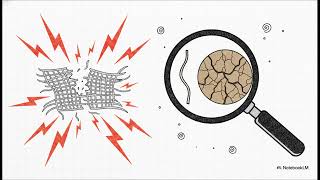
How pelvic organ prolapse mesh erosion causes localized dryness | WHC Clinical FAQ
Device context
Friction point
Bleeding check
Women’s Health Clinic FAQ
Can an unrecognised pelvic organ prolapse mesh exposure cause a focal point of sharp mechanical friction and bleeding during sex?
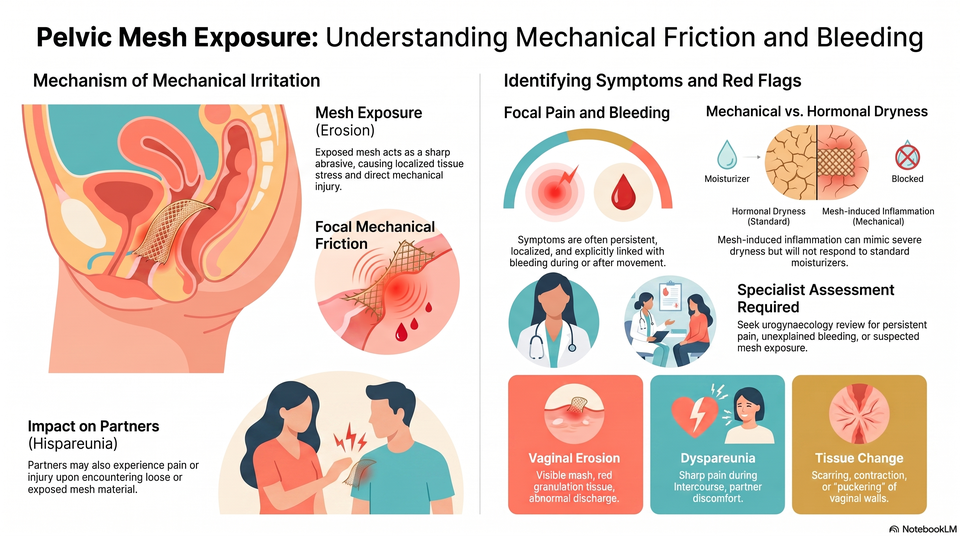
Mesh, prolapse surgery or pessary movement can sometimes create a focal friction point, pressure area or altered vaginal axis during intimacy.
Direct answer
Mesh exposure can create a focal point of friction, sharp pain or bleeding during sex, so post-prolapse surgery bleeding or partner discomfort needs examination. The safest approach is to define the anatomy, locate the pain, check for bleeding, infection or post-surgical red flags, and decide whether examination, imaging, supervised dilation discussion or specialist gynaecology review is needed. This avoids treating structural dyspareunia as anxiety, friction or a problem to force through.
The answer should be practical and safety-led: pain or bleeding after mesh, prolapse surgery or pessary use needs examination rather than guesswork.
Educational only. Suitability and next steps should be confirmed after consultation. Results vary. Not a cure.

Mechanical focal pain
At a glance
These are the main points to understand before deciding whether painful sex is linked to entry obstruction, deep pelvic pathology, scarring, stenosis, mesh, pessary pressure or infection.
At a glance
Clinical summary
Main area
Mesh or pessary
Pattern
Focal friction pain
Watch for
Bleeding
Next step
Examination
Important safety note
Bleeding, sharp focal pain, partner discomfort, suspected mesh exposure, discharge or pessary-related pressure symptoms should be assessed.
Depth
Scarring
Bleeding
Review
Detailed answer
Detailed answer
The deeper answer starts by separating primary entry obstruction, deep collision pain, post-surgical scarring, stenosis, mesh or pessary friction, infection and endometriosis.
Direct answer
The reader needs a practical explanation of how mesh, prolapse surgery or pessary movement can create focal pain or bleeding during sex.
Mechanism
Imaging
Safety
Direct answer
Sharp focal pain often needs direct examination of the pressure or exposure site.
Mechanical friction point
Bleeding with sex after mesh, surgery or pessary use should not be dismissed as normal friction.
Device or mesh context
Pessary size, position, vaginal tissue and prolapse stage can all change comfort.
Bleeding and tissue health
Mesh or pessary concerns need careful assessment, not panic or reassurance without examination.
How the research shapes the answer
The clinical reality is that structural dyspareunia can involve congenital anatomy, deep pelvic disease, adhesions, post-surgical scarring, mesh, pessary pressure, stenosis or infection.
The benchmark shaped search intent and section order, while final wording avoids procedural instructions and keeps bleeding, infection, mesh and post-surgical red flags visible.
Patient safety
Why this matters
Structural painful sex is easy to mislabel as anxiety, friction or normal healing. The safer approach is to describe the mechanism and check what needs assessment.
It localises the friction point
Sharp focal pain often needs direct examination of the pressure or exposure site.
It treats bleeding seriously
Bleeding with sex after mesh, surgery or pessary use should not be dismissed as normal friction.
It checks fit and tissue health
Pessary size, position, vaginal tissue and prolapse stage can all change comfort.
It avoids alarmism
Mesh or pessary concerns need careful assessment, not panic or reassurance without examination.
Assessment prevents avoidable harm
Forcing penetration, ignoring bleeding or following generic dilation advice can worsen pain or delay the right diagnosis.
A better plan connects anatomy, symptoms, examination tolerance, imaging, prior surgery and follow-up.
Considerations
What to consider
Multidisciplinary Team (MDT) Requirement: Patients with suspected mesh complications must be referred to a specialised regional MDT that includes urogynaecologists, urologists, colorectal surgeons, and pain management specialists. Diagnostic Tools: Clinical evaluation includes pelvic mapping (e.g., cotton swab test), assessing vaginal mucosal health.
Consultation priorities
Useful details include entry versus deep pain, tearing, bleeding, fever, discharge, tampon history, period symptoms, previous surgery, mesh or pessary use, imaging and examination preferences.
Depth
Surgery
Safety
Device history
Type of surgery, mesh, pessary size and review schedule matter.
Bleeding or discharge
These symptoms can signal exposure, ulceration, infection or tissue irritation.
Partner discomfort
A partner feeling scratchiness can be a useful clue to mesh exposure.
Review timing
New focal pain or bleeding should prompt examination.
What not to assume
Do not assume structural dyspareunia is only anxiety, only friction, normal healing or something to push through.
Symptom Onset: Mesh-related symptoms can appear within weeks or months following surgery, but may also present years or even over a decade later as vaginal tissues naturally atrophy with age. Conservative Trial: For asymptomatic or minimally symptomatic women with a small area.
Common concerns and myths
Common misconceptions
Structural dyspareunia advice can be too dismissive or too technical. These corrections keep the answer safer.
Myth: Mesh exposure is always obvious
Reality: focal pain or bleeding with mesh, prolapse surgery or pessary use needs examination rather than reassurance alone.
Myth: A pessary cannot affect sexual pain
Reality: focal pain or bleeding with mesh, prolapse surgery or pessary use needs examination rather than reassurance alone.
Myth: Bleeding during sex is just friction
Reality: focal pain or bleeding with mesh, prolapse surgery or pessary use needs examination rather than reassurance alone.
Anatomy matters
The hymen, introitus, vestibule, vaginal canal, apex, cervix, uterus, mesh and pessary can create different pain patterns.
Instructions have limits
Surgery, dilation, pessary adjustment and mesh management need individual examination, consent and supervision.
Safety checklist
Safety checklist
Use these checks to decide whether symptoms can be discussed routinely or need prompt clinical advice.
Is there bleeding or discharge?
Bleeding during sex, discharge, odour or suspected mesh exposure should be assessed.
Is deep pain severe or new?
Severe deep pain, fever, feeling unwell or suspected abscess needs prompt advice.
Is there a structural barrier?
Repeated failed entry, tearing, tampon difficulty or obstructed periods can point to anatomy that needs review.
Is there post-surgical narrowing?
Narrowing after hysterectomy, prolapse repair, perineoplasty or cancer treatment should be managed with specialist guidance.
More reassuring signs
Symptoms are more reassuring when they are mild, improving, already assessed and not linked with bleeding, fever, discharge, a mass, mesh exposure, severe pain or post-surgical worsening.
Improving
Reviewed
Reasons to seek advice
Urgent Clinical Red Flags: Patients must seek immediate specialist assessment if they present with heavy or unexplained vaginal bleeding, foul-smelling discharge, visible or palpable mesh, severe unprovoked pelvic pain, or inability to empty the bladder or bowels. Contraindications to Conservative Care: Topical.
Fever
Severe pain
When to escalate
When to seek medical help
Some symptoms should not be managed as routine painful sex, friction or normal healing.
Use NHS 111 online
Bleeding, mass or mesh concern
Bleeding with sex, a new lump, partner scratchiness or suspected mesh exposure should be assessed.
Fever or severe pelvic pain
Fever, severe deep pain, discharge, feeling unwell or possible abscess needs prompt medical advice.
Failed entry or obstructed symptoms
Inability to tolerate entry, repeated tearing, tampon difficulty or obstructed periods should be reviewed.
Emergency symptoms
Call 999 for life-threatening symptoms such as collapse, chest pain, breathing difficulty or stroke-like symptoms.
Use NHS 111 for urgent advice or call 999 in a life-threatening emergency. This page is educational and does not replace individual medical assessment.
Additional clinical context
How to use this answer
This page is designed to separate congenital anatomy, primary entry obstruction, deep pelvic pathology, adhesions, post-surgical scarring, stenosis, mesh exposure, pessary pressure and infection-related pain.What to discuss at appointment
Useful details include entry versus deep pain, tearing, bleeding, fever, discharge, tampon history, period symptoms, prior surgery, prolapse or pessary use, mesh history, imaging, cancer-treatment history and examination preferences.Regulatory resources
Authoritative resources
These resources support advice on painful sex, pelvic organ prolapse, pessary use, mesh exposure and post-surgical mechanical pain.
Next step
Book a clinical consultation
A consultation can review prolapse surgery history, mesh or pessary use, bleeding, discharge, partner discomfort, tissue health and whether device adjustment or specialist review is needed.
▶ View Research Sources (12 Sources)
These 12 source names are selected from 24 display-ready sources, with a raw audit trail of 160 imported records. Additional reviewed material included UK clinical guidance, professional society guidance, peer-reviewed clinical papers, evidence reviews; duplicate, low-relevance and non-clinical records were removed before display.
Educational only. This information is for education only and is not a substitute for professional medical advice, diagnosis or treatment. Results vary. Not a cure.
