


Can surgical tightening affect bladder symptoms?

Can surgical tightening affect bladder symptoms? | WHC Clinical FAQ

How do clinicians safely fit an incontinence pessary to ensure it stops lea... | WHC Clinical FAQ
Assessment first
UK guidance
Safety focused
Women’s Health Clinic FAQ
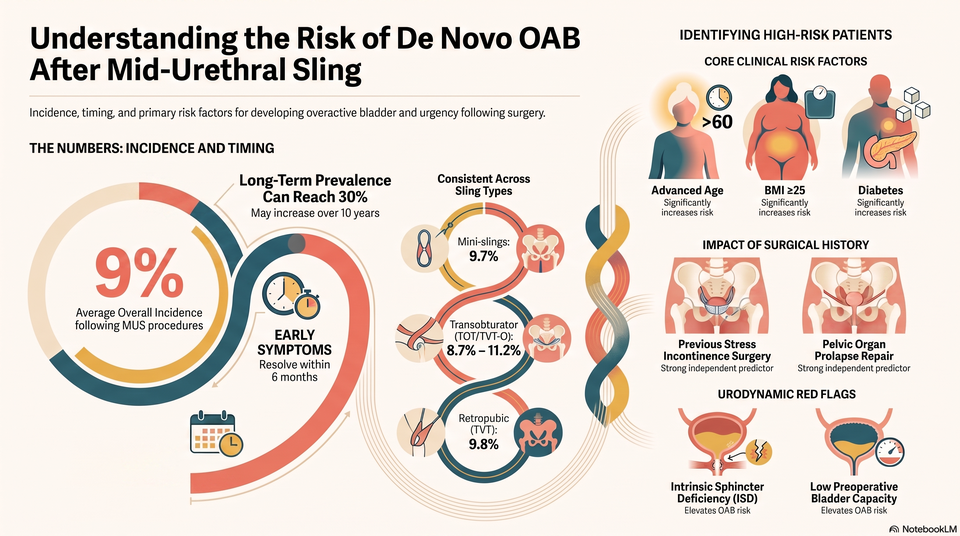
What is the risk of developing de novo urge incontinence or overactive bladder after mid-urethral sling placement?
Surgical choices for stress urinary incontinence can feel difficult because benefit, recovery, mesh considerations and complication pathways all matter. The safest answer starts with the exact symptom pattern and the reason surgery is being considered.
Direct answer
New urgency or overactive bladder symptoms can occur after mid-urethral sling placement, although the risk varies between patients and studies. Symptoms may be related to bladder sensitivity, infection, incomplete emptying, obstruction, pre-existing mixed incontinence or post-operative irritation. The important point is not to assume every leak after surgery is stress leakage. New urgency, frequency, pain or poor stream should be assessed.
A good consultation should separate stress leakage from urgency, retention, infection, pain, prolapse and previous-surgery issues before recommending a procedure or revision pathway.
Educational only. This page is educational and does not replace individual assessment. Results vary. Not a cure.

SUI surgery guidance
At a glance
These points help orient the decision before a surgical or specialist continence consultation.
At a glance
Clinical summary
Recovery
Advice depends on healing, symptoms and procedure type.
Risks
Urgency, pain, infection or retention should be reviewed.
Personal factors
Work, lifting, BMI and tissue health can change advice.
Follow-up
Return to activity should be guided by the treating team.
Important safety note
Seek medical advice promptly for inability to pass urine, painful bladder fullness, fever, blood in urine, severe pelvic or groin pain, unusual vaginal bleeding or discharge, suspected mesh exposure, recurrent infection symptoms or new neurological symptoms.
Mesh
Recovery
Consent
Follow-up
Detailed answer
Detailed answer
Recovery after SUI surgery is not only about the calendar; it is also about bladder emptying, pain, vaginal healing and whether leakage or urgency changes.
Clinical context
Recovery advice should be personalised because healing, job demands, sex, lifting, urgency and bladder emptying do not follow one identical timetable.
Bladder neck
Mesh safety
Aftercare
What the procedure is trying to change
Recovery after SUI surgery is not only about the calendar; it is also about bladder emptying, pain, vaginal healing and whether leakage or urgency changes.
Why the details matter
Activity, sex, lifting and work advice should come from the operating team because the procedure, tissues and patient context vary.
Guidance and evidence
New urgency, poor stream, painful fullness, fever, bleeding, discharge or worsening pelvic pain should not be treated as routine recovery.
Safety and follow-up
Long-term outcome discussions should be practical and non-stigmatising, especially when weight, occupation or previous symptoms affect risk.
What this means in practice
Responsible SUI information explains anatomy, material, recovery and complication pathways without teaching surgical technique.
If symptoms suggest retention, infection, mesh exposure, severe pain or new urgency, treatment decisions should pause until the cause is assessed.
Patient safety
Why this distinction matters
Sling route, mesh use, previous surgery, recovery symptoms and revision options can change both benefit and risk.
It clarifies anatomy
Retropubic, transobturator, fascial and colposuspension approaches are not the same operation.
It protects consent
Patients should understand alternatives, mesh-specific issues, removal limits and follow-up before surgery.
It separates symptoms
Stress leakage, urgency, retention, pain and infection can overlap but need different responses.
It prevents overclaiming
Surgery may help selected patients, but no procedure should be presented as certain, effortless or suitable for everyone.
A clinician-led decision
The safest plan balances symptom burden, diagnosis, previous treatment, tissue health, recovery needs, risks and patient priorities.
This is especially important when mesh, revision surgery, pain, retention or complex pelvic-floor symptoms are part of the picture.
Considerations
What to consider
Before deciding, consider diagnosis, non-surgical treatment history, urgency symptoms, emptying, prolapse, pain, previous surgery, recovery needs and who will manage complications.
Consultation priorities
The most useful aftercare plan tells the patient what to expect, what to avoid early on and which symptoms should trigger review.
Alternatives
Recovery
Review
Before surgery
Before surgery, the team should explain expected recovery, restrictions, warning signs and who to contact after discharge.
Consent discussion
Early recovery focuses on passing urine, pain control, wound or vaginal healing and avoiding strain while tissues settle.
After surgery
Return to sex, work, exercise or heavy lifting should be paced according to written advice and symptom response.
If symptoms persist
If leakage returns or new symptoms appear, review should check stress leakage, urgency, infection, emptying and pain separately.
Practical expectations
Recovery and results vary; follow-up should review leakage, bladder emptying, pain, urgency, vaginal healing and any new symptoms.
Costs, availability, procedure type and aftercare details should be confirmed directly with the clinic before booking.
Common concerns and myths
Common misconceptions
These points keep surgical SUI decisions realistic and safety-led.
Myth: recovery rules are identical for everyone
Reality: timing depends on the procedure, tissue healing, symptoms, job demands and surgeon advice.
Myth: urgency after surgery proves failure
Reality: urgency can have several causes and should be assessed.
Myth: weight discussions should be avoided
Reality: weight can affect pressure and recurrence risk, but it should be discussed respectfully and clinically.
Evidence and guidance
Clinical recommendations should follow current guidance, patient-specific assessment and transparent discussion of evidence limits.
Alternatives
Supervised PFMT, pessary support, bulking, colposuspension, autologous fascial sling, mesh sling or specialist referral may fit different patients.
Safety checklist
Safety checklist
Use these checks before relying on a surgical, mesh or revision recommendation for SUI.
Is the diagnosis clear?
Stress leakage, urgency, overflow, infection, retention, pain and prolapse-related symptoms should be separated.
Are alternatives understood?
Ask how non-surgical care, bulking, colposuspension, fascial sling, mesh sling or specialist referral compare in your case.
Are red flags absent?
Seek medical advice promptly for inability to pass urine, painful bladder fullness, fever, blood in urine, severe pelvic or groin pain, unusual vaginal bleeding or discharge, suspected mesh exposure, recurrent infection symptoms or new neurological symptoms.
Is follow-up planned?
Know who reviews urinary retention, infection, pain, mesh exposure, new urgency or recurrent leakage after surgery.
Reassuring signs
Proceeding is more reasonable when diagnosis is clear, options are understood, expectations are realistic and follow-up is arranged.
Informed consent
Review plan
Reasons to pause
Seek medical advice promptly for inability to pass urine, painful bladder fullness, fever, blood in urine, severe pelvic or groin pain, unusual vaginal bleeding or discharge, suspected mesh exposure, recurrent infection symptoms or new neurological symptoms.
Infection
Mesh concern
When to escalate
When to seek medical help
Some symptoms before or after SUI surgery need prompt review.
Use NHS 111 online
Unable to pass urine
Inability to pass urine, painful bladder fullness or repeated unsuccessful attempts to void need prompt clinical advice.
Infection symptoms
Fever, burning with systemic symptoms, worsening pelvic pain, discharge or feeling unwell should be assessed.
Pain, bleeding or mesh concern
Severe pelvic or groin pain, unusual vaginal bleeding, blood in urine or suspected mesh exposure should not be ignored.
Emergency symptoms
Call 999 in a life-threatening emergency, including collapse, chest pain, breathing difficulty or sudden neurological symptoms.
Use NHS 111 for urgent advice or call 999 in a life-threatening emergency. This page is educational and does not replace individual medical assessment.
More clinical detail
Recovery is symptom-led as well as time-led
Calendar timelines are helpful, but they should not override symptoms. Pain, fever, bleeding, discharge, inability to pass urine, poor stream or new urgency may change the recovery plan and should be discussed with the treating team.Returning to activity
Work, sex, lifting and exercise advice depends on the procedure, healing, job demands, pelvic-floor support and whether leakage or pain returns. Written aftercare from the operating team should take priority over generic online timelines.Regulatory resources
Authoritative resources
These resources support assessment-led, evidence-aware SUI surgery information.
NICE NG123 SUI surgery follow-up
NICE anchors follow-up, recurrent symptoms, voiding difficulty and referral after SUI procedures.
NHS surgery for urinary incontinence
NHS provides public information on recovery, risks and procedural choices for urinary incontinence surgery.
Cambridge University Hospitals sling procedure leaflet
This NHS hospital leaflet gives practical public information on sling surgery risks and recovery.
Next step
Book a continence consultation
A consultation can clarify the SUI mechanism, review conservative and surgical options, and decide whether specialist assessment is needed.
▶ View Research Sources (12 Sources)
These 12 source names are selected from 154 curated sources. Additional reviewed material included UK clinical guidance, professional society guidance, peer-reviewed clinical papers, evidence reviews; duplicate and low-relevance records were removed before display.
Educational only. This information is for education only and is not a substitute for professional medical advice, diagnosis or treatment. Results vary. Not a cure.
