



Should pelvic floor therapy come before tightening postpartum?

Should pelvic floor therapy come before tightening postpartum? | WHC Clinical FAQ

Can vaginal tissue recover naturally after 12 months postpartum? | WHC Clinical FAQ
Entry pain
Pelvic floor
Tissue comfort
Women’s Health Clinic FAQ
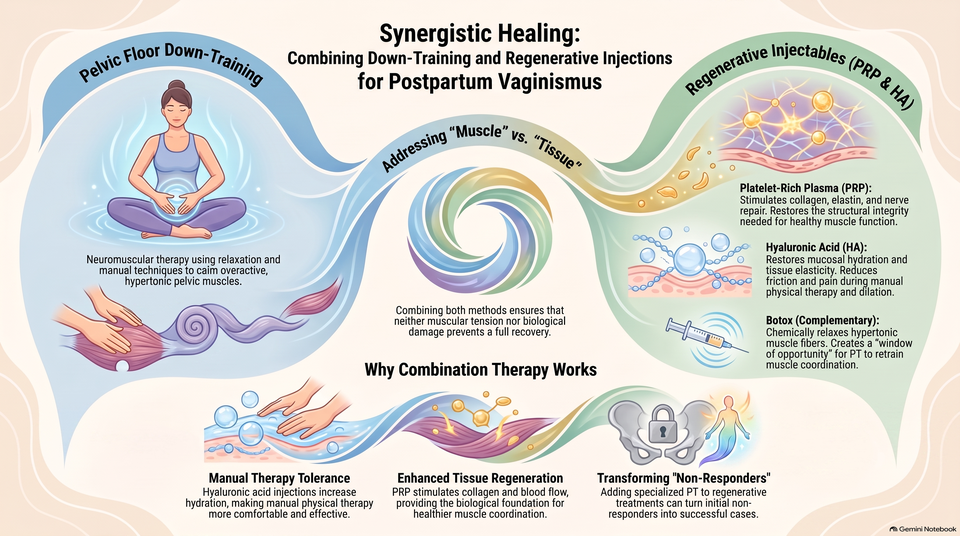
Can down-training be combined with regenerative injectables for postpartum vaginismus?
Pain at the vaginal opening after childbirth can be frightening, especially when everything has been described as healed.
Direct answer
Pelvic-floor down-training can be central in postpartum vaginismus because the muscles may protectively tighten around pain, fear or previous birth trauma. Regenerative injectables may be relevant only when a specific tissue issue, such as painful scar or dryness, is also present. The two should not be bundled automatically. Care should usually address pain education, scar assessment, pelvic-floor tone, psychological safety, lubricants or hormonal factors, and gradual follow-up.
The safest page separates scar tissue, mucosal dryness, pelvic-floor muscle response, nerve sensitivity, infection, wound healing and deeper pelvic injury before discussing regenerative or device-based options.
Educational only. Suitability must be confirmed after consultation and assessment. Results vary. Not a cure.

Entry-pain consultation
At a glance
These points keep the answer grounded before regenerative treatment, device treatment, scar work or surgical review is considered.
At a glance
Clinical summary
Entry pain is real
Pain after birth should not be dismissed as something to tolerate.
The repair may matter
A tight or uneven repair can change tissue stretch at the opening.
Muscles may guard
Pelvic-floor overactivity can maintain pain even after the scar heals.
Treatment is layered
Physiotherapy, scar care, lubrication, hormones or procedures may have different roles.
Important safety note
Fever, wound opening, offensive discharge, pus, heavy bleeding, faecal leakage, urinary retention, fistula symptoms, severe pelvic pain, calf swelling, chest pain, breathlessness or thoughts of self-harm need prompt medical advice.
Repair
Tone
Dryness
Comfort
Detailed answer
Detailed answer
The useful explanation is introital scar tethering, tight repair, dryness and pelvic-floor overactivity, while keeping birth injury, wound safety and evidence limits clear.
The clinical distinction
A surface scar, tight perineal repair, pelvic-floor overactivity, levator injury, infection and hormonal dryness can create similar symptoms but need different clinical thinking.
Muscle
Nerves
Safety
Tight repair
A narrowed or tethered perineal repair can make the introital ring less compliant.
Dryness and friction
Breastfeeding and low-oestrogen states can make healed tissue feel raw or fragile.
Guarding loop
Pain can trigger protective muscle tightening, which then makes penetration harder.
Adjunctive treatment
Regenerative or HA options should fit a confirmed tissue problem, not replace diagnosis.
What this means in practice
A plausible regenerative mechanism does not prove that pain, scar stiffness, gaping or nerve symptoms will resolve.
A safe consultation should review tear history, healing, pain triggers, bowel and bladder symptoms, pelvic-floor tone and realistic options.
Patient safety
Why this matters
Persistent pain or changed sensation after childbirth can affect confidence, intimacy, movement and trust in the body.
It protects intimacy
Clear explanations may reduce fear and shame around sex after birth.
It prevents wrong targeting
Treating tightness alone may miss dryness, nerve pain or muscle guarding.
It supports paced care
Down-training and gradual progress can be more appropriate than rushing procedures.
It recognises trauma
Birth injury and painful examinations can shape how the body responds.
A better clinical conversation
The goal is not to sell a procedure, but to identify what is actually causing symptoms and what level of care is proportionate.
Patients should leave understanding what is known, what is uncertain, and what would change the plan.
Considerations
What to consider
Before treatment, the clinical review should clarify tear grade, wound healing, scar tenderness, tissue quality, pelvic-floor tone, pain behaviour, sexual symptoms and bowel or bladder function.
Consultation priorities
The first step is usually history, examination where appropriate, pain mapping, pelvic-floor assessment and discussion of conservative or referral options.
Examination
Consent
Follow-up
Check the tissue
Scar thickness, tethering, tenderness, mucosal dryness and wound integrity can all influence treatment suitability.
Check the pelvic floor
Muscle weakness, overactivity, levator injury, prolapse symptoms or altered sensation may redirect the plan.
Check red flags
Infection signs, wound opening, bowel leakage, urinary retention, severe pain or heavy bleeding should be reviewed first.
Check expectations
Non-surgical care may support comfort or tissue quality, but structural injury or severe scarring may need referral.
Practical expectations
Response can take time and should be judged by comfort, function, examination findings and adverse symptoms.
Costs, access and treatment plans should be confirmed before booking.
Common concerns and myths
Common misconceptions
These myths are common because postnatal scar pain and pelvic-floor injury are often oversimplified.
Myth: Entry pain is normal after having a baby
Reality: postnatal symptoms need assessment before treatment claims are made.
Myth: A tighter repair is always better
Reality: scar, mucosa, pelvic-floor muscle, nerve and emotional factors can overlap.
Myth: Vaginismus is purely psychological
Reality: results vary, evidence has limits, and follow-up should shape the plan.
Biology is not a promise
Collagen remodelling, inflammatory signalling, hydration and nerve sensitivity are useful concepts, but they do not promise symptom resolution.
Symptoms need context
A patient can have pain from scar tissue, pelvic-floor guarding, dryness, levator injury, infection, granulation tissue or trauma-related fear.
Safety checklist
Safety checklist
Use these checks before considering regenerative or device-based treatment after childbirth trauma.
Has healing been checked?
The wound or scar should be examined if pain, discharge, bleeding or opening is present.
Has OASI been considered?
Bowel leakage, wind incontinence or severe tear history should trigger specialist review.
Has pelvic-floor tone been assessed?
Weakness and overactivity need different rehabilitation approaches.
Are expectations realistic?
Regenerative and device-based options should be adjunctive and assessment-led.
Reassuring signs
Proceeding is more reasonable when the scar is healed, red flags are absent, goals are clear, alternatives are explained and follow-up is planned.
Assessed
Reviewed
Reasons to pause
Pause for fever, wound opening, offensive discharge, heavy bleeding, bowel leakage, urinary retention, severe pain or significant distress.
Bleeding
Leakage
When to escalate
When to seek medical help
Some postnatal scar or pelvic-floor symptoms need prompt medical assessment rather than elective treatment.
Use NHS 111 online
Possible infection
Fever, worsening pain, offensive discharge, pus or feeling unwell should be assessed promptly.
Wound or bleeding concerns
Wound opening, heavy bleeding or rapidly worsening swelling needs medical advice.
Bowel or bladder symptoms
Faecal leakage, wind incontinence, urinary retention or suspected fistula symptoms need specialist review.
Emergency symptoms
Call 999 for life-threatening symptoms such as collapse, chest pain, breathing difficulty or sudden neurological symptoms.
Use NHS 111 for urgent advice or call 999 in a life-threatening emergency. This page is educational and does not replace individual medical assessment.
More clinical detail
Why introital scar tethering, tight repair, dryness and pelvic-floor overactivity needs careful framing
Postnatal scar and pelvic-floor symptoms sit at the edge of tissue healing, sexual comfort, muscle function and emotional recovery. The useful patient question is not whether a treatment sounds regenerative, but whether the cause has been properly identified.What patients can safely ask
Ask whether symptoms appear scar-related, muscle-related, nerve-related, hormonal, infection-linked or suggestive of deeper support injury; what conservative options apply; and what evidence supports any adjunctive treatment.What should stay clinician-led
Injection decisions, energy-device choices, scar-work technique, imaging interpretation, timing after childbirth and surgical referral decisions should be handled through clinical assessment and consent.Regulatory resources
Authoritative resources
These resources support cautious discussion of perineal tears, pelvic-floor injury, wound safety, consent and evidence limits.
RCOG perineal tears during childbirth
UK patient information relevant to perineal repair, healing and ongoing symptoms.
NICE NG210 pelvic floor dysfunction
UK guidance anchor for pelvic-floor assessment, conservative care and symptom-led referral.
Imperial Perinatal Pelvic Health Service
NHS example of multidisciplinary postnatal pelvic-health support for pain and pelvic-floor symptoms.
Next step
Book a specialist consultation
A consultation can review scar pain, pelvic-floor symptoms, childbirth history and whether conservative, regenerative, device-based or referral options are appropriate.
▶ View Research Sources (12 Sources)
These 12 source names are selected from 126 curated sources. Additional reviewed material included professional society guidance, peer-reviewed clinical papers, evidence reviews, clinical trial records; duplicate and low-relevance records were removed before display.
Educational only. This information is for education only and is not a substitute for professional medical advice, diagnosis or treatment. Results vary. Not a cure.

