


What is the recommended aftercare routine after CO2 laser resurfacing for b... | WHC Clinical FAQ

What is the recommended aftercare routine after CO2 laser resurfacing for best healing?

What is the recommended aftercare routine after CO2 laser resurfacing for best healing?
Assessment first
Evidence-aware
Device safety
Women’s Health Clinic FAQ
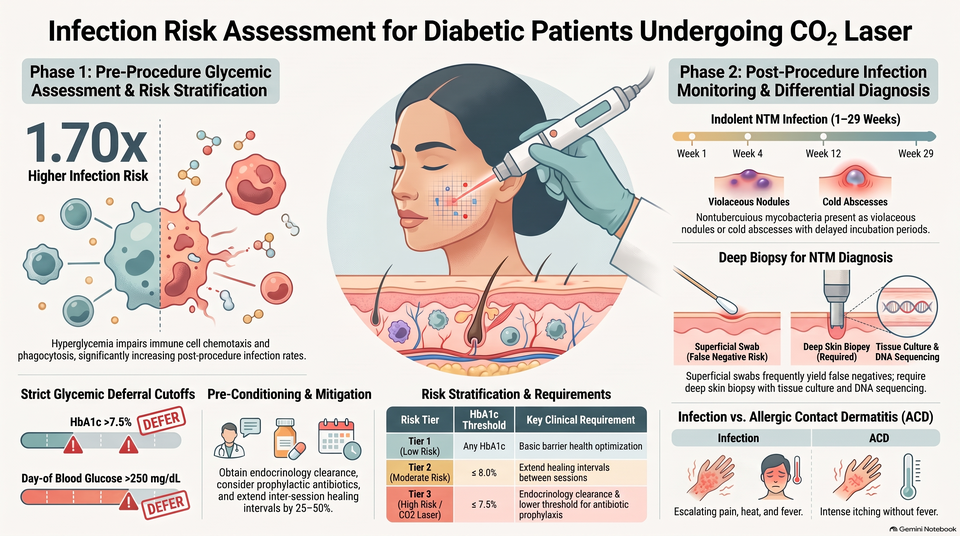
How is infection risk assessed for diabetic patients considering CO2 laser?
Vaginal laser treatment should be planned around tissue health, symptoms, evidence and safety, not simply around the device name.
Direct answer
Diabetes can affect infection risk and wound healing, so diabetic patients considering vaginal CO2 laser need careful pre-treatment assessment. The clinician should consider glucose control, recurrent infections, tissue fragility, medications, immune status, symptoms and whether there are signs of active infection. Laser should not be framed as a simple cosmetic procedure when healing may be slower or complications harder to recognise.
The safest public answer explains the principle without giving technical parameters or a treatment protocol. CO2 vaginal laser decisions should be made after consultation, examination where appropriate, review of alternatives and informed consent.
Educational only. Suitability must be confirmed after consultation and assessment. Results vary. Not a cure.

CO2 laser safety
At a glance
These points help separate useful patient education from clinician-only device decisions.
At a glance
Safety summary
Main issue
Healing and aftercare
Treatment area
Vaginal tissue
Evidence tone
Cautious
Next step
Clinical review
Important safety note
Do not use public web content to copy vaginal laser parameters, preparation schedules, repeated exposure patterns, aftercare products or treatment intervals.
Barrier care
Diabetes
Infection
Follow-up
Detailed answer
Detailed answer
The key is to understand healing and aftercare without turning the explanation into an operating protocol or a promotional device claim.
The clinical distinction
CO2 laser is an energy-based treatment. The relevant question is not just what the device can do, but whether the tissue, symptoms, evidence, risk profile and alternatives make treatment appropriate.
Tissue
Safety
Evidence
Direct answer
This part of the question should be explained as a clinical principle, not as a technical parameter, sequence, protocol or treatment instruction.
What healing is trying to achieve
CO2 laser treatment should be considered in the context of symptoms, tissue quality, menopause status, evidence limits and alternatives.
Barrier care and skin comfort
Dryness, atrophy, inflammation, bleeding, infection risk, pain, previous treatment and cancer history can all change suitability and timing.
Diabetes and infection risk
The safest discussion includes established alternatives, evidence limits, consent, aftercare and red flags rather than focusing only on device features.
What this means in practice
Patients can ask how suitability is assessed, why a treatment may be delayed, what alternatives exist and what symptoms should trigger medical review.
Device parameters, tissue-response decisions and complication management should remain clinician-led.
Patient safety
Why this matters
CO2 vaginal laser pages often sound simple, but intimate tissue, menopause symptoms and device-based treatments need careful clinical framing.
It protects fragile tissue
Low-oestrogen, dry or inflamed tissue may be more sensitive and less predictable during healing.
It avoids protocol copying
Public parameter advice or treatment intervals can be unsafe because devices and tissue findings differ.
It checks other causes
Bleeding, pain, lesions, infection, urinary symptoms or post-cancer changes may need a different pathway first.
It sets honest expectations
Collagen or healing mechanisms do not promise symptom relief for every patient.
A cautious device discussion
The page should help patients understand what to ask and when to pause, rather than making the device sound universally suitable.
That protects patient autonomy because consent is stronger when benefits, limits, alternatives and uncertainties are visible.
Considerations
What to consider
Before deciding on CO2 vaginal laser, the consultation should cover symptoms, tissue findings, medical history, screening context, alternatives and aftercare.
Consultation priorities
A safe patient journey starts with assessment, consent and a clear plan for aftercare and follow-up.
Tissue
Consent
Follow-up
Before treatment
Tell the clinician about bleeding, pain, infections, HPV history, cancer treatment, diabetes, medicines, pregnancy status, previous procedures and current vaginal treatments.
During planning
Consultation should review symptoms, medical history, contraindications, current treatments, tissue findings and whether laser is appropriate.
Healing expectations
Healing and response vary depending on tissue quality, treatment type, aftercare and the reason symptoms are present.
When to delay
Active infection, unexplained bleeding, ulcers, suspicious lesions, severe pain or very fragile tissue may mean treatment should wait.
What not to assume
Do not assume that newer device language, stronger heat, repeated exposure, a branded probe or an added therapy means better results.
Costs and treatment plans should be confirmed with the clinic before booking.
Common concerns and myths
Common misconceptions
These myths are common because vaginal laser is often marketed more simply than it should be explained.
Myth: Aftercare is the same for everyone
Reality: safety depends on assessment, tissue quality, evidence, governance and whether treatment is suitable at all.
Myth: Barrier ointments are harmless in every situation
Reality: technical details should be clinician-led and cannot be reduced to a public rule or device claim.
Myth: Adjunct light therapy can be assumed to reduce swelling
Reality: symptoms, healing and outcomes vary, so review and alternatives matter.
Mechanism is not a promise
A biological rationale, such as collagen remodelling, does not prove that every symptom will improve.
Safety is not just the device
Training, assessment, tissue condition, aftercare and follow-up are part of safety too.
Safety checklist
Safety checklist
Use these checks before considering CO2 vaginal laser treatment.
Has the symptom been assessed?
Dryness, pain, bleeding, urinary symptoms, laxity and recurrent infections can have different causes.
Are red flags absent?
Unexplained bleeding, ulcers, severe pain, infection signs or suspicious lesions should be reviewed first.
Are alternatives clear?
Ask about moisturisers, lubricants, local hormone options where suitable, pelvic-floor care or specialist referral.
Is aftercare clear?
You should know what sensations are expected, what is not expected and who to contact if symptoms worsen.
Reassuring signs
Proceeding is more reasonable when symptoms are explained, tissue is suitable, red flags are absent and the plan includes consent and follow-up.
Suitable
Follow-up
Reasons to pause
Pause for unexplained bleeding, active infection, ulcers, suspicious lesions, severe pain, urinary retention, poorly controlled health risks or pressure to proceed quickly.
Infection
Severe pain
When to escalate
When to seek medical help
Some symptoms need medical assessment before any elective vaginal laser treatment.
Use NHS 111 online
Bleeding or lesions
Postmenopausal bleeding, bleeding after sex, ulcers, new lumps or suspicious genital lesions should be assessed promptly.
Infection symptoms
Fever, pelvic pain, foul discharge, spreading redness, pus or feeling unwell needs medical advice.
Urinary symptoms
Urinary retention, blood in urine, severe burning or worsening bladder symptoms should not be treated as cosmetic irritation.
Emergency symptoms
Call 999 for life-threatening symptoms such as collapse, chest pain, breathing difficulty or severe allergic reaction.
Use NHS 111 for urgent advice or call 999 in a life-threatening emergency. This page is educational and does not replace individual medical assessment.
More clinical detail
Why healing and aftercare needs careful framing
This question involves a real technical principle, but the patient-facing answer should explain why the principle matters rather than giving parameters, timings or procedural instructions.What patients can safely ask
Ask how the clinic assesses tissue suitability, what alternatives are available, what safety checks are used, what side effects may occur and how follow-up is handled.What should stay clinician-led
Device parameters, pulse choices, probe handling, exposure sequencing, product recommendations, complication management and treatment intervals should not be followed from public web content.Regulatory resources
Authoritative resources
These resources support cautious discussion of vaginal laser therapy, GSM, menopause-related tissue change and device safety.
NICE HTG582 transvaginal laser therapy guidance
UK guidance supporting cautious governance for transvaginal laser therapy.
MHRA Yellow Card reporting
UK route for reporting suspected medical-device adverse events.
Practical guidance on vaginal laser therapy
Review article supporting careful screening, safety discussion and evidence-aware use.
Next step
Book a consultation
A consultation can confirm whether CO2 vaginal laser is suitable, whether another treatment should come first, and what safety checks or alternatives apply.
▶ View Research Sources (12 Sources)
These 12 source names are selected from 104 curated sources. Additional reviewed material included peer-reviewed clinical papers, clinical trial records; duplicate and low-relevance records were removed before display.
Educational only. This information is for education only and is not a substitute for professional medical advice, diagnosis or treatment. Results vary. Not a cure.
