


Can vaginal pH changes affect treatment comfort?

Can vaginal pH changes affect treatment comfort? | WHC Clinical FAQ

What lifestyle changes reduce pressure on vaginal support tissues?
Microbiome-aware
GSM context
Evidence-limited
Women’s Health Clinic FAQ
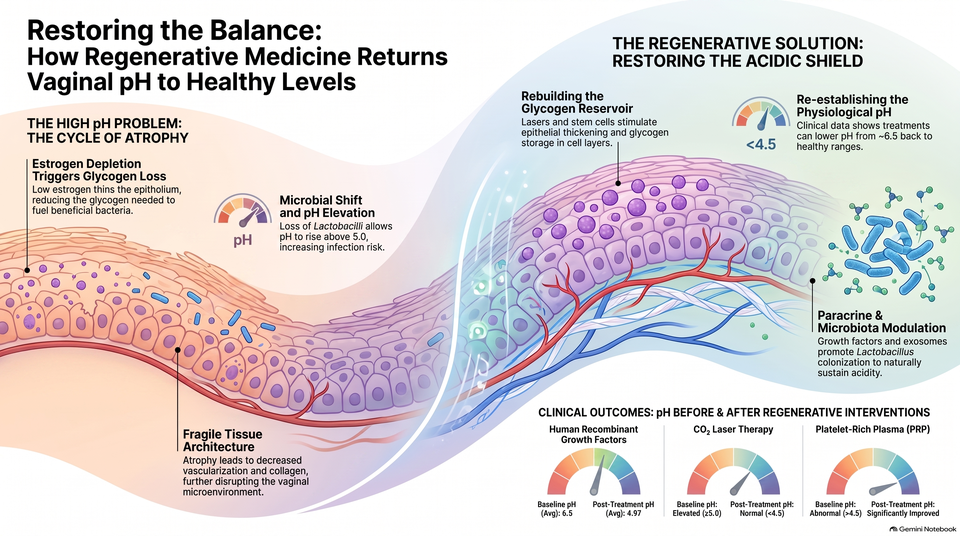
Can regenerative treatments lower vaginal pH back towards a healthy range?
Microbiome questions are often really about why symptoms keep returning despite hygiene changes, antibiotics or moisturisers.
Direct answer
Regenerative treatments might influence vaginal pH indirectly if they improve tissue maturity, hydration and the local environment that supports Lactobacillus. However, pH is affected by menopause, bleeding, semen, infection, antibiotics, BV, cytolytic vaginosis and sampling method, so it is not a stand-alone proof of success. Persistent high pH, discharge, odour, burning or recurrent UTI symptoms should be assessed before assuming a regenerative treatment is appropriate.
The safest page separates confirmed infection from GSM, microbiome disturbance, friction, bladder pain and pelvic-floor symptoms. It explains plausible tissue biology without replacing urine testing, swabs, guideline-based care or clinician judgement.
Educational only. Suitability must be confirmed after consultation and assessment. Results vary. Not a cure.

Microbiome and recurrent UTI
At a glance
These points keep the answer grounded before regenerative treatment, microbiome testing or supplement choices are considered.
At a glance
Clinical summary
Tissue maturity matters
Mature vaginal epithelium can support glycogen availability.
Lactobacillus matters
Lactobacillus dominance is linked with lactic acid and lower pH.
pH is not everything
pH changes with infection, semen, bleeding, antibiotics and sampling.
Evidence has limits
Regenerative treatment should not be sold as microbiome restoration.
Important safety note
Fever, flank pain, visible blood in urine, pregnancy, severe pelvic pain, urinary retention, recurrent upper UTI or suspected cancer symptoms should be medically reviewed before elective intimate treatment.
Lactobacillus
pH
GSM
Testing
Detailed answer
Detailed answer
The useful explanation is glycogen, Lactobacillus and vaginal pH, while keeping infection diagnosis and evidence limits clear.
The clinical distinction
Recurrent UTI, UTI-like burning, GSM, BV, cytolytic vaginosis, pelvic-floor pain and bladder pain syndrome can overlap. The treatment route should follow the most likely cause, not the most appealing treatment label.
Microbiome
Testing
Evidence
The glycogen link
Oestrogen-responsive vaginal cells store glycogen, which supports Lactobacillus metabolism.
The acidity link
Lactobacillus may help maintain an acidic environment through lactic acid production.
The treatment question
Energy or regenerative treatments may affect tissue quality but evidence varies by indication.
The assessment point
Symptoms, pH, swabs and urine testing may be needed before treatment choices.
What this means in practice
A plausible biological mechanism does not prove that a regenerative option will reduce infections, restore the microbiome or resolve urinary symptoms.
A safe consultation should review cultures, triggers, GSM symptoms, vaginal symptoms, medicines, pregnancy status, immune risk and red flags.
Patient safety
Why this matters
Recurrent urinary and vaginal symptoms can be exhausting and intimate, but guessing the cause can lead to the wrong treatment.
It protects diagnosis
Culture-positive UTI should be separated from irritation, GSM, BV, bladder pain or pelvic-floor symptoms.
It avoids overclaiming
Regenerative biology may be interesting, but prevention and microbiome claims need cautious evidence language.
It keeps NICE care visible
Vaginal oestrogen, self-care, methenamine and antibiotic decisions may be relevant depending on the case.
It supports confidence
A clear plan may reduce confusion around sex-triggered burning, negative cultures and recurring symptoms.
A better conversation
The goal is not to dismiss regenerative care, but to place it after diagnosis, standard options and evidence counselling.
Patients should leave understanding what is known, what is uncertain, and what would change the plan.
Considerations
What to consider
Before regenerative treatment, the clinical review should clarify infection history, vaginal symptoms, menopause status, medicines, microbiome context, sexual triggers and red flags.
Consultation priorities
The first step is usually history, examination where appropriate, urine or vaginal testing when indicated, and discussion of standard-care options.
pH
GSM
Review
Testing first
Urine culture, swabs, pH or microbiome testing may be relevant, but the right test depends on symptoms.
Standard options
Discuss vaginal oestrogen, moisturisers, lubricants, self-care, methenamine or antibiotic strategies where appropriate.
Regenerative limits
PRP, polynucleotides, exosomes, laser and RF should be framed as adjunctive or evidence-limited for recurrent UTI claims.
When to delay
Delay elective procedures if infection, unexplained bleeding, severe pain, pregnancy, resistant organisms or systemic illness needs review.
What not to assume
Do not assume a microbiome result, pH reading or tissue treatment explains every episode of burning or urgency.
Follow-up should track symptom pattern, confirmed infections, comfort, recurrence triggers and any adverse changes.
Common concerns and myths
Common misconceptions
These myths are common because recurrent UTI and microbiome marketing often make complex symptoms sound too simple.
Myth: A lower pH proves treatment success
Reality: recurrent urinary or vaginal symptoms need diagnosis before treatment claims are made.
Myth: Laser or RF automatically normalises the microbiome
Reality: microbiome, GSM, infection, tissue fragility and bladder pain can overlap but are not interchangeable.
Myth: All discharge or odour means infection
Reality: results vary, evidence has limits, and follow-up should guide whether the plan continues or changes.
Biology is not a promise
Glycogen, Lactobacillus, cytokines, vascularity and tissue hydration are useful concepts, but they do not promise fewer infections.
Symptoms need context
A patient can have UTI-like symptoms from GSM, inflammation, pelvic-floor guarding, bladder pain or vaginal infection.
Safety checklist
Safety checklist
Use these checks before considering regenerative urogynaecology treatment for recurrent urinary or microbiome-related symptoms.
Has infection been checked?
Recurrent UTI should be assessed with symptom history and urine testing where clinically indicated.
Has GSM been considered?
Dryness, burning, urgency and recurrent UTI after menopause may relate to low-oestrogen tissue change.
Are vaginal symptoms tested?
Discharge, odour, irritation or recurrent flares may need pH, swabs or microscopy before procedures.
Are expectations realistic?
Adjunctive regenerative care should not be treated as proven infection prevention or a substitute for standard care.
Reassuring signs
Proceeding is more reasonable when infection is excluded or treated, red flags are absent, options are explained and follow-up is planned.
Explained
Reviewed
Reasons to pause
Pause if there is fever, flank pain, visible blood in urine, urinary retention, pregnancy, severe pelvic pain, active infection or unexplained bleeding.
Blood
Retention
When to escalate
When to seek medical help
Some recurrent urinary or vaginal symptoms need prompt medical assessment rather than elective regenerative treatment.
Use NHS 111 online
Possible kidney infection
Fever, chills, flank pain, vomiting or feeling very unwell should be assessed urgently.
Blood or retention
Visible blood in urine, inability to pass urine or severe bladder pain needs prompt review.
Pregnancy or complex history
Pregnancy, recurrent upper UTI, immune suppression, kidney disease or resistant organisms should be medically managed.
Emergency symptoms
Call 999 for life-threatening symptoms such as collapse, chest pain, breathing difficulty or sudden neurological symptoms.
Use NHS 111 for urgent advice or call 999 in a life-threatening emergency. This page is educational and does not replace individual medical assessment.
More clinical detail
Why glycogen, Lactobacillus and vaginal pH needs careful framing
Regenerative urogynaecology sits at the edge of tissue biology, symptom care and evidence uncertainty. The useful patient question is not whether a pathway sounds regenerative, but whether the symptom has been correctly identified.What patients can safely ask
Ask whether symptoms are culture-positive infection, GSM, vaginal dysbiosis, friction, bladder pain or pelvic-floor related; what tests are needed; what standard options apply; and what evidence supports any adjunctive treatment.What should stay clinician-led
Antibiotic decisions, methenamine decisions, oestrogen suitability, injectable technique, laser or RF technical choices, microbiome interpretation and treatment timing should be handled through clinical assessment and consent.Regulatory resources
Authoritative resources
These resources support cautious discussion of recurrent UTI, GSM, microbiome context, consent and evidence limits.
NICE NG112 recurrent urinary tract infection
UK guidance linking recurrent UTI decisions with culture history, prevention choices and evidence limits.
NICE NG23 genitourinary symptoms of menopause
UK guidance supporting GSM assessment and vaginal oestrogen or non-hormonal options where appropriate.
NIHR recurrent UTI CO2 laser trial listing
UK research listing showing that laser, GSM, microbiome and recurrent UTI questions remain an active evidence area.
Next step
Book a specialist consultation
A consultation can review recurrent urinary symptoms, GSM, vaginal symptoms, test results and whether standard or adjunctive treatment options are appropriate.
▶ View Research Sources (12 Sources)
These 12 source names are selected from 104 curated sources. Additional reviewed material included peer-reviewed clinical papers, evidence reviews, clinical trial records; duplicate and low-relevance records were removed before display.
Educational only. This information is for education only and is not a substitute for professional medical advice, diagnosis or treatment. Results vary. Not a cure.
