

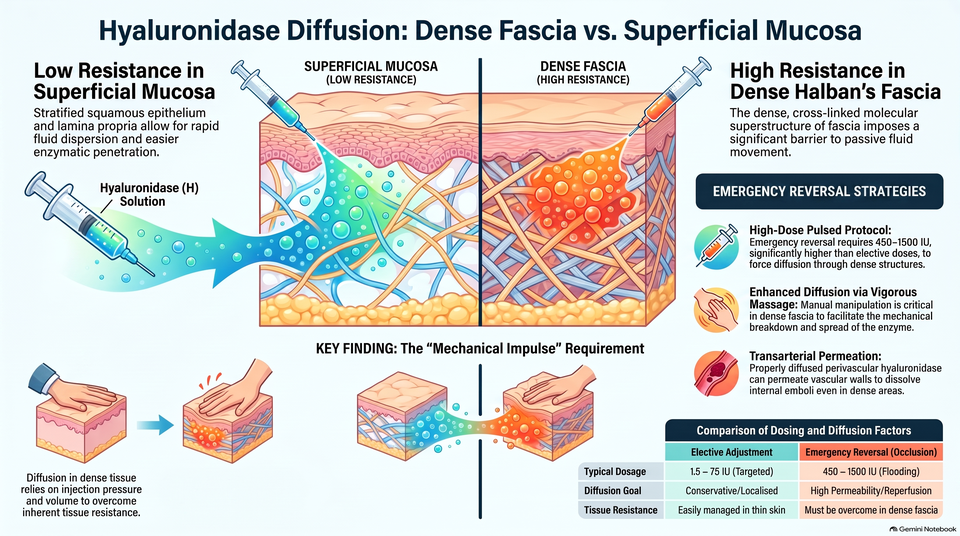


How does hyaluronidase diffusion behaviour differ in dense Halban’s fascia ... | WHC Clinical FAQ

How does hyaluronidase diffusion behaviour differ in dense Halban’s fascia compared to...

Can localised hyaluronidase activity increase during systemic inflammatory states and accelerate...
Urgent signs
Vascular safety
Clinician-led
Women’s Health Clinic FAQ
How does hyaluronidase diffusion behaviour differ in dense Halban’s fascia compared to superficial mucosal tissue during an emergency reversal?
Vascular warning-sign questions after G-Shot or intimate HA filler should be answered as safety concerns, not as treatment instructions.
Direct answer
This page should avoid teaching diffusion or tissue-plane technique and instead explain that emergency reversal in intimate tissue is specialist, anatomy-sensitive and clinician-led. For patients, the priority is prompt recognition and urgent review, not a public reversal recipe. Severe pain, blanching, mottling, spreading swelling, tissue colour change, fainting, heavy bleeding or systemic illness should be escalated quickly. A clinician should assess the symptoms and decide the safest next step.
This page translates a technical complication question into patient-safe language while keeping diagnosis and treatment decisions clinician-led.
Educational only. Use this as general education before discussing symptoms with a clinician. Results vary. Not a cure.

G-Shot safety review
At a glance
These points help separate normal uncertainty from symptoms that need prompt assessment.
At a glance
Safety summary
Colour change matters
Blanching, mottling or dusky tissue colour should be assessed urgently.
Pain pattern matters
Severe, worsening or disproportionate pain is not something to watch passively.
Reversal is clinical
Hyaluronidase decisions belong with trained clinicians, not public dosing tables.
Escalation is clear
Use urgent care pathways if symptoms are severe, spreading or systemic.
Important safety note
Seek medical advice promptly for heavy or persistent bleeding, fever, offensive discharge, severe or worsening pelvic or vulval pain, urinary retention, fainting, spreading swelling, tissue colour change, mottling, blanching, suspected infection, allergic symptoms or systemic illness.
Colour
Urgent
Review
111
Detailed answer
Detailed answer
The clinically useful answer explains what the concern may mean, what should be reported, and why public pages should not become treatment protocols.
Clinical context
The key issue is whether symptoms suggest a complication, normal recovery, another diagnosis or a need for urgent review.
Safety
Triage
Review
What matters first
Suspected vascular compromise after intimate filler is treated as an urgent safety concern because blood supply and tissue health may be at risk.
Why symptoms matter
Patients may notice severe pain, blanching, mottling, spreading swelling, tissue colour change, bleeding, faintness or a sudden change in urinary comfort.
Clinical boundary
Emergency reversal, tissue-plane judgement and hyaluronidase use are clinician-led decisions that depend on examination and clinical context.
Safety boundary
A responsible page should explain what to report and when to seek help, while refusing to publish dosing or procedural reversal instructions.
What this means in practice
A useful public answer explains warning signs and review thresholds without giving dosing, procedural, dissolving or correction instructions.
Suitability and management depend on symptoms, timing, examination findings, anatomy, medical history and consent.
Patient safety
Why this matters
Complication searches often sound technical, but the patient need is usually simple: know what to report and when to seek help.
It protects tissue
Colour change, severe pain or spreading swelling can signal a problem that needs prompt assessment.
It protects urinary safety
New retention, stream change or persistent burning should not be dismissed after anterior-wall filler.
It protects consent
Patients should understand material risks and limits before elective intimate filler is considered.
It protects clarity
Normal swelling, infection, allergy, vascular concern and mechanical discomfort need different responses.
A clinical decision
The question is not only whether a complication exists, but whether symptoms are changing, severe, spreading or systemic.
That is why urgent signs, honest reporting and clinician-led review are central to safe G-Shot care.
Considerations
What to consider
Consider symptom timing, severity, tissue colour, swelling, bleeding, urinary symptoms, fever, allergy history, medicines and whether symptoms are improving or worsening.
Review priorities
The consultation or urgent review should document timing, pain severity, tissue colour, swelling, bleeding, urinary symptoms, allergy history and systemic symptoms.
Symptoms
History
Escalation
Assessment
The consultation or urgent review should document timing, pain severity, tissue colour, swelling, bleeding, urinary symptoms, allergy history and systemic symptoms.
Differential thinking
The clinician decides whether the concern fits bruising, swelling, vascular compromise, infection, allergy or another complication.
Consent
Consent should explain that intimate HA filler has material risks and that emergency management cannot be planned from a public page.
Follow-up
Follow-up should confirm symptom direction, tissue appearance, urinary comfort, pain control and whether escalation or specialist review is needed.
Practical expectations
Some symptoms settle, but new, severe, spreading or systemic symptoms need a lower threshold for review.
Exact procedural details, medicines, reversal decisions and aftercare changes should be confirmed with the treating clinician.
Common concerns and myths
Common misconceptions
These myths can make post-filler safety concerns sound simpler than they are.
Myth: vascular problems cannot happen here
Reality: any filler area with blood vessels needs serious safety framing.
Myth: patients can follow a public reversal recipe
Reality: reversal decisions need examination, anatomy knowledge and clinical judgement.
Myth: pain always means normal bruising
Reality: severe or worsening pain, colour change or mottling needs urgent review.
Symptoms and diagnosis
A symptom pattern can suggest urgency, but diagnosis still depends on clinical assessment and sometimes testing.
Public information limits
Public education should support safer decisions without teaching emergency procedures or medicines.
Safety checklist
Safety checklist
Use these checks before assuming symptoms are part of normal recovery.
Are symptoms severe?
Severe pain, fainting, heavy bleeding, breathing symptoms or inability to pass urine should be escalated promptly.
Is the area changing?
Spreading swelling, mottling, blanching, colour change, discharge or worsening tenderness needs review.
Are urinary signs present?
Retention, weak stream, burning, fever or pelvic pain should not be treated as a cosmetic concern.
Is history relevant?
Allergy history, immune conditions, steroid use and previous procedures can change risk and follow-up planning.
Reassuring signs
Symptoms are more reassuring when mild, stable, improving and not associated with fever, colour change, retention or systemic illness.
Improving
Reviewed
Reasons to pause
Pause and seek clinical review for new bleeding, fever, offensive discharge, severe or worsening pain, urinary retention, spreading swelling, tissue colour change, mottling, blanching, allergic symptoms or uncertainty about infection.
Colour change
Retention
When to escalate
When to seek medical help
Some symptoms after intimate filler need urgent assessment rather than routine follow-up.
Use NHS 111 online
Severe or spreading symptoms
Severe pain, spreading swelling, mottling, blanching, tissue colour change or heavy bleeding should be assessed urgently.
Infection symptoms
Fever, offensive discharge, worsening burning, ulcers, pelvic pain or feeling very unwell may need prompt medical review.
Urinary or allergic symptoms
Inability to pass urine, weak stream, breathing difficulty, facial or throat swelling, widespread rash or collapse needs urgent help.
Emergency symptoms
Call 999 in a life-threatening emergency, including collapse, chest pain, breathing difficulty or sudden neurological symptoms.
Use NHS 111 for urgent advice or call 999 in a life-threatening emergency. This page is educational and does not replace individual medical assessment.
More clinical detail
Why public dosing is not appropriate
Hyaluronidase use depends on clinical findings, anatomy, urgency, allergy risk and governance. A public FAQ should explain escalation, not teach reversal.What patients can safely report
Patients can report timing, pain severity, colour change, swelling, bleeding, urinary symptoms, faintness and whether symptoms are spreading or improving.Regulatory resources
Authoritative resources
These resources support urgent recognition, consent and safe escalation after possible filler complications.
NHS 111 online
UK urgent-care route for worrying post-procedure symptoms that are not immediately life-threatening.
NHS emergency medical help
UK guidance on when life-threatening symptoms require 999.
GMC decision making and consent
UK professional guidance supporting material-risk discussion and clinician-led decisions.
Next step
Book an intimate health consultation
A consultation can clarify whether symptoms fit expected recovery, urinary irritation, infection concern, allergy, vascular warning signs, filler-related discomfort or another cause.
▶ View Research Sources (12 Sources)
These 12 source names are selected from 117 curated sources. Additional reviewed material included peer-reviewed clinical papers, evidence reviews; duplicate and low-relevance records were removed before display.
Educational only. This information is for education only and is not a substitute for professional medical advice, diagnosis or treatment. Results vary. Not a cure.
