
...
 Why us?  Why us? please click dropdown
4.8/5 out of 3,500+ reviews
Regulated: CQC Registered | 1-5796078466
  • Verified Content: Approved by the Women’s Health Clinic Clinical Team.
  • Educational Use: This is not a substitute for professional medical advice, diagnosis, or treatment.
  • Clinical Assessment: Individual suitability is determined by a clinician; results may vary.
  • Non-NHS: Private healthcare provider only. Pricing varies by treatment and site. Availability varies by clinical location.
  • MEDICAL EMERGENCY:

    If you need urgent help, use NHS 111. For a life-threatening emergency, call 999.

 Author  Find more about the author
Dr Farzana Khan

Dr Farzana Khan

Verified

Dr Farzana Khan qualified as an MD from the University of Copenhagen in 2003. She has worked in dermatology and obstetrics & gynaecology across the North of England and completed her MRCGP (CCT, 2013) and the Diploma of the Faculty of Sexual & Reproductive Health (2013). Her clinical focus is vaginal health—including dryness/GSM, sexual function concerns, lichen sclerosus, and comfort or volume changes. She offers careful assessment, discusses medical and conservative options first, and considers selected regenerative or aesthetic treatments where appropriate. Dr Farzana also trains clinicians as a KOL/Trainer with Neauvia, Asclepion Laser, and RegenLab (since 2023). Ongoing CPD includes IMCAS, CCR, ACE and expert training in women’s intimate fillers, PRP, and polynucleotide injectables. Her approach is simple: clear explanations, realistic expectations, and shared decision-making. Authored and medically reviewed by Dr Farzana Khan.

MD MRCGP DFFP
Was this answer helpful?
Rate Dr Farzana's explanation

Assessment first
Evidence-aware
Safety focused

Women’s Health Clinic FAQ

What to expect during an intimate exosome procedure?

Intimate exosome treatment is still an emerging area. The key clinical issue is not just the word exosomes, but the product source, the delivery route and the symptom being treated.

Direct answer

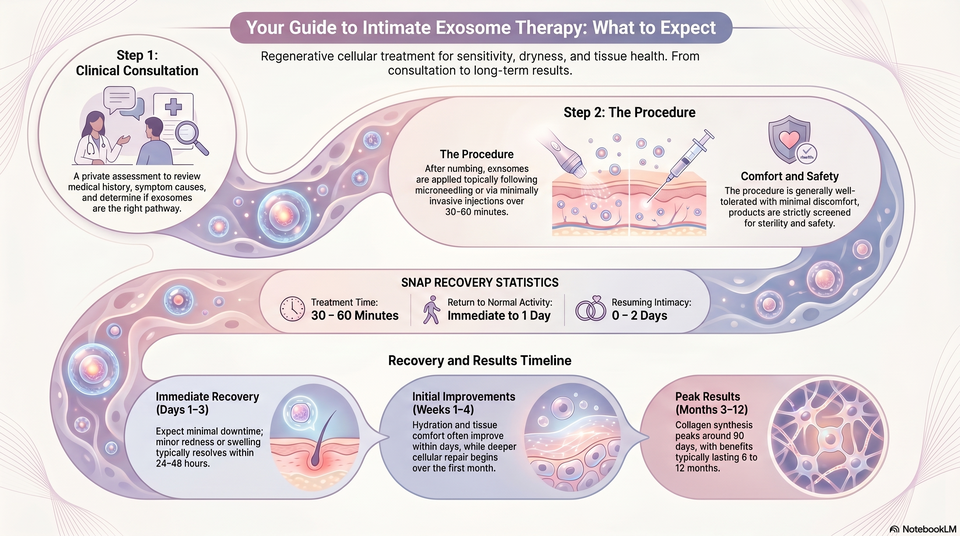
An intimate exosome appointment should start with assessment, consent and product transparency before any procedure. The clinician should explain whether the product is topical or injectable, its source, why it is being used, what evidence is limited, and what alternatives exist. During treatment, discomfort usually comes from the delivery method, such as micro-channelling, RF or laser. Aftercare should include pelvic rest, hygiene advice and red flags.

The safest plan starts by clarifying the symptom, checking red flags, explaining alternatives and agreeing realistic expectations before any procedure is booked.

Educational only. Suitability must be confirmed after consultation and assessment. Results vary. Not a cure.

Women's Health Clinic consultation about What to expect during an intimate exosome procedure?
Consultation-led care

At a glance

These are the main points to understand before deciding whether this option is suitable.

Exosomes at a glance

Emerging and regulated carefully

What it is

Exosomes are microscopic, lipid-bound vesicles (30 to 150 nanometers) secreted by cells, which carry proteins, lipids, and RNA to facilitate.

Intimate Health Applications

Marketed to address concerns like Female Sexual Arousal Disorder (FSAD), reduced clitoral sensitivity, and vaginal rejuvenation.

Administration

Typically applied topically as an adjunct to treatments like micro-channeling/microneedling, as injectable human-derived exosomes are strictly unapproved and carry higher.

Evidence Status

The evidence for intimate-health outcomes is in its early stages and remains unproven compared to standard conventional therapies.

Important safety note

Delivery Risks: The route of administration matters significantly. While topical or adjunctive use is generally well-tolerated, injecting exosomes carries serious legal and safety risks (including infection) and is not approved.

Product route
Source
Evidence
Red flags
Aftercare


Detailed answer

Why exosome safety depends on route and source

Exosomes are cell-signalling vesicles. In intimate health, the important clinical distinction is whether a product is topical or injected, what it is derived from, and what claim is being made.

Product transparency matters

A responsible consultation should explain product source, sterility, regulation, delivery route, evidence limits and alternatives before discussing possible tissue-quality benefits.

Mechanism
Evidence
Symptoms
Alternatives

What it means

Lack of Comparative Efficacy: Marketing claims that exosomes are automatically better than PRP for intimate health are myths; there is no clear comparative clinical proof to support this.

Why it happens

Regulatory Warnings: The FDA has explicitly warned that regenerative products, including exosomes, are not approved for the treatment of diseases or conditions, and unregulated use puts patients at risk.

Evidence limits

Diagnostic Priority: Superiority claims by clinics can push patients toward a product rather than a proper diagnosis. Accurate diagnosis must always precede elective regenerative treatments.

Treatment fit

Practitioner Verification: Ensure the provider is a registered healthcare professional operating within a safe, regulated clinical environment (e.g., CQC registered in the UK).

What this means in practice

Practitioner Verification: Ensure the provider is a registered healthcare professional operating within a safe, regulated clinical environment (e.g., CQC registered in the UK).

Variable Outcomes: Individual results vary significantly, and the treatment should not be viewed as a definitive cure.


Patient safety

Why cautious assessment matters

Regenerative language can sound reassuring, but intimate symptoms still need diagnosis and exosome products should not be treated as a universal solution.

It checks the cause

Lack of Comparative Efficacy: Marketing claims that exosomes are automatically better than PRP for intimate health are myths; there is no clear comparative clinical.

It protects safety

Delivery Risks: The route of administration matters significantly. While topical or adjunctive use is generally well-tolerated, injecting exosomes carries serious legal and safety risks.

It reviews alternatives

Practitioner Verification: Ensure the provider is a registered healthcare professional operating within a safe, regulated clinical environment (e.g., CQC registered in the UK).

It sets expectations

Variable Outcomes: Individual results vary significantly, and the treatment should not be viewed as a definitive cure.

Do not let marketing outrun safety

Claims about rejuvenation, sensitivity, lubrication or recovery should be checked against product route, regulatory status and the reason symptoms are present.

Cancer history, immunosuppression, active infection, unexplained bleeding, severe pain or vulval lesions should redirect the discussion to medical assessment first.


Considerations

What to consider

Practitioner Verification: Ensure the provider is a registered healthcare professional operating within a safe, regulated clinical environment (e.g., CQC registered in the UK).

Consultation priorities

Clinical Assessment: The journey must begin with a thorough medical consultation to map the underlying cause of the symptom (e.g., hormonal, dermatological, psychosexual, or pelvic-floor).

History
Consent
Aftercare
Follow-up

Before treatment

Clinical Assessment: The journey must begin with a thorough medical consultation to map the underlying cause of the symptom (e.g., hormonal, dermatological, psychosexual, or pelvic-floor).

During care

Exploring Alternatives: Recognized first-line options, such as menopause hormone care or pelvic-floor therapy, should be discussed and prioritized before regenerative procedures.

Aftercare

Consent and Route: Patients must be clearly informed whether the product is topical or adjunctive, ensuring they understand the non-injectable, cosmetic nature of the procedure.

When to reassess

Aftercare Protocol: Clear written advice should be provided covering pelvic rest, hygiene, expected temporary irritation, and when to seek medical help.

Practical expectations

Variable Outcomes: Individual results vary significantly, and the treatment should not be viewed as a definitive cure.

Product Transparency: The clinic must clearly explain the product's source (e.g., plant, animal, or human-derived), its sterility, and any regulatory limitations for its use.


Common concerns and myths

Common misconceptions

Clear patient information should correct over-simple claims and keep expectations realistic.

Myth: exosomes are automatically safe

Reality: safety depends on product source, sterility, route, regulation, symptom cause and medical history.

Myth: natural signalling means no risk

Reality: biological signalling products still need scrutiny and should not be used to bypass diagnosis.

Myth: one procedure suits every symptom

Reality: dryness, pain, arousal changes, infection and cancer history require different clinical pathways.

Evidence and limits

Mechanism-of-action language should not be treated as proof of a predictable clinical result.

Alternatives still matter

Moisturisers, local hormonal care, pelvic-floor physiotherapy, infection treatment or specialist review may be more appropriate for some patients.


Safety checklist

Safety checklist

Use these questions to decide whether treatment should be discussed, delayed or redirected.

Has the cause been assessed?

Symptoms should be reviewed in context before selecting a treatment.

Are red flags absent?

Do not claim intimate exosomes are a cure, promised rejuvenation method, cancer-safe treatment, infection-prevention treatment, sexual-function treatment or proven replacement for recognised care. Distinguish topical/adjunct application from injection.

Are alternatives clear?

Practitioner Verification: Ensure the provider is a registered healthcare professional operating within a safe, regulated clinical environment (e.g., CQC registered in the UK).

Is follow-up planned?

The clinic should explain aftercare, review timing and when to seek help.

Reassuring signs

Proceeding is more reasonable when goals are clear, red flags have been checked, and expectations are realistic.

Clear goals
No red flags
Follow-up plan

Reasons to pause

Pause for unclear product source, injectable or human-derived exosome offers, cancer history without clearance, active infection, unexplained bleeding or severe pelvic pain.

Pain
Bleeding
Infection


When to escalate

When to seek medical help

Some symptoms should be assessed before any elective intimate treatment. Use NHS 111 online

Severe or worsening pain

Severe burning, escalating pelvic pain or pain that feels out of proportion needs prompt clinical review.

Bleeding, lesions or discharge

Unexplained bleeding, vulval lesions, unusual discharge or suspected infection should be assessed before elective intimate treatment.

Infection signs

Red Flags: Treatment must be paused and immediate medical review sought if a patient presents with unexplained vaginal bleeding, symptoms of infection, vulval lesions, severe pelvic pain.

Emergency symptoms

Call 999 in a life-threatening emergency, including collapse, chest pain or breathing difficulty.

Use NHS 111 for urgent advice or call 999 in a life-threatening emergency. This page is educational and does not replace individual medical assessment.

Next step

Book a clinical consultation

A consultation can confirm whether this treatment may be suitable, whether another pathway should come first, and what realistic outcomes, risks and aftercare would look like.

View Research Sources (12 Sources)
• FDA: Important Patient and Consumer Information About Regenerative Medicine Therapies (Consumer Alert on Regenerative Medicine Products Including Stem Cells and Exosomes).
• Save Face: Exosome Therapy in the UK: A Patient Safety Warning on the New Injectables.
• ACOG: Committee Opinion on Elective Female Genital Cosmetic Surgery.
• Systematic Reviews: Efficacy and safety of injectable bio-revitalizers and rejuvenate therapies, including platelet-rich plasma and exosome-based treatments: A systematic review of licensed products in the UK (2025).
• Summary form National Institute for Health and Care Excellence Single Technology Appraisal (STA) Cabozantinib for previously tr - NICE
• EpiMET - NHS Health Research Authority
• The ENCODE study - NHS Health Research Authority
• www.cso.scot.nhs.uk Scottish Government Health Directorates Chief Scientist Office
• Exosomes in asthma: Underappreciated contributors to the pathogenesis and novel therapeutic tools - PMC
• Overview and Update on Extracellular Vesicles: Considerations on Exosomes and Their Application in Modern Medicine - PMC
• Vaginal rejuvenation using energy-based devices - PMC
• Efficacy and safety of injectable bio-revitalizers and rejuvenate therapies, including platelet-rich plasma and exosome-based treatments: A systematic review of licensed products in the UK (2025) – Staff Publications Hub - Shrewsbury and Telford Health Libraries

These 12 source names are selected from 24 display-ready sources, with a raw audit trail of 177 imported records. Additional reviewed material included peer-reviewed clinical papers; duplicate, low-relevance and non-clinical records were removed before display.

Educational only. This information is for education only and is not a substitute for professional medical advice, diagnosis or treatment. Results vary. Not a cure.

Loading directory...