Content approved by: Dr Farzana Khan, MD, MRCGP, DFFP — Specialist in vaginal health with 20+ years’ medical experience across dermatology and gynaecology. Care is balanced, evidence-aware, and patient-centred.
Dr Farzana Khan qualified as an MD from the University of Copenhagen in 2003. She has worked in dermatology and obstetrics & gynaecology across the North of England and completed her MRCGP (CCT, 2013) and the Diploma of the Faculty of Sexual & Reproductive Health (2013).
Her clinical focus is vaginal health—including dryness/GSM, sexual function concerns, lichen sclerosus, and comfort or volume changes. She explains conservative and medical options first, then discusses regenerative or aesthetic procedures where appropriate.
Dr Farzana is a key opinion leader on women’s intimate health and been featured in the press including the daily mail and on BBC radio. Dr Farzana also trains clinicians as a Trainer with Neauvia, NuV Laser, Asclepion Juliet Laser, and RegenLab. Ongoing CPD includes IMCAS, CCR, ACE and expert training in intimate fillers, PRP and polynucleotides.
Authored and medically reviewed by Dr Farzana Khan. Last updated: 1 November 2025.
Ozempic (semaglutide) and vaginal health
Comprehensive Clinical Report, Evidence Grading, and Integration Guidelines
Key Takeaways
- Semaglutide is not currently recognized by regulators as causing specific vulvovaginal adverse reactions.
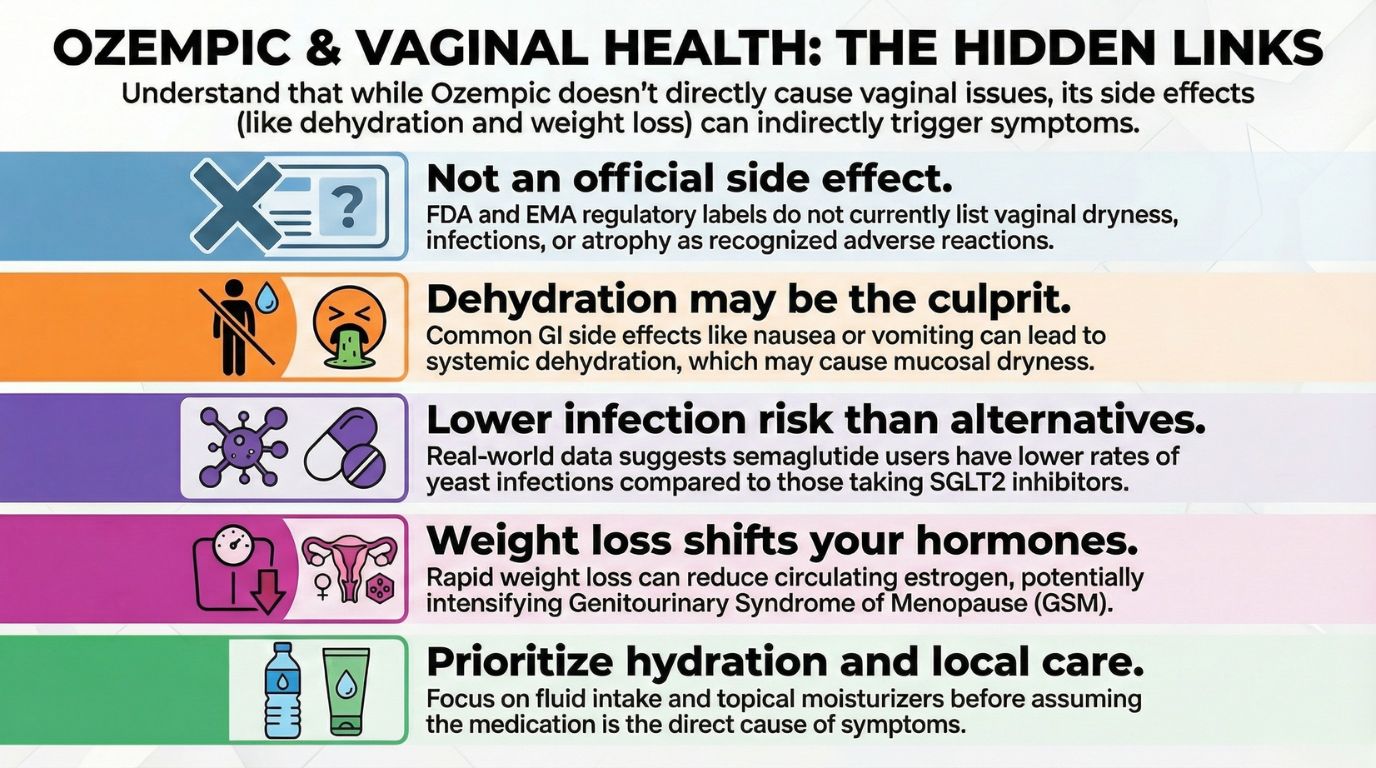
- Biologically plausible indirect pathways (weight loss, dehydration) could unmask pre-existing vaginal symptoms like GSM.
- Real-world evidence does not suggest an increased risk of vulvovaginal infections; it may actually be lower compared to SGLT2 inhibitors.
- Delayed gastric emptying increases aspiration risk during sedated elective procedures.
Table of Contents
- 1. Executive summary
- 2. Scope, methods, and evidence grading
- 3. Mechanistic pathways linking semaglutide to vaginal symptoms
- 4. Evidence on vaginal health outcomes
- 5. Incidence data and pharmacovigilance signals
- 6. Guidance for clinicians
- 7. Research gaps and proposed study designs
- 8. Clinical Integration: GLP-1 Therapies & Regenerative Wellness
Executive summary
Semaglutide authorised as Ozempic is not currently recognised by regulators as causing specific vulvovaginal adverse reactions such as vaginal dryness, vulvovaginal candidiasis, altered discharge, dyspareunia, vaginal atrophy, or vaginal mucosal injury. These outcomes are not listed in the most recent U.S. prescribing information or EU product information for Ozempic, and therefore trial-derived incidence rates for these specific vaginal endpoints are generally not available from the pivotal development programmes as presented in labelling. [ref]
That said, there are biologically plausible indirect pathways by which semaglutide treatment—especially when accompanied by rapid appetite suppression, gastrointestinal adverse effects, and clinically meaningful weight loss—could unmask or exacerbate pre-existing vaginal symptoms (for example, genitourinary syndrome of menopause) or contribute to discomfort through dehydration, altered sex steroid milieu, or pelvic soft-tissue volume changes. These mechanisms are plausible but not proven to be causal for new-onset vaginal pathology. [ref]
Importantly, the best available comparative real‑world evidence located during this review does not suggest an increased risk of vulvovaginal infections with semaglutide; rather, in a phenome-wide analysis of people with type 2 diabetes, semaglutide prescription was associated with lower rates of diagnoses including “candidiasis of vulva and vagina” and “inflammatory disease of cervix, vagina, and vulva” compared with SGLT2 inhibitors, consistent with the known infection liability of SGLT2 inhibitors in women. (This is associative evidence and may reflect confounding by indication, surveillance patterns, and glycaemic differences.) [ref]
For post-marketing pharmacovigilance, FAERS-based analyses of semaglutide identify multiple safety signals (e.g., gastrointestinal obstruction-related terms, dehydration/volume depletion in some GLP‑1RA analyses), but vulvovaginal dryness/infection/discharge/pain are not prominent as labelled risks in the major semaglutide FAERS disproportionality paper retrieved here. A separate FAERS work focused on gynaecological haemorrhagic events reported similar proportional reporting rates for semaglutide vs tirzepatide and no disproportionate signal—this relates to bleeding patterns rather than vaginal mucosal health per se. [ref]
Clinical implication: clinicians should treat vaginal symptoms in patients taking semaglutide as real and addressable, but approach causality cautiously: prioritise common diagnoses (genitourinary syndrome of menopause, infections, dermatologic vulvar disease, STIs, irritant/contact dermatitis, pelvic floor disorders), identify important confounders (notably SGLT2 inhibitors, antibiotics, hormonal therapies), manage symptoms and underlying conditions, and report suspected adverse reactions when there is a reasonable temporal relationship and alternative causes are less likely. [ref]
Scope, methods, and evidence grading
This report addresses semaglutide as authorised in Ozempic and its potential relevance to vaginal health outcomes requested by the user: dryness, infections, discharge, pain, atrophy, and mucosal changes, plus pharmacovigilance signals and clinical guidance.
Primary and regulatory sources prioritised were: product information from the U.S. Food and Drug Administration and European Medicines Agency, and UK SmPC hosting via the electronic Medicines Compendium (emc), plus pharmacovigilance-oriented publications using FAERS (and, where available, broader databases). [ref]
Because vaginal endpoints are not systematically collected or reported as key outcomes in major semaglutide trials in publicly available labelling, much of the question depends on indirect evidence and signal detection. Accordingly, evidence is graded in this report as:
- Level A (highest): authorised product information and pivotal trial safety tables as reported in labelling (high internal validity; limited granularity for uncommon/unsolicited vaginal outcomes). [ref]
- Level B: controlled trials / RCT publications with relevant predefined outcomes (few directly relevant vaginal endpoints identified in accessible primary sources during this review). [ref]
- Level C: observational comparative cohort studies (risk of confounding; provides directionality and relative risks). [ref]
- Level D: pharmacovigilance disproportionality analyses (hypothesis-generating; cannot estimate incidence; reporting bias, notoriety bias, missing denominators). [ref]
- Level E (lowest): case reports/series and patient-reported outcomes outside clinical systems (useful for pattern recognition; cannot establish population risk). [ref]
Assumptions due to missing data are stated explicitly where used—most importantly that menopausal status, baseline vulvovaginal symptoms, sexual activity, contraceptive use, and co-medications are frequently unreported in pharmacovigilance and trial summaries. [ref]
Mechanistic pathways linking semaglutide to vaginal symptoms
Indirect pathway through GI adverse effects and dehydration
Both U.S. and EU product information emphasise gastrointestinal adverse reactions (nausea, vomiting, diarrhoea, constipation, abdominal pain) as common with semaglutide, especially around dose escalation. [ref]
EU product information explicitly warns that nausea, vomiting and diarrhoea may cause dehydration and advises precautions to avoid fluid depletion. [ref] The U.S. label similarly describes postmarketing acute kidney injury events often occurring in patients who experienced gastrointestinal reactions leading to dehydration, and recommends monitoring renal function in those with reactions that could lead to volume depletion. [ref]
While neither source links dehydration to vaginal dryness specifically, systemic dehydration can plausibly worsen mucosal dryness and irritation symptoms in susceptible individuals, particularly where baseline genitourinary syndrome of menopause or vulvar dermatoses exist. This is a plausibility argument, not a demonstrated semaglutide adverse effect, and should be handled as such clinically. [ref]
Indirect pathway through weight loss, adipose endocrine changes, and oestrogen availability
EU product information lists “weight decreased” as a common adverse reaction category for semaglutide. [ref] Weight loss interventions in women—particularly postmenopausal women—are associated with changes in sex hormone profiles, including reductions in circulating oestrogens and changes in sex hormone-binding globulin in controlled trial settings. [ref]
Genitourinary syndrome of menopause (GSM) is driven by low or fluctuating oestrogen and is characterised by vulvovaginal dryness, irritation, dyspareunia, recurrent infections/urinary symptoms, and tissue fragility; UK consensus and NICE resources emphasise these mechanisms and management approaches. [ref]
Therefore, in peri‑ and post‑menopausal patients, rapid or substantial weight loss while on semaglutide may plausibly unmask or intensify GSM symptoms via endocrine and tissue-level changes—although the specific contribution of semaglutide vs weight loss per se is not established. [ref]
Direct GLP‑1 receptor effects on genital tract tissues: limited support for a direct vaginal target
Mechanistic caution is warranted because direct GLP‑1 receptor expression in vaginal tissue appears low by large transcriptomic resources. The Human Protein Atlas tissue summary for GLP1R shows “vagina” with 0.0 nTPM in its RNA expression summary (interpretable as no detectable expression in that dataset, not proof of absence). [ref]
Preclinical work demonstrates incretin receptor gene and protein expression in female reproductive tissues such as ovary and uterine structures in animal models, supporting the concept that incretin signalling can interact with reproductive physiology—again, not equivalent to a clinically meaningful direct vaginal mucosal effect in humans. [ref]
Microbiome and immune modulation as indirect drivers of infection risk or irritation
Semaglutide and other GLP‑1 receptor agonists are increasingly associated with changes in the gut microbiome in human and animal studies, though findings vary by agent and model. [ref]
The “gut–genital tract microbiota” interface and immune crosstalk is a recognised concept in women’s health, and diabetes is associated with alterations in vaginal microbiota ecology, particularly around menopause transitions. [ref]
Semaglutide and GLP‑1 signalling are also linked to systemic and cellular immune modulation (including macrophage and T‑cell signalling effects) and measurable anti-inflammatory biomarker reductions in clinical studies and meta-analyses. [ref]
However, translating these immunometabolic effects into a prediction of increased vaginal infections is not straightforward; improved glycaemic control and reduced inflammation could plausibly reduce susceptible states for candidiasis/vaginitis. The net effect is therefore best treated as an empirical question, not a settled mechanism—consistent with the comparative observational findings summarised below. [ref]
Tissue perfusion and sexual function pathways
A case report of female anorgasmia and hypoarousal temporally related to GLP‑1 agonist use (including semaglutide after a switch from liraglutide) proposed mechanisms including smooth-muscle vasoconstriction with reduced genital blood flow and central neurotransmitter pathway effects (hypothalamic signalling). This is hypothesis-generating and does not directly establish vaginal mucosal injury, but it is relevant to lubrication/arousal physiology and genital discomfort complaints. [ref]
Evidence on vaginal health outcomes
To facilitate reading of these detailed clinical outcomes, information has been organized into the sections below:
Dryness, atrophy, mucosal fragility, and dyspareunia
Regulatory and trial evidence: Neither the U.S. Ozempic prescribing information nor the EU Ozempic product information tables list vaginal dryness, vulvovaginal atrophy/GSM, dyspareunia, vaginal mucosal thinning, or related terms as recognised adverse reactions. [ref]
Interpretation: absence from labelling does not prove impossibility; it indicates that, as of the current authorised safety profile, there is insufficient evidence to include these outcomes as expected adverse drug reactions with estimable frequency. [ref]
Higher-likelihood alternative causes: In UK clinical guidance, GSM is a common and under-treated driver of dryness, dyspareunia and tissue fragility, and should be actively assessed, particularly in peri‑/post‑menopausal patients or those with iatrogenic hypo-oestrogenism. [ref]
How semaglutide could interact: dehydration warnings and common GI reactions provide a plausible route for symptom worsening in susceptible patients, without establishing drug-specific mucosal toxicity. [ref]
Evidence level: currently Level A evidence of non-listing (labels) and Level E–D for patient-reported symptom clusters outside regulated sources; there is no robust Level B trial signal for these endpoints in public product information. [ref]
Infections: vulvovaginal candidiasis, bacterial vaginosis, vulvovaginitis
Comparative observational signal (protective association): In a phenome-wide association study comparing people with type 2 diabetes prescribed GLP‑1 receptor agonists vs SGLT2 inhibitors and DPP4 inhibitors (NIH All of Us cohort, Jan 2018–Oct 2023), semaglutide prescription was associated with reduced risk of diagnoses including “candidiasis of vulva and vagina” and “inflammatory disease of cervix, vagina, and vulva” compared with SGLT2 inhibitors. [ref]
Context for confounding and differential diagnosis: SGLT2 inhibitors are known to increase genital mycotic infection risk, including vulvovaginal candidiasis, and real-world studies demonstrate clinically significant vaginitis incidence in users—making SGLT2 exposure a critical confounder when patients attribute “yeast infections” to semaglutide. [ref]
Mechanistic alignment: Improved glycaemic control should reduce glucose-rich environments favourable to Candida and may normalise vaginal microbial ecology in diabetes; diabetes-related vaginal microbiome alterations are documented, particularly in peri/postmenopausal women. [ref]
Evidence level: Level C (observational comparative) suggests no increased infection liability and possible reduced risk vs SGLT2 inhibitors; direct semaglutide-vs-placebo infection incidence is not available in product information tables for these specific endpoints. [ref]
Discharge, odour changes, and irritation
Regulatory evidence: Not listed in FDA/EMA adverse reaction tables for semaglutide. [ref]
Clinical interpretation: abnormal discharge and odour have broad differentials (BV, candidiasis, trichomoniasis, STI cervicitis, retained foreign body, desquamative inflammatory vaginitis, vulvar dermatoses, malignancy warning signs) and should not be presumed drug-related without evaluation. The link between diabetes and vaginal microbiota dysbiosis adds baseline risk in Ozempic’s indicated population. [ref]
Evidence level: Level A (non-listing) plus plausibility only; no strong semaglutide-specific signal identified in accessible primary sources. [ref]
Pain: vulvar discomfort, dyspareunia, pelvic floor symptoms
Regulatory evidence: No labelled vulvovaginal pain terms in Ozempic adverse reaction tables. [ref]
Potential indirect mechanisms:
- GSM can cause burning, irritation and dyspareunia through low-oestrogen tissue changes. [ref]
- Weight loss may reduce protective soft-tissue padding and change pelvic biomechanics; this is plausible but not well quantified for semaglutide-specific pathways. [ref]
- Proposed perfusion/neurotransmitter mechanisms in a GLP‑1 agonist sexual dysfunction case report may contribute to genital arousal pain or discomfort patterns in some patients, but generalisability is unknown. [ref]
Evidence level: Level E (case report hypothesis) and mechanistic plausibility; no controlled semaglutide vaginal pain incidence signal in labelling. [ref]
Bleeding-related events as adjacent gynaecological signals
Although bleeding is not a vaginal mucosal endpoint, it is clinically adjacent because patients may describe spotting as “vaginal bleeding” and present alongside discharge/pain.
A FAERS-based pharmacovigilance analysis comparing tirzepatide vs semaglutide in female reports (Q1 2022–Q3 2025) reported gynaecological haemorrhagic events in 0.62% of semaglutide cases (204 cases among 32,839 female-specific reports in that analysis) and did not detect a disproportionate signal vs tirzepatide. This is reporting-rate evidence, not incidence, and it is vulnerable to reporting bias and missing denominators. [ref]
UK menopause guidance notes that unscheduled bleeding on hormone therapy is common and clinical pathways exist to evaluate it; UK professional guidance has specifically discussed incretin-based therapies in women using hormone therapy, highlighting the need to consider bleeding evaluation and medication interactions/symptom interpretation in practice. [ref]
Incidence data and pharmacovigilance signals
What trials and authorised product information can and cannot tell us
The U.S. Ozempic label provides placebo-controlled adverse reaction rates for common events (≥5%) dominated by GI symptoms (dose-related increases in nausea, vomiting, diarrhoea, constipation/abdominal pain). [ref]
EU product information similarly tabulates adverse reactions by frequency categories and reiterates dehydration precautions. [ref]
Neither source provides structured incidence for vaginal dryness, vulvovaginitis, BV, dyspareunia, discharge changes, or atrophy. Therefore, incidence trends in trials for these specific vaginal outcomes cannot be extracted from product information, and any estimates require other study designs (see Research gaps). [ref]
Incidence-relevant data from regulatory sources (mediators and adjacent outcomes)
| Domain | Data element | Semaglutide incidence / frequency | Source type | Relevance to vaginal health |
|---|---|---|---|---|
| GI adverse effects (placebo-controlled trials in T2D) | Nausea | 15.8% (0.5 mg), 20.3% (1 mg) vs 6.1% placebo | FDA label Table 1 | Dehydration risk → potential dryness/irritation exacerbation (indirect) |
| Vomiting | 5.0% (0.5 mg), 9.2% (1 mg) vs 2.3% placebo | FDA label Table 1 | As above | |
| Diarrhoea | 8.5% (0.5 mg), 8.8% (1 mg) vs 1.9% placebo | FDA label Table 1 | As above | |
| Dehydration/volume depletion (warning) | Postmarketing acute kidney injury often with GI dehydration | Warning; frequency not estimable | FDA warning | Supports clinical vigilance for fluid depletion (indirect) |
| Weight loss | “Weight decreased” | Common (EU frequency category) | EMA table | Potential endocrine/GSM interaction, tissue-volume changes (indirect) |
| Vaginal dryness / infection / discharge / dyspareunia | Listed adverse reactions | Not listed | FDA/EMA product information | Suggests no established ADR with estimable frequency |
[ref] Source data annotations.
Pharmacovigilance and signal detection
FAERS semaglutide disproportionality (broad): A FAERS-based disproportionality analysis of semaglutide reports through mid‑2023 identified multiple unexpected adverse event signals and explicitly notes that some signals were not mentioned in the drug insert, including “polycystic ovaries.” The analysis highlights typical spontaneous-reporting limitations (missing age, outcome data). Vulvovaginal dryness/infection terms were not retrieved as prominent terms in the accessible text searches of that paper. [ref]
GLP‑1RA FAERS analyses (class-level): FAERS analyses across GLP‑1 receptor agonists highlight dehydration/volume depletion as an area needing attention and demonstrate sex differences in some adverse event patterns in broader AE categories; these are not specific to vaginal endpoints but support monitoring hydration status. [ref]
Focused FAERS analysis for gynaecologic haemorrhage: A targeted FAERS disproportionality comparison for gynaecological haemorrhagic events reported similar proportional reporting rates for semaglutide and tirzepatide and no increased reporting odds. This is particularly relevant to differential diagnosis when patients report “spotting” after weight loss or medication changes. [ref]
Timeline chart of evidence emergence
- 2017
Ozempic authorised (T2D) with GI-dominant AE profile in product information.
- 2023
Semaglutide-specific FAERS disproportionality analyses published; unexpected signals noted (e.g., polycystic ovary) but not vaginal dryness as a labelled ADR.
- 2025
Comparative real-world cohort analysis reports lower diagnosis rates of vulvovaginal candidiasis/vaginitis phenotypes with semaglutide vs SGLT2 inhibitors.
- 2025
Case report describes female sexual dysfunction temporally associated with GLP-1 agonists including semaglutide (hypothesis-generating mechanism).
- 2026
FAERS-focused analysis reports no disproportionate signal for gynaecological haemorrhagic events with semaglutide vs tirzepatide.
The timeline’s regulatory and pharmacovigilance statements are supported by product information and FAERS-based publications. [ref]
Guidance for clinicians
Assessment and history
A structured history should aim to distinguish (a) true vaginal mucosal symptoms, (b) vulvar dermatologic disease, (c) urinary tract symptoms, and (d) sexual function/arousal issues.
Key history elements (most yield, fewest assumptions):
- Temporal relationship: symptom onset vs semaglutide initiation, dose escalation, peak GI symptoms (which cluster early in treatment), and weight change trajectory. [ref]
- Hydration/GI: nausea, vomiting, diarrhoea, reduced intake—given explicit dehydration precautions in EU/US documents. [ref]
- Menopausal status and hypo-oestrogen risk: age, menopausal transition symptoms, breastfeeding/postpartum status, oophorectomy, cancer endocrine therapy, etc. (GSM is strongly linked to low oestrogen.) [ref]
- Infection risk: diabetes control, recent antibiotics, SGLT2 inhibitors, immunosuppression, sexual exposures. Diabetes is a key modifier of vaginal microbiome and infection susceptibility. [ref]
- Medication review: especially SGLT2 inhibitors (genital mycotic infections), hormonal contraception/HRT (bleeding patterns), and topical irritants. [ref]
Assumption note: in many semaglutide safety datasets, menopausal status is not captured; clinicians should therefore not rely on population averages when evaluating a symptomatic individual. [ref]
Examination and initial investigations
Recommended minimum evaluation for new or worsening vaginal symptoms in a semaglutide-treated patient generally mirrors standard care:
- External vulvar inspection for dermatoses (lichen sclerosus, eczema/contact dermatitis), fissures, atrophy signs. [ref]
- Speculum exam when indicated (discharge, bleeding, dyspareunia with red flags).
- Point-of-care/clinic testing: vaginal pH, microscopy or NAATs where appropriate; STI testing per risk. [ref]
- Consider UTI evaluation if urinary symptoms prominent, as GSM and infections can overlap. [ref]
Differential diagnosis: high-probability causes to exclude before attributing to semaglutide
| Presentation | Common non-drug causes to prioritise | Semaglutide-relevant confounders |
|---|---|---|
| Dryness, burning, dyspareunia | GSM; vulvar dermatoses; antidepressant-related sexual dysfunction; postpartum/lactation hypo-oestrogenism | Dehydration secondary to GI AEs; weight loss-related endocrine changes (indirect) |
| Itch, curdy discharge | Vulvovaginal candidiasis | Concomitant SGLT2 inhibitor; uncontrolled diabetes |
| Fishy odour, thin discharge | BV | Diabetes-related dysbiosis; antibiotics |
| Pain with sitting/cycling | Vulvar tissue volume loss, dermatoses, vestibulodynia, pelvic floor dysfunction | Rapid weight change; hypothesised perfusion effects (weak evidence) |
| Spotting/bleeding | Cervical pathology, endometrial pathology, pregnancy, HRT-related unscheduled bleeding | Weight change altering cycles; medication absorption concerns; do not assume causality |
[ref] Differential diagnosis source data.
Counselling and management strategies
Management is best framed as treating the symptom syndrome while maintaining the metabolic benefits of therapy when safe.
- Hydration-first strategy when dryness/irritation parallels nausea/vomiting/diarrhoea: reinforce regulator-labelled dehydration precautions; consider electrolyte support if clinically appropriate; monitor renal function if volume depletion suspected. [ref]
- GSM-directed therapy in peri/postmenopausal patients (or others with hypo-oestrogen states): NICE and UK resources support vaginal oestrogen as a local therapy for genitourinary symptoms of menopause, with patient counselling that systemic absorption is minimal and serious adverse effects are very rare. [ref]
- Non-hormonal measures: lubricants for intercourse-associated symptoms, moisturisers for baseline dryness (standard GSM care pathways). [ref]
- Infection management: treat confirmed candidiasis/BV per guidelines; reassess glycaemic control; review and potentially modify SGLT2 inhibitor therapy if recurrent genital mycotic infections occur. [ref]
- Pelvic floor symptoms/pain: consider pelvic floor physiotherapy referral and evaluation for dermatoses; do not default to medication attribution without findings. [ref]
When to stop or change semaglutide
There is no regulator-provided vaginal-symptom–specific discontinuation threshold because these events are not established adverse reactions in product information. [ref]
However, discontinuation or interruption is clearly indicated for certain serious syndromes in product labelling (for example, suspected pancreatitis; severe hypersensitivity; clinically significant dehydration/AKI situations), and clinicians should follow the authorised safety guidance when these conditions are present. [ref]
For vaginal complaints, a pragmatic approach consistent with pharmacovigilance principles is:
- Continue semaglutide while treating common causes unless symptoms are severe, refractory, temporally tightly linked to dosing/escalation, and alternative diagnoses have been reasonably excluded.
- Consider a supervised dechallenge (temporary discontinuation) only when clinically safe and when the risk–benefit balance becomes unfavourable, documenting symptom response; avoid rechallenge if serious outcomes or clear recurrence occurs. [ref]
Reporting suspected adverse events
Because vaginal symptoms are not established semaglutide adverse reactions in authorised product information, careful reporting can materially improve signal detection.
- In the UK, clinicians and patients can report suspected adverse drug reactions via the MHRA Yellow Card scheme (online/app/clinical systems). [ref]
- In the U.S., reporting can be made through FDA MedWatch using MedWatch online or forms (3500/3500B). [ref]
- In the EU, patients and clinicians generally report to national competent authorities; EMA notes it does not directly collect individual reports from healthcare professionals and directs users toward national systems (EudraVigilance is the backend). [ref]
High-yield reporting fields for suspected semaglutide‑related vaginal symptoms include: dose and escalation dates, concomitant SGLT2 inhibitor use, antibiotic/antifungal use, menopausal status/HRT, diabetes control markers, symptom description with onset/offset, objective test results (pH, microscopy/NAAT), and dechallenge/rechallenge outcomes if they occur. [ref]
Clinical Management Pathway
- Patient on semaglutide reports vaginal symptoms.
- Red flags present?
- Yes: Urgent evaluation: bleeding, severe pain, fever, pregnancy risk, malignancy concerns.
- No: Proceed to structured history.
- Structured history: timing, GI symptoms/dehydration, menopause/GSM risk, meds incl. SGLT2i, sexual/STI risks.
- Examination: Exam +/- pH/microscopy/NAATs; consider urinalysis.
- Diagnosis established?
- Infection: Treat per guidelines; optimise diabetes; review SGLT2i if relevant.
- GSM/atrophy: Offer vaginal oestrogen or non-hormonal options; review response.
- Dermatosis/pain: Manage/Refer: vulvar clinic, pelvic floor, dermatology as needed.
- Unclear: Reassess; consider temporality; optional supervised dechallenge if risk-benefit warrants -> Report suspected ADR to national system.
Research gaps and proposed study designs to test causality
Key gaps
- No semaglutide trial programme publicly reports validated vaginal symptom patient-reported outcomes (dryness scales, dyspareunia scores, pH/microbiome endpoints) in regulatory product information, limiting incidence estimation for vaginal endpoints. [ref]
- Menopausal status is often missing in pharmacovigilance datasets and many trial summaries, yet it is a dominant effect modifier for vaginal symptoms via GSM. [ref]
- Microbiome mediation is untested: gut microbiome changes with GLP‑1 therapy are documented, but direct consequences for the vaginal microbiome and infection risk in semaglutide users are not established. [ref]
- Confounding by concomitant diabetes therapies (especially SGLT2 inhibitors) is substantial in real-world datasets and must be explicitly controlled in any causality analysis. [ref]
- Outcome misclassification: patients may label vulvar skin laxity, pelvic floor weakness, bleeding changes, and libido/arousal effects under the umbrella of “vaginal changes,” requiring clearer phenotyping. [ref]
Study designs to investigate causality rigorously
- Prospective new-user cohort with active comparator (highest feasibility for causality): Recruit new semaglutide users and matched new users of a comparator second-line diabetes therapy with lower genital infection confounding (e.g., DPP4 inhibitor), stratified by menopausal status and baseline GSM. Collect baseline and follow-up (e.g., 1, 3, 6, 12 months) vaginal symptom PROMs, vaginal pH, microbiome sequencing, HbA1c, hydration markers, sex hormones (oestradiol/estrone/SHBG), and weight trajectory. Analyse total effect and mediation by weight loss/dehydration. [ref]
- Self-controlled case series (SCCS) for acute-onset infections or bleeding: Among semaglutide users who experience incident vulvovaginitis, candidiasis, or bleeding diagnoses, compare within-person incidence in defined risk windows after each dose escalation vs baseline periods, reducing fixed confounding. This is especially useful where between-person confounding is high. [ref]
- Target trial emulation in EHR/claims: Design an emulated trial comparing semaglutide vs non-SGLT2 comparators with explicit washout, new-user design, and high-dimensional propensity scoring. Outcomes: incident diagnoses of vaginitis/vulvovaginitis, candidiasis, dyspareunia, GSM, and prescriptions for vaginal oestrogen/antifungals. Include negative controls (e.g., unrelated dermatologic outcomes) and surveillance bias adjustments. [ref]
- Mechanistic sub-study embedded in an efficacy trial: Incorporate GSM/dryness endpoints (validated questionnaires, clinician assessment, pH) into semaglutide RCTs or pragmatic trials, with pre-specified subgroup analyses by menopausal status and HRT use. This directly addresses the current endpoint gap. [ref]
- Pharmacovigilance refinement using MedDRA and reporter-quality stratification: Re-run disproportionality analyses with (a) Standardised MedDRA Queries where applicable, (b) stratification by reporter type (healthcare professional vs consumer), co-medication filters (exclude SGLT2), and time-to-onset modelling to separate early dehydration-linked symptoms from later endocrine/tissue changes. The need for caution in interpreting FAERS signals is acknowledged in FAERS analyses themselves. [ref]
Evidence-strength summary table
| Outcome of interest | Current best evidence (from sources retrieved) | Direction suggested | Evidence strength | Key limitations |
|---|---|---|---|---|
| Vaginal dryness / irritation | Not listed in FDA/EMA labelled AEs; dehydration warnings and common GI AEs provide indirect plausibility | Uncertain | Low for causality | No trial vaginal endpoints; strong confounding (GSM, meds) |
| Vaginal atrophy / mucosal thinning | Not listed as ADR; GSM guidance explains common menopausal mechanism | Uncertain | Low | Menopause status often unreported |
| Dyspareunia / pain | Not listed; GSM common; one sexual dysfunction case report suggests possible perfusion/neuro pathways | Uncertain | Very low | Case report generalisability; misclassification |
| Vulvovaginal candidiasis / vaginitis | Real-world comparative study suggests reduced diagnosis risk with semaglutide vs SGLT2; SGLT2 infection risk well documented | Possibly reduced vs SGLT2 | Moderate (comparative association) | Observational bias; coding/diagnosis differences |
| Discharge/odour changes | Not listed; broad differential; diabetes affects vaginal microbiome | Uncertain | Very low | No direct studies located |
| Gynaecologic haemorrhage (adjacent) | FAERS focused analysis: low proportional reporting, no increased signal vs tirzepatide | No increased signal vs comparator | Low–moderate (signal context) | Reporting-rate ≠ incidence; indications differ |
Clinical Integration: GLP-1 Therapies & Regenerative Wellness
While semaglutide (Ozempic) is not an automatic contraindication for regenerative vaginal treatments, it significantly impacts clinical timing, medication reviews, and expectation-setting. The primary clinical concerns involve gastrointestinal (GI) side effects leading to dehydration, delayed gastric emptying affecting oral medication absorption, and increased aspiration risk during sedated procedures.
Treatment-Specific Implications & Precautions
| Clinic Service | Semaglutide Interaction & Clinical Nuance | Operational Guidance |
|---|---|---|
| Foundation Layer (Moisturizers, Local Estrogen) | Critical Priority. Dehydration from GI side effects can amplify dryness/irritation. | Optimize this "base layer" first, especially during dose escalation or active nausea. |
| HA Fillers & Labial Augmentation | Moving Target. Rapid, ongoing weight loss may shift the aesthetic and comfort target. | Be cautious with aggressive volume work while weight is still dropping quickly. |
| PRP (O-Shot® / GSM / LS) | Symptom Stability. Timing is the main implication, rather than pharmacologic incompatibility. | Avoid elective PRP during active GI symptoms or the early escalation phase. |
| Vulval Laser & RF | Safety & Compliance. NICE core cautions for GSM remain the primary hurdle. | Ensure screening for aspiration risk if deep sedation/general anesthesia is used. |
| Signature Intimate Makeover | Staging Requirement. This multi-part package requires the most careful planning. | Follow a "staged" approach; avoid combined elective packages during active weight changes. |
Clinical Intake Checklist: GLP-1 Management
Practitioners should utilize the following checklist during the initial assessment for any patient currently prescribed an incretin-based therapy:
- Medication Phase: Identify if the patient is in the initiation, escalation, or maintenance phase of treatment.
- GI Symptom Screen: Document any active nausea, vomiting, or diarrhea that may indicate clinical dehydration.
- Hydration Status: Evaluate for signs of systemic volume depletion, as this may be the primary driver of mucosal dryness.
- Oral HRT Review: Specifically check for oral progestogen use, as delayed gastric emptying may reduce its effectiveness.
- Weight Trajectory: Assess if weight loss is ongoing or plateaued to determine the stability of pelvic soft-tissue volume.
- Sedation Planning: Confirm the date of the last dose and the presence of GI symptoms to manage aspiration risk for sedated procedures.
Critical Patient Safety Adjustments
- Oral Medication Review: Weight-loss injections may reduce the effectiveness of oral HRT medications, particularly oral progestogens.
- Route of Administration: Transdermal or non-oral HRT routes are generally preferred for these patients as they are less affected by gastric transit changes.
- Aspiration Risk Management: Delayed gastric emptying increases aspiration risk during procedures involving sedation.
- Risk Timing: This risk is highest during the dose escalation phase or when active GI symptoms are present.
- Foundation First: Practitioners should prioritize optimizing lubricants, moisturizers, and local estrogens (Prasterone/estrogen) to offset medication-related mucosal irritation.
The Clinic Rule: Semaglutide affects the timing and sequencing of care rather than basic eligibility. The golden rule for these patients is: "Assessment first, stage it, don't rush it". Management focuses on stabilizing the patient’s hydration and weight trajectory before committing to significant elective rejuvenation packages.