

WHC treatment education
CO2 Skin Resurfacing: Is the Downtime Worth the Results? (2026 Guide)
A calm, clinical guide to weighing recovery time against potential changes in texture, scarring, fine lines and sun-damaged skin.
CO2 skin resurfacing can be worth the downtime for the right person, particularly when the concern is significant texture change, acne scarring, etched lines or photodamage. It may be less proportionate for mild concerns, limited recovery time, higher pigment risk or expectations that cannot be met safely. Suitability is confirmed after consultation and assessment.
Educational only. Results vary. Not a cure. Not a diagnosis or medical advice. Suitability is confirmed after consultation and assessment.
Key takeaways
- CO2 resurfacing is usually most justifiable when someone wants a meaningful change in texture, acne scarring, fine lines, pores or sun damage and can plan visible recovery.
- Downtime is not just peeling. It includes barrier healing, redness, sensitivity, social planning and several months of collagen remodelling.
- Fractional CO2 usually offers a more manageable recovery than fully ablative resurfacing, but treatment depth and density still matter.
- Results build gradually: early smoothness may appear after healing, while collagen-led improvement can continue for 3 to 6 months or longer.
- The downtime is less likely to be worth it if the concern is mild, sun protection is difficult, aftercare cannot be followed or pigment risk is not carefully managed.
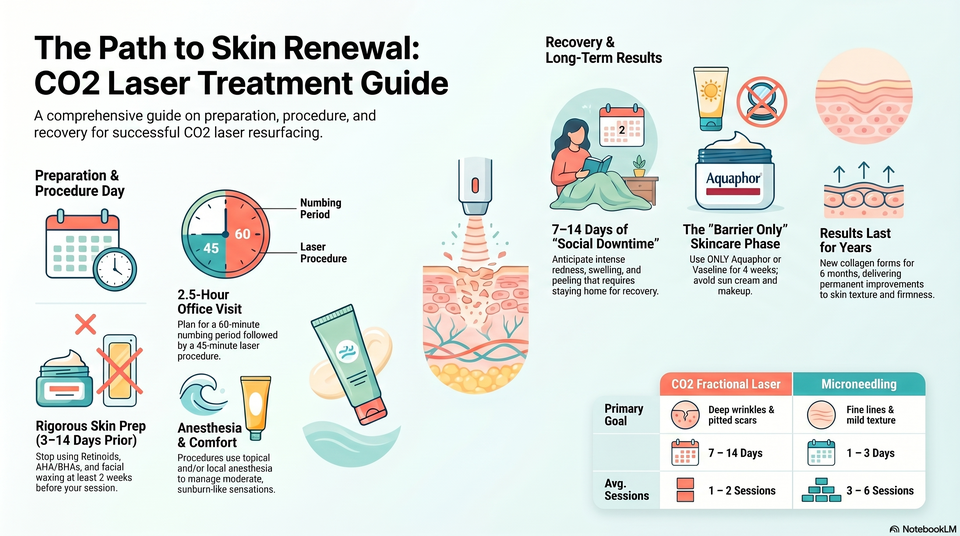
CO2 resurfacing decisions should balance the scale of the skin concern, the expected recovery window, pigment risk, aftercare capacity and personal priorities.
The short answer
CO2 skin resurfacing may be worth the downtime when the goal is a stronger change than lighter treatments can usually offer. It is often considered for acne scarring, sun-damaged texture, etched lines, enlarged pores and some laxity, but it asks something real in return: visible healing, careful aftercare and temporary limits on work, exercise, make-up, heat and sun exposure.
The decision is not simply whether CO2 is powerful. The more useful question is whether that power is proportionate for your skin, your risk profile and your life over the recovery period.
Clinical interpretation
Worth it for the right goal, not for every goal
If your concern is mild and you mainly want a subtle refresh, a lower-downtime option may be more proportionate. If your concern is deeper scarring, etched lines or significant sun-damaged texture, accepting more downtime may make clinical sense after assessment.
What downtime really means
Downtime is often described as a single number, but CO2 recovery has several overlapping phases. You may feel socially ready before redness has fully settled, and the visible result may continue developing after you look healed.
- Days 0-3
Heat, redness, swelling, tightness, oozing or micro-crusting can occur. This is the phase where wound care and avoiding heat, sun and picking matter most.
- Days 4-10
Peeling, dryness and itch can become more obvious. Some people feel ready for remote or desk-based work before they feel comfortable in public-facing settings.
- Weeks 2-6
The skin may look healed but remain pink, sensitive and reactive. Pigment risk, heat sensitivity and careful SPF planning remain important.
- 3-6 mo
Collagen remodelling becomes the main story. Texture, firmness and scar-softening may continue to refine gradually.
What can make downtime longer?
Higher treatment density, deeper settings, larger areas and treating around the mouth or eyes can increase swelling, crusting and visible healing.
Reactive skin, pigment-prone skin, recent tanning, smoking, infection risk, picking, heat exposure and missed aftercare can all make recovery more difficult.
If your diary has a wedding, sunny holiday, public event or important work commitment, treatment timing should be planned conservatively.
What results can justify the downtime?
The result side of the decision depends on what you are trying to change. CO2 is a resurfacing treatment: it can affect surface texture and deeper collagen response, but it is not a substitute for surgery when significant loose skin is the main concern.
Texture and pores
Controlled resurfacing may help roughness, enlarged pores and dull texture when the skin is suitable and aftercare is followed.
Acne scarring
Fractionated CO2 is used in NHS laser services for acne scarring, with improvement varying by scar type and treatment plan.
Lines and photodamage
Fine lines, sun-damaged texture and uneven tone may improve as damaged surface cells are treated and collagen response develops.
Skin firmness
Thermal stimulation may support firmer-looking skin, but meaningful laxity should be assessed carefully because CO2 is not a lifting operation.
| Goal | Why downtime may be worth considering | Important limit |
|---|---|---|
| Pitted acne scarring | Collagen remodelling can soften texture over time. | Deep ice-pick, tethered or keloid-type scars may need another plan. |
| Etched fine lines | Ablative resurfacing can be stronger than many low-downtime options. | Lines continue to develop with ageing, UV exposure and collagen change. |
| Sun damage and roughness | Surface renewal can improve brightness and texture. | Sun protection remains essential; pigment can recur or worsen. |
| Mild early ageing | May still help selected patients who want a stronger result. | Lower-downtime options may be more proportionate. |
Fractional versus fully ablative CO2
The downtime question changes depending on treatment intensity. Fractional CO2 treats microscopic columns and leaves surrounding skin to help healing. Fully ablative resurfacing treats the surface more continuously and may have a heavier recovery burden. The right approach depends on your skin, concern and tolerance for risk and downtime.
| Approach | Typical role | Downtime trade-off |
|---|---|---|
| Fractional CO2 | Often used for acne scarring, texture, pores, fine lines and moderate photodamage. | Usually more manageable, but redness, peeling and sensitivity can still be meaningful. |
| Fully ablative CO2 | May be considered for more intensive resurfacing goals in carefully selected patients. | Usually a heavier recovery with longer redness and stricter aftercare needs. |
| Lower-downtime options | May suit mild concerns, maintenance, pigment-first concerns or limited recovery time. | Often less disruptive, but usually more gradual or less intensive. |
The cellular reason results take time
CO2 laser energy is strongly absorbed by water in skin tissue. This allows controlled ablation at the surface and thermal stimulation in the dermis.
The visible surface renews first. Deeper improvement relies on fibroblast activity and collagen reorganisation, which is why results may build over months.
This slow biology is one reason CO2 can feel frustrating early on: the most important repair is not always visible in the first week.
The worth it decision matrix
This is not a scoring tool or a diagnosis. It is a patient-friendly way to think about whether CO2 downtime is likely to feel proportionate.
More likely to feel worth it
- Significant acne scarring or texture change
- Etched lines or visible photodamage
- Realistic expectations about gradual results
- Ability to follow aftercare and avoid sun/heat
- Time to recover without major events immediately after
Needs careful discussion
- Moderate concerns with limited downtime
- History of pigmentation or reactive skin
- Perimenopause or menopause-related dryness
- Upcoming travel, weddings or public work
- Uncertainty about maintenance commitment
Less likely to be proportionate
- Mild early texture change only
- No capacity for visible healing
- Difficulty avoiding sun, heat or picking
- Unrealistic expectations of a fixed outcome
- Active infection or untreated skin inflammation
Women, oestrogen and skin resilience
WHC looks at CO2 resurfacing through a women-centred lens. Around perimenopause and menopause, lower oestrogen is associated with changes in collagen, hydration, barrier function and wound-healing behaviour. This does not automatically make CO2 unsuitable, but it can affect how the skin is prepared, treated and maintained.
If your skin feels drier, thinner, more reactive or slower to recover than it used to, this is worth discussing at consultation rather than dismissing as purely cosmetic.
Practical implication
For some women, the best plan may include barrier support, gentler settings, staged treatment, longer spacing, hormone-aware skin care discussion or choosing an alternative with less disruption.
Safety, aftercare and red flags
Good aftercare reduces the chance of infection, prolonged redness, pigment change and scarring. Your clinic's instructions should always take priority because settings, treatment area and skin type change the plan.
When to seek advice
Seek medical advice promptly if symptoms worsen rather than gradually improve. Use NHS 111 for urgent advice or call 999 in a life-threatening emergency.
Before treatment
Discuss cold sore history, pigment risk, recent sun exposure, active acne or dermatitis, scarring tendency, medicines that affect healing and any upcoming events.
After treatment
Avoid picking, heat, early active skincare, unapproved products and sun exposure. Restart make-up, exercise and active skincare only when advised.
Alternatives and maintenance
If the downtime is not proportionate, options may include gentler resurfacing, non-ablative laser, RF microneedling, microneedling, chemical peels or skin-care-led preparation and maintenance. The right alternative depends on the concern: pigment, pores, scars, fine lines and laxity are not all treated in the same way.
Lower downtime
This may be preferable for mild concerns, higher pigment risk, limited time off work or people who want gradual change.
Longer-term maintenance
Daily SPF, barrier support, not smoking, review appointments and realistic maintenance planning can protect the visible result.
If pricing affects your decision, check the WHC pricing page or confirm before booking. Do not assume another clinic's price, session count or package applies to your skin.
Frequently asked questions
Short answers to the questions patients most often ask when comparing CO2 downtime with likely results.
Is CO2 laser downtime worth it? +
It can be worth it when the concern is significant enough to justify visible recovery, such as acne scarring, sun-damaged texture, etched lines or more advanced resurfacing goals. It may not be proportionate for mild concerns or if you cannot follow aftercare.
How much downtime should I plan for? +
Many people plan around 1 to 2 weeks of visible recovery, but the exact window depends on fractional versus fully ablative treatment, settings, area treated, skin type and healing response. Pinkness and sensitivity can last longer than peeling.
When will I see results? +
Early smoothness or brightness may appear once the surface has healed, but the deeper result usually builds over weeks to months as collagen remodels. A 3 to 6 month review window is often more realistic than judging the result in week one.
Is fractional CO2 easier than fully ablative CO2? +
Often, yes. Fractional CO2 treats microscopic zones and leaves surrounding skin to support healing. Fully ablative resurfacing is more intensive and may involve longer recovery, so it needs careful assessment and planning.
Can menopause affect healing or results? +
It may. Oestrogen changes around perimenopause and menopause are associated with collagen, hydration and barrier changes. This does not automatically rule out CO2, but it makes personalised assessment, preparation and maintenance more important.
What if I cannot take 1 to 2 weeks of downtime? +
Tell your clinician early. Lower-downtime alternatives may be more appropriate, or treatment may need to be timed around work, travel and events. A milder treatment that you can recover from safely may be better than a stronger treatment you cannot support.
When should I seek urgent advice after CO2 laser? +
Seek advice promptly for worsening pain, spreading redness, increasing heat, pus, unpleasant smell, fever, feeling unwell, clusters of blisters or any eye symptoms. Use NHS 111 for urgent advice or call 999 in a life-threatening emergency.

