

Vaginal Dryness & Vaginal Atrophy (GSM) Non-Hormonal Medical Options in the UK
Vaginal dryness (often part of Genitourinary Syndrome of Menopause) can be linked to hormonal change, tissue thinning, and inflammation. Options range from moisturisers and prescription therapies (where suitable) to non-hormonal in-clinic treatments like CO2 laser, radiofrequency, and regenerative injectables.
If you’re dealing with dryness, stinging, irritation, or discomfort with intimacy, you’re not alone—and you don’t have to “just put up with it.”
We offer a clinician-led assessment and a personalised plan using non-hormonal technologies and regenerative approaches, chosen around your symptoms, history, and preferences.
Why women choose our clinic
Practitioner-led care
Women’s health specialist
Medical governance
Safety-first protocols
Practitioner-Led Care
All treatments are delivered by Dr Farzana Khan, GP and Women’s Health Specialist with over 20 years’ medical experience.
Treatment options at a glance
CO2 Laser
Resurfacing & renewal • ~5 days pelvic rest
Radiofrequency
Gentle tightening & circulation • no downtime
Regenerative injectables
Polynucleotides / exosomes • minimal downtime
PRP / Hyaluronic acid
Hydration & repair • 0–24h downtime
Educational information only. A medical consultation confirms suitability and options.
Not sure what’s right for you?
A private medical consultation helps us understand your symptoms and recommend the safest, most effective plan—without guesswork.
Book AssessmentWhat is vaginal dryness (and why does it happen)?
Vaginal dryness is rarely a single-cause problem. It can involve reduced moisture, tissue thinning, irritation/inflammation, and changes in blood flow—often linked to hormonal change (but not always).
Tissue changes
Lower oestrogen can affect the vaginal and vulval tissues—reducing elasticity, lubrication, and resilience.
- Thinning of the lining (fragility)
- Reduced natural lubrication
- More friction and micro-irritation
Common symptoms
Dryness can show up as more than “dry”—including soreness, stinging, or discomfort during daily life and intimacy.
- Stinging, burning, or itching
- Pain with intimacy or tampon use
- Recurrent irritation or sensitivity
Multiple pathways
Different treatments target different mechanisms—surface comfort, tissue quality, long-term hydration, and structural support.
Your plan may combine methods depending on symptoms and medical suitability.
Our non-hormonal treatment categories
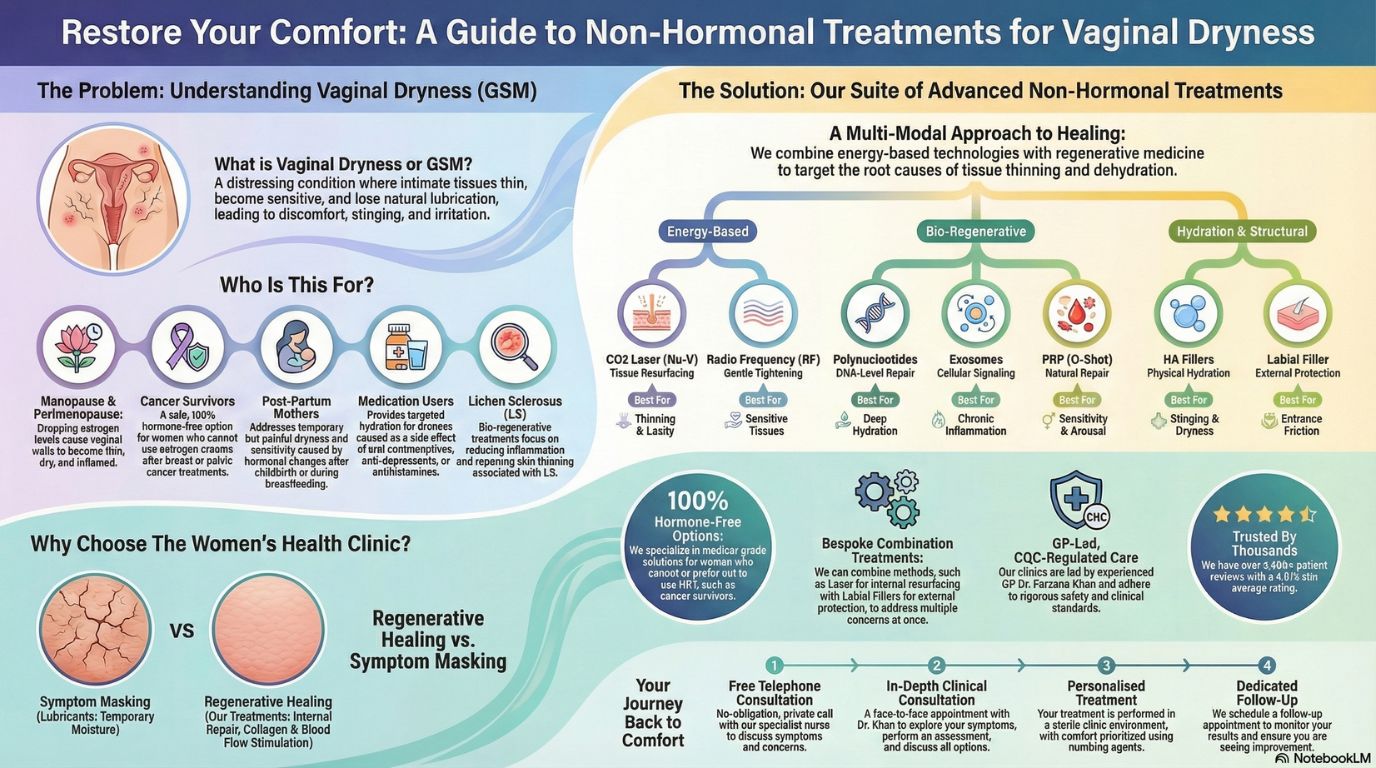
We combine three clinician-selected categories: energy-based remodelling (Fractional CO2 laser, radiofrequency), bio-regenerative medicine (polynucleotides, exosomes, PRP), and hydration & structural support (hyaluronic acid injections, labial filler).
Information provided is for education only and does not replace personalised medical advice. A full medical history and assessment is required.
Who is this suitable for?
This service is designed for women who want evidence-informed, non-hormonal medical options for dryness, irritation, and GSM—guided by a clinician.
Perimenopause or menopause
Dryness, stinging, or changes in comfort linked to hormonal transition (GSM).
Postpartum & breastfeeding
Temporary hormonal shifts can affect lubrication and sensitivity.
After cancer treatment
Supportive options for women who may not be able to use hormones (case-dependent).
Sensitive or fragile tissues
Discomfort with friction, intimacy, or daily activities.
Recurrent irritation patterns
When symptoms keep returning and you want a structured medical review.
Prefer non-hormonal care
If you don’t want, or can’t use, hormone-based options.
A consultation that prioritises safety and clarity
We review symptoms, history, previous treatments, and goals—then explain options, limits, risks, and realistic outcomes.
Book ConsultationWhy choose medical, non-hormonal treatment?
Many women try lubricants or moisturisers first. If symptoms persist, an in-clinic plan can target tissue quality and comfort—especially when hormones are not preferred or not suitable.
Targets the mechanism
Different technologies address different drivers—surface comfort, hydration, tissue quality, and structural support.
Clinician-led selection
We match treatment to symptoms and medical history, rather than a one-size-fits-all protocol.
Safety-first pathway
Medical suitability checks, realistic expectations, and aftercare built into your plan.
Regenerative focus
Evidence-informed regenerative options may support tissue quality and comfort over time (case-dependent).
GP-led care • CQC-regulated clinics • Clinical governance
What results can I realistically expect?
What if I’m using (or considering) hormones?
Unsure which option is right?
You don’t need to decide alone. A private assessment helps us recommend the safest, most suitable plan for your body and goals.
Book Medical AssessmentPricing
Prices are listed for guidance. A consultation confirms suitability and the most appropriate plan. Educational only. Results vary.
Vaginal Laser (CO2)
Energy-based support for GSM and tissue quality
Course of 3: £1,500
- Often chosen for tissue resurfacing and renewal
- Course-based approach available
- Typically 5 days pelvic rest
Other treatment options
Other options may include vulvo-vaginal skin booster (£895) and vulval skin tightening (£699). Course pricing may be available where clinically appropriate.
Signature Intimate Makeover
A comprehensive package designed around hydration, regeneration, and tissue support. Includes HA filler, PRP, HA skin booster, and a laser session (subject to consultation).
£3,499
Discuss PackageWant help choosing the right option?
You don’t need to decide from a menu. We’ll review symptoms, history, and goals—then recommend the safest, most suitable plan.
Book Medical Assessment Medical suitability
Your safety comes first. We assess medical history, symptoms, and goals before recommending any in-clinic treatment.
When we may delay or decline treatment
Please tell us if any of the following apply. In some cases we may recommend a different approach, investigate symptoms first, or postpone treatment.
-
Pregnancy (or suspected pregnancy)
In-clinic intimate treatments are typically postponed during pregnancy.
-
Active infection or outbreak
Including thrush/BV flare, UTI symptoms, herpes outbreaks, or unexplained irritation—these need assessment and treatment first.
-
Unexplained bleeding or a new lesion
Any new bleeding, lump, or skin change should be assessed medically before proceeding.
-
Recent surgery/childbirth or severe pain
We may advise waiting until healing is complete or exploring other causes first.
Important medical information to share
These do not always exclude treatment, but they can change what’s recommended and how we plan aftercare.
Immune or inflammatory conditions
Autoimmune conditions, immunosuppression, or recurrent infections.
Bleeding risk
Bleeding disorders or anticoagulant/antiplatelet medication (e.g., warfarin, DOACs).
Cancer history or pelvic radiotherapy
Especially if you’ve had hormone-sensitive cancer or pelvic radiotherapy—specialist input may be needed.
Allergies / sensitivities
Previous reactions to injectables, anaesthetics, or topical products.
Confidential medical review
If you’re unsure about suitability, our team can review your history privately and explain the safest options.
Discuss EligibilityThis list is not exhaustive. A full medical history is taken during consultation. Information provided is educational and does not constitute medical advice.
Unsure which option is right for you?
A clinician-led assessment helps match your symptoms to the safest, most effective plan—without guesswork.
Book Assessment Frequently asked questions
Quick answers about suitability, treatment choice, downtime, and results.
Are these treatments hormone-free?
Yes. The in-clinic options listed on this page are non-hormonal. A consultation confirms what is suitable for you and discusses alternatives (including prescription options where appropriate).
How do I know which treatment I need?
Treatment choice is determined during consultation. We assess symptoms, medical history, previous treatments, and goals—then recommend the safest, most suitable pathway.
Can treatments be combined?
Often, yes. Combination plans are common because different modalities target different mechanisms (comfort, hydration, tissue quality, and structural support).
How many sessions will I need?
It depends on the method and your symptoms. Some treatments are done as a single session; others work best as a short course with optional maintenance.
Is there downtime?
Downtime varies. Many injectable options have minimal downtime; CO2 laser typically requires pelvic rest for around 5 days. We’ll provide written aftercare for your plan.
Are results permanent?
Results can be long-lasting but are not permanent. Maintenance may be recommended depending on symptoms and life stage.
Ready to talk it through privately?
Book a free 20-minute consultation and we’ll help you understand your options.
Book Free ConsultationMore about vaginal dryness, GSM, and treatment options
GSM, vaginal dryness, and “vaginal atrophy”: what’s the difference?
Genitourinary Syndrome of Menopause (GSM) is an umbrella term used by many clinical bodies for the collection of vulvovaginal and urinary symptoms linked to hormonal change around menopause. You may also see older terms like vaginal atrophy or atrophic vaginitis.
People commonly search for: vaginal dryness treatment UK, vaginal atrophy treatment, GSM treatment, and menopause dryness. These often refer to the same symptom cluster, but causes can vary—so a medical assessment matters.
- Dryness = symptom (how it feels)
- GSM = broader diagnosis that may include dryness, irritation, pain with intimacy, and urinary symptoms
- Atrophy = tissue thinning/fragility often linked to low oestrogen
What can I do at home first?
Many women start with simple measures. These may be enough for mild symptoms, or they may complement medical treatments:
- Vaginal moisturisers (regular use) for baseline hydration
- Lubricants for intimacy and friction reduction
- Gentle skincare: avoid fragranced washes, harsh soaps, and irritants
- Address triggers: new products, tight clothing, over-washing, or recurrent irritation patterns
If symptoms persist, keep returning, or affect quality of life, it’s reasonable to seek a clinician-led review.
When should I seek a medical review?
Please seek medical advice if you have any new, unexplained, or worsening symptoms—especially:
- Unexplained bleeding (including after intimacy)
- A new lump, ulcer, or persistent skin change
- Severe pain, swelling, fever, or feeling unwell
- Recurrent infections or urinary symptoms that don’t settle
This page is educational only and does not replace assessment by a qualified clinician.
How clinicians choose between laser, RF, and regenerative injectables
Different modalities target different mechanisms. During consultation we consider symptom pattern, examination findings, medical history, and preferences.
- Fractional CO2 laser: energy-based resurfacing/remodelling; commonly planned as a short course
- Radiofrequency: gentle energy-based support, often chosen when a lower-intensity option is preferred
- Regenerative injectables (e.g., polynucleotides, PRP): may support tissue quality and hydration over time (case-dependent)
- Hyaluronic acid: targeted hydration/support where suitable
We’ll also discuss where prescription options (including local therapies) may fit, depending on your situation.
Tools to help you prepare for consultation
If you’re not sure how to describe your symptoms, a short tracker can help. Consider noting:
- When symptoms started and how they’ve changed
- What makes them better or worse
- Any urinary symptoms (frequency, urgency, UTIs)
- Products tried (moisturisers, lubricants, prescriptions)
Patient resources (available from our clinic): interactive treatment matcher, educational guide, wellness quiz, symptom diary, and newsletter community.
Clinical References & Citations
- 1. NHS — Vaginal dryness (symptoms, causes, treatments). nhs.uk
- 2. NHS — Vaginal oestrogen (medicine information). nhs.uk
- 3. NICE NG23 — Menopause: identification and management (recommendations). nice.org.uk
- 4. NICE — Visual summary: GU symptoms associated with menopause (NG23). nice.org.uk (PDF)
- 5. British Menopause Society — GSM consensus statement. thebms.org.uk
- 6. NAMS/ISSWSH — 2020 GSM position statement (PDF). isswsh.org (PDF)
About Our Clinical Team

Dr Farzana Khan
BSc (Hons), MD, DFFP, RCGP
Qualifications
- MD, University of Copenhagen (2003)
- MRCGP, CCT (2013)
- Diploma of the Faculty of Sexual & Reproductive Health (2013)
Clinical focus
Sexual function and comfort
Lichen sclerosus
Vulval skin
Volume concerns
How she works
- Listens first. Conservative and medical options discussed before procedures
- Clear, balanced counselling on benefits, limits, risks, and alternatives
- Shared decisions, realistic expectations, written aftercare
Training & teaching
- KOL/Trainer: Neauvia, Asclepion Laser, RegenLab (since 2023)
- Ongoing CPD: IMCAS, CCR, ACE, and intimate HA/PRP/Polynucleotide training
Authored and medically reviewed by Dr Farzana Khan. Last updated: [November 2025]

Katy Pitt Allen
Clinical Director
Katy brings exceptional clinical expertise and international experience to her role as Clinical Director, with specialized knowledge in oncology, gynaecology, and palliative care developed through over a decade of nursing excellence. Her proven leadership skills, demonstrated through her progression from staff nurse to junior ward sister and her current international oncology practice, ensure our clinic maintains the highest clinical standards while delivering compassionate, evidence-based care to all patients.

Dr Kamaljit Singh
Clinical Oversight
Dr. Kamaljit Singh provides medical oversight for our clinical team, bringing over 25 years of comprehensive healthcare experience to ensure the highest standards of patient care. A graduate of Leeds Medical School with distinction, Dr. Singh holds his MRCGP qualification and served as a senior partner at Leicester Medical Group for 16 years. His expertise spans both traditional medicine and aesthetic procedures, with specialized training in cosmetic treatments and 18 years of membership with the British Association of Aesthetic Plastic Surgeons. Dr. Singh's background includes roles as an FY2 trainer and GP assessor, demonstrating his commitment to medical education and professional standards that ensure our clinical team operates with rigorous oversight and excellence.

Jill Crowe
Director of Relationships
Jill brings over two decades of nursing excellence and exceptional relationship-building skills to her role as Relationship Manager at our women's health clinic. With her proven expertise in communication, team leadership, and inter-agency collaboration, she seamlessly coordinates between practitioners, patients, and partners to ensure the highest quality of care and service delivery.
Master treatment template
Leeds – Harrogate
Exeter – Denmark Road
Bristol – City
Manchester – King Street
Surrey – West Byfleet
London – Harley Street
Birmingham – Edgbaston
London – Canary Wharf
Real Results from
Real Women
Join thousands of women who have enhanced their confidence with NuV treatment




How we work?
1
Free Telephone Consultation —Master treatment template
2
Preparation & Clinical Guidance —Master treatment template
3
Face-to-Face Consultation —Master treatment template
4
Evidence-Based Treatment —Master treatment template
5
Immediate Aftercare & Comfort —Master treatment template
6
Review & Expectation Management —Master treatment template
7
Long-Term Care & Follow-Up —Master treatment template
Get in Touch and Take the First Step Today
Book your free consultation and discover how O-Shot®, G-Shot®, Exosomes, vaginal HA Fillers & Skin Boosters, can help you with your confidence. Individual experiences vary. (we offer a generic PRP approach (no brand affiliation).
We’ll listen, assess, and explain options—conservative, medical, and (if suitable) procedural.
Ask a question first
Send us a note if you’re not ready to book.