How Menopause Affects the Whole Family: A Candid Conversation
Key Takeaways
- The Ripple Effect: Menopause doesn't happen in isolation; it impacts partners, children, and workplace dynamics.
- Invisible Symptoms: Mental health struggles like detachment, paranoia, and mirror dysphoria are often more debilitating than physical signs.
- Communication is Vital: Explaining "it's my hormones, not you" can save relationships and normalize the conversation.
- Holistic Care: HRT isn't one-size-fits-all, and symptoms like joint pain or burning mouth syndrome are often missed without specialist knowledge.
Table of Contents
The Silent Struggle: When Hormones Change Everything
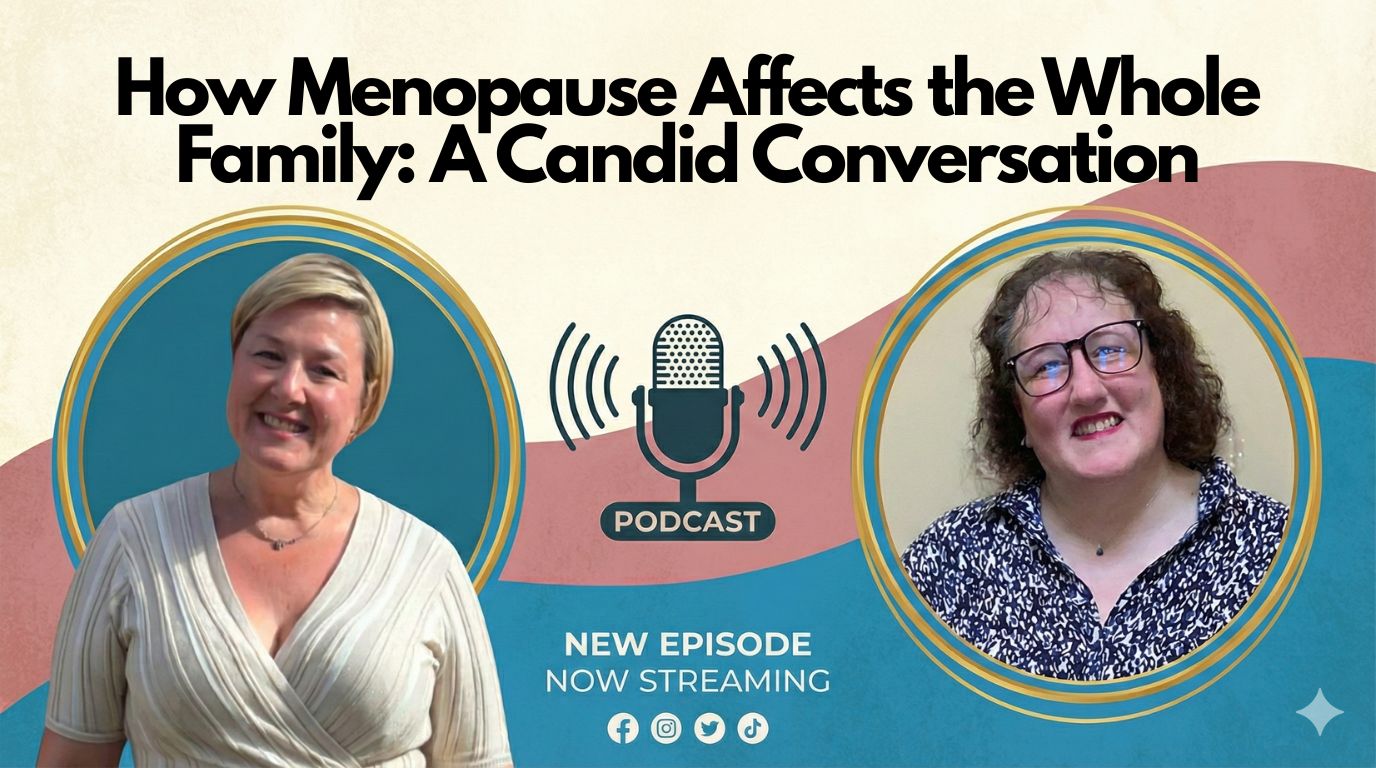
"Mum, what's wrong? You are never grumpy with me. Why are you grumpy?" Those words from Tracy Withers' daughter became a turning point—the moment she realized her menopause journey wasn't just affecting her, but rippling through her entire family. In a refreshingly honest conversation with Jill Crowe at the Women's Health Clinic, Tracy opened up about the reality so many women face: menopause doesn't happen in isolation.
Tracy's journey began with a feeling she couldn't quite name. Her periods became erratic, life felt complicated, and she found herself wondering: was it stress, or something more? Like countless women, she initially dismissed symptoms as "just having a lot on." As Jill Crowe points out: "When you are working, you've got commitments... you just put it down to, I'm just stressed."
The Invisible Symptoms
Tracy experienced something many women struggle to articulate: detachment. "I felt detached and that I was doing things because I had to for other people," she shares. This emotional disconnection became Tracy's instigator for seeking help again. As she puts it: "Everybody has a trigger and a line across."
 Book Assessment
 The Relationship Crisis Nobody Talks About
Perhaps the most difficult aspect of Tracy's menopause journey involved her marriage. "Let's be honest," Tracy says, "my husband and I relationship has always been—we are very with each other... But all of a sudden out of nowhere, just didn't want it."
When "Shut Up" Comes Out of Nowhere
"There are still times when I get so frustrated... my husband just talking to me like he generally would be, and I turned around and told him to shut up. It just comes out of nowhere without you expecting it." — Tracy
Jill emphasizes that this irritability is like "someone inside you verbally coming out." Tragically, without understanding, these changes can lead to breakdown. "The stories I hear from some ladies... their marriages have ended up in divorce," Jill notes. Tracy considers herself fortunate that her husband educated himself, but the strain on intimacy and communication is a universal challenge.
Beyond Hot Flushes: The Mental Health Impact
We always hear about hot flushes and weight gain, but the mental health impact is often the most debilitating factor. "We've got estrogen to a certain degree in every single cell in our body," Jill explains. "As that declines... it is physical, it's mental health as well."
The Symptoms Nobody Warns You About
- Paranoia: Jill notes many women fear their partners are having affairs or that "nobody likes them."
- Mirror Dysphoria: Looking in a mirror and not seeing yourself—a profound disconnection from your own body.
- Severe Anxiety: Often underestimated, anxiety can become a dominant force in daily life.
Navigating Menopause Across Generations
Communicating what you're experiencing to different generations requires different approaches.
Talking to Children
Tracy used her granddaughter's puberty as a bridge: "It's an ideal time to start talking about hormones." For sons, a simple "it's just my hormones" often suffices. The key message: "It's nothing you've done."
Talking to Partners
Jill advises explaining the 'why'. "I'm not feeling sexual... it's not you, just stabilizing my hormones." Frame it as: "I am doing this to help myself. You need to do this to help me."
Struggling with symptoms at work?
Get SupportThe Workplace Challenge
"Menopause in the workplace is a really difficult conversation to have," Jill acknowledges, "especially if you have got a male boss and they're a younger male boss." Symptoms like brain fog, lack of concentration, and feeling less confident in professional clothing can profoundly impact work performance.
However, education works. Jill recalls a man attending her menopause talk to help his wife and subsequently educating his colleagues in construction. "If you're not aware about something, you can't help someone, can you?"
Surprising Symptoms You Never Expected
Not Just "Getting Older"
Don't rule out anything that's not the norm for you. These symptoms are often misdiagnosed:
- Joint Pain: Often mistaken for skeletal issues. Jill found her hip and elbow pain resolved with HRT.
- Burning Mouth Syndrome: A sensation like "pizza burn" inside the mouth.
- Ear Issues & Dry Eyes: Menopause can affect mucous membranes everywhere.
The HRT Journey: Not Always Straightforward
HRT isn't a magic wand that works instantly for everyone. While Tracy found relief with a standard regimen, Jill discovered she was estrogen sensitive, experiencing headaches and irritability that required careful dosage adjustment.
Crucially, you are rarely "too old" for HRT. "I've got many ladies in their seventies still on HRT because they've still got the symptoms," Tracy adds. "Just because your periods stop doesn't mean you can't be managed."
You Don't Have to Do This Alone
Whether you need medical advice or just to be heard, specialist support is available.
Moving Forward: Advice & Support
"You control the menopause—don't let the menopause control you," says Jill. Taking control means being proactive, noticing symptoms early, and communicating with those around you.
For Partners & Family
Educate Yourself: Knowledge enables support.
It's Not Personal: Withdrawal or irritability is hormonal, not a reflection of feelings.
Be Patient: Finding the right HRT balance takes time.
For Employers
Make it Easier: Don't force women to explain intimate details without support structures.
Small Adjustments: Flexibility for appointments and temperature control matter.
Retain Talent: Policies save experienced talent from leaving.
About the Experts
Jill Crowe RGN is the Director of Relations at the Women's Health Clinic with over 20 years of nursing experience. She specializes in mental health awareness and workplace menopause training.
Tracy Withers RGN DipHE is a Practice Nurse and women's health advisor with over a decade of experience in general practice, specializing in health promotion and patient-centered care.