
Why us?  Why us? please click dropdown
4.8/5 out of 3,500+ reviews
Regulated: CQC Registered | 1-5796078466
  • Verified Content: Approved by the Women’s Health Clinic Clinical Team.
  • Educational Use: This is not a substitute for professional medical advice, diagnosis, or treatment.
  • Clinical Assessment: Individual suitability is determined by a clinician; results may vary.
  • Non-NHS: Private healthcare provider only. Pricing varies by treatment and site. Availability varies by clinical location.
  • MEDICAL EMERGENCY:

    If you need urgent help, use NHS 111. For a life-threatening emergency, call 999.

 Author  Find more about the author
Dr Farzana Khan

Dr Farzana Khan

Verified

Dr Farzana Khan qualified as an MD from the University of Copenhagen in 2003. She has worked in dermatology and obstetrics & gynaecology across the North of England and completed her MRCGP (CCT, 2013) and the Diploma of the Faculty of Sexual & Reproductive Health (2013). Her clinical focus is vaginal health—including dryness/GSM, sexual function concerns, lichen sclerosus, and comfort or volume changes. She offers careful assessment, discusses medical and conservative options first, and considers selected regenerative or aesthetic treatments where appropriate. Dr Farzana also trains clinicians as a KOL/Trainer with Neauvia, Asclepion Laser, and RegenLab (since 2023). Ongoing CPD includes IMCAS, CCR, ACE and expert training in women’s intimate fillers, PRP, and polynucleotide injectables. Her approach is simple: clear explanations, realistic expectations, and shared decision-making. Authored and medically reviewed by Dr Farzana Khan.

MD MRCGP DFFP
Was this answer helpful?
Rate Dr Farzana's explanation

CO2 comparison
CoolPeel explained
Assessment first

Women’s Health Clinic FAQ

How does CoolPeel differ from traditional CO2 laser treatment?

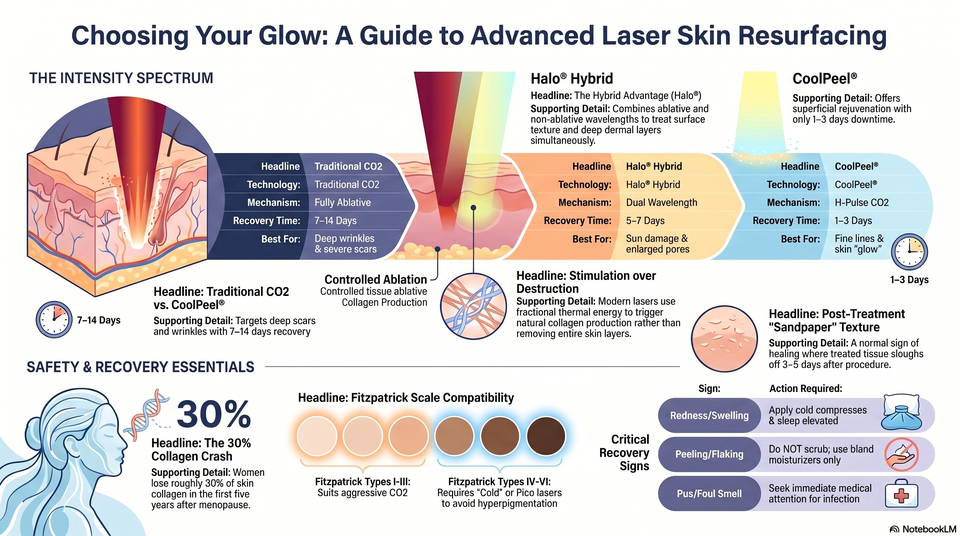
CoolPeel and traditional CO2 laser treatment are related, but they are not used in the same way. The main differences are treatment depth, heat spread, downtime, intensity and the kind of skin concern being treated.

Direct answer

CoolPeel is a lighter, more superficial way of delivering CO2 laser energy, designed to refresh texture, pores and fine lines with less residual heat and shorter downtime. Traditional CO2 treatment usually means deeper fractional or fully ablative resurfacing, which can create more collagen remodelling for deeper wrinkles, scars or laxity, but also more redness, crusting, aftercare and recovery. Suitability depends on skin type, pigment risk, goals and consultation.

A useful way to think about it is not “which is better?”, but “how much resurfacing does my skin need, and how much recovery can I safely manage?”

Educational only. This page supports general understanding and does not replace personalised assessment. Results vary. Not a cure.

Clinician explaining the difference between CoolPeel and traditional CO2 laser treatment
CoolPeel vs CO2 laser

At a glance

Both treatments use CO2 laser principles, but they sit at different points on the resurfacing-intensity spectrum.

At a glance

Different delivery, different recovery

CoolPeel

Short-pulse, superficial CO2 resurfacing.

Traditional CO2

Deeper fractional or fully ablative resurfacing.

Downtime

CoolPeel is usually days; deeper CO2 is often longer.

Best fit

Depends on skin concern, tone and recovery capacity.

Most important distinction

CoolPeel is still CO2. It is the delivery mode and treatment depth that change the recovery and risk profile.

CO2 wavelength
Short pulses
Less heat spread
Lower downtime
Deeper CO2 options


Detailed answer

CoolPeel is a controlled, lower-heat CO2 mode

CO2 laser energy is absorbed strongly by water in the skin. That controlled interaction can remove microscopic areas of surface tissue and trigger a wound-healing response that signals fibroblasts to make new collagen.

Depth and heat explain most of the difference

CoolPeel uses short, high-energy pulses to keep treatment more superficial and reduce lingering heat. Traditional CO2 can be delivered more deeply, creating a stronger wound response but also more swelling, crusting and downtime.

Water absorption
Micro-ablation
Thermal spread
Collagen signalling

What CoolPeel targets

CoolPeel is usually positioned for mild-to-moderate texture change, enlarged pores, dullness, fine lines and early sun damage where shorter social downtime is important.

What deeper CO2 targets

Traditional fractional or fully ablative CO2 may be considered for deeper wrinkles, more advanced photoageing, significant acne scarring or laxity when a stronger recovery is acceptable.

Why recovery differs

Less residual heat and shallower ablation usually mean less oozing, crusting and prolonged redness. Deeper CO2 creates more controlled injury and therefore needs stricter aftercare.

Why results differ

CoolPeel may need a course of treatments for cumulative change. Traditional CO2 can create more dramatic resurfacing in selected patients, but with a greater recovery burden.

It is a spectrum, not a contest

The same CO2 platform may offer lighter and stronger modes. A clinician should explain whether you are being offered CoolPeel, fractional CO2, fully ablative CO2 or a staged plan.

The correct choice balances the concern being treated, Fitzpatrick skin type, melasma or PIH history, menopause-related skin dryness, previous healing and your ability to avoid sun, heat and picking afterwards.


Patient safety

Why the distinction matters clinically

Choosing the wrong intensity can mean under-treating a deeper concern or over-treating skin that needed a gentler approach.

Intensity changes risk

More ablation and heat can mean more redness, swelling, pigment risk, infection risk and time away from normal routines.

Downtime affects safety

A treatment is only sensible if you can follow the recovery plan, including sun avoidance, gentle cleansing and product restrictions.

Pigment history matters

Melasma, darker skin tones, recent tan and previous post-inflammatory hyperpigmentation should shape the treatment plan and settings.

Hormones affect skin

Perimenopause and menopause can affect collagen, hydration and barrier resilience, so preparation and aftercare may need to be more cautious.

The WHC lens: match the treatment to the biology

CO2 laser works by creating controlled injury. In response, inflammatory cells, keratinocytes and fibroblasts coordinate surface repair and collagen remodelling. CoolPeel aims to prompt this process with less thermal burden.

Traditional CO2 can create a stronger wound-healing signal, but it is not automatically better. The safest plan is the one that matches your skin, goal, risk profile and aftercare capacity.


Considerations

How to decide which approach fits

A good consultation should explain the treatment mode, expected recovery and why that level of CO2 energy is appropriate for your concern.

Questions to ask before treatment

Ask whether the plan is CoolPeel, fractional CO2 or fully ablative CO2; how deep it will go; how many sessions may be needed; what downtime to expect; and what pigment precautions apply.

Skin concern
Skin type
Downtime
Aftercare

For mild texture and pores

CoolPeel may suit people seeking fresher texture, pore refinement and fine-line softening with a shorter recovery window.

For deeper wrinkles or scars

Traditional CO2 may be considered when deeper tissue remodelling is needed, but the recovery and red-flag plan must be very clear.

For pigment-prone skin

A gentler or staged plan may be safer if you have darker skin, melasma, recent tanning or previous post-inflammatory hyperpigmentation.

For busy schedules

Lower downtime can be valuable, but do not treat it as no downtime. Even CoolPeel needs sun protection, gentle products and temporary activity changes.

What recovery planning should include

You should know when to cleanse, what to apply, when makeup and SPF are allowed, when to pause actives, how long to avoid heat and exercise, and who to contact if healing changes.

If you cannot follow aftercare, it may be safer to delay treatment or choose a gentler option rather than push ahead with a stronger resurfacing plan.


Common concerns and myths

Common CoolPeel and CO2 myths

Marketing language can make resurfacing feel more confusing than it needs to be. These are the misconceptions to clear up first.

CoolPeel is not CO2

CoolPeel is a CO2 laser treatment mode. The difference is the short-pulse, lower-heat delivery, not a completely different category of treatment.

Less downtime means no risk

Lower downtime does not mean no aftercare. Redness, dryness, pigment change, irritation and infection are still possible and need sensible precautions.

Stronger is always better

Traditional CO2 may be more powerful, but that is only helpful when the skin concern justifies the deeper recovery and risk profile.

Subtle does not mean ineffective

A lighter course can be clinically useful for early texture, pores and maintenance, especially where downtime or pigment risk matters.

One session is not the only measure

Some people prefer staged improvement over multiple lower-downtime sessions. Others may accept a more intensive single procedure. Both require assessment.


Safety checklist

Safety checklist before choosing

Use these questions to make the consultation practical and safety-focused.

Has my skin been assessed?

Skin type, pigment history, melasma, tan, scarring tendency, rosacea, acne and previous healing should be discussed before choosing settings.

Do I know the exact mode?

Confirm whether the plan is CoolPeel, fractional CO2, fully ablative CO2 or a staged combination.

Is downtime realistic?

Plan around work, events, exercise, sun exposure, makeup delay and the level of wound care required.

Do I know when to call?

You should leave with written aftercare and clear instructions for pain, swelling, discharge, cold sores or delayed healing.

Reassuring signs

The recommendation is personalised, risks are discussed, recovery is realistic and the clinician explains why that level of CO2 energy fits your skin.

Personalised plan
Pigment risk checked
Aftercare clear

Caution signs

Be cautious if CoolPeel is described as having no meaningful risk, traditional CO2 is pushed as best for everyone, or no one discusses pigment risk and aftercare.

No assessment
No red flags
No aftercare plan


When to escalate

When to seek help after CO2 treatment

Seek medical advice promptly if symptoms worsen rather than settle after CoolPeel or traditional CO2. Use NHS 111 for urgent advice or call 999 in a life-threatening emergency. Use NHS 111

Possible infection

Spreading redness, warmth, swelling, pus, yellow or green discharge, offensive smell, fever or feeling generally unwell.

Worsening pain or swelling

Pain that intensifies, throbs, becomes severe or does not match the expected recovery pattern should be reviewed.

Cold sores or blisters

New cold sores, painful blisters, grouped spots, tingling or tender lymph nodes can need prompt clinical treatment.

Delayed or unusual healing

Open areas, crusting beyond the expected window, new dark patches, whitening, unusual rash or eye symptoms need review.

Educational only. This page cannot assess your skin. Contact your treating clinic for personalised advice, use NHS 111 for urgent advice, or call 999 in a life-threatening emergency.

CoolPeel and CO2 laser questions

Is CoolPeel still a CO2 laser?

Yes. CoolPeel is a CO2 laser treatment mode rather than a completely separate non-CO2 treatment. The difference is how the energy is delivered: short, controlled pulses are used to refresh the surface while limiting lingering heat in surrounding tissue.

Does CoolPeel replace traditional CO2 resurfacing?

No. CoolPeel may suit mild-to-moderate texture, pores, early lines and patients who need less disruption. Traditional fractional or fully ablative CO2 may still be considered for deeper wrinkles, more advanced photoageing, significant acne scarring or laxity, if the patient accepts a stronger recovery plan.

How many sessions might be needed?

CoolPeel is often planned as a course because each session is intentionally lighter. Traditional CO2 may produce more visible change from fewer sessions, but the recovery, redness, aftercare and risk profile are usually more demanding. Your clinician should explain the expected course before treatment.

Which is better for acne scars?

It depends on scar type and depth. Mild textural scarring may improve with lighter fractional approaches, while deeper boxcar or rolling scars may need stronger CO2 settings or combination care such as subcision, microneedling, peels or staged resurfacing. Skin tone and pigment history matter.

Is CoolPeel better for darker skin?

CoolPeel may reduce heat-related downtime compared with deeper CO2 settings, but it is not automatically suitable for every darker skin tone. Fitzpatrick type, melasma history, recent tan and previous post-inflammatory hyperpigmentation should be assessed before any resurfacing.

How does menopause affect the decision?

Perimenopause and menopause can be associated with drier, thinner and more reactive skin because oestrogen supports collagen, hydration and barrier resilience. This does not rule out treatment, but it can influence preparation, settings, aftercare and the pace of product reintroduction.

When can I use makeup and SPF?

Do not apply makeup or sunscreen to raw, oozing or actively peeling skin unless your clinician has specifically advised it. CoolPeel may allow an earlier return than deeper CO2, but the skin surface must be closed and comfortable first. Continue hats, shade and broad-spectrum protection once SPF is allowed.

Next step

Unsure whether CoolPeel or CO2 resurfacing fits?

WHC can help you understand which resurfacing intensity is appropriate for your skin goals, pigment risk, hormonal skin context and recovery capacity.

Educational only. A consultation is needed to confirm suitability, treatment settings and your personalised recovery plan. Results vary. Not a cure.

Loading directory...