


Which underwear, soaps, and bath products reduce irritation?
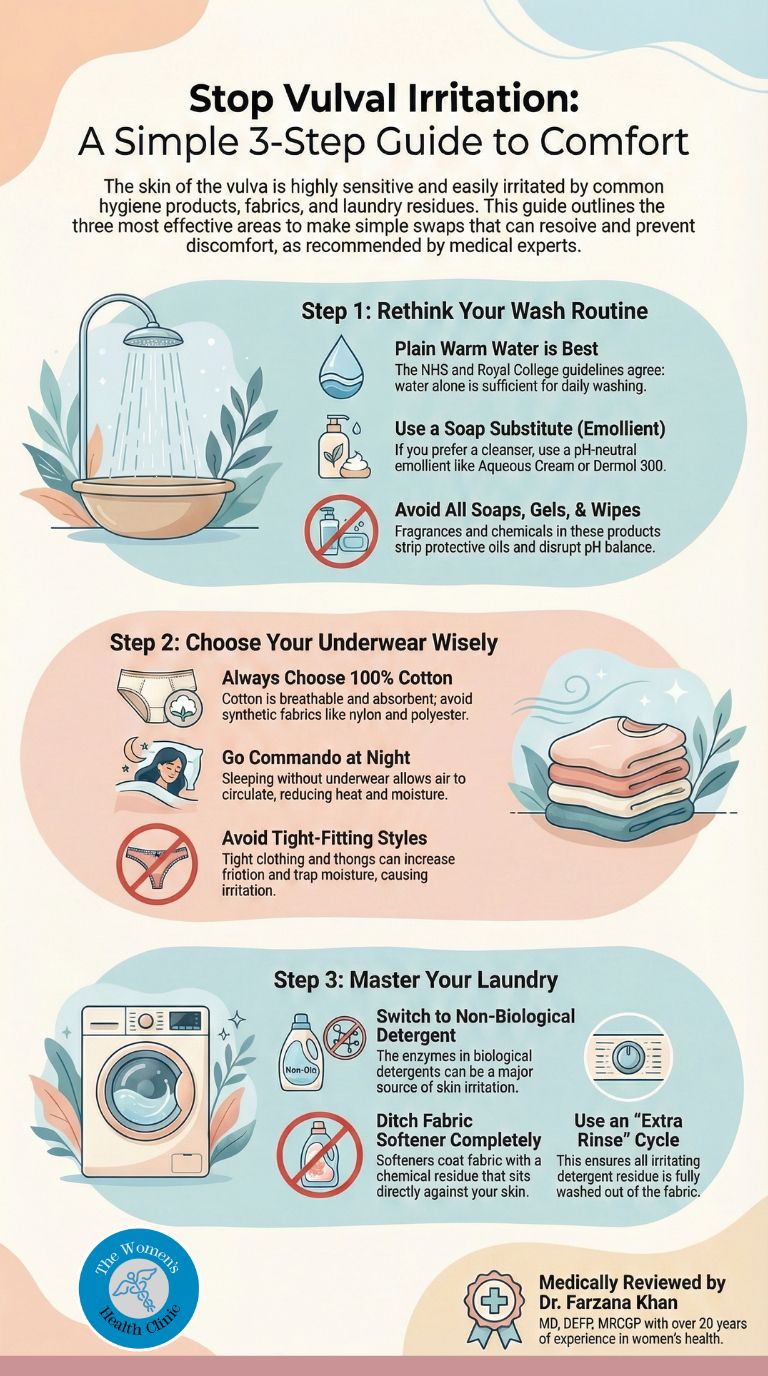
The vulva and vagina are highly sensitive to chemical irritants, friction, and moisture imbalance. Choosing 100% cotton underwear, avoiding soaps and fragranced products on the vulva, and using plain warm water for daily cleansing are the most effective steps to reduce irritation. Many cases of persistent vulval discomfort, itching, or burning are caused—or worsened—by well-intentioned hygiene products that disrupt the skin barrier and vaginal pH.
Show Detailed Answer
Vulval irritation is one of the most common reasons for gynaecological consultation. Symptoms include itching, burning, rawness, or stinging—particularly after washing, wearing tight clothing, or during your period. While infections like thrush or bacterial vaginosis can cause similar symptoms, a significant proportion of cases are due to contact irritation from everyday products and fabrics.
The skin of the vulva is thinner and more permeable than skin elsewhere on the body. It lacks the protective keratinised outer layer found on your arms or legs, making it exceptionally vulnerable to irritants. The vagina itself is a self-cleaning organ with a naturally acidic pH (around 3.8–4.5), maintained by healthy lactobacilli bacteria. Disrupting this balance—through douching, scented wipes, or harsh soaps—can trigger inflammation, dryness, and recurrent infections.
Why Common Products Cause Problems
Many products marketed as “feminine hygiene” are precisely the ones to avoid:
- Fragranced soaps and shower gels: Contain synthetic perfumes, parabens, and surfactants that strip natural oils and alter skin pH.
- Bubble baths and bath bombs: Often contain sodium lauryl sulphate (SLS), dyes, glitter, and essential oils—all potent irritants.
- Wet wipes and “feminine wipes”: Usually contain preservatives (like methylisothiazolinone) and fragrances. Even “sensitive” versions can cause allergic contact dermatitis.
- Vaginal deodorants and douches: Completely unnecessary and actively harmful. They destroy beneficial bacteria and increase infection risk.
- Synthetic underwear and shapewear: Trap heat and moisture, creating an environment for yeast overgrowth and bacterial imbalance.
Underwear: What to Choose
Your choice of underwear has a direct impact on vulval health:
- Fabric: Choose 100% cotton gusset underwear. Cotton is breathable, absorbent, and does not trap moisture against delicate skin. Avoid polyester, nylon, lace gussets, and satin.
- Fit: Opt for styles that are not excessively tight. Thongs can irritate some people by increasing friction and transferring bacteria from the anus, but they are fine if you experience no symptoms.
- Washing: Use non-biological detergent and avoid fabric softeners or scented laundry products. Rinse thoroughly. If irritation persists, try a second rinse cycle or switch to sensitive-skin detergents.
- Overnight: Consider going without underwear at night to allow air circulation and reduce moisture build-up.
Soaps & Cleansers: What to Use (and Avoid)
The NHS, RCOG, and dermatology guidelines all recommend the same approach: plain warm water is sufficient for daily vulval washing.
- Daily cleansing: Use your hand (not a flannel or sponge, which harbour bacteria) and plain lukewarm water to gently wash the external vulva. Pat dry with a soft towel.
- Avoid internal washing: Never wash inside the vagina. It is self-cleaning and does not require soap, douches, or sprays.
- If you prefer a cleanser: Use an emollient wash substitute designed for sensitive skin, such as aqueous cream, Dermol 500, or unperfumed Cetaphil. These are soap-free, pH-balanced, and available over the counter or on prescription.
- Never use: Regular soap, shower gel, antibacterial wash, tea tree oil products, or anything labelled “intimate wash” with fragrance.
Bath Products: How to Bathe Safely
Baths can be soothing, but many additives irritate vulval skin:
- Plain water baths: Safest option. Limit soaking time to 15–20 minutes to avoid drying the skin.
- Emollient bath oils: Products like Oilatum, Balneum, or Aveeno Colloidal Oatmeal can soothe dry or inflamed skin. Add to the water as directed—do not apply directly to the vulva.
- Avoid: Bubble bath, bath bombs, salts with fragrance, and any product containing glitter, mica, or essential oils.
- After bathing: Pat dry gently. If your skin is very dry or inflamed, apply a thin layer of plain emollient (like Epaderm or Diprobase) to the outer vulva—not inside the vagina.
Period Products & Irritation
Sanitary products can also contribute to vulval irritation:
- Pads: Choose unscented, chemical-free brands. Change frequently to reduce moisture exposure. Reusable cloth pads (100% cotton) are an excellent option for sensitive skin.
- Tampons: Opt for 100% organic cotton tampons without fragrance, chlorine bleach, or rayon. Change every 4–6 hours.
- Menstrual cups and discs: Made from medical-grade silicone, these are generally well-tolerated. Sterilise between cycles and ensure correct fit.
- Period underwear: Look for brands with cotton gussets and no added biocides or silver nanoparticles, which can irritate.
Common Concerns & Myths
“Don’t I need to use soap to stay clean down there?”
No. The vulva and vagina are designed to maintain their own healthy balance. Soap disrupts this and can cause the very symptoms—odour, discharge, itching—that people are trying to prevent.
“Are ‘pH-balanced’ intimate washes safe?”
Not necessarily. Many still contain fragrances, preservatives, and surfactants. Plain water or a prescribed emollient is safer and cheaper.
“I’ve always used these products and never had a problem before—why now?”
Skin sensitivity can develop over time due to hormonal changes, repeated exposure, or a weakened skin barrier from other factors like stress, menopause, or medication. What was once tolerated may now trigger a reaction.
Clinical Context
Vulval irritation is frequently seen in primary care and gynaecology clinics. It can mimic or coexist with conditions like lichen sclerosus, eczema, psoriasis, or recurrent thrush. A detailed history of products used—including laundry detergent, wipes, lubricants, and menstrual products—is a critical part of diagnosis. In many cases, simply stopping irritants leads to complete resolution within 2–4 weeks. Educational only. Results vary. Not a cure.
Evidence-Based Approaches
Self-Care & Lifestyle
Implementing a “skin-safe” routine is the cornerstone of managing and preventing vulval irritation.
- Switch to 100% cotton underwear: Replace synthetic fabrics immediately.
- Stop all fragranced products: This includes soap, wipes, sprays, and scented pads.
- Wash with water only: Use your hand and plain warm water. Pat dry thoroughly.
- Review laundry products: Use non-biological detergent, skip fabric softener, and add an extra rinse cycle.
- Avoid tight clothing: Choose breathable fabrics like cotton or linen for trousers, leggings, and tights.
- Stay dry: Change out of wet swimwear or sweaty gym clothes promptly.
Medical & Specialist Options
If symptoms persist despite product changes, seek medical review to rule out infections, dermatological conditions, or hormonal causes.
- Emollient therapy: GPs can prescribe soap substitutes and leave-on emollients to restore the skin barrier.
- Topical steroids: Short courses may be needed for inflammatory dermatoses like eczema or lichen sclerosus.
- Topical oestrogen: For post-menopausal dryness and atrophy, which increases vulnerability to irritation.
- Patch testing: Dermatology referral for suspected allergic contact dermatitis to identify specific allergens.
If you are experiencing persistent discomfort despite making these changes, you can meet the clinical team who specialise in vulval health. Many patients also choose to book a consultation for a tailored assessment and treatment plan.
C. Red Flags (When to see a GP)
Seek medical review if you experience persistent itching or pain, visible skin changes (thickening, white patches, ulcers), bleeding, lumps, or symptoms that do not improve after stopping irritants for 3–4 weeks.
External Resources:
Educational only. Results vary. Not a cure.
Dermatology Update: The "gentle soap" advice is outdated. Current guidelines recommend washing with Emollients (soap substitutes) to prevent dryness. Additionally, your laundry routine (detergents and softeners) is often a hidden cause of persistent irritation.
Additional information
MYTH: "Baby wipes and baby soaps are safe to use."
REALITY: Many baby products contain preservatives and fragrances that are too harsh for adult vulval skin. Wipes, in particular, often contain Methylisothiazolinone (MI), a potent allergen that causes contact dermatitis.
Water alone can be drying, but soap (even "sensitive" soap) strips natural oils. The medical standard is to wash with an Emollient.
How to wash with Emollients
- The Swap: Use a tub of Aqueous Cream, Hydromol, or Dermol 500 instead of shower gel. Mix a small amount with warm water in your hand and use it to clean the area.
- Why it works: It cleanses without foaming, leaving a protective hydration barrier on the skin rather than stripping it away.
- Caution: These products can make the shower floor slippery. Be careful!
Irritation is often caused by chemical residue left in your underwear fabric, not the fabric itself.
3 Rules for Washing Underwear
- 1. Non-Bio Only: Use "Non-Biological" detergents. Biological powders contain enzymes designed to digest proteins and fats; these can irritate delicate skin.
- 2. NO Fabric Softener: Softeners work by coating fabric fibers with a chemical layer. This residue sits directly against your skin all day and is a major cause of itching.
- 3. The Double Rinse: If you have sensitive skin, run your washing machine's "Extra Rinse" cycle to ensure all detergent is removed before drying.
- Cotton (The Standard): White cotton is ideal for daily use because it is breathable and absorbent. Avoid black or navy dyes if you have unexplained itching, as dark textile dyes can be an allergen.
- DermaSilk (The Therapeutic): For conditions like Lichen Sclerosus or severe Eczema, specialist silk underwear (e.g., DermaSilk) is clinically proven to reduce irritation better than cotton, as it minimizes friction and maintains temperature.
- Sleep Hygiene: The most effective fabric is no fabric. sleeping without underwear ("airing out") reduces moisture and heat buildup overnight.