


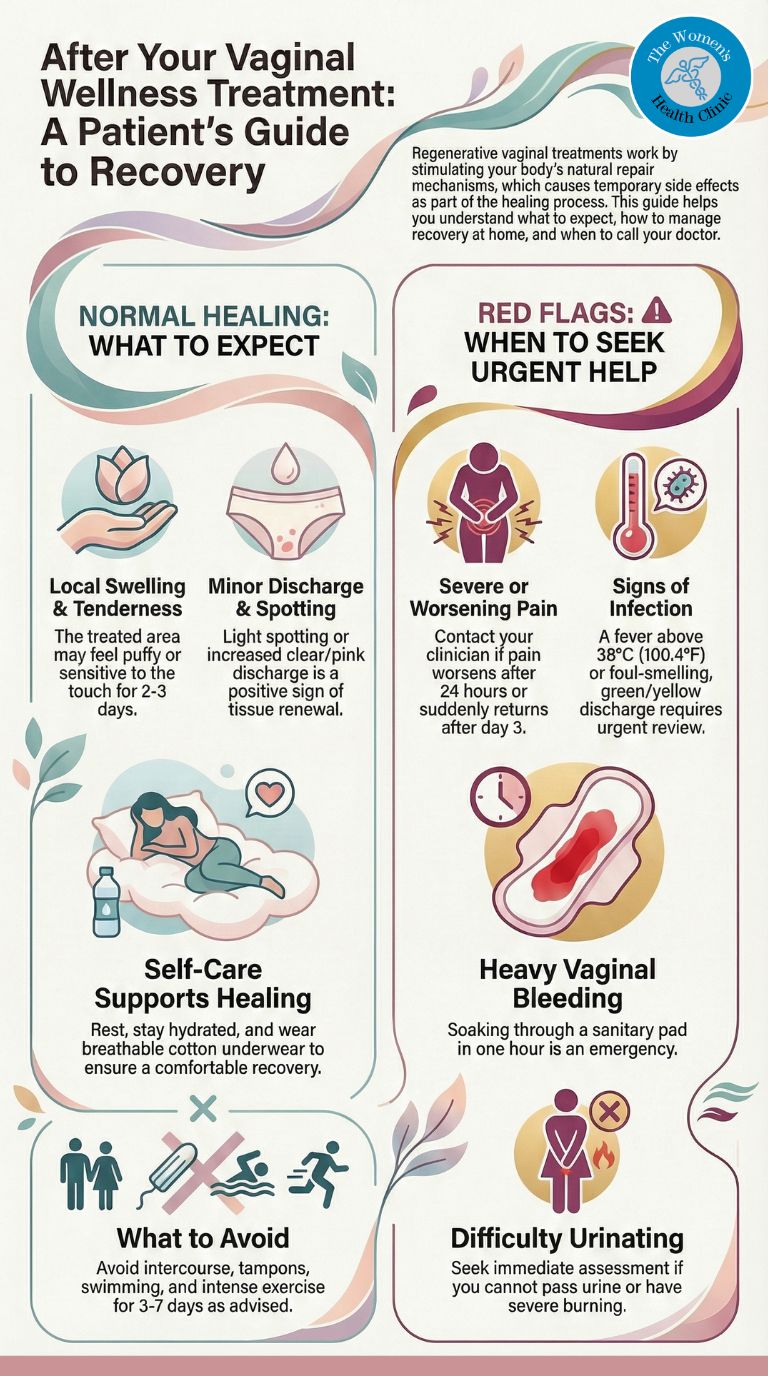
What side-effects are common and what red flags should I watch for?
Regenerative vaginal wellness treatments typically cause mild, temporary side-effects such as local swelling, tenderness, spotting, or increased discharge for 2–5 days. These are normal healing responses and usually resolve without intervention, but you should contact your clinician immediately if you experience severe pain, heavy bleeding, fever, or foul-smelling discharge. Understanding what to expect helps you distinguish between typical recovery and signs requiring urgent review.
Show Detailed Answer
Regenerative treatments—including platelet-rich plasma (PRP), hyaluronic acid injections, and energy-based devices such as laser or radiofrequency—work by stimulating your body’s natural repair mechanisms. This controlled micro-injury triggers collagen production, improved blood flow, and tissue remodelling. As with any medical procedure that activates healing, you may experience predictable, short-lived side-effects.
Most women report minimal discomfort and return to normal activities within 24–48 hours. However, knowing the difference between expected reactions and warning signs is essential for safe recovery and peace of mind. Your clinician should provide written aftercare instructions and a direct contact number for concerns.
Common Side-Effects (Expected & Temporary)
These are normal physiological responses and typically resolve within a few days:
- Localised Swelling & Tenderness: The treated area may feel puffy or sensitive to touch for 24–72 hours. This reflects increased blood flow and the inflammatory phase of healing.
- Light Spotting or Pink Discharge: Minor bleeding or blood-tinged discharge can occur, especially if the cervix or vaginal walls were treated. This usually stops within 1–3 days.
- Increased Vaginal Discharge: A clear or slightly cloudy discharge may increase as tissues hydrate and shed superficial cells. This is a positive sign of tissue renewal.
- Mild Cramping: Some women experience period-like cramping for a few hours post-treatment, particularly with deeper injections or laser.
- Temporary Urinary Frequency or Mild Stinging: If the urethra or anterior vaginal wall was treated, you may feel the urge to urinate more often or notice brief discomfort when passing urine.
Red Flags: When to Seek Urgent Medical Review
Contact your clinician or attend urgent care if you experience any of the following:
- Severe, Unrelenting Pain: Pain that does not improve with simple analgesia (paracetamol or ibuprofen) or that worsens after the first 24 hours.
- Heavy Vaginal Bleeding: Soaking through a pad within one hour, or passing clots larger than a 50p coin.
- Fever or Chills: A temperature above 38°C (100.4°F), especially if accompanied by sweating, shivering, or feeling generally unwell. This could indicate infection.
- Foul-Smelling or Green/Yellow Discharge: A sudden change in discharge colour or odour may signal bacterial infection and requires prompt antibiotic review.
- Difficulty Urinating or Urinary Retention: If you cannot pass urine or experience severe burning that prevents voiding, seek immediate assessment.
- Allergic Reaction: Rash, itching, swelling of the face or throat, or difficulty breathing (extremely rare but requires emergency care).
Managing Common Side-Effects at Home
To support comfortable recovery and minimise discomfort:
- Rest & Avoid Strenuous Activity: Avoid heavy lifting, intense exercise, or hot baths for 48 hours to reduce swelling and bleeding risk.
- Use Cold Packs (External Only): A wrapped ice pack against the outer vulva (not internally) for 10 minutes can ease swelling.
- Stay Hydrated: Drinking plenty of water helps flush the urinary tract and supports tissue healing.
- Wear Breathable Cotton Underwear: Avoid tight synthetic fabrics that trap moisture and heat.
- Avoid Tampons, Intercourse, & Swimming: Follow your clinician’s advice—typically abstinence for 3–7 days—to allow the tissue to seal and heal.
- Pain Relief: Over-the-counter paracetamol or ibuprofen can be taken as directed for mild discomfort.
Common Concerns & Myths
“If I have any bleeding, does that mean something went wrong?”
Not necessarily. Light spotting is common and expected after treatments involving micro-needling or laser. However, heavy, persistent bleeding is not normal and should be reviewed.
“Should I take antibiotics just in case?”
No. Antibiotics are only prescribed if there are clear signs of infection. Unnecessary use can disrupt your vaginal microbiome and cause thrush.
“Can I use a tampon to manage the discharge?”
Avoid tampons for at least 3–7 days. They can introduce bacteria and irritate healing tissue. Use external pads only during the recovery window.
Clinical Context
Regenerative vaginal treatments are minimally invasive and generally well-tolerated. Serious complications—such as infection, scarring, or nerve injury—are rare when performed by trained specialists in sterile conditions. The most common side-effects are self-limiting and reflect the body’s natural inflammatory healing cascade. Your clinician should conduct a pre-treatment assessment to identify any contraindications (such as active infection, bleeding disorders, or pregnancy) and provide clear written aftercare guidance. Educational only. Results vary. Not a cure.
Evidence-Based Approaches
Self-Care & Lifestyle
Optimising your general health supports faster recovery and reduces complication risk.
- Nutrition: Protein-rich foods, vitamin C, and zinc support collagen synthesis and wound healing.
- Avoid Smoking: Nicotine impairs blood flow and tissue repair, increasing risk of poor healing and infection.
- Gentle Hygiene: Wash the external area with plain water only; avoid perfumed products, douches, or antiseptic washes unless advised.
- Monitor Symptoms: Keep a simple diary of pain levels, discharge type, and any new symptoms to share with your clinician if needed.
Medical & Specialist Options
Your clinic should offer robust aftercare protocols and accessible follow-up.
- Pre-Treatment Screening: Blood tests or swabs may be taken to rule out infection or clotting issues.
- Post-Treatment Review: A follow-up appointment (usually 4–6 weeks) to assess healing and plan any further sessions.
- 24/7 Clinical Contact: Reputable providers offer direct access to a clinician for urgent concerns outside office hours.
To understand the full clinical pathway and safety measures, you can view our step-by-step treatment plan. If you wish to discuss any concerns before committing, you can book a consultation with our team.
Red Flags (When to see a GP or A&E)
If you experience fever above 38°C, uncontrolled bleeding, severe abdominal pain, or signs of anaphylaxis (difficulty breathing, facial swelling), seek emergency care immediately.
External Resources:
- NHS – Safety of cosmetic procedures
- NICE – Interventional procedures guidance on vaginal treatments
- RCOG – Consent to treatment and understanding risks
- MHRA – Safety advice on medical devices and procedures
- PubMed – Clinical studies on regenerative vaginal therapies
- Cochrane Library – Systematic reviews on gynaecological interventions
Educational only. Results vary. Not a cure.
Triage Guide: Differentiating "Normal Recovery" from "Medical Emergency" is critical. While fainting immediately after a procedure is often a harmless nervous reflex ("Cervical Shock"), developing new pain 3 days later is a sign of infection. Use this guide to check your symptoms.
Additional Clinical Guidelines
If you feel faint, nauseous, or sweaty during or immediately after a procedure (like a Coil fit or Biopsy), this is usually Vasovagal Syncope (Cervical Shock).
What is happening?
- The Cause: Manipulation of the cervix stimulates the Vagus Nerve, causing a sudden drop in heart rate and blood pressure.
- Symptoms: Tunnel vision, ringing in ears, cold clammy sweat, and nausea. This is not an allergic reaction.
- The Fix: Lie flat immediately. Elevate your legs higher than your head to return blood to the brain. Sip water and sugar. It typically resolves within 15 minutes.
Pain patterns tell us the cause. Understanding the timeline helps you decide when to call.
- Immediate (Day 0-2): Cramping similar to a period is normal. Use hot water bottles and Ibuprofen (unless advised otherwise).
- Delayed (Day 3-7): If pain was getting better but suddenly returns or worsens several days later, this is a red flag for infection (Endometritis/PID). You need a medical assessment.
After treatments like Laser, Loop Diathermy (LLETZ), or Biopsies, your discharge will change.
Visual Check
- Normal ("Coffee Grounds"): Brown, gritty discharge is common after Silver Nitrate is used to stop bleeding.
- Normal (Watery/Pink): After Laser or LLETZ, the wound produces clear or pinkish serous fluid as it heals. This can be heavy for 1-2 weeks.
- Abnormal (Green/Offensive): Thick yellow/green discharge with a "fishy" or rotting smell indicates bacterial infection requiring antibiotics.
Sepsis is a rare but life-threatening reaction to an infection. Do not wait for a GP appointment if you see these signs—go to A&E.
The "Sepsis Six" (Call 999)
- Slur: Slurred speech or confusion.
- Extreme Shivering: Uncontrollable shaking or muscle pain.
- Passing No Urine: Not urinating for 12 hours (indicates kidney distress).
- Severe Breathlessness: Breathing fast or feeling like you can't catch your breath.
- I "Feel like I might die": A sense of impending doom is a clinically recognized symptom.
- Skin: Mottled, blue, or very pale skin/lips.