


What is dyspareunia (pain with sex) and how is it classified?
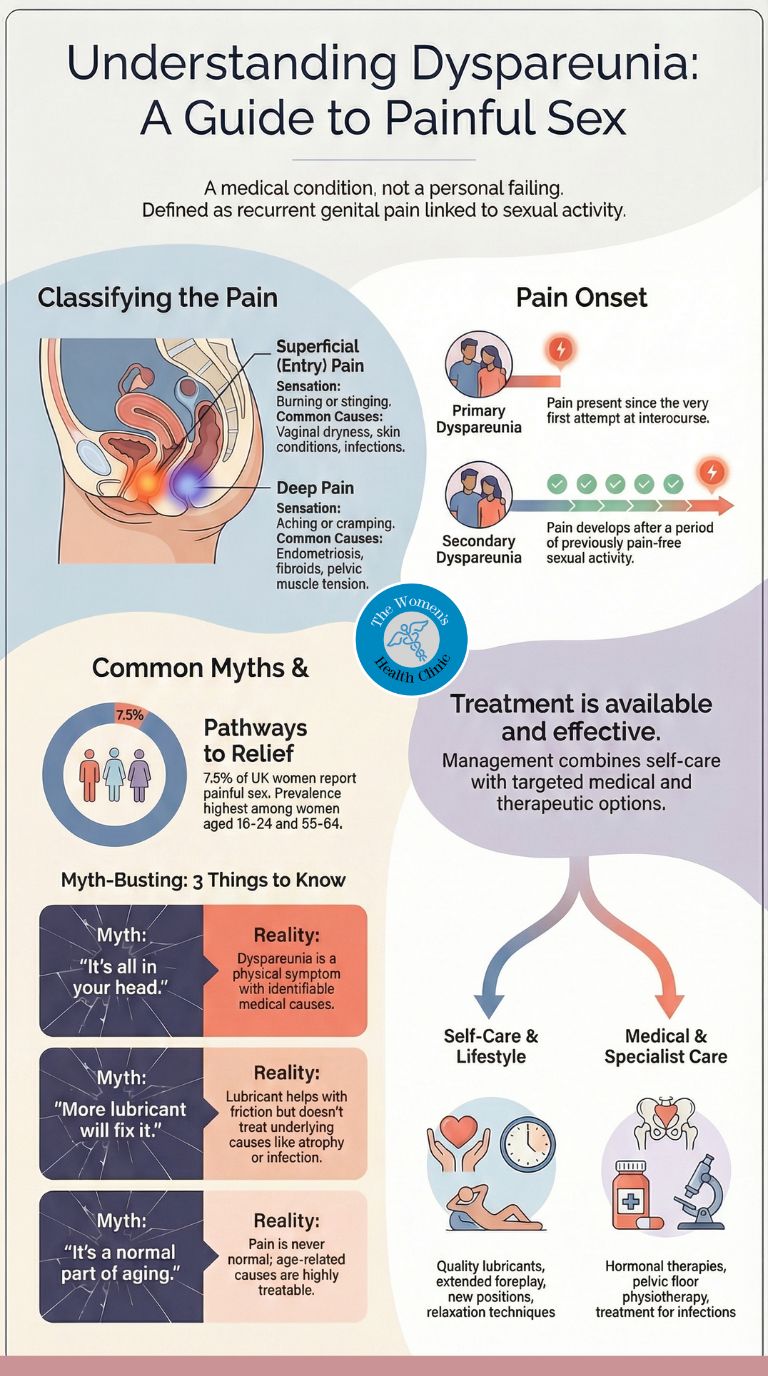
Dyspareunia is the medical term for persistent genital pain experienced before, during, or after sexual intercourse. Classification is based primarily on where the pain occurs—at the vaginal entrance (superficial) or deep within the pelvis (deep)—and whether symptoms have been lifelong or developed after a period of pain-free intimacy. Understanding this classification helps clinicians identify the underlying cause, which may be hormonal, anatomical, muscular, or involve nerve sensitivity, and guides appropriate treatment.
Show Detailed Answer
Dyspareunia describes recurrent or persistent pain in the genital area that is linked to sexual activity. The experience varies considerably: some describe a sharp, burning sensation immediately upon touch, whilst others report a deep, aching discomfort during or after penetration that may radiate to the thighs or lower abdomen. This pain is more than physical—it can profoundly affect self-esteem, emotional wellbeing, and intimate relationships, often leaving individuals feeling confused, frustrated, or alone.
Importantly, dyspareunia is not a character flaw or a sign of inadequacy. It is a recognised medical symptom with identifiable physical causes. Clinicians assess the pattern, location, and timing of the pain, as well as any associated symptoms such as vaginal dryness, bleeding, or changes to menstrual cycles. This thorough assessment allows healthcare professionals to pinpoint whether the root cause lies in the vulval skin, hormonal imbalance, pelvic floor muscle tension, or heightened nerve sensitivity.
Classification by Location: Superficial vs. Deep Dyspareunia
The most clinically useful classification system categorises dyspareunia according to the specific anatomical location where pain is felt:
- Superficial (Entry) Dyspareunia: Pain is localised to the vulva or vaginal entrance and typically occurs immediately upon touch or at the moment of initial penetration. It is frequently described as burning, stinging, or tearing. Common underlying causes include vaginal dryness related to hormonal deficiency (particularly low oestrogen during perimenopause, menopause, or breastfeeding), infections such as thrush or bacterial vaginosis, and vulval skin conditions like lichen sclerosus or eczema.
- Deep Dyspareunia: Pain is experienced higher in the vagina or within the pelvic cavity, typically during deep penetration or thrusting. It is often described as a dull ache, cramping, or a sensation of internal pressure or collision. This type may indicate conditions such as endometriosis, uterine fibroids, pelvic inflammatory disease, ovarian cysts, or overactive pelvic floor muscles that remain tense and fail to relax during intimacy.
Classification by Onset: Primary vs. Secondary Dyspareunia
Clinicians also examine the timeline of symptoms to better understand their origins:
- Primary Dyspareunia: Pain has been present from the very first attempt at vaginal penetration or intercourse. This may suggest congenital anatomical differences, persistent hymen tissue, or conditions such as vaginismus, where involuntary muscle spasms occur in response to attempted penetration.
- Secondary Dyspareunia: Pain develops after a period of comfortable, pain-free sexual activity. This is the more common presentation and frequently follows life events such as childbirth (particularly if there has been perineal trauma or episiotomy), the onset of perimenopause or menopause, pelvic surgery, or the development of conditions like endometriosis or chronic pelvic pain syndromes.
Common Concerns & Myths
"Is this pain psychological rather than physical?"
No. Whilst anxiety and fear can cause protective muscle guarding, dyspareunia is recognised as a physical symptom with identifiable medical causes such as oestrogen deficiency, inflammation, or muscle dysfunction. Dismissing it as purely psychological ignores the need for proper medical assessment and treatment.
"Will using more lubricant solve the problem?"
Lubricant can help reduce friction and discomfort, particularly in cases of vaginal dryness, but it does not address underlying causes such as tissue atrophy, infection, or pelvic floor tension. These require targeted medical or physiotherapy intervention.
"Is painful sex just a normal part of ageing?"
No. Whilst hormonal changes during perimenopause and menopause can lead to vaginal dryness and atrophy, these symptoms are treatable with topical oestrogen and other therapies. Pain during sex should never be considered an inevitable part of growing older.
Clinical Context
Dyspareunia is a frequent presenting complaint in gynaecological practice and affects individuals across the lifespan, from young adulthood through to post-menopause. Research indicates that approximately 7.5% of sexually active women in the UK report experiencing painful sex, with higher prevalence among those aged 16 to 24 and 55 to 64 years. Menopausal changes, particularly genitourinary syndrome of menopause, are a leading cause in older women, whilst younger individuals may experience pain related to infections, skin conditions, or pelvic floor overactivity. Educational only. Results vary. Not a cure.
Evidence-Based Approaches
Self-Care & Lifestyle
Initial management focuses on reducing friction, supporting natural lubrication, and minimising pain triggers.
- Use of Lubricants: Apply generous amounts of high-quality, water-based or silicone-based lubricant that is free from fragrances, glycerin, and parabens. This reduces friction during penetration.
- Extended Foreplay: Allow adequate time for arousal, which encourages natural vaginal lubrication and relaxation of the pelvic floor muscles.
- Position Adjustments: Experiment with sexual positions that allow you to control the depth and angle of penetration, reducing the risk of deep collision pain.
- Mindful Relaxation: Breathing exercises and mindfulness techniques can help reduce anticipatory anxiety and muscle tension that may exacerbate pain.
Medical & Specialist Options
Clinical management is guided by the classification of dyspareunia and may involve a combination of medical, physiotherapy, and psychological interventions.
- Hormonal Therapies: Topical vaginal oestrogen is considered the gold standard treatment for menopausal vaginal dryness and atrophy. It restores tissue elasticity, thickness, and lubrication.
- Treatment of Infections: Vaginal swabs may be taken to identify infections such as thrush, bacterial vaginosis, or sexually transmitted infections, which can then be treated with appropriate antimicrobial therapy.
- Pelvic Floor Physiotherapy: Specialist physiotherapists can assess and treat overactive or tense pelvic floor muscles through manual therapy, biofeedback, and graduated desensitisation techniques.
- Psychosexual Therapy: Addresses the emotional and relational impact of dyspareunia, including the fear-pain cycle, and supports communication between partners.
For those seeking comprehensive care, you can view our step-by-step treatment plan to understand the pathway from assessment to symptom relief. Many also wish to meet the clinical team to ensure they feel confident in their care.
Red Flags: When to Seek Urgent Medical Review
You should contact your GP or gynaecologist urgently if you experience sudden onset severe pain, heavy or unusual vaginal bleeding, fever, pain accompanied by abnormal discharge with an offensive odour, or if you notice lumps or lesions in the genital area.
External Resources:
Educational only. Results vary. Not a cure.