


What are vaginal dilators and how are they used safely?
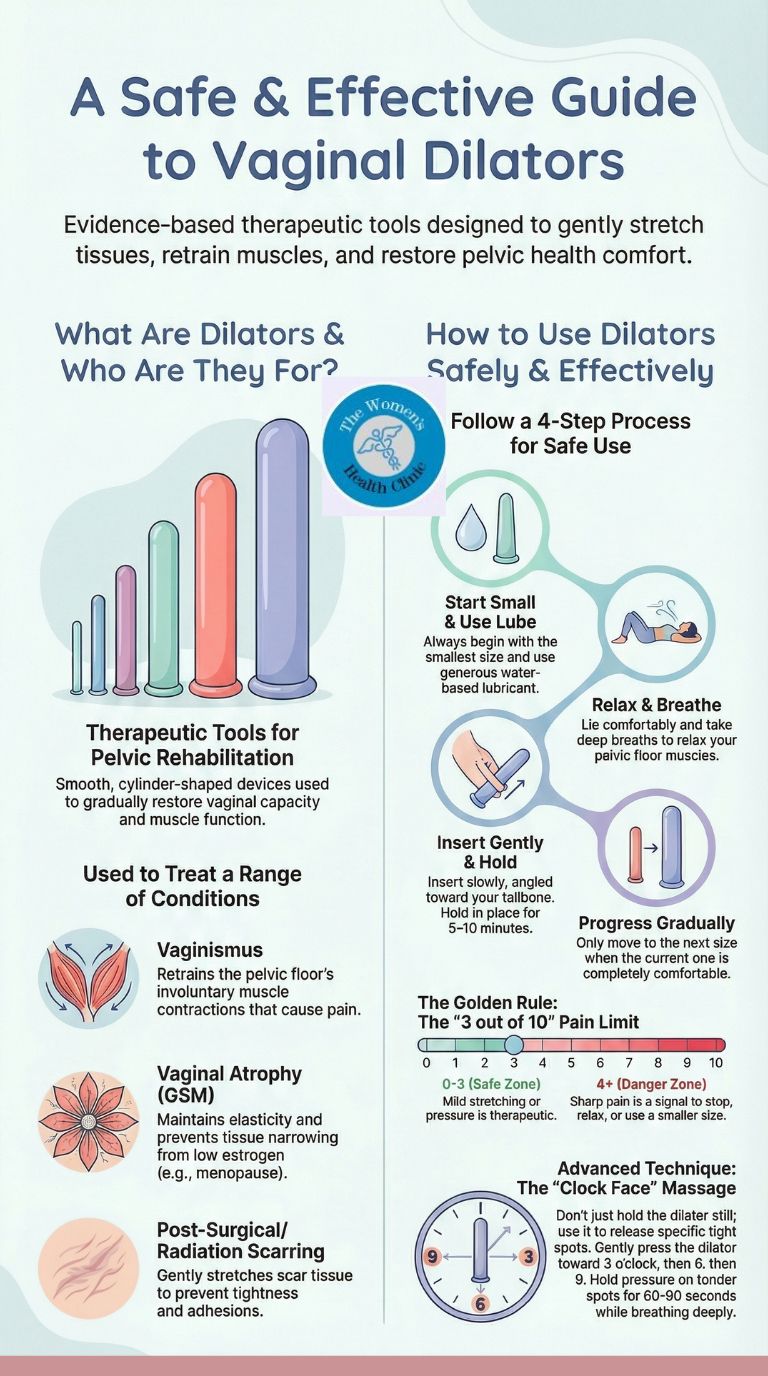
Vaginal dilators are smooth, cylinder-shaped medical devices that come in graduated sizes, designed to gently stretch vaginal tissues and retrain pelvic floor muscles. When used correctly with adequate lubrication and at your own pace, they are a safe, evidence-based tool for treating conditions like vaginismus, vaginal atrophy, and post-surgical scarring. They work by reducing muscle tension, desensitising hypersensitive nerves, and restoring tissue flexibility without medication.
Show Detailed Answer
Vaginal dilators are therapeutic tools used in pelvic health physiotherapy and gynaecological rehabilitation. They are typically made from medical-grade silicone or plastic and range from very slim (approximately the width of a finger) to larger sizes that approximate average vaginal capacity. The purpose is not to “force” anything open, but rather to provide controlled, progressive exposure that helps your body learn that penetration can be safe and comfortable.
Many people feel embarrassed or anxious about using dilators, worrying they are “broken” or that the process will be painful. In reality, dilators are a clinically validated intervention recommended by the NHS, RCOG, and specialist pelvic health physiotherapists. They work by gradually retraining the pelvic floor muscles to relax rather than reflexively tighten, and by increasing blood flow and tissue elasticity in areas affected by hormonal changes, radiation therapy, or surgical scarring.
What Conditions Are Treated with Dilators?
Vaginal dilators are used to manage a range of conditions that affect vaginal capacity, comfort, or muscle function:
- Vaginismus: Involuntary contraction of the pelvic floor muscles that makes penetration painful or impossible. Dilators help retrain the reflex response.
- Vaginal Atrophy (GSM): Thinning and drying of vaginal tissues due to low oestrogen during menopause or after cancer treatment. Dilators maintain elasticity and prevent narrowing or shortening.
- Post-Surgical Scarring: After gynaecological surgery, radiotherapy, or childbirth trauma, scar tissue can cause tightness. Dilators gently stretch the area to prevent adhesions.
- Lichen Sclerosus or Lichen Planus: Chronic inflammatory skin conditions that can cause fusion or narrowing of the vaginal opening.
- Gender-Affirming Care: Trans women post-vaginoplasty use dilators to maintain vaginal depth and width as part of surgical aftercare.
How to Use Vaginal Dilators Safely: Step-by-Step
Safe dilator use is about patience, consistency, and listening to your body. Here is the recommended approach:
- Start Small: Begin with the smallest size that you can insert comfortably without pain. This might be narrower than you expect—that is completely normal.
- Use Generous Lubrication: Apply a thick layer of body-safe, water-based or silicone lubricant to both the dilator and the vaginal opening. Dryness is the most common cause of discomfort.
- Find a Comfortable Position: Lie on your back with knees bent and feet flat, use pillows for support, or try a semi-reclined position. Some people prefer standing with one foot on a stool.
- Breathe and Relax: Take slow, deep breaths. Consciously relax your pelvic floor muscles (imagine you are “letting go” rather than pushing).
- Insert Gently: Angle the dilator slightly downward (toward your tailbone) and insert slowly. Stop if you feel sharp pain. Mild pressure or stretching is normal; pain is not.
- Hold in Place: Once inserted, hold the dilator in place for 5–10 minutes. You can gently rotate or press against the sides to stretch different areas.
- Progress Gradually: Move to the next size only when the current one feels completely comfortable. This may take days or weeks—there is no set timeline.
- Frequency: Most clinicians recommend using dilators 3–5 times per week. Consistency is more important than duration.
Safety Tips and Precautions
- Never Force: If a dilator will not insert, stop. Forcing can cause tearing or reinforce fear and muscle tension.
- Clean After Every Use: Wash dilators with warm water and mild, unscented soap. Let them air dry completely. Follow manufacturer guidance for sterilisation.
- Check for Allergies: If using latex dilators, ensure you are not allergic. Silicone is hypoallergenic and generally safer.
- Combine with Other Therapies: Dilators work best when paired with pelvic floor physiotherapy, topical oestrogen (if indicated), and psychological support if anxiety is present.
- Avoid During Active Infection: Do not use dilators if you have thrush, bacterial vaginosis, or a sexually transmitted infection until treated.
Common Concerns & Myths
“Will using dilators stretch me out permanently?”
No. The vagina is elastic and muscular. Dilators restore normal capacity; they do not cause permanent looseness. Once you stop, tissues naturally return to their baseline.
“Isn’t this just a ‘sex toy’?”
No. Dilators are medical devices prescribed or recommended by healthcare professionals. They are not designed for pleasure, but for therapeutic rehabilitation.
“Will it hurt as much as sex does?”
When used correctly, dilators should not replicate the pain you experience during sex. You control the pace, angle, and depth, which makes them a safer, more gradual way to retrain your body.
Clinical Context
Vaginal dilators are widely endorsed in clinical guidelines for pelvic health rehabilitation. The NHS recommends them for post-radiotherapy care, menopausal atrophy, and vaginismus. NICE guidance on menopause includes dilator therapy as part of managing genitourinary syndrome of menopause when combined with topical oestrogen. Pelvic health physiotherapists often prescribe dilators alongside manual therapy and biofeedback to treat pelvic floor dysfunction. The evidence base shows that regular, guided use significantly improves vaginal capacity, reduces pain, and restores sexual function. Educational only. Results vary. Not a cure.
Evidence-Based Approaches
Self-Care & Lifestyle
Dilator therapy is most effective when integrated into a holistic self-care routine.
- Set a Routine: Schedule dilator use at the same time of day when you feel relaxed and unhurried, such as before bed or after a warm bath.
- Mindfulness Techniques: Pair dilator use with deep breathing exercises, progressive muscle relaxation, or guided meditation to reduce pelvic floor tension.
- Education: Understanding your anatomy and the physiology of pain can reduce fear. Many people benefit from looking at diagrams or watching educational videos from trusted sources.
- Partner Involvement: If appropriate, involve your partner in the process. This can reduce relationship anxiety and build intimacy without pressure.
Medical & Specialist Options
Clinical guidance enhances safety and outcomes. Specialist support is especially important if you have scarring, nerve damage, or chronic pelvic pain.
- Pelvic Health Physiotherapy: A specialist physio can assess your pelvic floor tone, teach proper insertion technique, and provide internal manual therapy to release trigger points.
- Topical Oestrogen: If you have vaginal atrophy, combining dilators with topical oestrogen (cream, pessary, or ring) restores tissue thickness and moisture, making dilation more comfortable.
- Psychosexual Counselling: Addresses fear, shame, or past trauma that may contribute to muscle guarding or avoidance behaviours.
- Botulinum Toxin (Botox): In severe vaginismus cases resistant to other treatments, Botox injections into the pelvic floor muscles can temporarily relax spasm, allowing dilator use to progress.
For a comprehensive approach to vaginal health, you can view our step-by-step treatment plan. If you are considering specialist support, you may wish to book a consultation to discuss your individual needs.
C. Red Flags (When to see a GP)
Seek medical review if you experience bleeding after dilator use, severe pain that does not improve with smaller sizes, signs of infection such as fever or unusual discharge, or if you have a known pelvic mass or active cancer treatment.
External Resources:
- NHS – Vaginismus overview and treatment options
- NICE – Menopause: diagnosis and management
- RCOG – Vaginismus patient information
- The Eve Appeal – Vaginal dilators after gynaecological cancer
- PubMed – Efficacy of vaginal dilators in pelvic radiotherapy
- POGP – Pelvic, Obstetric and Gynaecological Physiotherapy resources
Educational only. Results vary. Not a cure.
Clinical Strategy: Dilation is not about "stretching" skin; it is about "Desensitization"—retraining the brain to stop reacting to touch as a threat. We recommend active techniques like "The Clock Face" and Vibration Therapy to override pain signals.
Additional Clinical Guidelines
MYTH: "I need to force it in to stretch the skin."
REALITY: The vagina is muscle, not just skin. Forcing a dilator triggers a "guarding reflex" (spasm), which makes the muscle tighter. The goal is Neuromuscular Desensitization—teaching the nervous system that pressure is safe, so the muscles relax on their own.
Do not just insert the dilator and hold it still. Use it as a tool to massage tight spots (Trigger Points).
How to perform the Clock Massage
- Visualize: Imagine the vaginal opening is a clock face (12 o'clock is the clitoris/pubic bone, 6 o'clock is the perineum/rectum).
- The Action: Insert the dilator gently. Apply firm, steady pressure towards 3 o'clock, then 6 o'clock, then 9 o'clock.
- Hold: When you find a tender spot, hold the pressure for 60–90 seconds while breathing deeply until the sensation drops. This releases the specific muscle band.
- Avoid: Do not press on 12 o'clock (the urethra) as this is sensitive and not a muscle attachment site.
For severe pain or high anxiety, we recommend Silicone Vibrating Dilators.
- Gate Control Theory: Nerves can only transmit a limited amount of information at once. Vibration signals travel faster than pain signals. By flooding the area with vibration, you "close the gate" to pain, allowing the muscle to accept the object without spasm.
- Blood Flow: Gentle vibration increases local blood flow, improving tissue elasticity and natural lubrication.
The "Stop" Signal
- 0–3/10 (Safe Zone): Mild discomfort or stretching sensation. This is therapeutic.
- 4+/10 (Danger Zone): Sharp or stinging pain. If you push through this, your brain reinforces the "Pain = Penetration" pathway, setting your progress back. Stop, downsize to a smaller dilator, or focus on breathing.
- Hygiene: Always wash dilators with warm soapy water or a toy cleaner. Avoid silicone-based lubricants with silicone dilators (they degrade the material); use water-based or oil-based (if material permits) instead.