


Does menopause reduce arousal and increase pain—what helps?
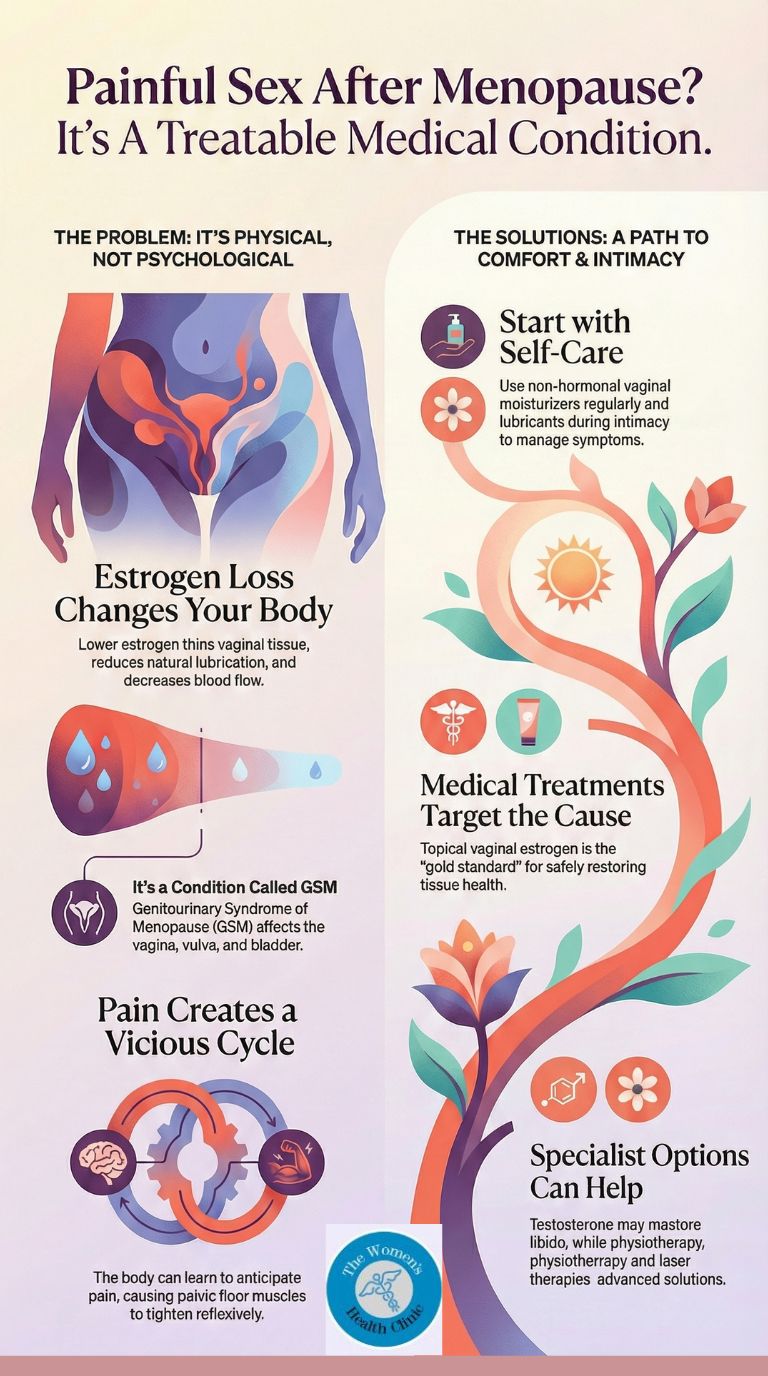
Yes, menopause commonly reduces arousal and increases pain during sex due to declining oestrogen, which thins vaginal tissue, reduces lubrication, and lowers blood flow to the genital area. These changes are medically recognised as Genitourinary Syndrome of Menopause (GSM) and can be effectively treated with topical oestrogen, lubricants, pelvic physiotherapy, and vaginal regenerative therapies. The symptoms are physical, not psychological, and addressing them can restore comfort and intimacy.
Show Detailed Answer
The transition through perimenopause and menopause brings profound hormonal shifts that directly impact sexual function. As the ovaries produce less oestrogen, the tissues of the vulva, vagina, and lower urinary tract become thinner, drier, and less elastic. This process—called vulvovaginal atrophy—makes the area more fragile and sensitive to touch, friction, and penetration.
At the same time, declining oestrogen reduces blood flow to the pelvic region, which diminishes natural arousal responses: less genital swelling, less lubrication, and reduced clitoral sensitivity. These physiological changes can create a cycle where intimacy becomes painful, leading to anxiety and avoidance, which in turn reduces arousal further. It is essential to understand that this is not “ageing badly” or “losing interest”—it is a predictable, treatable consequence of hormonal change.
How Menopause Reduces Arousal
Arousal is a complex interplay of hormones, blood flow, nerve sensitivity, and psychological readiness. Oestrogen plays a vital role in maintaining the health of genital tissues and supporting the neurovascular pathways that create physical arousal responses.
- Reduced Genital Blood Flow: Lower oestrogen means less vasodilation (widening of blood vessels), so the clitoris and vaginal walls receive less oxygen and nutrient-rich blood. This results in slower, weaker arousal sensations.
- Nerve Sensitivity Changes: Oestrogen influences nerve density and responsiveness. Without it, touch that once felt pleasurable may feel dull or even uncomfortable.
- Psychological Impact: When physical arousal is diminished, it can lead to frustration, loss of confidence, and withdrawal from intimacy, which further dampens desire.
How Menopause Increases Pain
Pain during sex after menopause is most commonly caused by tissue changes and insufficient lubrication:
- Vaginal Atrophy: The vaginal lining becomes thin, pale, and dry. It loses its natural elasticity and rugae (folds), making it more prone to micro-tears and irritation during penetration.
- Lack of Lubrication: Without sufficient oestrogen, the vaginal walls produce far less moisture, even when aroused. This creates friction that feels raw, burning, or tearing.
- pH Changes: The vaginal environment becomes less acidic, increasing susceptibility to infections like bacterial vaginosis or thrush, which can add to discomfort.
- Pelvic Floor Tension: In response to pain, the pelvic floor muscles may tighten reflexively (protective guarding), which can worsen entry pain and create a vicious cycle.
Common Concerns & Myths
“Is it normal to lose all interest in sex after menopause?”
No. While desire can fluctuate, many women maintain or rediscover sexual interest after menopause—especially when physical symptoms like pain and dryness are properly addressed. Loss of desire is often secondary to untreated discomfort, not an inevitable consequence of ageing.
“Will using lubricant solve everything?”
Lubricant is helpful for reducing friction during sex, but it does not treat the underlying tissue atrophy. For lasting improvement, vaginal oestrogen or regenerative therapies are often needed to restore tissue health.
“Is HRT the only option?”
No. Systemic HRT (tablets or patches) can help, but topical vaginal oestrogen is the gold standard for GSM and can be used safely even in women who cannot take systemic HRT. Non-hormonal options like vaginal moisturisers, laser therapy, and physiotherapy are also effective.
Clinical Context
Genitourinary Syndrome of Menopause (GSM) affects up to 50% of postmenopausal women, though many do not seek help due to embarrassment or the mistaken belief that it is untreatable. GSM encompasses vaginal dryness, burning, irritation, urinary urgency, recurrent infections, and dyspareunia (painful sex). Unlike hot flushes, which often resolve over time, GSM is progressive and worsens without treatment. The good news is that localised oestrogen therapy is highly effective, safe for long-term use, and has minimal systemic absorption. Educational only. Results vary. Not a cure.
Evidence-Based Approaches
Self-Care & Lifestyle
Simple, evidence-based steps can significantly reduce symptoms and improve comfort during intimacy.
- Regular Use of Vaginal Moisturisers: Non-hormonal moisturisers (e.g., Replens, Yes VM) are applied every 2–3 days to rehydrate tissues. They work best when used consistently, not just before sex.
- Water-Based or Silicone Lubricants: Use generously during intimacy to reduce friction. Avoid products with glycerin, parabens, or fragrance, which can irritate sensitive tissue.
- Pelvic Floor Relaxation: Gentle stretches, diaphragmatic breathing, and mindful relaxation can help release overactive pelvic muscles that contribute to guarding and pain.
- Maintain Sexual Activity: Regular arousal (with or without a partner) increases blood flow and helps maintain tissue elasticity. “Use it or lose it” has physiological truth in pelvic health.
Medical & Specialist Options
Medical treatment targets the root cause: restoring tissue health and optimising hormonal support.
- Topical Vaginal Oestrogen: Available as creams, pessaries, or rings (e.g., Ovestin, Vagifem). It restores vaginal pH, thickens the epithelium, and increases lubrication. Absorption is minimal, making it safe even for breast cancer survivors in many cases (discuss with oncology team).
- Systemic HRT: Tablets, patches, or gels can improve overall menopausal symptoms including mood, energy, and libido, though vaginal symptoms often require additional local treatment.
- Vaginal Laser or Radiofrequency: Non-surgical regenerative therapies (e.g., CO2 laser, Morpheus8V) stimulate collagen production and improve tissue hydration and elasticity.
- Pelvic Health Physiotherapy: Specialist physios use internal manual therapy, dilator training, and biofeedback to release tension, desensitise pain, and restore normal muscle function.
- Psychosexual Counselling: Addresses the emotional and relational impact of pain, helping to break the fear-avoidance cycle and rebuild intimacy confidence.
For a comprehensive overview of available treatments, you can explore treatment benefits. If you are ready to take the next step, you can book a consultation with our specialist team.
C. Red Flags (When to see a GP)
Seek urgent review if you experience unexplained vaginal bleeding (especially if postmenopausal), persistent pelvic pain unrelated to intercourse, new lumps or masses, or signs of infection such as heavy discharge, fever, or offensive odour.
External Resources:
Educational only. Results vary. Not a cure.
Clinical Insight: It's not just "dryness." The medical term is Genitourinary Syndrome of Menopause (GSM), which affects the bladder too. Furthermore, loss of arousal is often linked to low Testosterone, not just Estrogen. Treating the pain often requires breaking the "Secondary Vaginismus" cycle.
Medical Management of Menopausal Sex
Doctors now use the term Genitourinary Syndrome of Menopause (GSM) because estrogen loss affects the entire pelvic floor, not just the vagina.
- Urinary Symptoms: Estrogen receptors are dense in the urethra. Low levels cause urgency, frequency, and recurrent UTIs, which kill libido.
- Sexual Symptoms: Beyond dryness, the vagina shortens and narrows (stenosis), making penetration physically difficult, not just dry.
Estrogen fixes the machinery (lubrication/skin), but Testosterone often fuels the engine (desire/sensation).
Testosterone for Women?
It is a natural female hormone. Levels drop by 50% between ages 20–40.
- Indication: The British Menopause Society supports the use of Testosterone for HSDD (Hypoactive Sexual Desire Disorder) when HRT alone hasn't restored libido.
- Effect: It can improve desire, arousal intensity, and orgasmic sensation. It takes 3–6 months to work.
- Level 1 (Non-Hormonal): Hyaluronic Acid moisturisers (e.g., Hyalofemme) used every 3 days to plump cells.
- Level 2 (Local Hormone): Vaginal Estrogen (Pessaries/Creams). Safe for most women as it stays local.
- Level 3 (DHEA): Intrarosa (Prasterone). Converts to both Estrogen AND Testosterone locally, helping tissue quality and nerve sensitivity.
- Level 4 (Oral Non-Hormone): Ospemifene. An oral tablet (SERM) that acts like estrogen on the vagina but not the breast/uterus. Good for women who hate creams.
If you have had painful sex for months, your body may have developed a reflex.
- The Reflex: Your pelvic floor muscles subconsciously tighten (spasm) in anticipation of pain.
- The Result: Even if we fix the atrophy with estrogen, the muscles remain tight. You may need Pelvic Floor Physiotherapy to "down-train" these muscles alongside your hormone treatment.
MYTH: "Sex stops at menopause."
REALITY: "Use it or lose it" is medically true. Regular sexual activity (with a partner or solo) increases blood flow to the pelvis. This oxygenated blood keeps the tissues elastic and prevents the vagina from shortening/narrowing.