

Do I need a pelvic examination to diagnose dyspareunia?
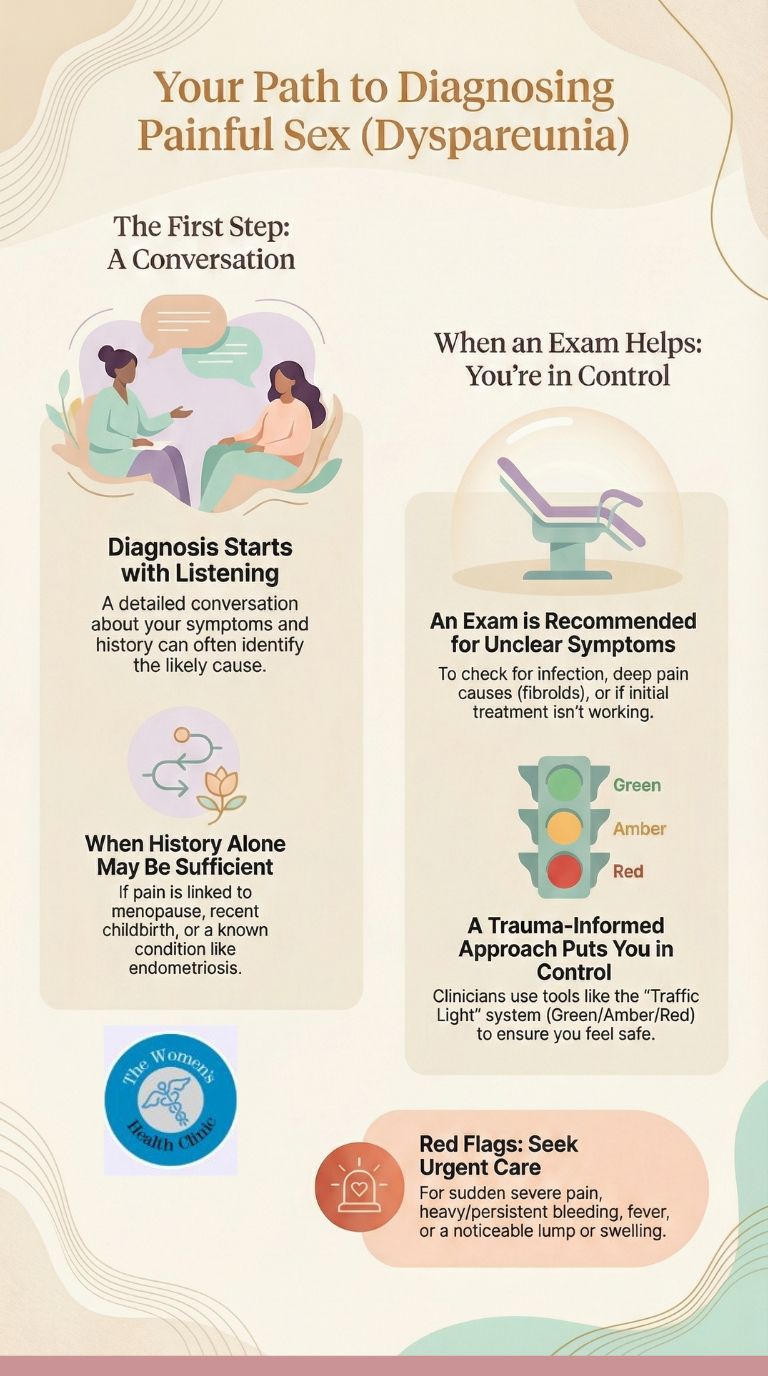
A pelvic examination is not always essential to begin diagnosing dyspareunia, but it is often recommended to identify physical causes. Your clinician can start with a detailed conversation about your symptoms, medical history, and pain pattern—this alone may suggest the likely cause and guide initial treatment. However, if symptoms persist or if certain conditions are suspected, a gentle examination helps confirm the diagnosis and tailor the right treatment.
Show Detailed Answer
The diagnosis of dyspareunia begins with listening. A skilled clinician will ask detailed questions about when the pain started, exactly where you feel it, what it feels like (burning, aching, stabbing), whether it occurs at entry or deep inside, and if there are other symptoms like bleeding, discharge, or cycle changes. This clinical history is often enough to form a working diagnosis and begin first-line treatment.
Many women feel anxious about pelvic examinations, particularly if they are already experiencing pain. It is completely valid to voice this concern. A trauma-informed clinician will never force an examination and will discuss what it involves, why it might help, and give you full control over the process—including the option to pause or stop at any time.
When History Alone May Be Sufficient
In certain situations, your clinician may confidently begin treatment based on your description alone:
- Clear Hormonal Link: If you are perimenopausal or postmenopausal and describe dryness, burning at the entrance, and thinning tissues, the diagnosis of Genitourinary Syndrome of Menopause (GSM) is highly likely. Topical oestrogen can be started without examination.
- Recent Onset After Childbirth: Pain beginning after vaginal delivery, particularly if associated with scarring or tearing, may be managed initially with physiotherapy or scar massage.
- Known Underlying Condition: If you have a diagnosed condition like endometriosis or vaginismus, the focus may shift to managing that condition rather than repeating examinations.
When an Examination is Helpful or Necessary
A pelvic examination becomes more important in the following scenarios:
- Unclear Cause: If your symptoms do not fit a clear pattern, examination can identify visible signs like redness, lesions, atrophy, or anatomical variants.
- Infection Suspected: If you have abnormal discharge, odour, or itching, swabs taken during examination can confirm thrush, bacterial vaginosis, or sexually transmitted infections.
- Deep Pain: Pain felt deep in the pelvis may require bimanual palpation (where the clinician gently feels the uterus and ovaries) to check for masses, tenderness, or restricted movement that might suggest endometriosis, fibroids, or pelvic inflammatory disease.
- Persistent or Worsening Symptoms: If initial treatment has not worked, examination helps rule out serious pathology and guides next steps.
- Red Flag Symptoms: Bleeding between periods, post-coital bleeding, sudden severe pain, or a palpable lump require urgent examination and possibly further investigation like ultrasound.
What Does a Pelvic Examination Involve?
A pelvic exam for dyspareunia is usually gentle and tailored to your tolerance. It typically includes:
- External Inspection: Looking at the vulva for redness, lesions, scars, or skin conditions like lichen sclerosus.
- Cotton-Bud Test (Q-tip Test): Gently touching areas around the vestibule (vaginal opening) to map exactly where the pain is most sensitive. This helps diagnose provoked vestibulodynia.
- Speculum Examination: Inserting a small, lubricated speculum to view the vaginal walls and cervix. This checks for atrophy, inflammation, or discharge. A smaller or single-blade speculum can be used if you are very tender.
- Bimanual Palpation: Using gloved fingers inside the vagina and a hand on the abdomen to gently feel the uterus, ovaries, and surrounding structures. This assesses for deep tenderness or masses.
- Swabs: If infection is suspected, samples are taken for laboratory testing.
You remain in control throughout. You can ask for a chaperone, request a break, or choose to defer the examination to a later visit once you feel more comfortable or once initial treatments have eased symptoms.
Common Concerns & Myths
“Will the examination make the pain worse?”
A skilled clinician uses the smallest, most appropriate instruments and plenty of lubricant. They will communicate with you at every stage. While you may feel discomfort, the goal is never to cause harm, and findings from the exam can lead directly to pain relief.
“If I say no to an exam, will my doctor think I’m difficult?”
Absolutely not. Consent is fundamental to ethical medical practice. Declining an examination does not make you difficult—it makes you an informed patient exercising your right to bodily autonomy. A good clinician will respect your decision and work with you to explore alternative diagnostic routes.
“Do I have to see a male doctor?”
No. You are entitled to request a female clinician for intimate examinations. Most practices will accommodate this, though it may mean waiting slightly longer for an appointment.
Clinical Context
Modern gynaecological practice emphasises shared decision-making. The pelvic examination is a tool, not a mandatory gateway to care. Many dyspareunia cases are managed effectively with history-taking, validated questionnaires, and trials of treatment. However, when examination is clinically indicated, it provides invaluable information that imaging or blood tests cannot replicate—especially for conditions like vulvodynia, atrophy, or pelvic floor hypertonicity. Educational only. Results vary. Not a cure.
Evidence-Based Approaches
Self-Care & Lifestyle
While you are considering whether to proceed with examination, you can begin self-care measures that are safe and evidence-based:
- Symptom Diary: Track when pain occurs, its intensity, and any associated triggers like stress or menstrual cycle phase. This helps your clinician even without examination.
- Pelvic Floor Awareness: Practise gentle diaphragmatic breathing to reduce muscular guarding. Avoid kegel exercises if you suspect tension—over-tightening can worsen pain.
- Vaginal Moisturisers: Regular use of non-hormonal moisturisers can improve tissue hydration if dryness is suspected, even before formal diagnosis.
Medical & Specialist Options
Depending on your history and comfort level, your clinician may offer:
- Trial of Treatment: Starting topical oestrogen or antifungal therapy based on symptoms, then reviewing response. If symptoms improve, examination may not be needed immediately.
- Pelvic Floor Physiotherapy Referral: A specialist women’s health physiotherapist can perform internal assessment in a gentle, controlled way and teach you techniques to reduce muscle tension.
- Imaging or Blood Tests: If deep pain or systemic symptoms are present, ultrasound scans or hormone panels may provide diagnostic clues without requiring pelvic examination first.
- Psychosexual Counselling: If anxiety or past trauma is contributing to avoidance of examination, therapy can help you feel safer in your body and in clinical settings.
If you are exploring specialist care, you can meet the clinical team to understand their approach to trauma-informed care. Many patients also find it helpful to book a consultation where examination can be discussed without pressure.
Red Flags (When to Seek Urgent Review)
Even if you are reluctant to have an examination, seek urgent medical advice if you experience:
- Sudden, severe pelvic pain
- Heavy or persistent bleeding unrelated to menstruation
- Fever, chills, or feeling generally unwell alongside pelvic pain
- Discharge with a very strong or foul odour
- A noticeable lump or swelling in the genital area
In these cases, examination may be medically necessary to rule out serious conditions like ectopic pregnancy, ovarian torsion, or abscess.
External Resources:
Educational only. Results vary. Not a cure.
Clinical Reality: An exam is valuable but not always mandatory on day one. For severe Vaginismus, we often diagnose based on history to avoid trauma. For deep pain, a physical check is essential to rule out Endometriosis. You always have the right to say "Stop."
The "Trauma-Informed" Examination
Yes. If you have severe anxiety or a history of trauma, forcing an exam can make the condition worse (Retraumatization).
- History Diagnosis: Conditions like Vaginismus can often be provisionally diagnosed just by talking about your symptoms (e.g., "hitting a wall").
- Deferred Exam: We can delay the physical check until you have built trust or started therapy to relax the muscles.
It depends on where your pain is. We tailor the check to your symptoms.
For Entrance Pain (Stinging/Burning)
We look at the skin of the vulva. We may perform the Q-Tip Test: gently touching the vestibule (entrance) with a cotton bud to map nerve sensitivity. A speculum is often not needed for this.
For Deep Pain (Aching/Collision)
This requires a Bimanual Exam. The doctor places two gloved fingers inside and one hand on your tummy to check the uterus and ovaries for tenderness or mobility (e.g., signs of Endometriosis).
We use specific tools to ensure you feel safe during an assessment:
- The "Traffic Light" System: You tell us "Green" (okay), "Amber" (pause), or "Red" (stop immediately). We respect "Red" instantly.
- Self-Insertion: You can guide the speculum or the doctor's hand yourself.
- The Mirror: You can use a mirror to see exactly what we are doing, demystifying the pain.
MYTH: "It will hurt like a smear test."
REALITY: A pain assessment is gentler than a smear. We use pediatric (tiny) instruments and lots of lubrication. Unlike a smear (which scrapes the cervix), we are often just looking or lightly pressing. If it hurts, we stop.