


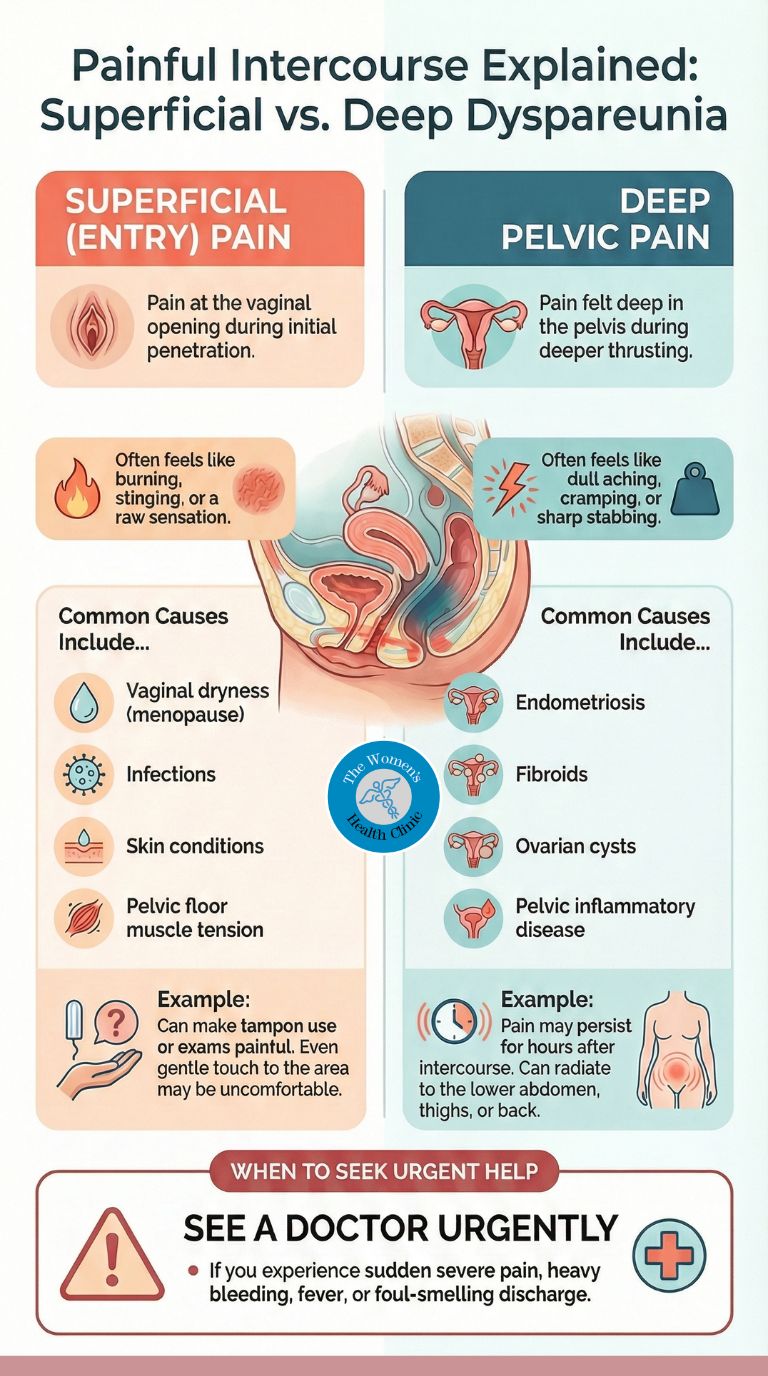
Can vaginal dryness (GSM) cause pain with penetration?
Yes, vaginal dryness caused by Genitourinary Syndrome of Menopause (GSM) is one of the most common reasons for pain during penetration. When oestrogen levels drop, the vaginal tissue becomes thinner, less elastic, and produces far less natural lubrication, making any form of penetration uncomfortable or even painful. This is not about being insufficiently aroused—it is a physiological change in the tissue itself that requires targeted treatment to restore comfort and function.
Show Detailed Answer
Genitourinary Syndrome of Menopause, previously called vaginal atrophy, describes a collection of symptoms affecting the vulva, vagina, and urinary tract due to falling oestrogen levels. The decline typically begins during perimenopause and becomes more pronounced after menopause, though it can also occur after certain cancer treatments, surgical removal of the ovaries, or while breastfeeding.
Oestrogen is essential for maintaining the health of vaginal tissue. It keeps the lining thick, supple, and well-lubricated by supporting blood flow and stimulating glands that produce moisture. When oestrogen falls, the tissue becomes fragile, pale, and dry. The vaginal walls thin out, the natural acidic pH rises, and the protective mucus layer diminishes. This creates an environment where even gentle touch or penetration can cause friction, tearing, bleeding, and significant discomfort.
Many women describe the pain as burning, stinging, tearing, or rawness at the vaginal opening. Some also experience deeper aching if the dryness extends internally. The pain is not fleeting—it can linger for hours or days after intercourse, and over time, fear of pain can lead to muscle guarding, where the pelvic floor automatically tightens in anticipation, worsening the problem.
How GSM Leads to Pain During Penetration
The mechanism is straightforward but multi-layered:
- Tissue Thinning: The vaginal epithelium (lining) loses multiple cell layers, becoming paper-thin and easily damaged. What was once robust, cushioned tissue becomes delicate and vulnerable.
- Loss of Elasticity: Collagen and elastin fibres break down, so the vagina loses its natural stretch and flexibility. Penetration that was once comfortable now feels tight or restrictive.
- Reduced Lubrication: The glands that produce natural moisture shrink and slow down. Even with arousal, there may not be enough fluid to reduce friction.
- Inflammation & Micro-Tears: Dry, fragile tissue is prone to tiny abrasions during penetration, which can become inflamed, bleed slightly, or sting intensely.
The Emotional & Relational Impact
Pain with penetration rarely stays confined to the physical realm. Many women feel guilt or shame, worrying they are "failing" their partner or that their body has betrayed them. Relationships can strain under the weight of avoided intimacy, and self-esteem often suffers when a previously enjoyed activity becomes a source of dread. It is vital to recognise that GSM is a medical condition, not a personal shortcoming, and effective treatments exist.
Common Concerns & Myths
"Is it just because I'm not aroused enough?"
No. While arousal does increase natural lubrication in younger women, GSM is a structural tissue problem. Even with full arousal, the glands may not produce adequate moisture if oestrogen is low.
"Will over-the-counter lubricant solve it completely?"
Lubricant helps reduce friction in the moment, but it does not treat the underlying tissue changes. Long-term management usually requires restoring oestrogen to the tissue itself.
"Is this just part of getting older that I have to accept?"
Absolutely not. GSM is treatable. Modern therapies can significantly improve tissue health, comfort, and quality of life. Suffering in silence is unnecessary.
Clinical Context
GSM affects approximately 50 to 70 percent of postmenopausal women, though it is significantly underreported due to embarrassment or the mistaken belief that nothing can be done. Unlike hot flushes, which often improve over time, GSM is chronic and progressive—it worsens without treatment. The condition also increases susceptibility to urinary tract infections and can cause urinary urgency or frequency. Early intervention prevents long-term tissue damage and preserves sexual function. Educational only. Results vary. Not a cure.
Evidence-Based Approaches
Self-Care & Lifestyle
While self-care cannot reverse tissue atrophy, it can provide immediate symptom relief and make penetration more tolerable.
- Vaginal Moisturisers: Applied regularly (two to three times per week), these products hydrate the tissue and provide ongoing moisture between sexual activity. Look for products without perfume or glycerin.
- Lubricants: Use generously before and during penetration. Water-based or silicone-based formulas work well; avoid those with warming or tingling agents, which can irritate sensitive tissue.
- Regular Sexual Activity: Gentle, regular vaginal stimulation (with or without a partner) helps maintain blood flow and tissue elasticity, though this alone will not correct severe atrophy.
Medical & Specialist Options
Clinical treatment focuses on restoring oestrogen to the vaginal tissue, which rebuilds the epithelium, increases lubrication, and improves elasticity.
- Topical Vaginal Oestrogen: Available as creams, pessaries, or rings, this is the gold-standard treatment. It delivers oestrogen directly to the tissue with minimal systemic absorption, making it safe for most women, including many breast cancer survivors (with oncology approval).
- Systemic Hormone Replacement Therapy (HRT): If a woman has multiple menopausal symptoms (hot flushes, mood changes), systemic HRT may address GSM alongside other concerns, though vaginal oestrogen is often still needed for full symptom control.
- Vaginal Laser or Radiofrequency Therapy: Emerging treatments that stimulate collagen production and improve tissue quality. Evidence is growing, though further research is ongoing.
- Pelvic Floor Physiotherapy: If pain has triggered muscle guarding, specialist physiotherapy can release tension and retrain the pelvic floor to relax during penetration.
For a comprehensive pathway tailored to your needs, you can view our step-by-step treatment plan. If you are considering private specialist care, many patients find it helpful to see transparent pricing before booking.
Red Flags (When to See a GP Urgently)
Seek medical review if you experience unexpected heavy bleeding, severe pain that does not improve, foul-smelling discharge, lumps or ulcers on the vulva, or if symptoms appear suddenly after starting a new medication.
External Resources:
Educational only. Results vary. Not a cure.