


Can switching medication improve sexual comfort—how to discuss safely?
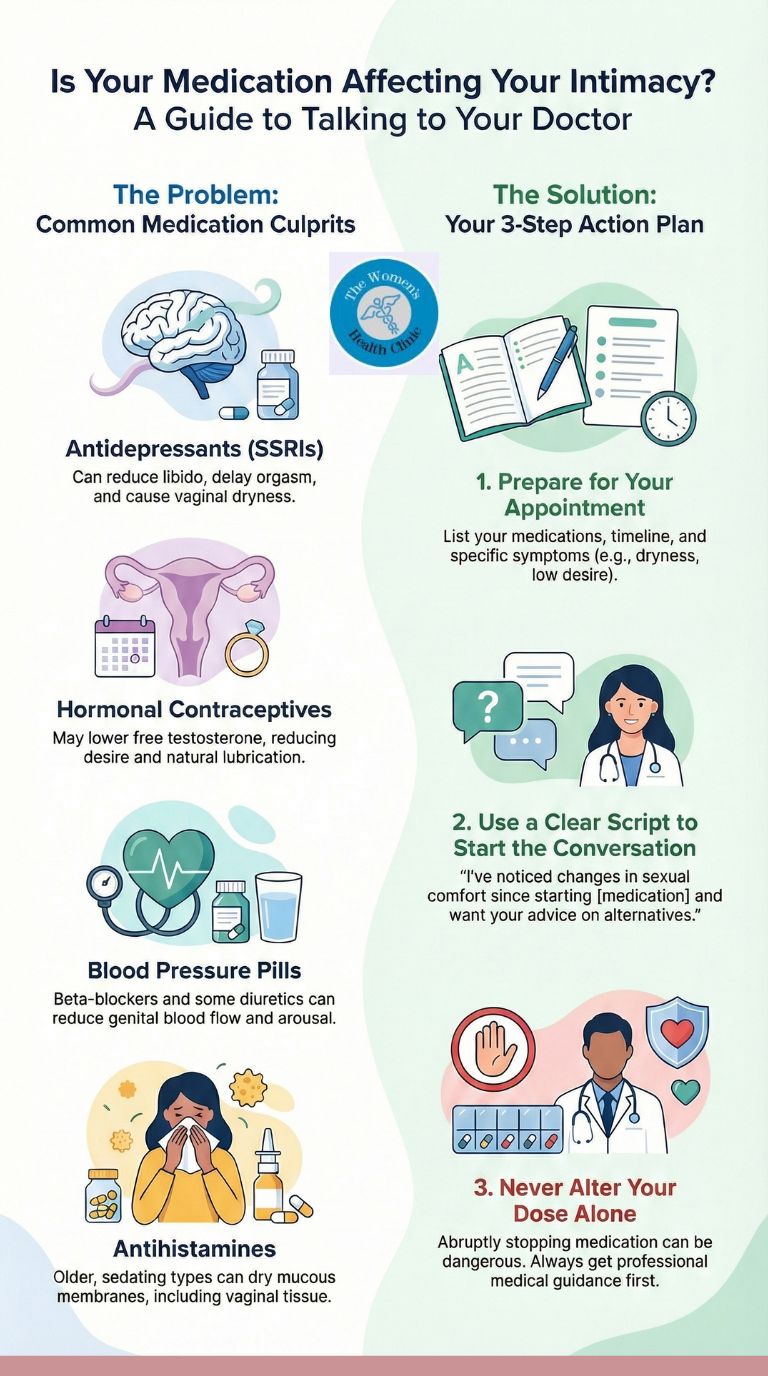
Yes, switching medication can sometimes improve sexual comfort, particularly if your current medicine affects hormones, blood flow, lubrication, or libido. Common culprits include certain antidepressants, hormonal contraceptives, blood pressure tablets, and antihistamines—but you must never stop or swap medication without discussing it with your GP or prescriber first. A collaborative conversation ensures your mental and physical health remain protected while exploring alternatives that may better support intimacy.
Show Detailed Answer
Many commonly prescribed medications can interfere with sexual function—dampening desire, reducing natural lubrication, delaying arousal, or causing discomfort during penetration. These side effects are frustrating and often go unmentioned in consultations because patients feel embarrassed or worry they will be dismissed. Yet sexual wellbeing is a legitimate aspect of health, and addressing medication-related sexual dysfunction is an important part of holistic care.
The good news is that switching to an alternative within the same drug class, adjusting the dose, or choosing a different therapeutic approach can often restore comfort without compromising the treatment of your underlying condition. The key is to approach this conversation systematically, with clarity about your symptoms and openness to your clinician’s expertise.
Which Medications Commonly Affect Sexual Comfort?
Understanding which drug classes are most frequently implicated helps you identify potential contributors:
- Antidepressants (SSRIs and SNRIs): Selective serotonin reuptake inhibitors like sertraline, citalopram, and fluoxetine can reduce libido, delay orgasm, and cause vaginal dryness. Switching to bupropion or mirtazapine may help, as these have lower rates of sexual side effects.
- Hormonal Contraceptives: The combined pill, implant, and some IUDs can lower free testosterone and reduce natural lubrication and desire. Non-hormonal methods or switching to a different progestogen formulation may improve symptoms.
- Blood Pressure Medications: Beta-blockers and some diuretics can reduce genital blood flow and arousal. ACE inhibitors or calcium channel blockers may be better tolerated.
- Antihistamines: Older sedating antihistamines dry mucous membranes, including vaginal tissue. Non-sedating alternatives like loratadine are less drying.
- Other Medications: Some treatments for epilepsy, reflux, or chronic pain can also interfere with sexual response.
How to Prepare for the Conversation
To make the most of your appointment, gather the following information beforehand:
- List all current medications: Include prescription drugs, over-the-counter products, herbal supplements, and contraception.
- Describe the timeline: When did the sexual difficulty start? Did it coincide with starting or increasing a dose?
- Be specific about symptoms: Are you experiencing low desire, difficulty with arousal, vaginal dryness, pain, or inability to reach orgasm?
- Note other factors: Stress, relationship changes, sleep, and menopausal status all influence sexual function and may interact with medication effects.
What to Say: A Safe Script
Many patients worry about sounding ungrateful or trivial. Here is a respectful, clear opening:
“I’d like to discuss some side effects I’ve been experiencing since starting [medication name]. I’ve noticed changes in my sexual comfort—specifically [describe: dryness / pain / low desire]—and I’m wondering if there’s an alternative that might work for my [condition] with fewer effects on intimacy. I know it’s important not to stop suddenly, so I wanted to get your advice.”
This approach acknowledges the importance of your treatment, signals you have done some thinking, and invites collaborative problem-solving.
What Your Clinician Will Consider
Your prescriber will weigh several factors before recommending a change:
- Stability of your primary condition: If your mental health, blood pressure, or other condition is well controlled, they may suggest a trial of an alternative. If it is fragile, they may add supportive measures first.
- Evidence base: Not all alternatives have equal efficacy. Your doctor will choose based on clinical guidelines and your individual risk profile.
- Washout period: Some drugs require gradual tapering or a gap before starting a new one to avoid interactions or withdrawal.
- Additional support: They may recommend topical oestrogen for dryness, lubricants, or referral to psychosexual therapy alongside any medication switch.
Common Concerns & Myths
“Will my doctor think I’m being vain or selfish?”
No. Sexual health is a recognised component of quality of life. Good clinicians welcome these discussions and understand that untreated sexual side effects can lead to non-compliance with important medication.
“Can I just halve the dose myself to see if it helps?”
Never. Altering doses without guidance can destabilise your condition, cause withdrawal symptoms, or create dangerous drug levels. Always discuss changes first.
“If I switch, will the new drug work as well?”
Often, yes—but it depends on the condition and the alternative. Your clinician will monitor you closely during the transition to ensure continued efficacy and safety.
Clinical Context
Medication-induced sexual dysfunction is vastly under-reported yet affects up to 70% of people taking certain antidepressants and a significant proportion of those on hormonal contraception or antihypertensives. The reluctance to discuss it stems from embarrassment and fear of being dismissed, but modern guidelines encourage shared decision-making that balances all aspects of health, including intimacy. Educational only. Results vary. Not a cure.
Evidence-Based Approaches
Self-Care & Lifestyle
While you cannot self-manage a medication switch, you can take steps to minimise discomfort in the meantime:
- Use lubricants: Water-based or silicone-based products reduce friction and can ease dryness caused by medication.
- Prioritise communication: Speak openly with your partner about what feels comfortable and what does not. This reduces pressure and anxiety.
- Track symptoms: Keep a brief diary of when discomfort occurs, how severe it is, and any other patterns. This helps your clinician assess the link to your medication.
Medical & Specialist Options
Clinical management may involve switching drugs, adding adjunctive therapies, or addressing the sexual difficulty directly:
- Medication Review: Your GP or psychiatrist may trial a different drug within the same class or switch to one with a lower sexual side-effect profile.
- Topical Hormones: Vaginal oestrogen can restore tissue health and lubrication if dryness is the main issue, even if caused by non-hormonal medication.
- Pelvic Health Physiotherapy: Can help if medication has led to guarding, tension, or pain with penetration.
- Psychosexual Counselling: Useful if anxiety or relationship strain has developed alongside the physical symptoms.
If you are considering a holistic approach to vaginal comfort and tissue health, you can explore treatment benefits. Many patients also find it helpful to book a consultation to discuss their symptoms in a safe, specialist setting.
C. Red Flags (When to see a GP urgently)
Seek immediate review if you experience sudden severe pain, abnormal bleeding, signs of infection, or if stopping medication abruptly causes withdrawal symptoms such as dizziness, flu-like aches, or worsening mood.
External Resources:
- NHS – Loss of libido (reduced sex drive)
- NICE – Depression in adults: treatment and management
- BNF – Antidepressant drugs: treatment summary
- FSRH – Guidance on hormonal contraception and side effects
- Mayo Clinic – Female sexual dysfunction overview
- PubMed – Clinical studies on medication-induced sexual dysfunction
Educational only. Results vary. Not a cure.
Clinical Strategy: Sexual side effects are common but not inevitable. "Deprescribing" or switching medication is a valid medical strategy. For example, switching from oral to transdermal contraception can restore testosterone levels, and changing antidepressant classes can recover orgasm function.
Medication Switching Strategies
SSRIs (like Sertraline or Citalopram) often cause "emotional blunting" and delayed orgasm.
Potential Alternatives
Discuss these with your GP or Psychiatrist:
- Mirtazapine: A different class of antidepressant that has fewer sexual side effects for many women.
- Dose Reduction: Sometimes lowering the dose to the minimum effective level restores sensation without losing mental health benefits.
- Timing: Taking the medication after sex (if daily) to minimize peak blood levels during intimacy.
If you have lost your libido since starting the Pill, it may be due to high SHBG (Sex Hormone Binding Globulin).
- The Switch: Moving from an Oral Pill (which is processed by the liver, spiking SHBG) to a Transdermal Patch/Ring or a Non-Hormonal IUD (Copper Coil).
- The Result: This bypasses the liver, lowering SHBG and freeing up your natural testosterone for libido.
Oral antihistamines dry out all mucus membranes, including the vagina.
- The Switch: Use a Steroid Nasal Spray (like Beconase or Flixonase) instead of tablets. This treats the hayfever locally in the nose without drying out the rest of your body.
Doctors are trained to help, but you need to be specific. Use this script:
"I am experiencing significant sexual side effects (dryness/loss of libido/anorgasmia) that are affecting my quality of life. I suspect it may be linked to [Medication Name]. Under NICE guidelines, I would like a medication review to discuss switching to an alternative with a lower side-effect profile."