


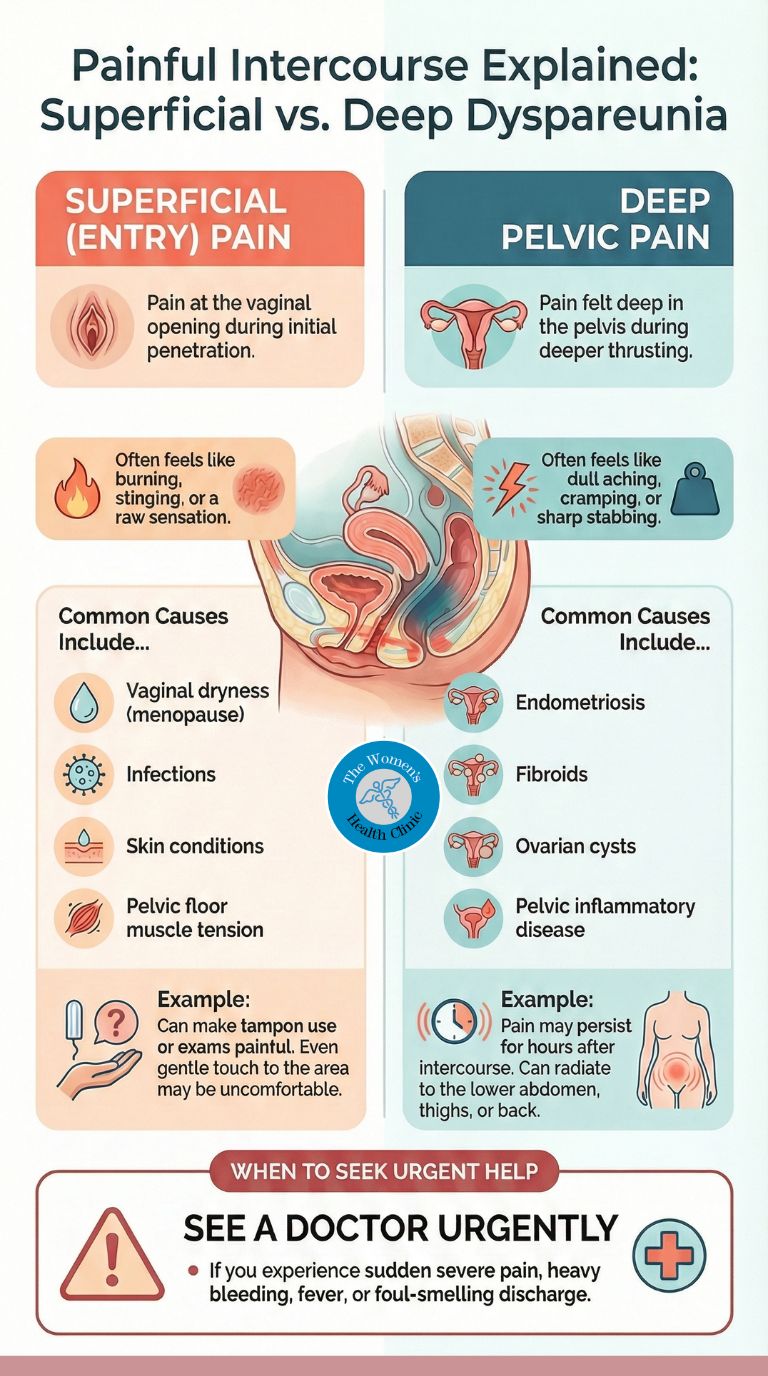
Can pain be "burning" or "tearing" yet not due to infection?
Yes, absolutely. Burning, stinging, or tearing sensations at the vulva or vaginal entrance are frequently caused by tissue changes rather than infection. The most common non-infectious cause is vaginal atrophy, where falling oestrogen levels make the tissues thin, dry, and fragile—leading to pain that feels like a raw burn or split during touch or penetration. Other causes include skin conditions, nerve sensitivity, and pelvic floor muscle tension, all of which require different treatments than antibiotics or antifungals.
Show Detailed Answer
Many women describe their vulval or vaginal pain using words like "burning", "stinging", "raw", or "tearing"—sensations that instinctively suggest infection, such as thrush or cystitis. However, these descriptors are equally common in conditions where no infection is present at all. The pain arises because the tissue itself has become vulnerable, inflamed, or hypersensitive due to hormonal changes, structural weakening, or nerve overactivity.
Understanding that pain does not always equal infection is crucial. It prevents unnecessary cycles of antibiotic or antifungal treatment, which not only fail to address the real cause but can disrupt the vaginal microbiome further. Instead, the focus shifts to restoring tissue health, calming inflamed nerves, and releasing tension in protective muscles.
Why Does Non-Infectious Pain Feel Like Burning or Tearing?
The sensation you experience depends on what is happening at a cellular and nerve level:
- Tissue Thinning (Atrophy): When oestrogen drops—during breastfeeding, perimenopause, or menopause—the vaginal lining loses its thickness and elasticity. The outer layers become fragile and can literally split or crack with friction, creating a sharp, tearing sensation. The underlying nerve endings are also more exposed, leading to burning pain even with light touch.
- Dryness and Friction: Without adequate natural lubrication, the delicate mucosa experiences micro-trauma during penetration or contact. This feels like sandpaper rubbing against raw skin—a burning, stinging discomfort that worsens with movement.
- Inflammation Without Infection: Conditions like lichen sclerosus or lichen planus cause chronic inflammation of the vulval skin. The immune system attacks the tissue, causing it to become pale, fragile, and hypersensitive. Any touch or stretch triggers intense burning or stinging, yet swabs remain negative for infection.
- Nerve Hypersensitivity (Provoked Vestibulodynia): The nerve fibres around the vaginal opening can become overactive, firing pain signals in response to pressure, touch, or friction. This feels like a sharp, electric burn or sting, even though the tissue looks normal on examination.
Common Non-Infectious Causes of Burning or Tearing Pain
The following conditions are frequently mistaken for recurrent infections because the symptoms overlap so closely:
- Genitourinary Syndrome of Menopause (GSM): Previously called vaginal atrophy, this affects up to 50% of postmenopausal women. Low oestrogen causes the vaginal walls to thin, lose moisture, and become inflamed. Pain is typically felt at the entrance and is described as burning, rawness, or tearing with penetration.
- Lichen Sclerosus: An autoimmune skin condition that causes white, shiny patches on the vulva. The skin becomes fragile and can tear easily, leading to sharp, burning pain. It is more common after menopause but can occur at any age.
- Lichen Planus: Another inflammatory condition that can affect the vaginal lining and vulva, causing painful erosions, redness, and a burning sensation. It may also cause vaginal discharge, mimicking infection.
- Provoked Vestibulodynia: Pain confined to the vestibule (vaginal entrance) triggered by touch or pressure. The area may appear slightly red or completely normal, but the nerve endings are hypersensitive, causing intense burning or stinging.
- Pelvic Floor Overactivity: Muscles that are chronically tense or in spasm can compress nerves and restrict blood flow to the tissues, causing referred burning pain. The muscles may be guarding against previous trauma or pain, creating a protective cycle that perpetuates discomfort.
How to Differentiate From Infection
Your clinician will assess the pattern of your symptoms and perform an examination to rule out infection. Key differences include:
- Timing: Infection-related pain often comes with sudden onset, abnormal discharge, and odour. Non-infectious pain tends to be chronic, worsening gradually over months or years.
- Swab Results: Negative swabs for bacteria, yeast, or sexually transmitted infections strongly suggest a non-infectious cause.
- Response to Treatment: If antifungal or antibiotic treatment provides no relief (or only temporary relief), it is unlikely to be infection-driven.
- Hormonal Context: Pain that began during perimenopause, after childbirth (especially if breastfeeding), or following cancer treatment is more likely to be hormonal atrophy.
Common Concerns & Myths
"I've tried every cream for thrush—why does it still burn?"
Because it was never thrush. Repeated antifungal use can irritate already fragile tissue and disrupt the natural microbiome, potentially worsening symptoms. A proper examination and swab can confirm whether infection is truly present.
"If it's not infected, does that mean the pain is psychological?"
No. The pain is real and has a physical cause—whether that is tissue atrophy, inflammation, or nerve dysfunction. Acknowledging emotional impact is important, but the root problem is biological and treatable.
"Will it heal on its own if I just avoid sex?"
Unfortunately, no. Conditions like atrophy and lichen sclerosus are progressive without treatment. Avoidance may reduce immediate pain but does not address the underlying tissue changes. Early intervention leads to better outcomes.
Clinical Context
Non-infectious vulvovaginal pain is a common presentation in gynaecology and sexual health clinics, particularly among perimenopausal and postmenopausal women. Genitourinary Syndrome of Menopause (GSM) is the leading cause, affecting tissue health due to oestrogen deficiency. Chronic inflammatory skin conditions like lichen sclerosus require long-term management to prevent scarring. Provoked vestibulodynia is increasingly recognised as a nerve pain condition rather than a structural problem. Educational only. Results vary. Not a cure.
Evidence-Based Approaches
Self-Care & Lifestyle
First-line strategies focus on protecting fragile tissue and reducing friction.
- Lubrication: Use generous amounts of a high-quality, fragrance-free lubricant during intimacy. Choose water-based or silicone-based products designed for sensitive skin.
- Barrier Protection: Avoid harsh soaps, wipes, or scented products on the vulva. Wash with plain warm water only.
- Moisturising: Daily use of a vaginal moisturiser (not lubricant) can help restore hydration and improve tissue resilience between episodes of intimacy.
- Gentle Exploration: Allow time for arousal and natural lubrication. Communicate openly with your partner about pacing and pressure.
Medical & Specialist Options
Treatment is guided by the underlying diagnosis. Accurate identification of the cause is essential for effective management.
- Topical Oestrogen: The gold standard for treating vaginal atrophy and GSM. Available as pessaries, creams, or vaginal rings, it restores tissue thickness and elasticity. Effects are usually noticeable within 4 to 6 weeks.
- Topical Corticosteroids: Used to manage lichen sclerosus and lichen planus. High-potency steroids reduce inflammation and prevent scarring. Long-term maintenance is often required.
- Pelvic Floor Physiotherapy: Specialist physio helps release muscle tension, desensitise painful areas, and retrain overactive pelvic floor muscles. This is particularly useful for vestibulodynia and muscle guarding.
- Nerve Pain Management: For provoked vestibulodynia, treatment may include topical anaesthetics, low-dose nerve modulators (such as amitriptyline or gabapentin), or cognitive behavioural therapy to address the fear-pain cycle.
For a structured pathway tailored to your symptoms, you can view our step-by-step treatment plan. Many patients also wish to see transparent pricing for private specialist care.
Red Flags (When to See a GP Urgently)
Seek immediate medical review if you experience sudden severe pain, heavy or persistent bleeding, visible ulcers or sores that do not heal, fever, or if the burning is accompanied by urinary symptoms such as blood in the urine.
External Resources:
Educational only. Results vary. Not a cure.