


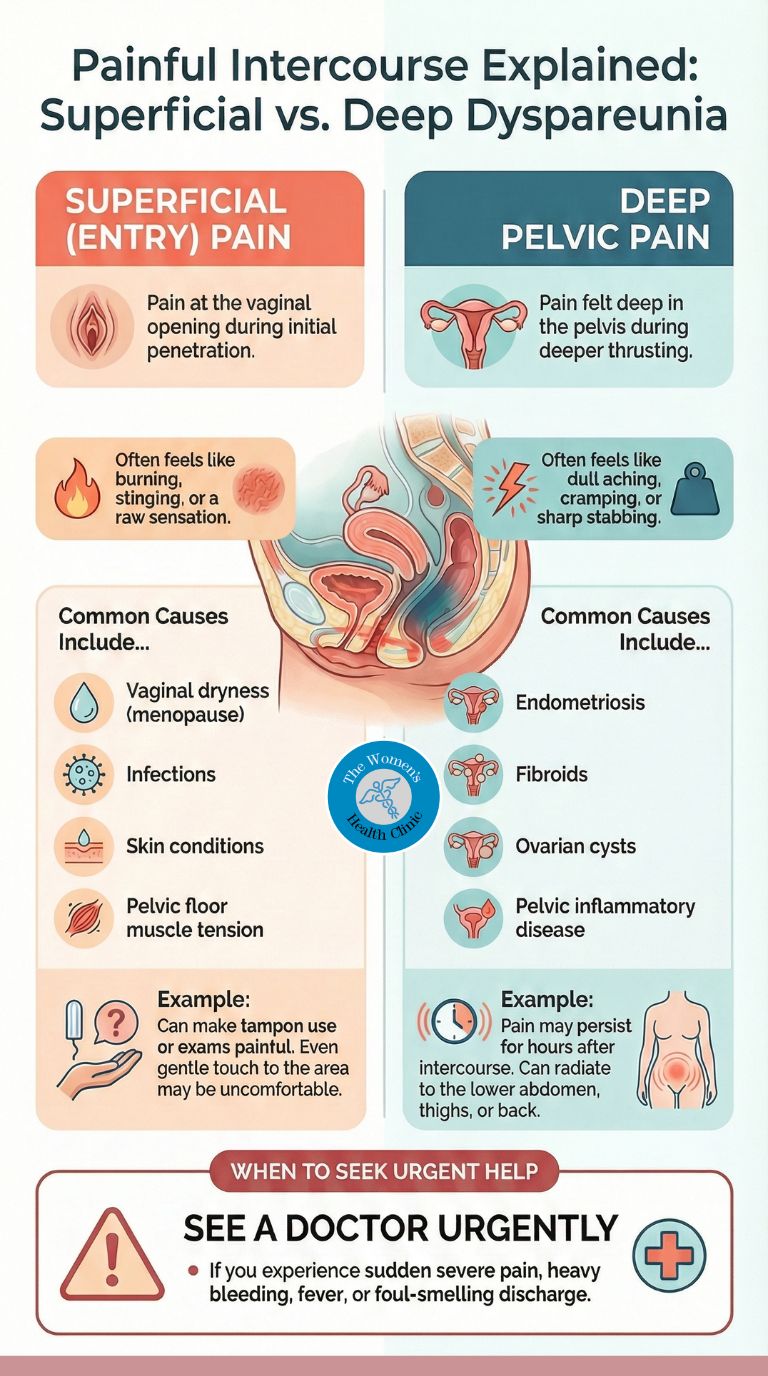
Can lichen sclerosus or lichen planus cause painful sex?
Yes, both lichen sclerosus and lichen planus frequently cause painful sex. Research shows that approximately 75% of women with lichen sclerosus experience pain during intercourse, whilst over 50% of those with lichen planus report similar difficulties. Both conditions damage the delicate vulval and vaginal tissues through chronic inflammation, leading to scarring, fissures, and narrowing that make penetration uncomfortable or impossible.
Show Detailed Answer
Lichen sclerosus and lichen planus are distinct but related chronic inflammatory skin conditions that predominantly affect the genital area. Both create long-term changes to the vulval architecture, turning healthy, elastic tissue into fragile, scarred skin. The result is a cycle of pain, avoidance of intimacy, and psychological distress that extends far beyond the physical symptoms.
Painful sex is not a minor inconvenience with these conditions. It is a primary symptom that significantly impairs quality of life and intimate relationships. The inflammation causes the vaginal opening to narrow, tissues to tear easily, and nerves to become hypersensitive. Many women describe the pain as burning, tearing, or like being cut with glass. For some, penetration becomes entirely impossible.
How Lichen Sclerosus Causes Dyspareunia
Lichen sclerosus primarily affects the vulva, creating characteristic white, thin patches of skin with a wrinkled appearance often described as resembling cigarette paper. The condition causes the tissues to become fragile and prone to splitting.
- Structural Changes: Over time, the labia minora can disappear entirely, the clitoris becomes buried under its hood, and the vaginal opening shrinks. This architectural distortion directly prevents comfortable penetration.
- Fissures and Erosions: The weakened skin tears easily during any friction, including sexual activity. These painful cracks bleed and take time to heal, making subsequent attempts at sex even more distressing.
- Introital Stenosis: The narrowing of the vaginal entrance is a common late-stage complication. This physical barrier makes penetration mechanically difficult or impossible without causing severe pain.
- Impact on Sexual Function: Studies confirm that between 55% and 75% of women with lichen sclerosus report dyspareunia, with many avoiding sex altogether. The psychological toll includes anxiety, body image concerns, and relationship strain.
How Lichen Planus Causes Dyspareunia
Lichen planus affecting the vulva and vagina is typically the erosive variant, which is more aggressive and painful than lichen sclerosus in many cases. It causes raw, open sores and severe inflammation.
- Erosive Disease: Lichen planus creates painful ulcers and erosions on the vulva and inside the vagina. These raw areas are exquisitely tender, and any touch or pressure causes intense burning and stinging pain.
- Desquamative Vaginitis: This form of inflammatory vaginitis accompanies erosive lichen planus. The vaginal lining sloughs away, creating a thick discharge and bleeding on contact. Examination alone can be unbearable, let alone intercourse.
- Vaginal Adhesions: Untreated or severe lichen planus can cause the vaginal walls to stick together, progressively narrowing or even completely closing off the vagina. This is a medical emergency requiring surgical intervention.
- Post-Coital Bleeding: The fragile, inflamed tissues bleed easily during or after sex, which is both distressing and a warning sign that the condition is active and damaging.
The Psychological Dimension of Sexual Pain
Chronic dyspareunia is not only a physical issue. It profoundly affects mental health, self-esteem, and intimate relationships.
- Fear-Avoidance Cycle: Repeated painful experiences create anticipatory anxiety. Even thinking about sex triggers muscle tension in the pelvic floor, which worsens pain and creates a vicious cycle.
- Identity and Shame: Many women report feeling inadequate as partners or broken as women. The visible changes to the vulva can cause embarrassment and reluctance to seek intimacy.
- Relationship Strain: Partners may feel rejected or confused. Without open communication and appropriate support, relationships can deteriorate, adding further emotional burden.
Common Concerns & Myths
"Will I ever be able to have sex again?"
With appropriate treatment, many women can improve their symptoms and regain the ability to have comfortable sex. Early intervention with potent topical steroids, regular use of dilators, and psychological support can all help restore intimacy. However, the journey takes time and commitment.
"Is this contagious or sexually transmitted?"
No. Neither lichen sclerosus nor lichen planus are sexually transmitted infections or contagious. They are autoimmune or inflammatory conditions. You cannot pass them to a partner, and they are not caused by poor hygiene or sexual activity.
"Does this mean I'll develop cancer?"
There is a small increased risk of vulval cancer with both conditions, approximately 2-4% for lichen sclerosus and slightly lower for lichen planus. However, consistent treatment with topical steroids and regular monitoring significantly reduces this risk. Any new lumps, thickened areas, or non-healing ulcers should be reviewed urgently.
Clinical Context
Lichen sclerosus affects approximately 1 in 80 women and is most common in postmenopausal women, though it can occur at any age including in children. Lichen planus affecting the vulva is less common but tends to be more severe, particularly the erosive variant. Both conditions are chronic and require long-term management. They are thought to be autoimmune in origin, where the immune system mistakenly attacks healthy genital tissues. Neither condition is fully understood, and there is no cure, but early and consistent treatment can control symptoms, prevent scarring, and allow many women to maintain sexual function. Educational only. Results vary. Not a cure.
Evidence-Based Approaches
Self-Care & Lifestyle
Daily care of the vulval area is essential to reduce irritation and prevent flare-ups.
- Gentle Cleansing: Use only plain warm water or a soap-free emollient wash. Avoid bubble baths, scented soaps, and any harsh products.
- Barrier Protection: Apply a plain, fragrance-free emollient or barrier cream daily to protect the skin and keep it moisturised.
- Clothing Choices: Wear loose cotton underwear and avoid tight trousers or synthetic fabrics that trap moisture and heat.
- Lubrication: Use generous amounts of a high-quality, body-safe lubricant during any sexual activity. Water-based or silicone-based lubricants are preferable to oil-based ones unless specifically recommended.
Medical & Specialist Options
Treatment is tailored to the specific condition and its severity. Both lichen sclerosus and lichen planus require specialist input.
- Topical Corticosteroids: Ultrapotent topical steroids such as clobetasol propionate 0.05% are the gold standard first-line treatment for both conditions. Applied intensively for three months initially, then reduced to maintenance doses, they reduce inflammation, relieve symptoms, and prevent scarring. Do not be afraid of using strong steroids on genital skin when prescribed by a specialist—they are safe and necessary.
- Vaginal Dilators: Used in conjunction with steroid treatment, dilators help stretch the vaginal opening gently and progressively, preventing or reversing stenosis and allowing penetration to become possible again.
- Pelvic Floor Physiotherapy: Specialist pelvic health physiotherapists can help release overactive muscles that guard against pain, teach relaxation techniques, and support gradual desensitisation.
- Psychosexual Counselling: Addressing the emotional and psychological impact of chronic sexual pain is vital. Therapists can help with anxiety, body image issues, and communication with partners.
- Systemic Treatments: For severe or refractory disease, oral immunosuppressants such as methotrexate, hydroxychloroquine, or mycophenolate may be required. These are prescribed by specialists and require careful monitoring.
- Surgical Intervention: In advanced cases with significant vaginal adhesions or severe scarring, surgery may be needed to release adhesions and widen the vaginal opening. Post-operative use of dilators and topical steroids is essential to prevent recurrence.
For comprehensive guidance on managing these conditions and restoring intimate function, you can view our step-by-step treatment plan. Many patients also wish to see transparent pricing for private specialist care.
Red Flags (When to see a GP urgently)
Seek urgent medical review if you develop a new lump or thickened area on the vulva, an ulcer that does not heal within two weeks, persistent bleeding unrelated to your menstrual cycle, or any sudden worsening of symptoms despite treatment.
External Resources:
- NHS – Lichen sclerosus overview
- NHS – Lichen planus overview
- British Association of Dermatologists – Lichen planus patient information
- British Association of Dermatologists – Guidelines for management of lichen sclerosus 2018
- RCOG – Vulval skin disorders guidance
- PubMed – Clinical research on lichen sclerosus and lichen planus
Educational only. Results vary. Not a cure.