

Can GSM be present even if I’m still having periods?
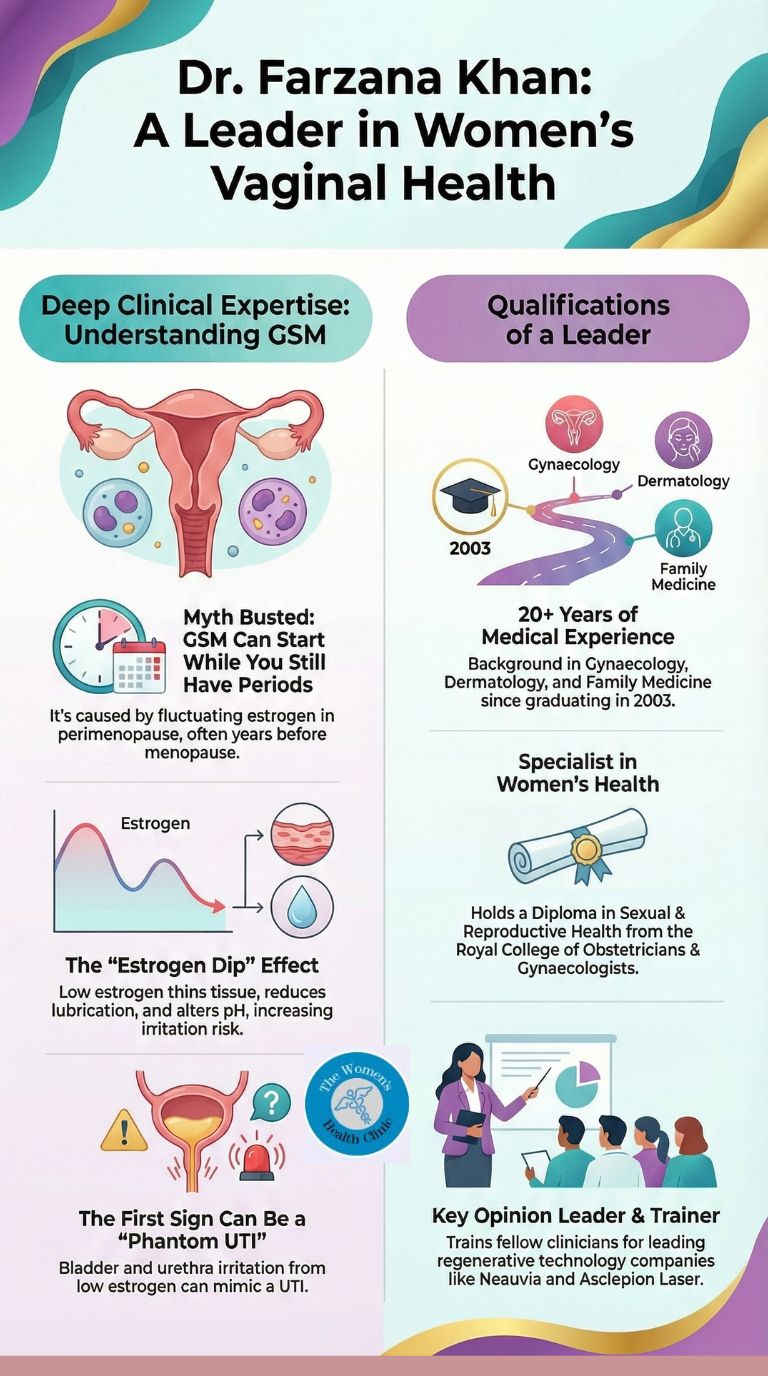
Yes. Genitourinary Syndrome of Menopause (GSM) can develop during perimenopause—often years before your final period—because oestrogen levels fluctuate unpredictably during this transition. You do not need to have stopped menstruating completely to experience vaginal dryness, irritation, or discomfort during sex caused by falling oestrogen. Many women in their early to mid-40s report GSM symptoms while still having regular or irregular cycles.
Show Detailed Answer
GSM describes a collection of physical changes affecting the vulva, vagina, bladder, and urethra due to reduced oestrogen. Symptoms include dryness, burning, itching, painful intercourse (dyspareunia), and urinary urgency or recurrent infections. While the term includes “menopause,” the condition is not exclusive to post-menopausal women.
During perimenopause—the transitional phase that can last 4 to 10 years—oestrogen production becomes erratic. Levels may swing from normal to very low within the same cycle, or remain persistently lower than in your reproductive years. This hormonal instability is enough to trigger thinning of the vaginal lining (atrophy), reduced natural lubrication, and changes in pH that increase susceptibility to irritation and infection.
Understanding the Oestrogen–Tissue Connection
Oestrogen maintains the thickness, elasticity, and moisture of vaginal tissue. It stimulates blood flow, supports collagen production, and keeps the vaginal environment slightly acidic (pH 3.8–4.5), which protects against harmful bacteria. When oestrogen declines:
- Epithelial thinning: The vaginal lining becomes fragile and less cushioned, making it prone to micro-tears and irritation.
- Reduced lubrication: Fewer glands produce natural moisture, leading to dryness even during arousal.
- pH shift: The environment becomes less acidic, allowing overgrowth of non-protective bacteria and increasing infection risk.
- Loss of elasticity: Collagen and elastin fibres break down, causing the vagina to feel tighter or less accommodating.
Crucially, these changes can occur even if you are ovulating occasionally or still menstruating, because what matters is the cumulative oestrogen exposure to the tissues, not just whether bleeding happens.
Why Perimenopause Is Often Overlooked
Many women—and some clinicians—assume GSM only affects those who have reached menopause (defined as 12 consecutive months without a period). This misconception leads to delayed diagnosis and unnecessary suffering. Women in their 40s may be told their symptoms are due to stress, relationship issues, or “just ageing,” when in fact they have a treatable hormonal condition.
Additionally, perimenopausal symptoms can be masked by continuing periods, especially if cycles remain relatively regular at first. The fluctuating hormone levels mean you may have good months and bad months, which can make it harder to recognise a pattern.
Other Causes of Low Oestrogen While Menstruating
GSM-like symptoms can also occur in younger, menstruating women due to:
- Breastfeeding: Prolactin suppresses oestrogen, leading to temporary vaginal atrophy.
- Hormonal contraception: Some pills, injections, or IUDs reduce systemic or local oestrogen, causing dryness.
- Cancer treatments: Chemotherapy, radiotherapy, or hormone-blocking drugs (e.g., tamoxifen, aromatase inhibitors) can induce a medically-induced menopause.
- Premature ovarian insufficiency (POI): Ovarian function declines before age 40, causing early menopause symptoms despite occasional periods.
Common Concerns & Myths
“I thought GSM only happened after menopause—am I too young?”
No. Perimenopause can begin in your early 40s (or even late 30s), and GSM symptoms can appear whenever oestrogen levels drop, regardless of whether you still have periods.
“Will my symptoms go away once my cycle settles down?”
Unlikely. GSM is progressive. Without treatment, vaginal atrophy worsens over time. Early intervention with localised oestrogen can prevent long-term tissue damage.
“Is it just because I’m not aroused enough?”
No. While arousal increases lubrication, GSM reflects a structural change in the vaginal tissue itself. No amount of foreplay can restore oestrogen-dependent tissue health.
Clinical Context
GSM affects up to 50% of post-menopausal women and a significant proportion of perimenopausal women, yet it remains under-reported and under-treated. Unlike hot flushes, which often improve over time, GSM symptoms are chronic and worsen without intervention. The condition can profoundly affect sexual function, intimate relationships, bladder health, and quality of life. Early recognition and treatment during perimenopause can preserve tissue integrity and prevent irreversible changes. Educational only. Results vary. Not a cure.
Evidence-Based Approaches
Self-Care & Lifestyle
While these measures do not replace oestrogen, they can provide symptomatic relief and support tissue health.
- Regular vaginal moisturisers: Use non-hormonal, hyaluronic acid-based moisturisers 2–3 times per week to maintain hydration between episodes of intimacy.
- Lubricants: Apply water-based or silicone-based lubricant generously before and during sex to reduce friction.
- Pelvic floor health: Gentle pelvic floor exercises and regular sexual activity (with or without a partner) help maintain blood flow and tissue elasticity.
- Avoid irritants: Skip perfumed soaps, douches, or wipes that disrupt the vaginal pH.
Medical & Specialist Options
Localised (vaginal) oestrogen is the gold-standard treatment for GSM and is safe for most women, even those who cannot take systemic HRT.
- Vaginal oestrogen: Available as creams, pessaries, or rings. These deliver low-dose oestrogen directly to the vaginal tissue, restoring thickness, lubrication, and pH with minimal systemic absorption.
- Systemic HRT: If you have other menopausal symptoms (hot flushes, mood changes), combined HRT may address both genital and systemic symptoms, though vaginal oestrogen may still be needed for full GSM relief.
- Non-hormonal options: Vaginal laser therapy, radiofrequency treatments, or DHEA suppositories may be considered if oestrogen is contraindicated.
- Specialist review: A menopause specialist or gynaecologist can assess your hormone levels, rule out other causes (e.g., infection, dermatological conditions), and tailor treatment to your needs.
To explore a comprehensive care pathway, you can view step-by-step treatment plan or book a consultation with our clinical team.
Red Flags (When to See a GP Urgently)
Contact your GP promptly if you experience unexpected vaginal bleeding (especially post-menopausal bleeding), persistent pelvic pain, foul-smelling discharge, or sores or lumps on the vulva. These may indicate infection, structural abnormalities, or, rarely, malignancy.
External Resources:
Educational only. Results vary. Not a cure.
Clinical Insight: Yes. GSM is driven by fluctuating estrogen, not just low estrogen. In perimenopause (while you still have periods), estrogen "dips" can starve the vaginal tissue, causing cyclical burning or "phantom UTIs" long before your periods actually stop.
Additional Clinical Context
Your vagina needs a steady supply of estrogen to stay plump and moist. In perimenopause (years before your period stops), estrogen levels become chaotic.
- The Cycle: You may notice symptoms worsen the week before your period (when estrogen naturally drops) and improve during your period.
- The Threshold: Some women have a high "Estrogen Threshold," meaning their vaginal tissue starts to suffer even when blood tests show "normal" hormone levels.
For many women, the first sign of GSM isn't dryness—it's the bladder.
- Mechanism: The urethra (urine tube) is packed with estrogen receptors. When levels dip, the lining thins, causing the sensation of a UTI (urgency, burning) but with negative culture results.
Other causes of Low Estrogen
- Breastfeeding (Lactational Atrophy): The hormone Prolactin (which makes milk) suppresses Estrogen. This creates a "temporary menopause" state with severe dryness.
- The Pill (COC): Some contraceptive pills lower your body's own estrogen production to a level that keeps you safe from pregnancy but is too low for your vaginal tissue comfort.