

Can antidepressants (SSRIs/SNRIs) affect arousal or orgasm?
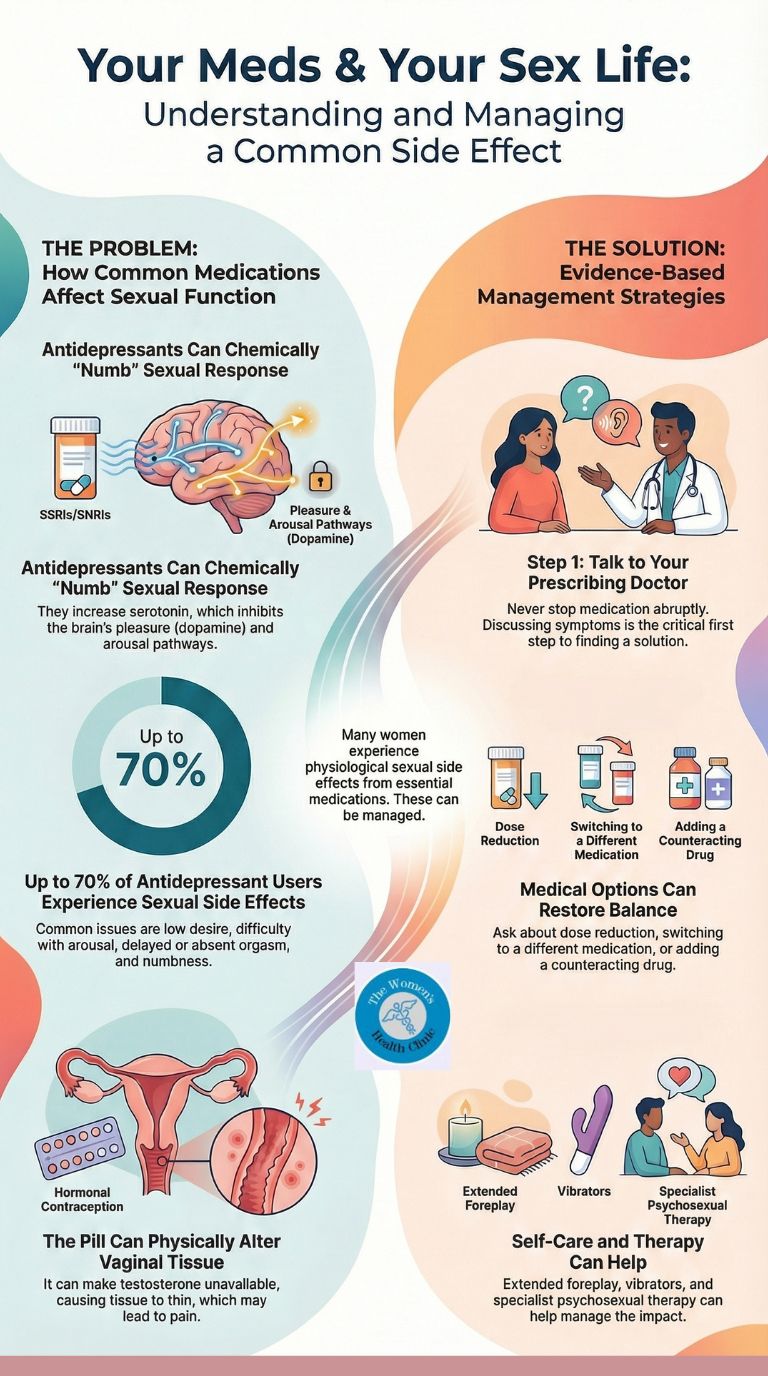
Yes. SSRIs and SNRIs commonly cause sexual side effects including reduced desire, delayed arousal, difficulty reaching orgasm, and diminished orgasm intensity in up to 70% of users. These effects result from how these medications alter serotonin and other neurotransmitters that regulate the sexual response cycle. While the mental health benefits are often essential, the sexual impact is a recognised medical side effect that can be managed through dose adjustment, medication switching, or specialist support.
Show Detailed Answer
Selective serotonin reuptake inhibitors (SSRIs) and serotonin-norepinephrine reuptake inhibitors (SNRIs) are widely prescribed for depression, anxiety, and certain pain conditions. Whilst they can be life-changing for mental wellbeing, they frequently interfere with sexual function—a side effect that is under-discussed but affects the majority of users to some degree.
Sexual dysfunction is not a sign that you are “broken” or ungrateful for treatment. It is a physiological consequence of how these medications work in the brain and body. The good news is that there are evidence-based strategies to minimise the impact without sacrificing your mental health, and open conversation with your prescriber is the critical first step.
How SSRIs and SNRIs Affect Sexual Function
These medications work by increasing the availability of serotonin (and in the case of SNRIs, norepinephrine) in the brain. Serotonin plays a vital role in mood regulation, but it also inhibits sexual response. Specifically:
- Dopamine suppression: Serotonin dampens dopamine, the neurotransmitter that drives desire and motivation for sex.
- Nitric oxide reduction: SSRIs can reduce nitric oxide, which is essential for clitoral and vaginal engorgement (arousal).
- Orgasm delay: Elevated serotonin raises the threshold needed to trigger orgasm, making climax harder to reach or less intense.
- Genital numbness: Some users report decreased genital sensitivity, making touch less pleasurable.
The severity varies between individuals and between medications. Common culprits include sertraline, paroxetine, citalopram, escitalopram (SSRIs), and venlafaxine, duloxetine (SNRIs).
Types of Sexual Dysfunction Reported
The impact typically appears across multiple phases of the sexual response cycle:
- Reduced libido: Lower spontaneous desire or interest in sex.
- Arousal difficulties: Reduced lubrication, decreased clitoral swelling, or feeling physically “disconnected.”
- Anorgasmia: Complete inability to reach orgasm, even with prolonged stimulation.
- Delayed orgasm: Climax takes significantly longer than before starting medication.
- Muted orgasm: Orgasm occurs but feels weaker or less satisfying.
Timeline: When Do Side Effects Start?
Sexual side effects often emerge within the first few weeks of starting treatment or after a dose increase. For some, they improve slightly after 8–12 weeks as the body adjusts, but for many, the effects persist as long as the medication is continued. A small number of individuals report post-SSRI sexual dysfunction (PSSD), where symptoms linger even after stopping the drug, though this remains an area of ongoing research.
Common Concerns & Myths
“Will it get better if I just wait it out?”
Possibly, but not guaranteed. Some people experience mild improvement after the first few months, but many do not. Waiting indefinitely without discussing alternatives can lead to relationship strain and avoidance of intimacy.
“Does this mean I have to choose between my mental health and my sex life?”
No. There are antidepressants with lower sexual side effect profiles (such as bupropion or mirtazapine), dose adjustments, medication holidays, and augmentation strategies. A collaborative approach with your prescriber can often find a balance.
“Is it all psychological—am I just depressed about being depressed?”
No. While low mood can reduce libido, SSRI-induced sexual dysfunction occurs even in people whose depression or anxiety is well-controlled. It is a direct pharmacological effect, not a failure of willpower or attraction.
Clinical Context
Sexual side effects from antidepressants are one of the most common reasons people stop taking prescribed medication, often without informing their GP or psychiatrist. This can lead to relapse of mental health symptoms. The prevalence is estimated at 40–70% for SSRIs and SNRIs, though it is frequently under-reported due to embarrassment or the assumption that nothing can be done. The British National Formulary (BNF) and NICE guidance both acknowledge sexual dysfunction as a known adverse effect, and clinicians are encouraged to proactively discuss it. Educational only. Results vary. Not a cure.
Evidence-Based Approaches
Self-Care & Lifestyle
Whilst lifestyle changes cannot reverse the pharmacological impact, they can help optimise what remains of your sexual response.
- Extended foreplay: Allow more time for arousal to build, as the process may be slower.
- Vibrators and stimulation: Increased or varied stimulation (clitoral vibrators, varied touch) can sometimes overcome the raised orgasm threshold.
- Communication: Openly discuss the changes with your partner to reduce performance pressure and explore other forms of intimacy.
- Timing of dose: Some find that taking medication after sex (if daily dosing allows) slightly reduces immediate impact.
Medical & Specialist Options
Management should always involve your prescribing doctor. Do not stop antidepressants abruptly, as this can cause withdrawal symptoms and mental health relapse.
- Dose reduction: Lowering to the minimum effective dose may reduce side effects whilst maintaining therapeutic benefit.
- Medication switch: Bupropion (Wellbutrin) and mirtazapine have lower rates of sexual dysfunction. Agomelatine is another option in some cases.
- Drug holidays: Planned short breaks (e.g., skipping doses on weekends) can work for some SSRIs with shorter half-lives, but must be supervised due to risk of discontinuation symptoms.
- Augmentation: Adding bupropion or buspirone to an existing SSRI may counteract sexual side effects in some individuals.
- Topical therapies: For those also experiencing vaginal dryness or atrophy (common in perimenopause), localised oestrogen or regenerative treatments may address the physical dimension of arousal.
- Psychosexual therapy: Specialist counselling can help navigate the emotional impact, fear-avoidance cycles, and relationship strain.
If you are exploring treatment pathways for related vaginal or pelvic health concerns, you can meet the clinical team who specialise in these areas. Many also find it helpful to book a consultation to discuss integrated care.
C. Red Flags (When to Seek Urgent Review)
Seek immediate GP or psychiatric review if you experience sudden worsening of mood, suicidal thoughts, severe anxiety, or discontinuation syndrome (dizziness, electric shock sensations, flu-like symptoms) after stopping or reducing medication.
External Resources:
- NHS – SSRI side effects overview
- BNF – Antidepressant drugs treatment summary
- Royal College of Psychiatrists – Antidepressants patient information
- NICE – Depression in adults: treatment and management
- Mayo Clinic – Antidepressants and sexual side effects
- PubMed – Sexual dysfunction associated with SSRIs (systematic review)
Educational only. Results vary. Not a cure.
Clinical Insight: Medications don't just lower "mood" for sex; they can physically block the nerve signals for pleasure. SSRIs (Antidepressants) can cause "Genital Anesthesia" (numbness), while the Contraceptive Pill can physically thin the vaginal tissue (Atrophy) by locking up your Testosterone.
Medication Impact on Sexual Function
Drugs like Sertraline, Fluoxetine, or Citalopram work by increasing Serotonin. However, Serotonin chemically inhibits Dopamine (the "pleasure" hormone) and Norepinephrine (the "arousal" hormone).
The "Numbing" Effect
- Genital Anesthesia: Many women report that their genitals feel "numb," "rubbery," or less sensitive to touch. This makes orgasm difficult or impossible (Anorgasmia).
- Emotional Blunting: The medication "flattens" emotional peaks, which can make sexual connection feel distant or mechanical.
- PSSD Warning: In rare cases, these symptoms can persist after stopping the medication (Post-SSRI Sexual Dysfunction). If you notice numbness, speak to your doctor early.
The Combined Pill increases a protein called SHBG (Sex Hormone Binding Globulin). This protein binds to your free Testosterone, making it unavailable to your body.
- The Physical Result: Your vulva needs testosterone to stay plump and healthy. Low levels can cause the vestibular tissue to thin and shrink (Atrophy), leading to burning pain at the entrance (Provoked Vestibulodynia).
- The Fix: Switching to a non-hormonal method (Copper IUD) or transdermal estrogen (Patch/Ring) often reverses this.
You do not always have to choose between mental health and sexual health.
- Switching Class: Antidepressants like Mirtazapine or Bupropion (off-label in UK) act on different chemical pathways and have a lower risk of sexual side effects.
- Topical Hormones: Using estrogen/testosterone cream at the vaginal entrance can sometimes counteract the thinning caused by the Pill.