


Can adenomyosis cause painful sex and heavy periods together?
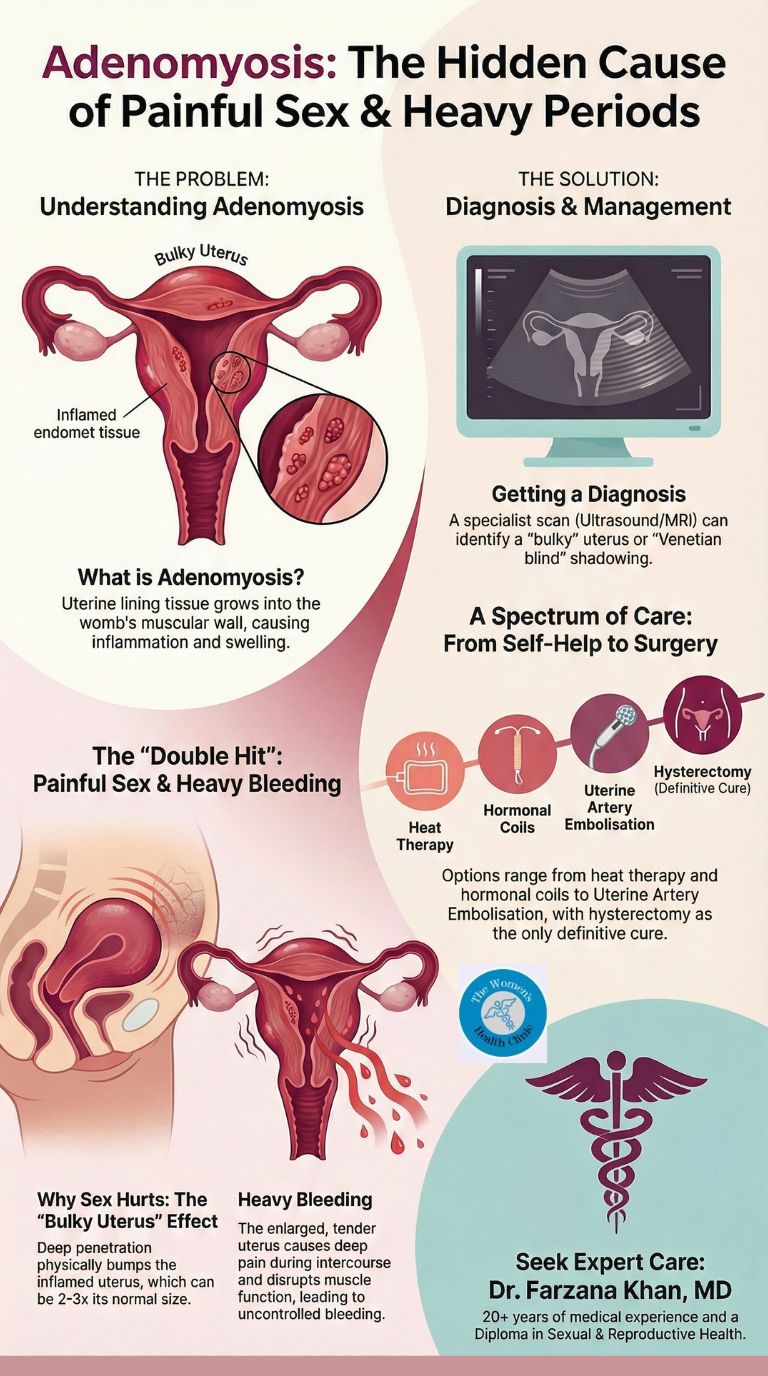
Yes, adenomyosis frequently causes both painful sex (deep dyspareunia) and heavy, prolonged periods together. This happens because the endometrial tissue grows into the muscular wall of the womb, causing inflammation, swelling, and pressure that trigger pelvic pain during intercourse and disrupt the uterus’s ability to contract properly during menstruation. These symptoms often worsen together as the condition progresses, significantly affecting quality of life and intimate relationships.
Show Detailed Answer
Adenomyosis is a condition where the tissue that normally lines the inside of the womb (endometrium) breaks through into the thick muscular wall (myometrium). Each month, this misplaced tissue responds to your hormones—thickening, breaking down, and bleeding—but it has nowhere to escape. This causes the womb to become enlarged, boggy, and tender, leading to a constellation of symptoms that include exceptionally heavy bleeding and deep pelvic pain.
Many women describe feeling as though their pelvis is “constantly bruised” or “inflamed.” The pain during sex is typically deep—felt high in the vagina or across the lower abdomen when the penis or fingers press against the cervix or uterus. The heavy periods can be debilitating, with flooding, clots, and bleeding lasting seven days or more. Together, these symptoms can lead to anaemia, exhaustion, anxiety about intimacy, and feelings of isolation.
Why Adenomyosis Causes Both Symptoms Simultaneously
The link between painful sex and heavy bleeding in adenomyosis is rooted in the same underlying process:
- Uterine Swelling & Tenderness: The infiltration of endometrial tissue into the muscle wall creates localised inflammation. The womb becomes enlarged and exquisitely sensitive to pressure, which is why deep penetration can trigger sharp or aching pain.
- Disrupted Muscle Function: A healthy uterus contracts rhythmically during menstruation to expel the lining. In adenomyosis, the muscle wall is thickened, disrupted, and unable to contract efficiently. This leads to prolonged, uncontrolled bleeding and the passage of large clots.
- Hormonal Sensitivity: The ectopic endometrial tissue inside the muscle responds to oestrogen and progesterone. During the second half of your cycle, the tissue swells, which increases pelvic heaviness and pain—including during intimacy.
- Chronic Inflammation: The trapped blood and tissue debris provoke an ongoing inflammatory response, which sensitises pelvic nerves and can cause baseline pelvic pain that worsens with touch or movement.
How the Symptoms Progress Together
Women with adenomyosis often notice that both symptoms worsen in tandem, particularly in the days leading up to and during menstruation. The pelvis feels “full,” intercourse becomes increasingly uncomfortable, and periods become progressively heavier and longer. This cyclical pattern can become exhausting and demoralising, especially when the pain begins to affect your relationship, self-esteem, and ability to plan everyday activities.
Common Concerns & Myths
“Is it just normal period pain that I’m overreacting to?”
No. Adenomyosis pain is typically more severe, prolonged, and debilitating than primary dysmenorrhoea. It often does not respond well to over-the-counter painkillers and significantly impacts daily functioning.
“Will having a baby cure it?”
No. Pregnancy may temporarily suppress symptoms due to hormonal changes, but adenomyosis often returns or worsens after childbirth. It is not “cured” by pregnancy.
“Is painful sex all in my head?”
Absolutely not. The pain is a direct result of physical changes in the womb—inflammation, swelling, and nerve sensitisation. It is a legitimate medical symptom that requires clinical assessment and treatment.
Clinical Context
Adenomyosis is most commonly diagnosed in women in their 30s and 40s, particularly those who have had children, though it can occur at any reproductive age. It is often found alongside endometriosis and fibroids, which can complicate the symptom picture. Diagnosis is typically made using transvaginal ultrasound or MRI, and symptoms usually improve after menopause when oestrogen levels fall. The emotional burden—feeling dismissed, fearing intimacy, or struggling with fatigue—is significant and should be acknowledged as part of comprehensive care. Educational only. Results vary. Not a cure.
Evidence-Based Approaches
Self-Care & Lifestyle
While self-care cannot reverse adenomyosis, it can help you manage symptoms and reclaim some control.
- Heat Therapy: A hot water bottle or heat pad applied to the lower abdomen can ease cramping and pelvic heaviness.
- Pacing Intimacy: Schedule sex for the first half of your cycle when inflammation is typically lower. Use plenty of lubricant and communicate openly with your partner about what feels tolerable.
- Iron Supplementation: Heavy bleeding often leads to iron-deficiency anaemia. Speak to your GP about testing your ferritin levels and starting an appropriate supplement.
- Movement: Gentle exercise such as walking, swimming, or yoga can reduce pelvic congestion and improve mood, though you may need to adapt intensity during flare-ups.
Medical & Specialist Options
Treatment is tailored to the severity of symptoms, your age, and whether you wish to preserve fertility.
- Hormonal Therapies: The Mirena coil (levonorgestrel IUS) is often first-line, thinning the endometrial tissue and reducing bleeding and pain. The combined pill or progesterone-only pill taken continuously can also suppress menstruation.
- Tranexamic Acid & NSAIDs: Tranexamic acid reduces menstrual blood loss by up to 50%, while mefenamic acid targets both bleeding and pain.
- GnRH Analogues: These create a temporary menopause, shrinking adenomyotic tissue. They are typically used short-term due to side effects like hot flushes and bone density loss.
- Uterine Artery Embolisation (UAE): A minimally invasive procedure that blocks blood flow to the adenomyotic tissue, reducing womb size and symptoms.
- Hysterectomy: The only definitive cure. It is considered when symptoms are severe, other treatments have failed, and fertility is not desired.
If you are considering specialist care or wish to explore regenerative options for pelvic health, you can explore treatment benefits and book a consultation to discuss a personalised pathway.
C. Red Flags (When to see a GP urgently)
Seek immediate medical review if you experience sudden, severe pelvic pain, bleeding so heavy you soak through a pad or tampon every hour, passing clots larger than a 50p coin, or symptoms of anaemia such as extreme fatigue, dizziness, or breathlessness.
External Resources:
- NHS – Adenomyosis overview and treatment options
- NICE – Heavy menstrual bleeding: assessment and management
- RCOG – Heavy menstrual bleeding patient information
- Endometriosis UK – Adenomyosis information and support
- Mayo Clinic – Adenomyosis: symptoms and causes
- PubMed – Clinical research on adenomyosis and dyspareunia
Educational only. Results vary. Not a cure.
Clinical Insight: Yes. Adenomyosis creates a "double hit" of symptoms because the uterus becomes both heavy (causing bleeding) and tender (causing pain). A key sign is Dysorgasmia—cramping that occurs specifically after orgasm, distinct from standard period pain.
The "Bulky Uterus" Effect
Unlike Endometriosis (where organs are stuck together), Adenomyosis makes the uterus itself soft, boggy, and bruised.
- Collision Dyspareunia: Deep penetration physically bumps the tender uterus. Because the organ is inflamed and enlarged (often 2–3x normal size), this impact causes a deep, bruising ache that can last for hours.
- Dysorgasmia: During orgasm, the uterus contracts. In adenomyosis, the muscle fibers are infiltrated with bleeding tissue, making these contractions intensely painful.
Adenomyosis is often missed on standard scans if the sonographer isn't looking for it. Check your report for these terms:
Ultrasound "Red Flags"
- "Venetian Blind" Shadowing: The ultrasound beam is blocked by the adenomyosis, creating striped shadows.
- Asymmetrical Thickening: One wall of the uterus (usually the back/posterior) is significantly thicker than the other.
- Bulky/Globular Uterus: The uterus looks round and heavy rather than pear-shaped.
If you are offered Endometrial Ablation (burning the lining) for heavy bleeding, proceed with caution.
- The Risk: Ablation only treats the surface lining. If your adenomyosis is deep in the muscle, the ablation creates a layer of scar tissue that traps the bleeding inside the muscle wall.
- The Result: This can lead to Post-Ablation Tubal Sterilization Syndrome (PATSS) or worsening chronic pain, often requiring a hysterectomy later. Discuss this risk specifically with your surgeon.
MYTH: "It's just Fibroids."
REALITY: Fibroids are distinct "balls" of muscle (like marbles in a bag). Adenomyosis is diffuse (like grit in jam). Treating adenomyosis like fibroids (e.g., trying to remove just the lump) often fails because there is no clear border to cut.